
Westville Brief and Part Details
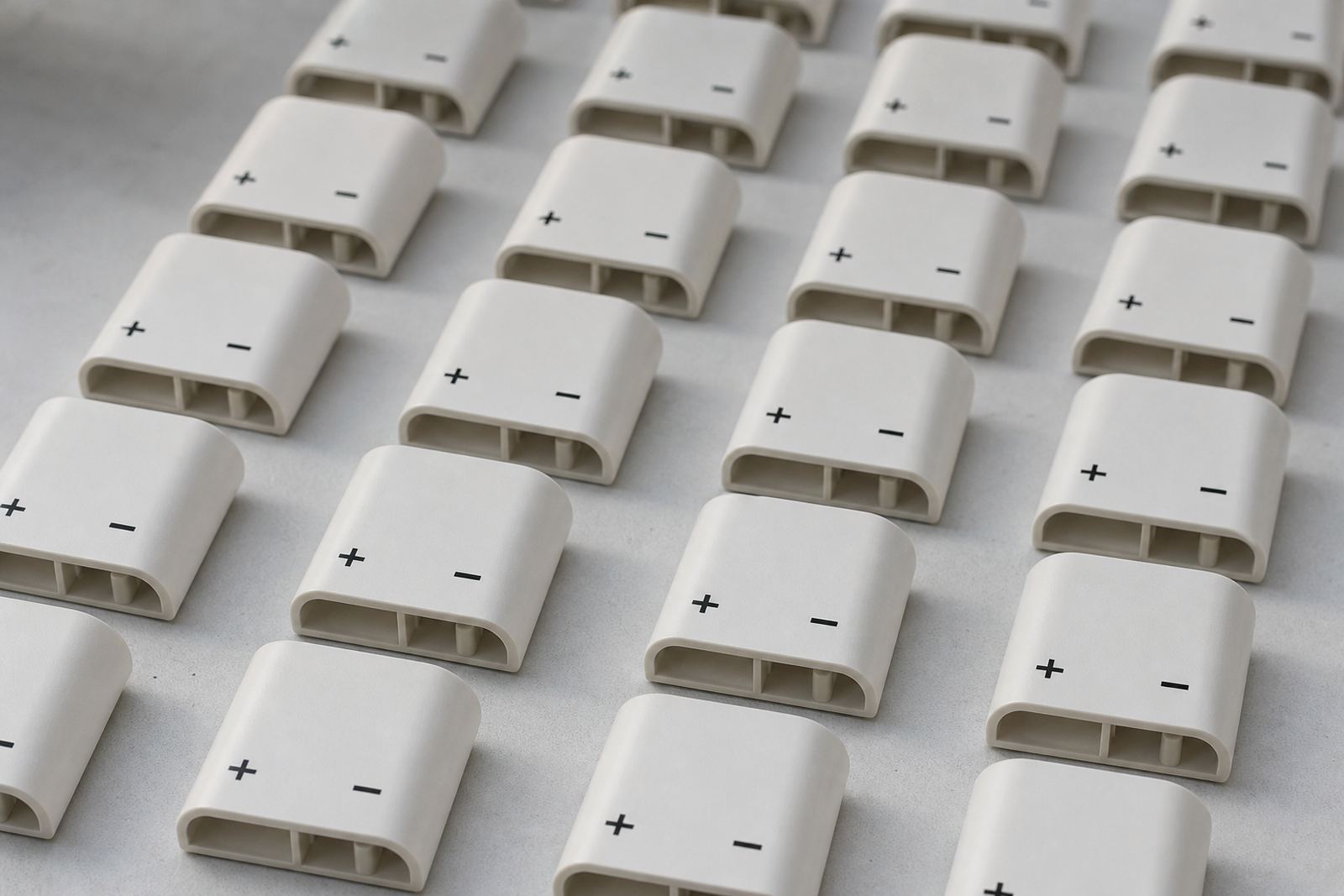
A medical supplier in Westville came to us with a practical brief: mark small device caps with clear one colour legends that could be read at a glance and hold up through handling, cleaning and normal use. The parts were compact, slightly curved and had limited print space, so the mark had to sit in the right spot every time without creeping onto the edge.
The caps were supplied in repeat batches and the customer needed the same result from run to run. Because these parts sit inside a medical workflow, the artwork had to stay sharp and the print process had to be controlled from the first sample onwards. Customers remain responsible for their own device compliance, so our role was to supply the printing method, repeatability and sample control needed for their production line.
- Part type: small plastic device caps
- Marking: one colour legend
- Application: repeat batch medical supply
- Area served: Westville, Durban and wider South Africa
Why Pad Printing Suited the Job
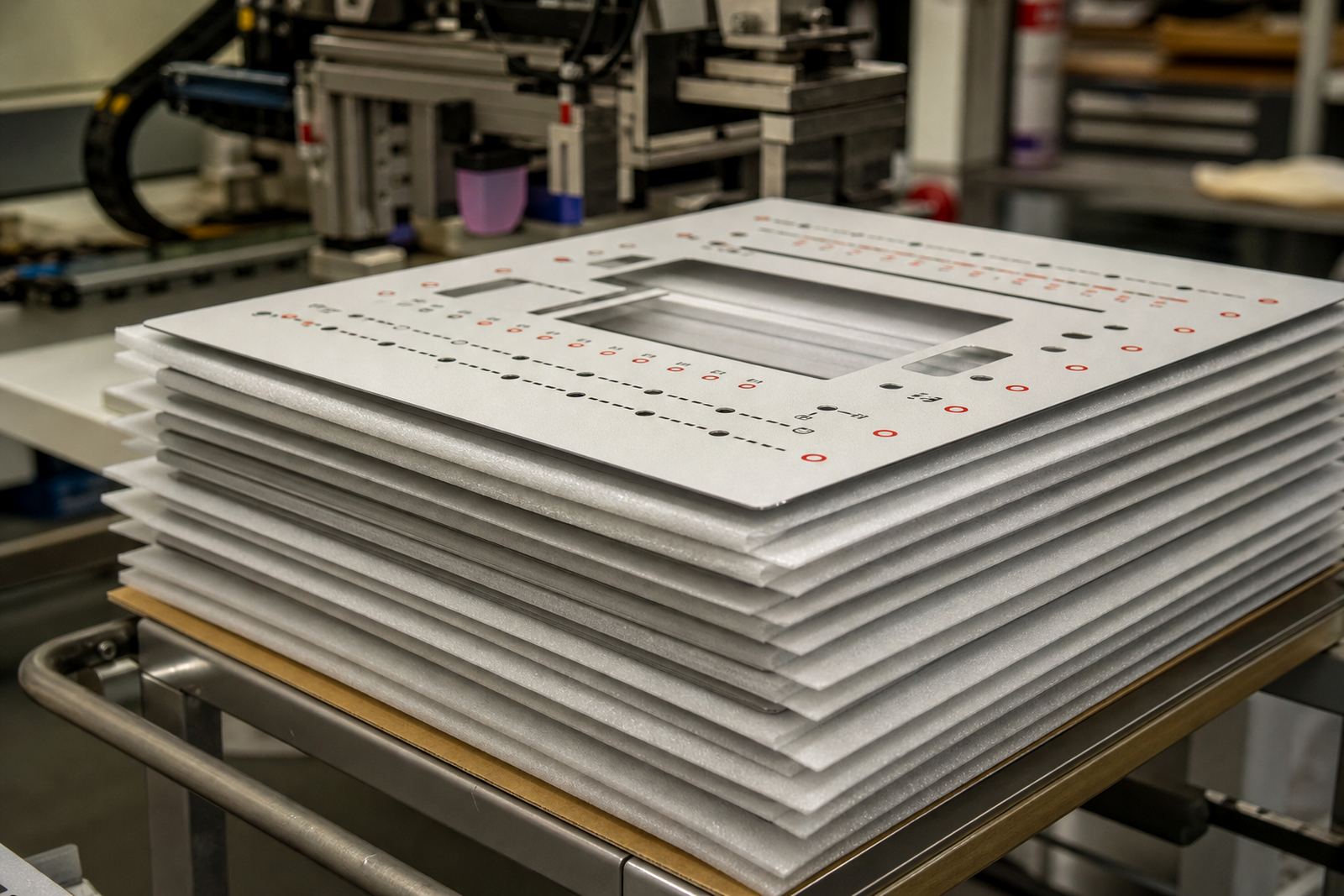
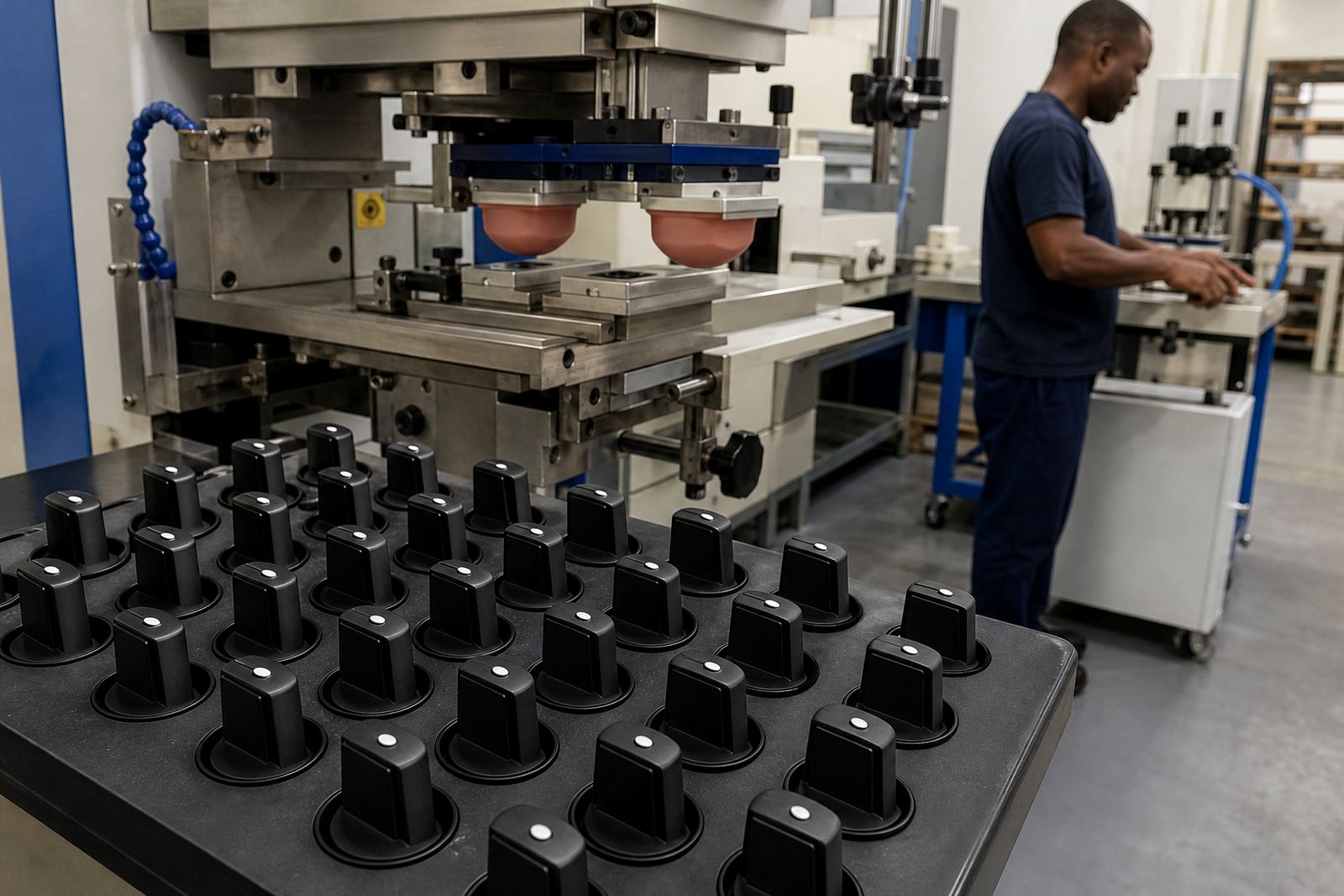
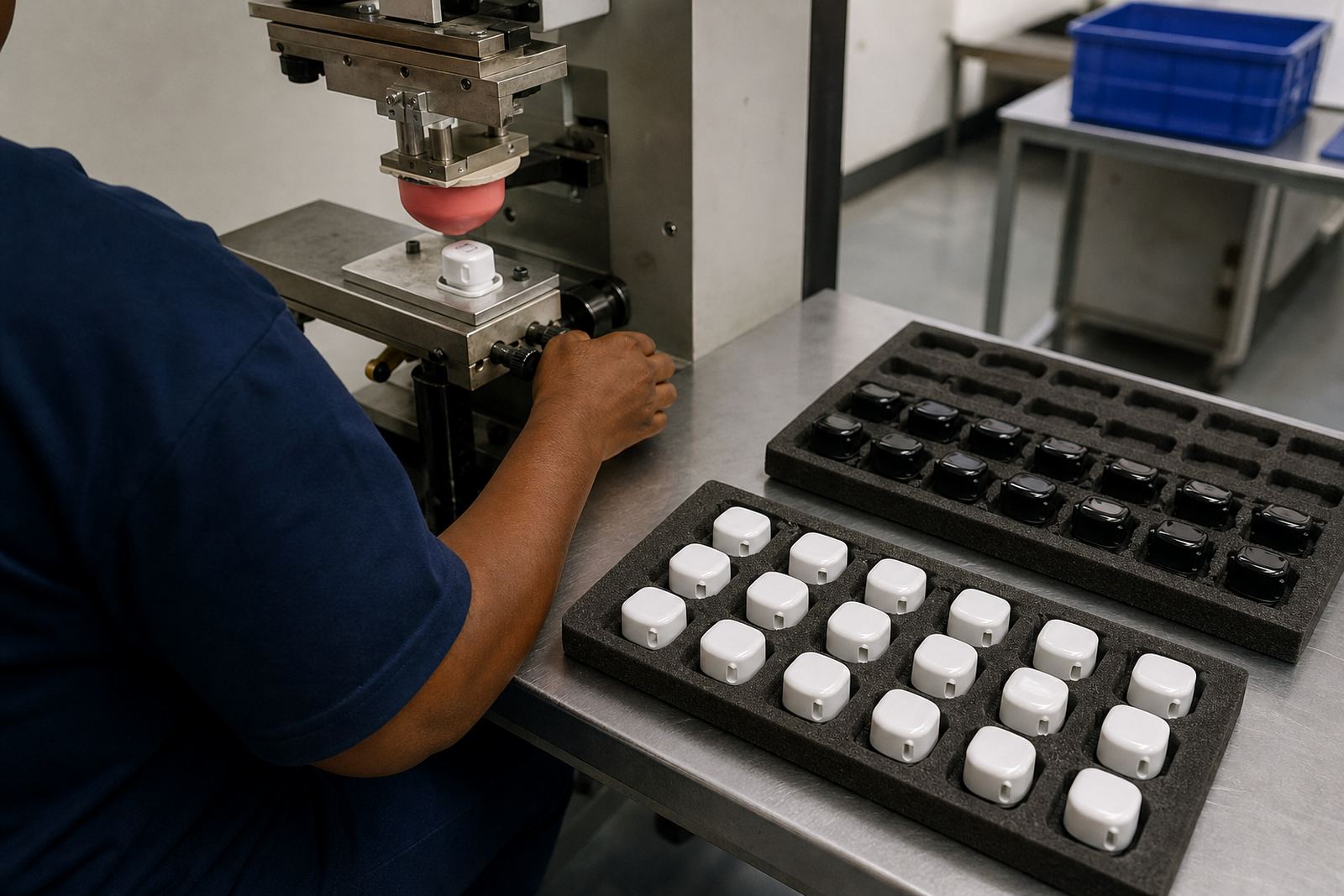
Pad printing is a good fit when a mark must move from a flat plate to a formed component with a curve or recessed area. A silicone pad picks up ink from an etched plate and transfers it onto the part with controlled pressure. That gives clean legends on small surfaces where screen printing or other methods can struggle with shape and access.
For these caps, the main challenge was keeping the legend clear on a tight print area. We planned the artwork so the line weight stayed legible, then matched the plate and pad setup to the part profile. Ink selection and curing method were also important because the print had to be handled soon after printing and then move through repeat batches without smudging. Not every part needs the same treatment, so we look at material, surface finish and handling before choosing the process.
- Silicone pad transfer for curved or recessed areas
- Etched plate for controlled ink pickup
- Ink and curing matched to the substrate
- Fine line work kept within the usable print zone
Artwork, Plates and Trial Samples
Our team started with artwork preparation and logo redraws where needed, then checked the print area planning against the actual cap dimensions. This avoids guesswork later on. If the legend is even slightly too large, it can fall off centre or lose clarity on the curved face of the part.
Once the layout was agreed, Sanjay Dookhi handled plate exposure and plate etching, while Lerato Mabunda checked the sample prints for clarity, position and consistency. We ran trial sample runs before release, which gave the client a chance to confirm the look and placement on the actual component. That step matters on small medical parts because a tiny shift is still visible. We also confirmed the curing method selection before moving to the repeat batches.
- Artwork preparation and redraws
- Print area planning against the real part
- Plate exposure and etching
- Trial sample runs before production release
Making the Print Hold Up in Production
Small caps can be awkward to print if the fixture is loose or the ink is not matched properly. Mfundo Xaba set up the machine and the fixtures so each cap sat in the same position for the print stroke, then the team tested the transfer and drying behaviour. We also carried out adhesion test samples so the customer could check the mark against their own handling and cleaning steps.
Because the order was for repeat batches, rerun job control was built into the process. That means the same plate reference, the same fixture setup and the same curing settings are kept on record for the next run. It helps reduce variation when production has to move quickly, especially where parts are dispatched across South Africa and the customer needs the same legend every time.
- Fixture making for repeat positioning
- Adhesion test samples before release
- Rerun job control for future batches
- Dispatch packing for safe movement
Timeline from Setup to Repeat Batches
The project ran over three weeks from first brief to approved repeat setup. The first week covered part review, artwork preparation and print area planning. In week two, we completed plate work, sample runs and curing selection. The third week was used for final adjustments, production sign-off and dispatch packing.
For a Westville customer, timing had to fit with incoming stock and the pace of their own assembly line. Yashika Sewpersad coordinated the client side of the job so feedback came through clearly and quickly. Once the sample was approved, the repeat batch process was straightforward and the same setup could be called up again when more caps were needed. That kind of control is useful for local suppliers in Durban who may be running more than one item at a time.
- Week 1: brief, artwork and print area review
- Week 2: plates, samples and curing checks
- Week 3: final approval, production and packing
Result for the Westville Supplier
The finished caps carried a crisp one colour legend with steady placement and good readability. The print stayed within the intended area and the batch to batch look was consistent, which was the main ask from the client. Because the parts were small, the result depended on careful setup more than speed, and that is where pad printing works best.
The customer could then use the marked caps in their own supply chain, whether the parts were going to Durban, Johannesburg, Cape Town, Pretoria or Gqeberha. We did not change the product design itself, only the marking process and the control around it. That kept the focus on clean production rather than rework later on. The job also gave the client a repeatable route for future batches, so there was no need to start over each time new stock came in.
- Crisp one colour legend on a small cap
- Consistent position across batches
- Repeatable setup for future runs
- Suitable for national dispatch from Pinetown
Run details
| Project location | Westville, Durban |
|---|---|
| Base of operations | Westmead, Pinetown |
| Component type | Small medical device caps |
| Print type | One colour pad printed legend |
| Timeline | 3 weeks from brief to repeat setup |
| Team involved | Sibusiso Naicker, Naledi Kekana, Sanjay Dookhi, Lerato Mabunda, Yashika Sewpersad, Mfundo Xaba |