

Three parts of the process, three turning points
The pad
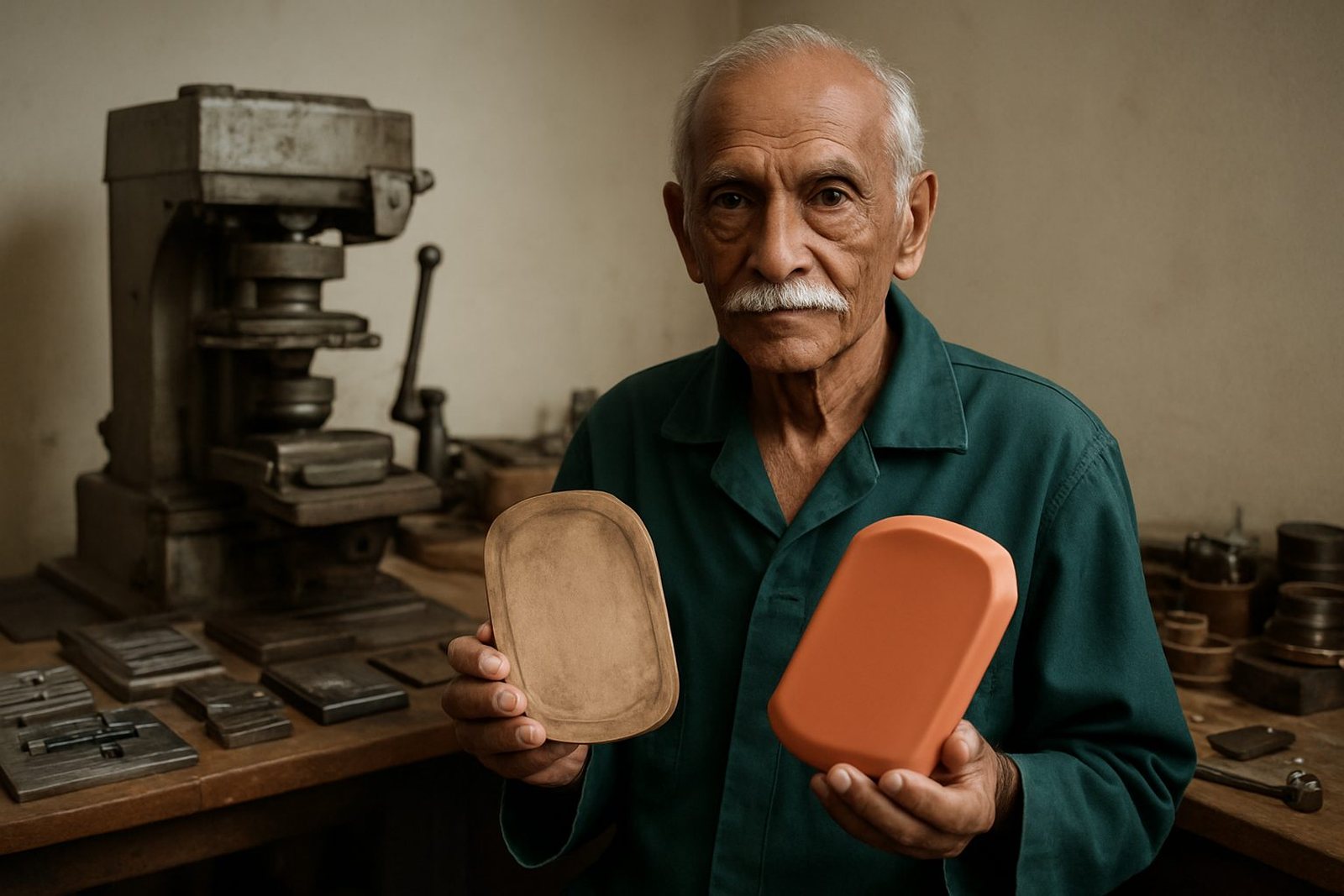
The first silicone pads were bought from overseas and wore out quickly on curved knobs. Testing harder and softer pads for each shape became the start of our pad-selection work, now one of the first things we review on any new part.
The cliché
Early plates were etched elsewhere, with long waits for every correction. Bringing steel and photopolymer plate making in-house cut sample times from weeks to days and gave us control over fine detail.
The ink
A medical device maker in Durban needed markings that survived alcohol wipes and autoclaving. Months of ink and curing trials produced the documented process we still use for medical components.
The workshop today
We print on medical housings, tube clamps, instrument panels, switchgear parts and consumer electronics for manufacturers in KwaZulu-Natal and beyond. Every new job begins with sample parts, a trial print and a rub or solvent test, because the instrument maker who started it all taught us that a mark is only useful if it stays.