
Brief From an Umhlanga Manufacturer
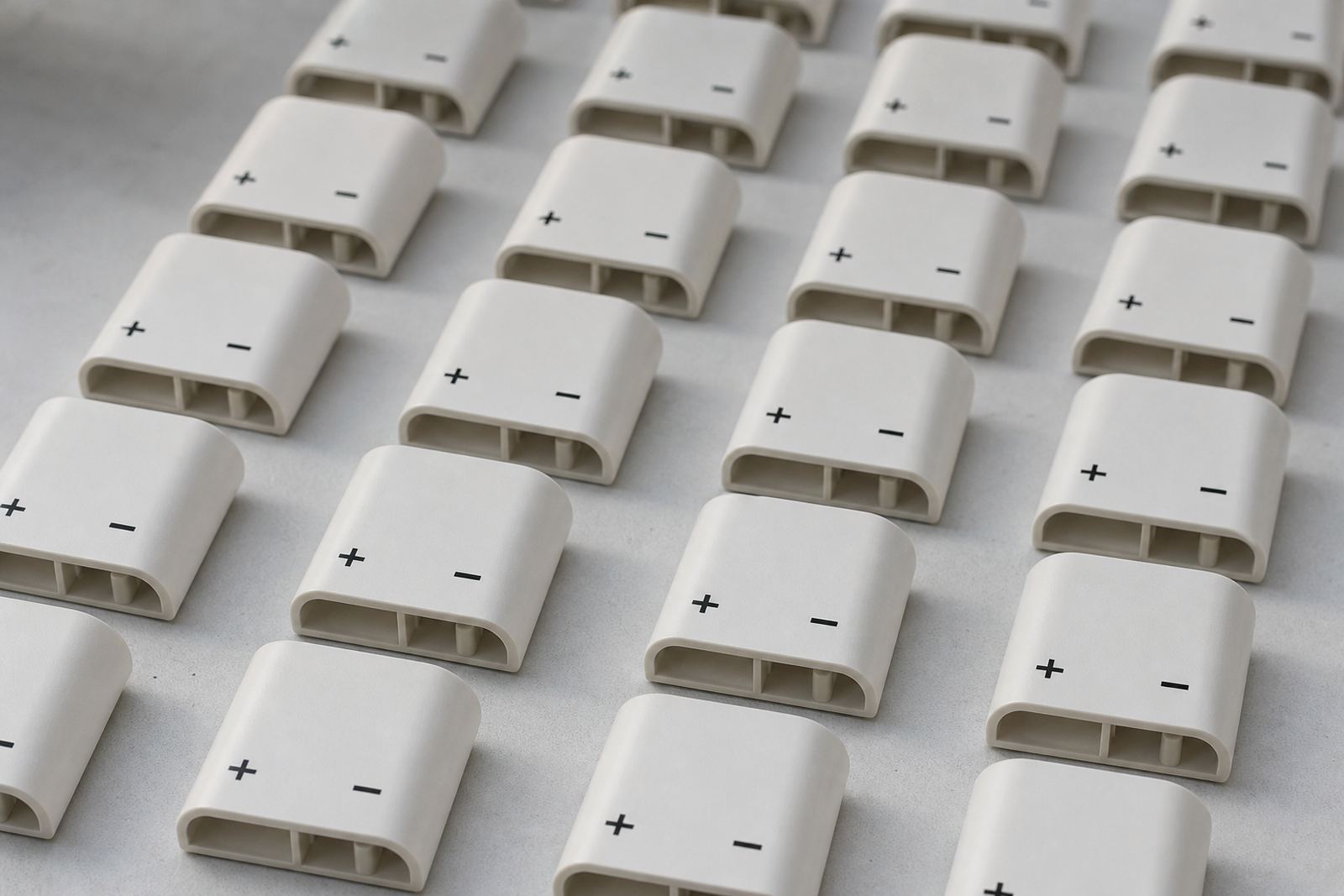
The client was a manufacturer in Umhlanga working on sensor housings for medical and electronic assemblies. The parts had a curved profile, a limited flat area and a need for small identification marks that could still be read after handling, cleaning and assembly. On these Hillcrest wearable cases, the print looked straightforward until the curved face and edge control had to be held together.: place the mark in the right position, keep the characters clear, and make sure the print held up on a mixed material housing with a tight finish requirement.
They needed a repeatable process for compact part marking across a production run, with no smudging on the edges of the curve and no loss of detail on thin line work. Because these housings were going into controlled products, the client remained responsible for their own device compliance and internal acceptance criteria, while we focused on the print process and consistency.
- Part type: curved sensor housing
- Mark type: compact alphanumeric identifier
- Industry use: medical and electronic assemblies
- Town: Umhlanga, with dispatch support into Durban and the wider KZN area
Why Pad Printing Suited the Shape
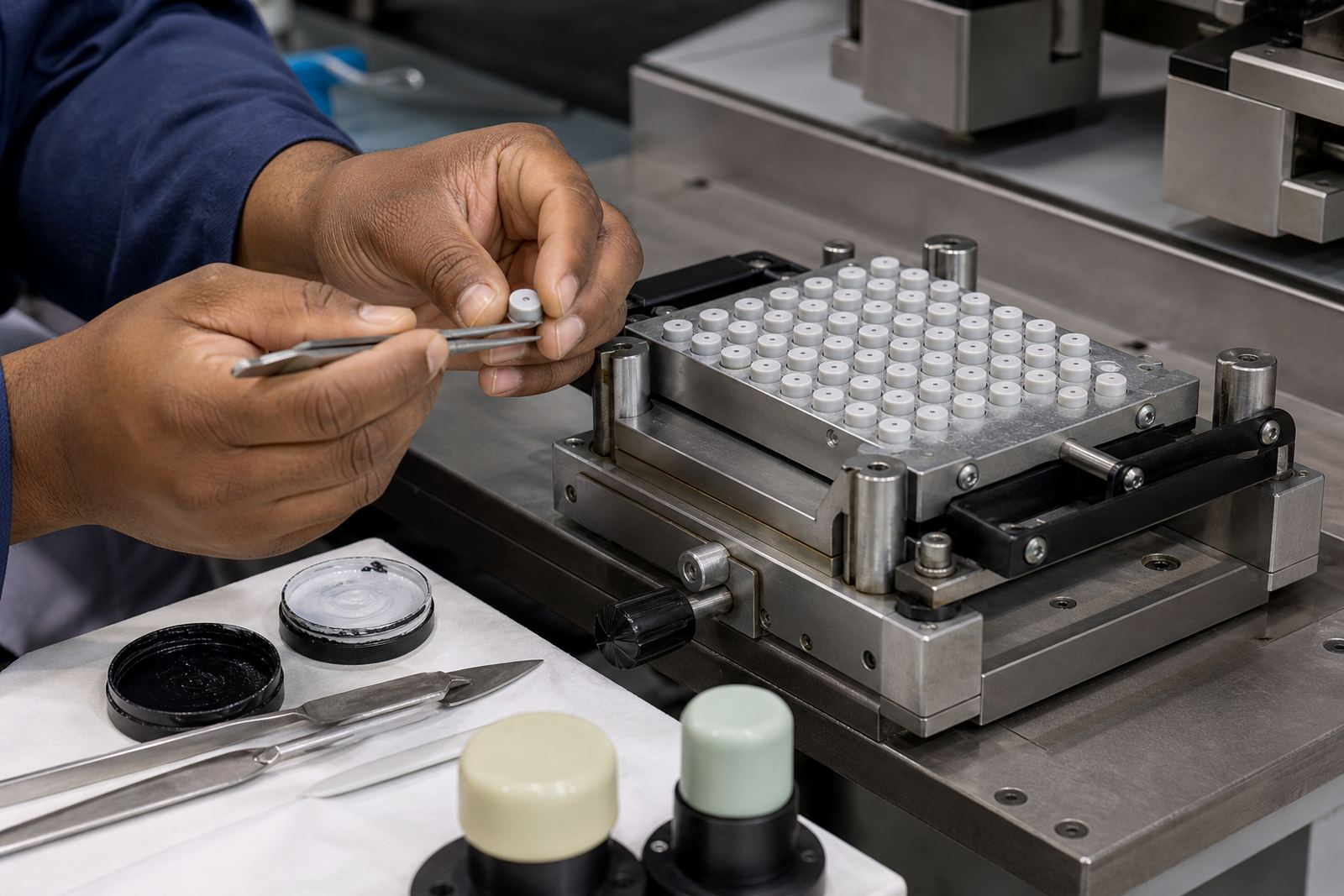
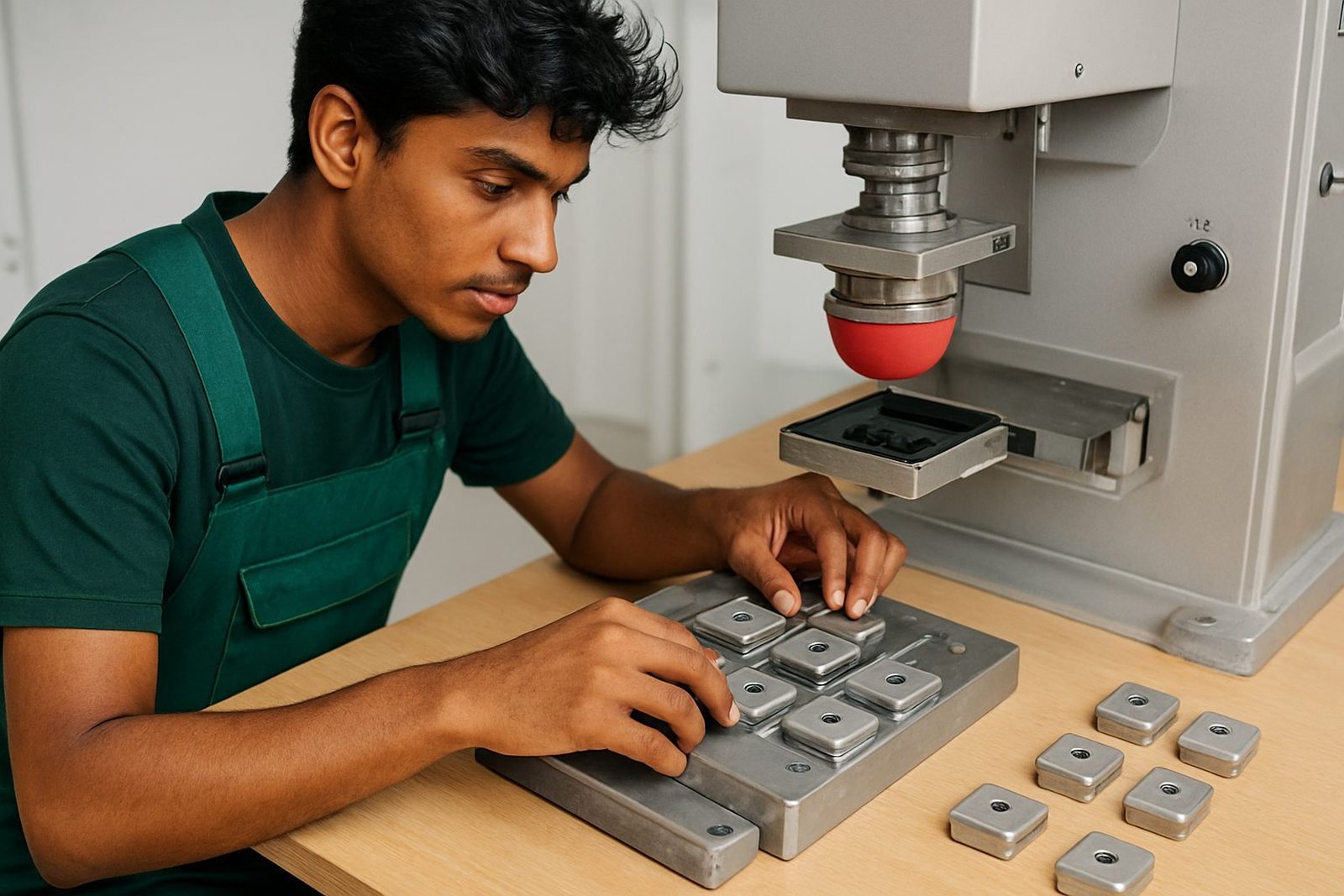
Pad printing is well suited to parts that are not flat. A silicone pad picks up ink from an etched plate and transfers it onto the component, allowing the pad to conform to a curve, a recess or a small boss without flooding the whole surface. For these housings, that method gave us the control needed for the print position and the fine detail requested by the client.
The main challenge was the shape of the housing itself. The curved face meant the pad had to make even contact without rocking, and the ink had to cure properly without affecting the housing finish. We looked at the contact area, the radius of the curve and the available print field before settling on the pad profile and plate layout. The result was a marking method that could be repeated across the batch without constant adjustment.
- Silicone pad selected for a controlled wrap on the curved face
- Etched plate prepared for the identifier layout
- Ink matched to the surface and curing requirement
- Fixture planned to hold the part steady during transfer
Constraints on the Job
The biggest constraint was space. The print area was narrow, so the artwork had to be simplified without losing legibility. We redrew the identifier to suit the part and checked the stroke weight against the available area. There was also the issue of repeatability, since a small shift in position on a curved housing can make the print look off centre even when the machine settings are correct.
Another constraint was production timing. The client needed a sample run first, then a short turnaround on the final batch once the position and cure method were signed off.
- Limited print area on a curved housing
- Tight alignment tolerance for each part
- Need for sample approval before full run
What We Supplied and Set Up for medical parts
We handled the job from artwork preparation through to dispatch packing. The first step was a redraw of the identifier so it would reproduce cleanly at the required size. After that, we completed print area planning and prepared the plate for exposure and etching. A trial sample run was then done on the actual housings, which let us confirm position, ink transfer and finish before moving ahead.
For the production run, we made a simple fixture to locate each housing consistently and selected a curing method that suited the material and the ink. Our team kept a close eye on rerun job control, which matters on small identifiers because even a slight change in setup can affect the result. Final packing was done to protect the printed surfaces in transit.
- Artwork preparation and logo redraws for a compact mark
- Plate exposure and plate etching for sharp detail
- Fixture making for stable repeat positioning
- Trial sample runs before the main batch
- Curing method selection for the housing material
Timeline and Production Outcome
The finished housings carried compact identifiers that stayed clear on the curved surface and sat neatly within the available print field. The final print looked consistent across the batch, with good edge definition and no obvious smearing on the curve. For a component this small, that consistency matters because the mark has to remain readable after handling and assembly.
- Lead time: 3 weeks total
- Sample approval completed before production
- Consistent identifier placement across the batch
- Clean edge definition on a curved surface
What We Would Keep on the Next Pass
On another run of these Umhlanga sensor housings, we would keep the same method: simplify the artwork early, test the position on the actual housing and lock the fixture before the full run starts. That saves time and cuts down on rework. We would also repeat the curing checks at the start of the batch, especially if the material lot changes or the workshop temperature shifts.
For clients in medical and electronic manufacturing, the practical lesson is that the marking process should be planned alongside the part design, not after the housing is already frozen. A small change to the print zone, radius or finish can make a big difference to how the mark transfers. Our job is to make that transfer predictable, from first sample to final pack.
- Keep artwork compact and readable from the start
- Confirm pad shape against the actual curve
- Use the same fixture and setup through the run
- Recheck cure and adhesion when material batches change
Support for KZN and National Production
This Umhlanga job also shows how we support manufacturers beyond one town. Our base in Westmead, Pinetown lets us work with clients in Durban, New Germany and Westville, while also handling supply and dispatch for Johannesburg, Pretoria, Cape Town and Gqeberha. For sensor housings, connectors, small enclosures and related parts, the process stays practical: prepare the artwork, set the plate, test the mark and run the job with control.
Our team on this type of work includes Sibusiso Naicker on management, Naledi Kekana on production, Sanjay Dookhi on artwork and plates, Lerato Mabunda on quality control, Yashika Sewpersad on client support, and Mfundo Xaba on machine setup. Clients can reach us through our contact form when they need support for a new part or a repeat run.
- Pinetown Printing Support
- Durban Manufacturers
- Johannesburg Supply
- Pretoria Supply
- Cape Town Supply
- Gqeberha Supply
Run details
| Project | Umhlanga Sensor Housings |
|---|---|
| Part type | Curved sensor housings |
| Print method | Pad printing with shaped silicone pad |
| Marking | Compact identifiers on a limited print area |
| Timeline | 3 weeks from setup to dispatch |
| Base | Westmead, Pinetown |