
Kempton Park brief: marking carriers that guide the line
The client was a plastics and electronics supplier in Kempton Park, serving assembly and packing operations where small parts move through trays, carriers and fixtures all day. Their carriers needed simple but consistent marks so operators could spot the correct orientation fast and reduce mix ups at bench level.
The brief was practical. Marking needed to be neat, readable and placed on a slightly textured plastic surface without distorting the carrier shape. The parts were handled by different teams across the shift, so the print had to stay legible after repeated contact, cleaning and stacking. The customer also wanted the marks to remain clear under ordinary workshop lighting, including the harsher white light found on many production floors.
We treated the job as a control and process issue rather than a decorative print. That meant looking at the carrier surface, the print area, the handling method and the drying or curing window before setting up the run. The aim was to make the part easier to use on the line, not to add unnecessary complexity.
What the carriers needed to withstand
These carriers were used around electronics assemblies, so the marks had to survive regular hand contact, light abrasion from stacking, and common factory wiping routines. In this type of work, a print that looks fine on day one can fade, smear or chip if the ink choice and curing method are not matched to the substrate.
The main constraints were straightforward:
- Plastic surfaces with a slight moulded texture
- Limited flat space for marking
- Need for fast visual orientation by operators
- Repeated handling during kitting and dispatch
- Consistency across multiple batches
There was also the usual production reality in Gauteng, where jobs must slot into the line without long delays. The customer needed a method that could be repeated week after week with controlled setup, not a one off sample that looks good only in ideal conditions. We kept the process simple and predictable.
Pad printing method used on the job
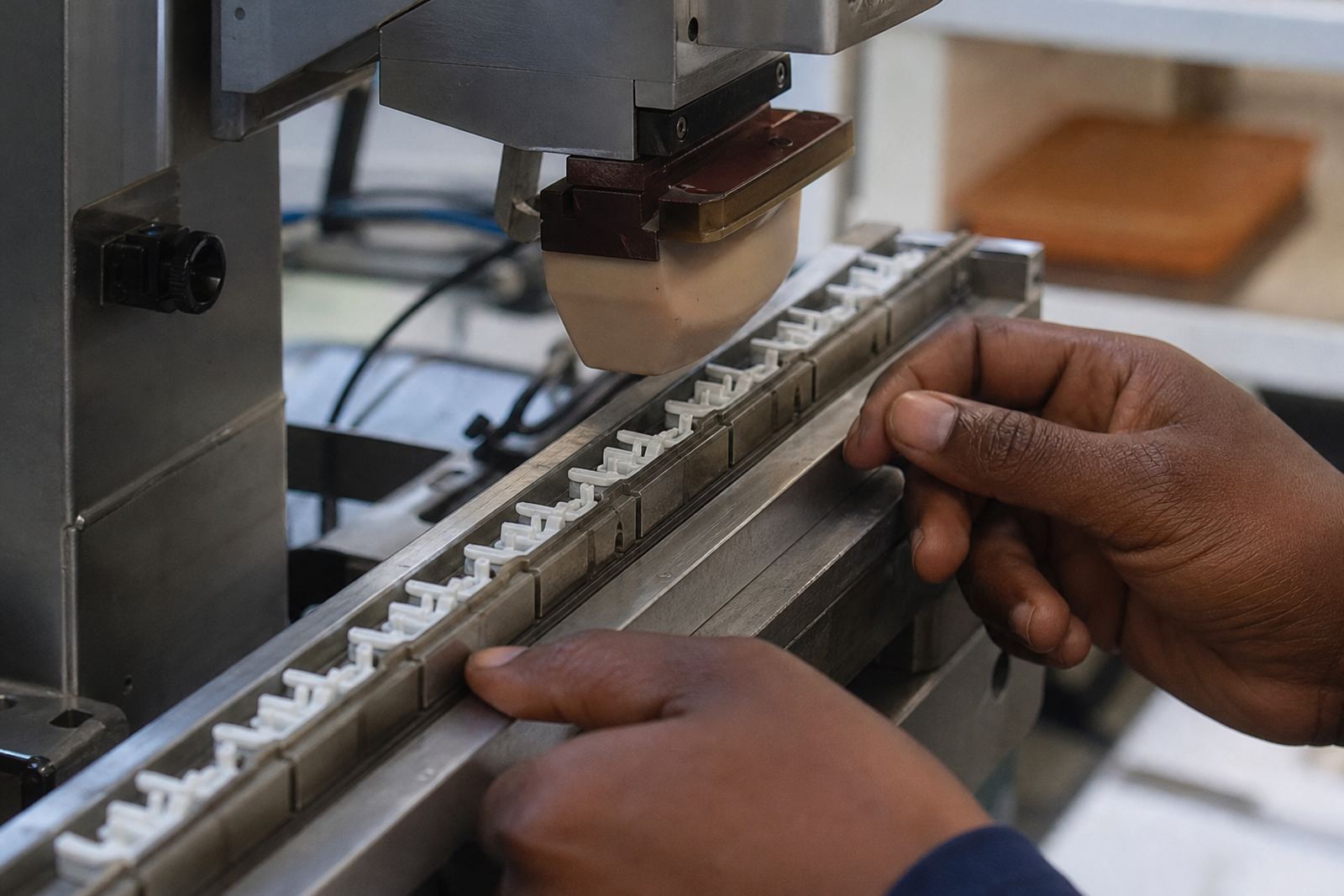
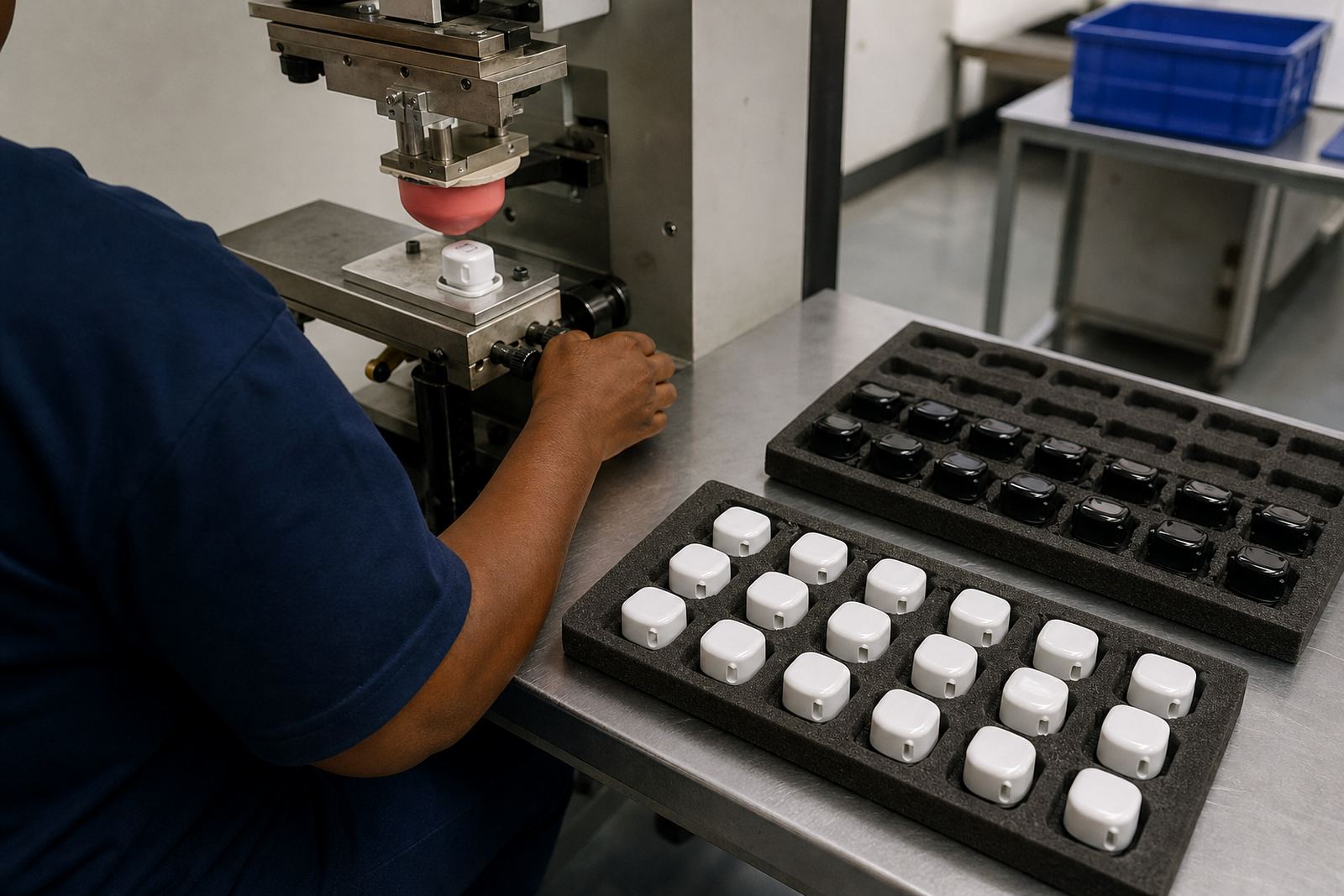
Pad printing suited the carriers because the silicone pad can pick up ink from an etched plate and transfer it onto uneven or recessed areas with good control. That makes it useful where a screen print may struggle and where labels are not practical. For this project we worked with a single-colour mark designed for clear orientation, part code reference and handling guidance.
The process followed the usual stages: artwork preparation, plate exposure, plate etching, test prints, adhesion checks and then production setup. We matched the ink to the plastic after sample testing, then selected a curing method that gave a stable finish without warping or stressing the part. Where needed, we also adjusted the fixture so the carrier sat in the same position for every print pass.
- Artwork redrawn for clean line edges
- Print area planned to suit the moulded shape
- Adhesion test samples run before full production
- Fixture made to hold the carrier repeatably
- Trial sample runs checked for alignment and clarity
That detail matters on smaller parts. Even a few millimetres of shift can make a part code hard to read or place the mark too close to a raised edge. We kept the image position tight and the transfer consistent across the batch.
Our supply scope from artwork to packed dispatch
For this Kempton Park project we handled the full production chain in-house from artwork clean-up through to dispatch packing. The customer supplied the basic marking intent and placement needs. We then prepared the artwork, redrew the logo style to suit pad printing, and set the plate layout to match the carrier dimensions.
We also managed colour matching for the required contrast against the plastic base, though the final print was chosen for function first. Since the parts were destined for manufacturing use, we focused on a finish that could be read quickly rather than one that only looked good in a sample tray. Once the print was approved, we completed the repeat run and packed the carriers to keep the marks protected in transit.
- Artwork Preparation
- Logo Redraws
- Print Area Planning
- Colour Matching
- Adhesion Test Samples
- Plate Exposure
- Plate Etching
- Fixture Making
- Trial Sample Runs
- Curing Method Selection
- Rerun Job Control
- Dispatch Packing
The job was managed from our base in Westmead, Pinetown, with the client receiving the same type of practical support we provide to manufacturers in Durban, Johannesburg, Pretoria, Cape Town and Gqeberha. For this type of marking, communication and sample control are usually the difference between a tidy result and a rework cycle.
Timeline and production control over two weeks
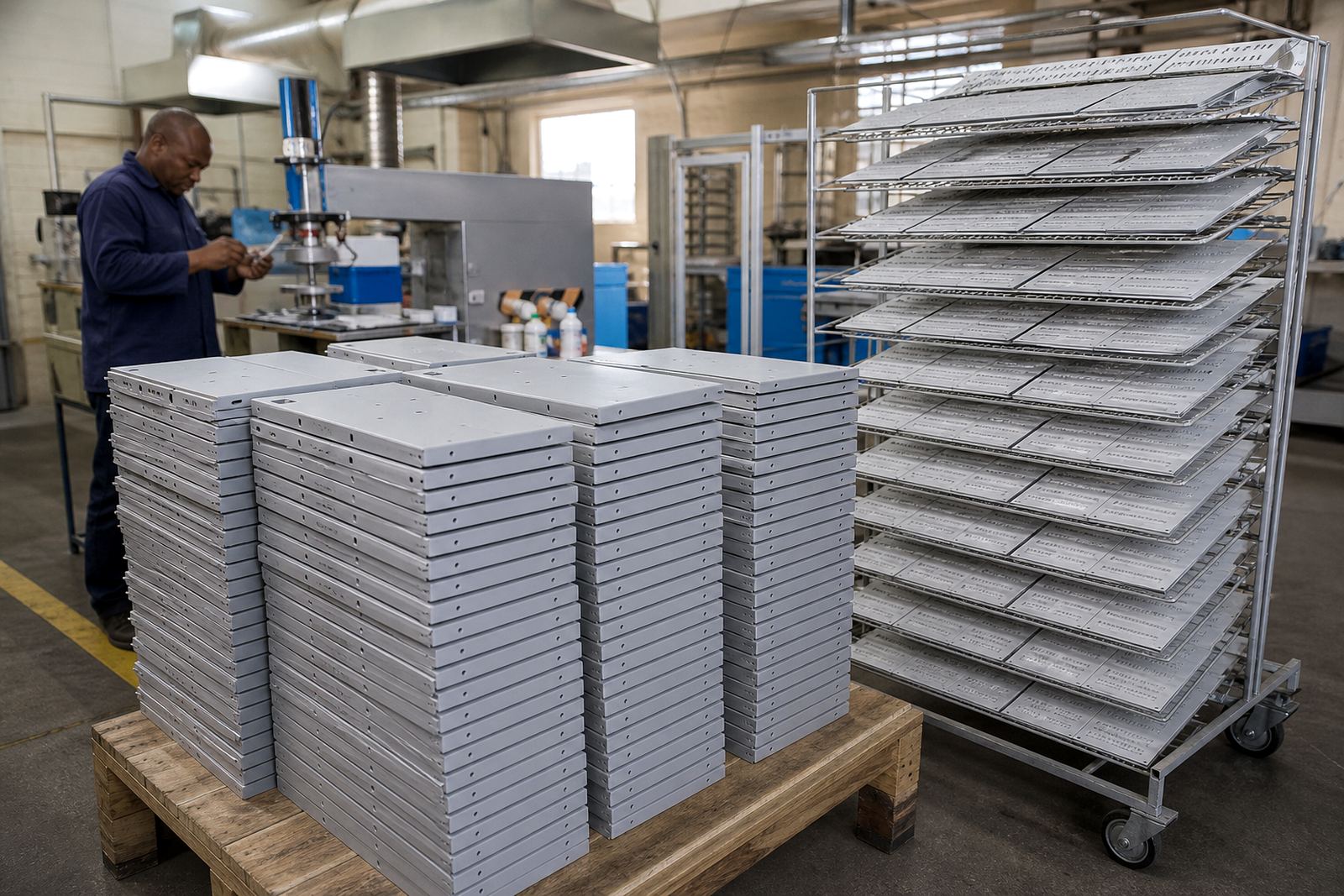
Because the carriers were linked to electronics assembly, we kept close control on batch consistency. That meant checking every setup point before the run began and tracking the same print position through the job. It also meant allowing enough drying time between handling stages so the finish was not marked during packing.
There were no surprises in the process because the job had been planned around the actual use case. That is often the difference with industrial marking. If the carrier is going into a line, the process must fit the line, not the other way round. A small change in pad pressure or dwell time can affect the print edge and the result shows up later in production.
Result on the carriers and what we would keep
The final result gave the customer a clear and repeatable mark on the carrier body, with better visual control for orientation and handling. The print stayed readable on the moulded surface and the pack-out stage was simpler because the carriers could be sorted and identified more quickly by operators.
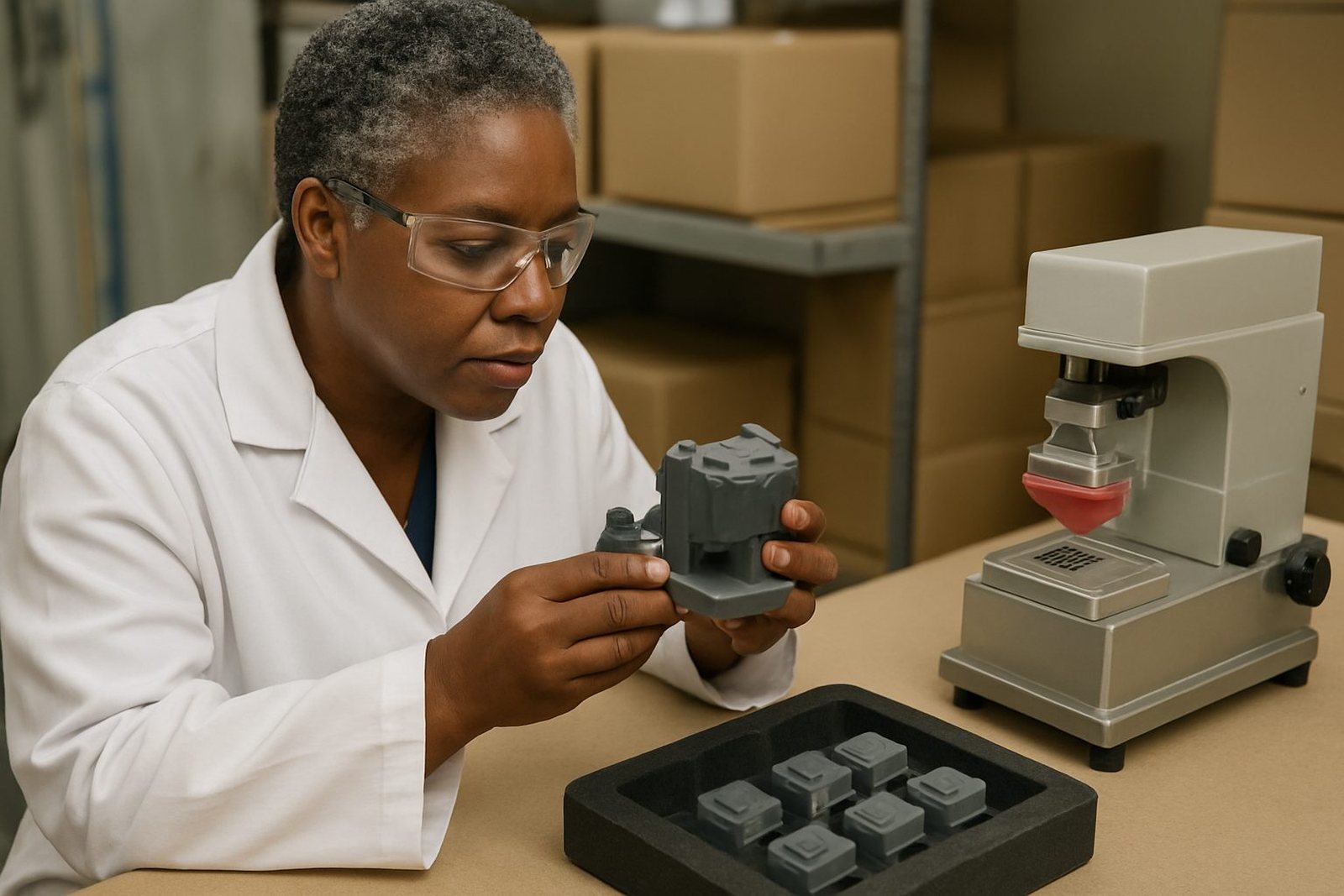
On the next batch we would still start with a sample run on the exact substrate before any large batch work. That gives the best read on adhesion, ink behaviour and curing time. We would also keep the fixture design simple, because for carriers like these a stable hold matters more than complexity. In a busy plant, simple tooling is easier to keep consistent.
- Clearer orientation at line level
- Faster identification during handling
- Better repeatability across batches
- Less risk of mixed carriers during sorting
- Practical finish suited to daily factory use
Our part in the job is accurate, durable marking that supports the customer’s own compliance process. For manufacturers in Kempton Park and across South Africa, that usually means good artwork, the right ink system, careful curing and enough sample control to avoid problems later.
Run details
| Project town | Kempton Park, Gauteng |
|---|---|
| Part type | Plastic carriers used around electronics assemblies |
| Mark type | Orientation and handling identification print |
| Method | Pad printing with silicone pad transfer |
| Timeline | 2 weeks from sample stage to final packed output |
| Base | Westmead, Pinetown |