
Project overview for a Gauteng bezel run
A Johannesburg-based manufacturer brought us moulded bezels that needed recurring pad printing for internal product use. The parts were for medical and electronic assemblies, so the brief was not only about a clean logo or reference mark, but about keeping the same printed position and appearance from one batch to the next.
The work was handled from our base in Westmead, Pinetown, with production support for Gauteng dispatch. The customer needed matched artwork control, print area planning and a repeatable process that could be followed again when the next batch arrived. That meant the same silicone pad behaviour, the same ink response, and the same cure method every time.
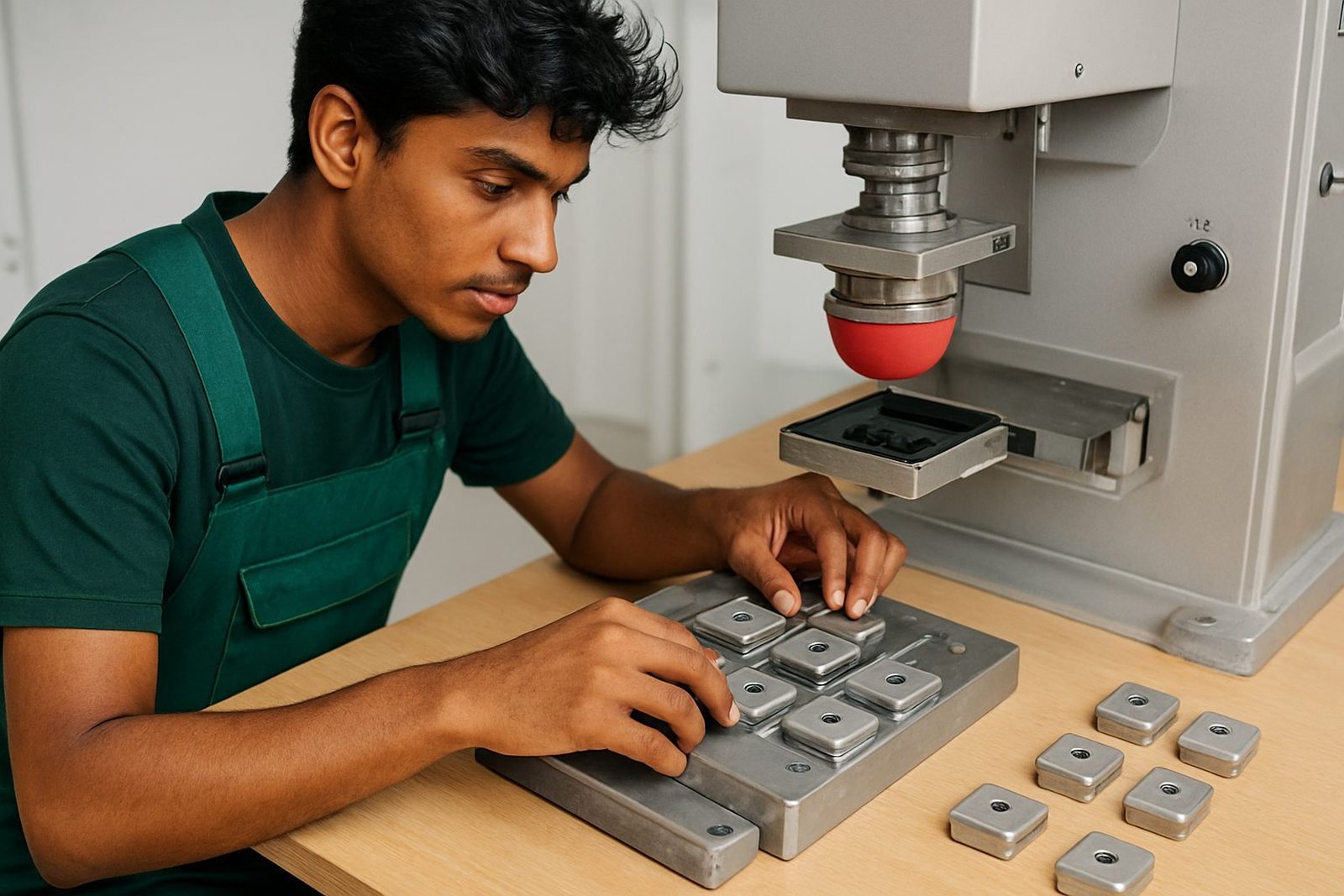
Pad printing suits shaped parts like bezels because the silicone pad can pick up an image from an etched plate and transfer it onto curved or uneven surfaces. For these parts, the important point was not just legibility, but accurate placement on each face and around moulded edges.
What the brief asked us to solve for medical parts
The customer’s team asked for recurring print batches with matched artwork control across multiple reorders. The bezels were moulded, which meant the print area was limited and the shape needed fixture support during setup. They also wanted a process that could be repeated without changing the artwork layout each time a new run came in.
- Part type: moulded bezels for medical and electronic assemblies
- Town: Johannesburg, Gauteng
- Requirement: recurring batches with the same print position
- Constraint: tight print area on a shaped surface
- Priority: clear marking, good adhesion and controlled repeatability
There was also a practical concern around handling. Bezels can shift slightly in the fixture if the support points are not right, and even a small movement changes registration. That is why fixture making and print area planning formed part of the job from the start, instead of being sorted out later after the first samples.
Artwork control, plate work and sample approval
We started with artwork preparation and logo redraws where needed, then adjusted the layout so the mark sat correctly inside the available print zone. A bezel face may look simple from the outside, but the usable print area can be smaller than it first appears once clips, curves and recesses are taken into account.
The plate exposure and plate etching were set up for the agreed artwork size, then trial sample runs were done to check transfer quality and placement. We also supplied adhesion test samples so the customer could assess the ink hold under their own handling process. That step matters because customers remain responsible for device compliance, and the print has to fit their own internal checks and end use requirements.
For this project, colour matching was kept controlled and practical. The aim was not decorative printing, but a stable mark that could be read clearly and repeated without drift. If the artwork changes later, rerun job control keeps the history tidy so the next batch can match the approved version.
- Artwork redraws and layout correction
- Plate exposure for repeat use
- Plate etching for fine detail transfer
- Adhesion test samples before release
- Rerun job control for future batches
How the pad printing process was set up
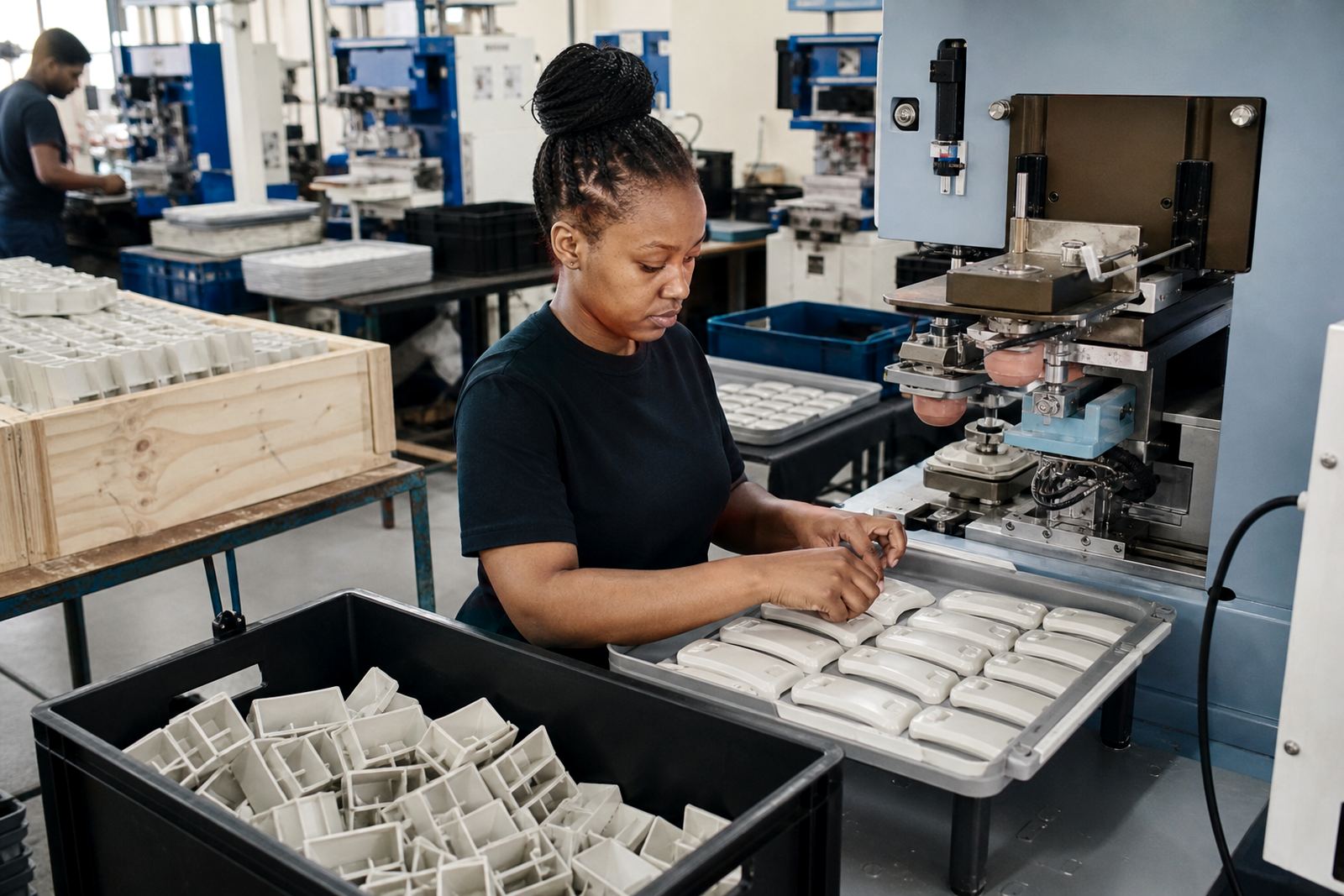
Once the samples were approved, we set the job up around the parts themselves. The bezels needed a fixture that held each piece securely and allowed the pad to land cleanly on the marking face. On this type of part, the fixture is just as important as the ink choice because a stable part gives a stable print.
We selected the curing method to suit the substrate and the production rhythm. Some parts need a quick set before handling, while others need a longer cure to build proper adhesion. The right choice depends on the material, the ink system and how the finished part will be handled after printing. In this case, curing method selection was tied to the customer’s recurring production window, so the run could move on without unnecessary delay.
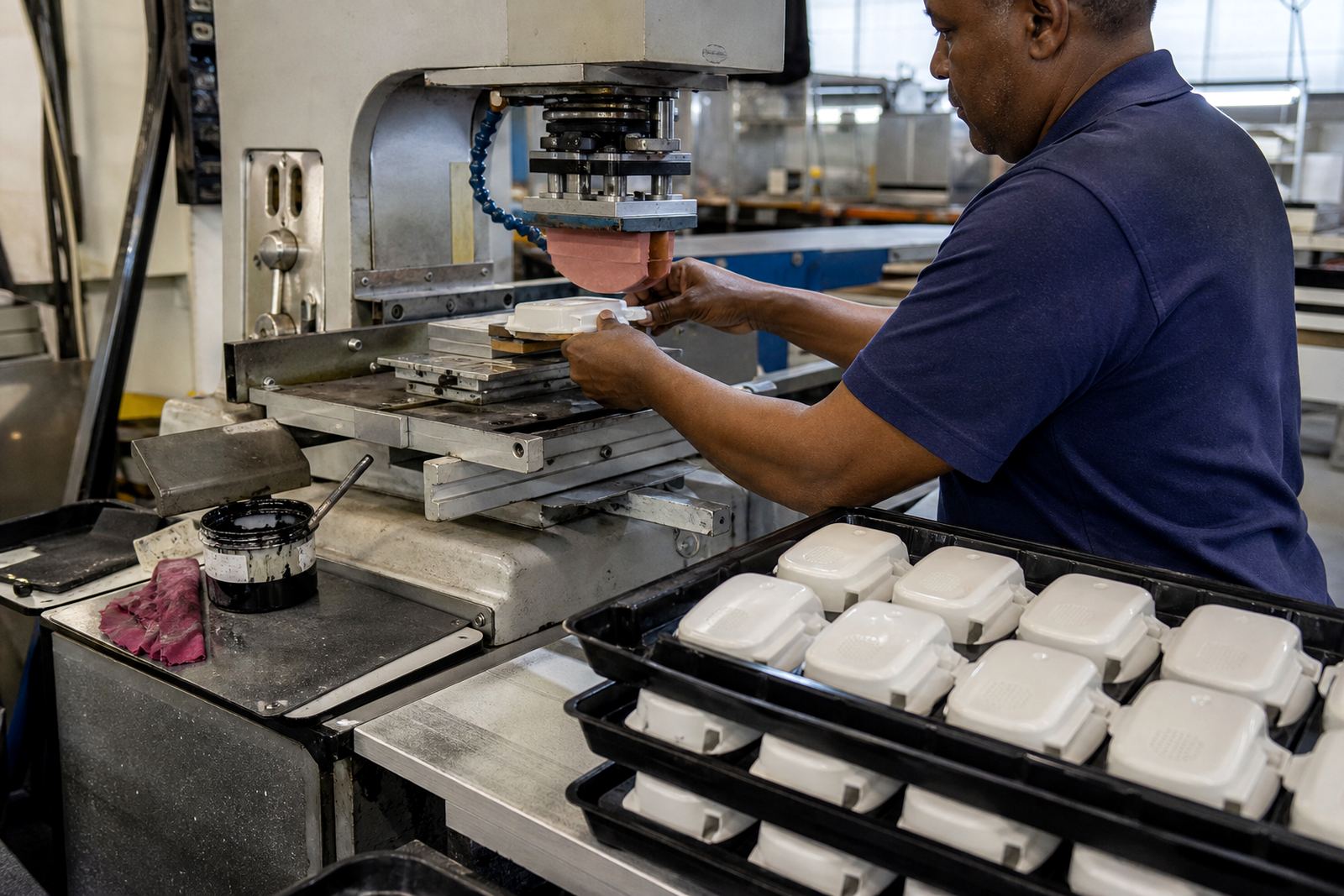
The print itself was checked for crisp edges, even transfer and no smudging on the part contours. Silicone pads were matched to the shape of the bezel, because pad softness and size affect how well the image follows corners and recessed details. A poor pad choice can leave part of the mark thin or distorted, which is not good enough on medical and electronics parts.
Timeline and production flow for medical parts
The work was handled over a short production cycle, with the first stage focused on artwork control and samples, then the second stage on repeat batch planning. From first check to final dispatch packing, the full flow took about two weeks. That included plate work, fixture refinement, trial samples and approved rerun setup.
Because the customer was in Johannesburg and the work was produced in KZN, dispatch packing had to be neat and organised. The parts were packed so they could travel without rubbing against each other, which is especially important with printed bezels where the surface must stay clean before assembly.
- Week 1: artwork control, fixture planning and sample runs
- Week 2: approved batch printing, curing and dispatch packing
- Delivery route: Westmead to Johannesburg customer receiving point
That helps avoid unnecessary hold-ups when a print run must be completed in sequence, not in bits and pieces.
Result on the finished bezels
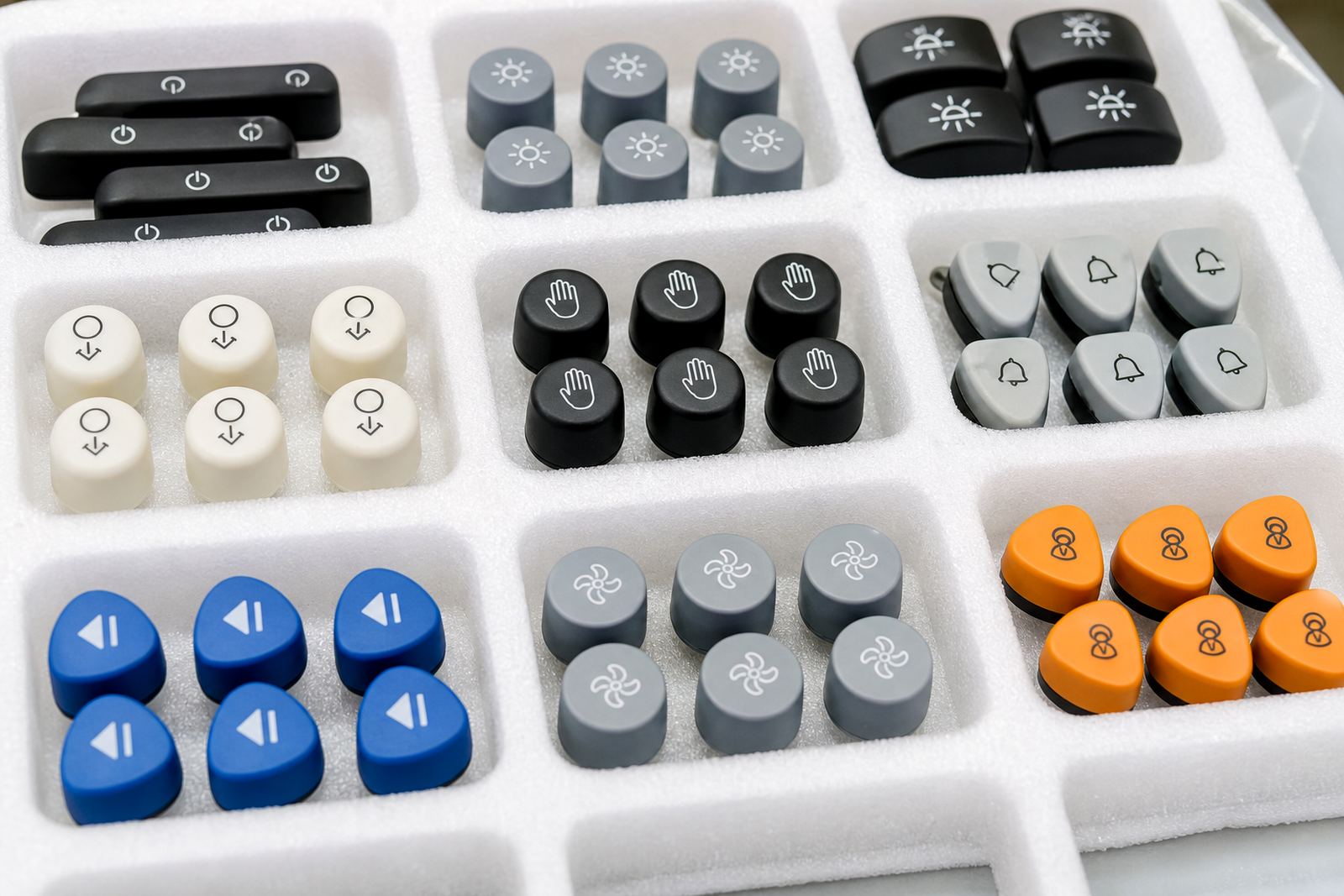
The finished bezels were printed with matched artwork control and a repeatable layout that the customer could use for future batches. The marks sat consistently on the available print area, and the transfer remained clear after curing. The result was practical for production use, with the kind of repeatability that makes reruns less stressful.
What mattered most was consistency from part to part. Once the fixture, plate and curing method were settled, the process became easy to repeat. That is the main advantage of pad printing on moulded components: it gives manufacturers a controlled way to mark small or awkward surfaces without changing the part design.
If we were doing the same job again, we would follow the same approach, starting with artwork control, then sample approval, then a properly checked repeat batch. For this kind of work, that sequence saves time and keeps the print result aligned with the customer’s own production checks. There is no need to improvise when the parts need to come out right every time.
When manufacturers send us bezel work again
We would approach the next run in the same way, with the approved artwork, the same print area planning and a review of the part condition on arrival. If the moulded bezel changes even slightly, the fixture may need a small adjustment. That is normal on recurring work and it is why we keep job control records clean for each run.
PadPrinters Medical works with manufacturers across South Africa, including Durban, Johannesburg, Pretoria, Cape Town and Gqeberha. For repeat bezel marking, the main thing is to keep the process simple and controlled: prepare the artwork, confirm the print zone, test adhesion, then run the batch with proper curing and packing.
That is how we handle recurring marking jobs for medical and electronic parts from our Westmead, Pinetown base. The aim is straightforward: accurate printing, practical handling and a result the production team can use again without extra fuss.
Run details
| Project | Johannesburg Bezel Marking |
|---|---|
| Client type | Gauteng manufacturer of medical and electronic components |
| Parts | Moulded bezels |
| Process | Artwork preparation, plate exposure, pad printing and curing |
| Timeline | About 2 weeks |
| Base | Westmead, Pinetown |