
Project brief for a curved wearable housing
The client was a wearable device manufacturer based in Hillcrest, serving a production line that needed neat marking on small plastic cases. On these Hillcrest wearable cases, the print looked straightforward until the curved face and edge control had to be held together.: a logo and product identifier had to sit cleanly on a gently curved face, with no bleed into the edges and no heavy look that would distract from the unit itself.
The case material had a smooth moulded finish, so the print area needed careful prep before any ink touched the part. We also had to work around the shape of the housing, the location of the clip and seam lines, and the fact that the case would be handled often during assembly. For a wearable product, any marking has to stay readable and stay put, even after repeated handling and cleaning.
The client needed a local South African supplier who could handle trials, artwork checks and production follow through without dragging the process out. We kept the work practical: confirm the print face, sort the artwork, test the ink, then move into controlled production once the sample held up. That approach kept the job tight and avoided the usual delays that come when a curved surface is treated like a flat panel.
What made the job tricky
Wearable cases are small, light and often unforgiving when it comes to branding. On this job, the main constraints were the curve on the face, the need for a subtle result, and the fact that the parts had to look consistent in a batch rather than one good piece and a few weak ones. The print also had to leave enough open area for the product to look clean, because the client did not want a strong promotional look.
There was also the question of ink behaviour on the selected plastic. Some surfaces take print well after a light surface treatment or a well controlled adhesion test, while others need tighter ink selection and curing to hold up. Since these cases were going into regular use, we treated adhesion as a working requirement, not a nice extra. We ran sample parts, checked the print against handling, and adjusted the process before full run.
- Gentle curved face with limited flat contact area
- Subtle branding required, not full coverage
- Small part size needing accurate registration
- Consistent finish needed across the batch
- Handling and cleaning resistance important
How we set up the pad printing run
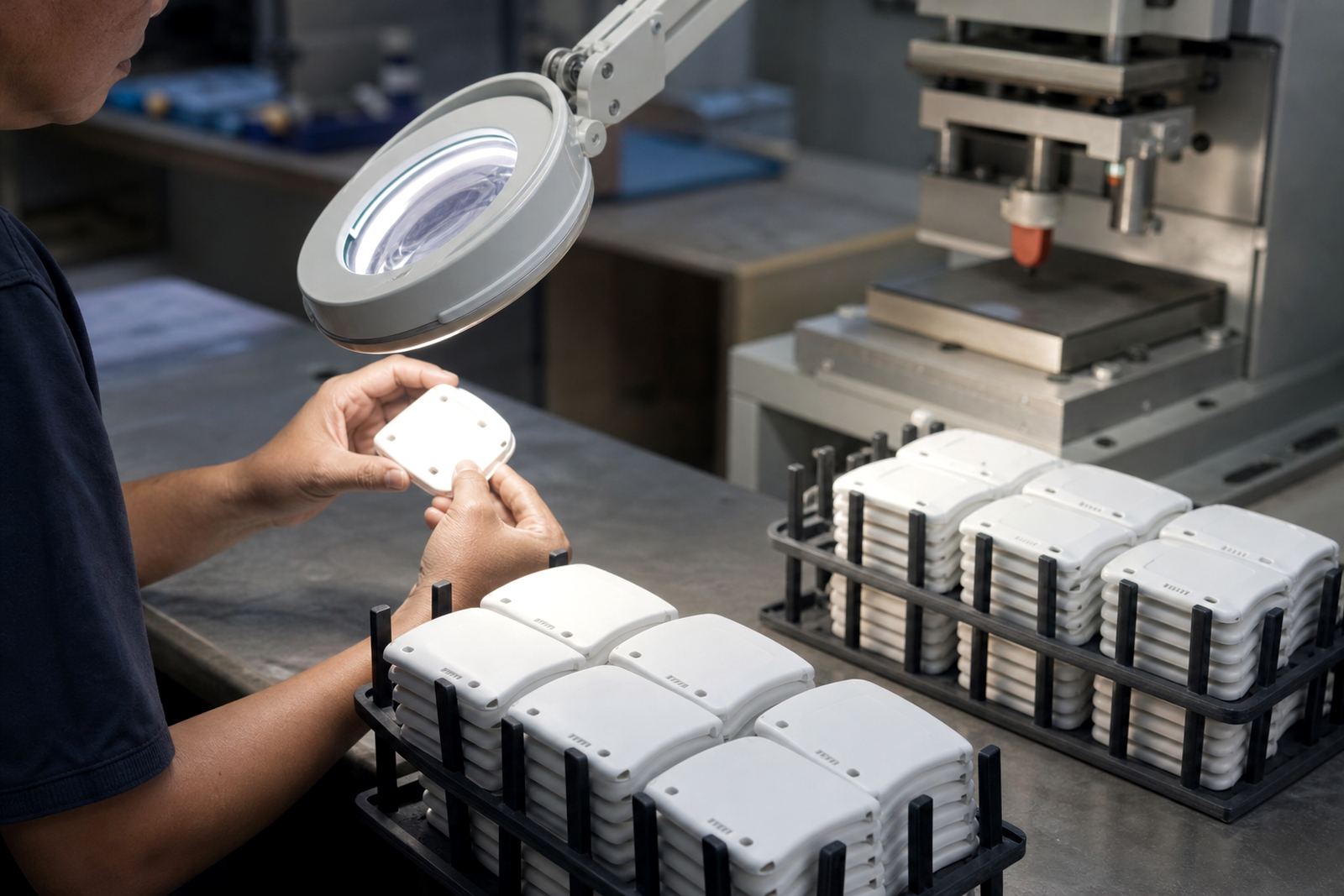
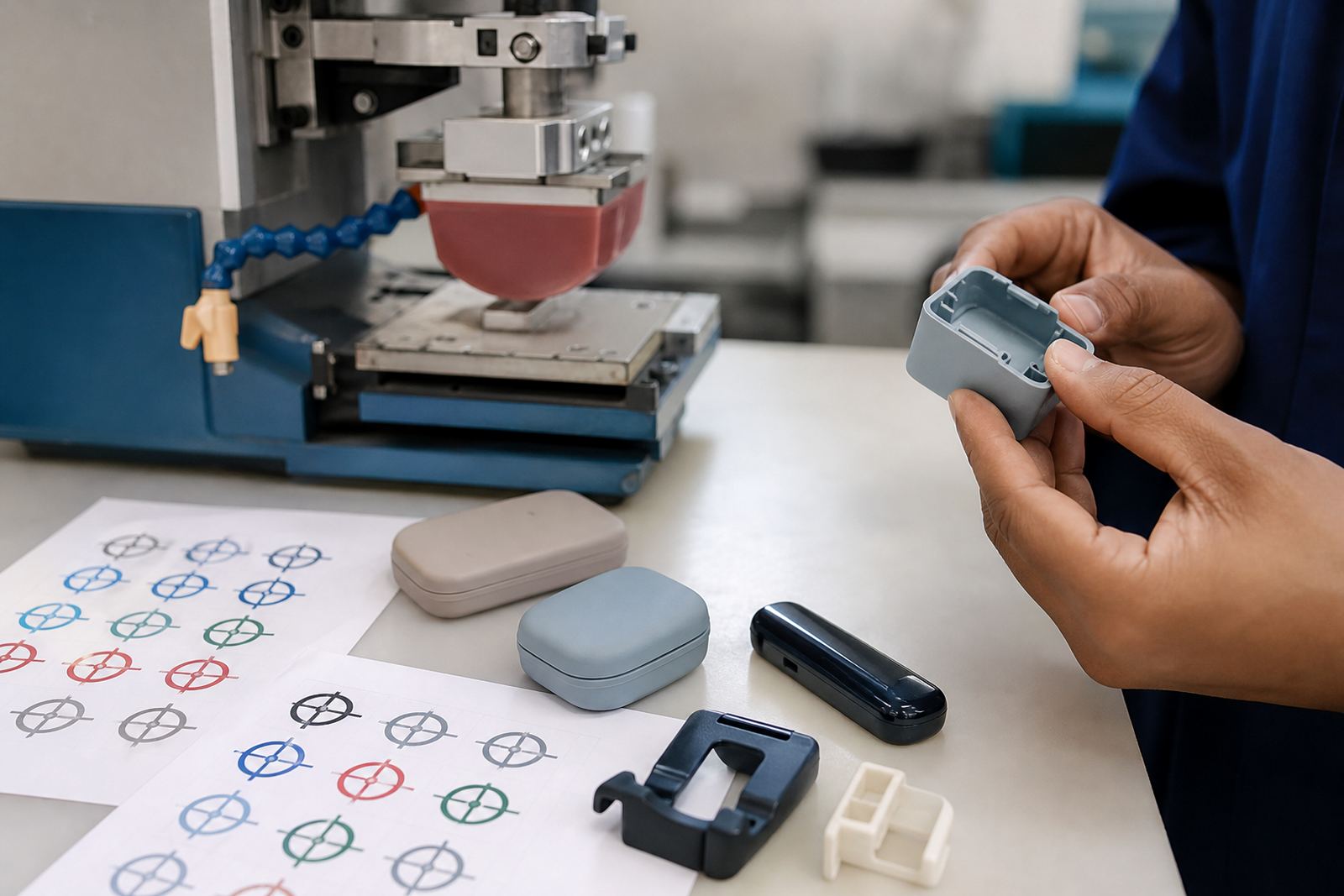
Pad printing suited this job because the silicone pad can pick up ink from the etched plate and transfer it onto a curved or uneven face with far more control than a direct flat method. We prepared the artwork, checked the line weight and spacing, then set the plate so the image would land in the correct spot on each case. The print had to be subtle, so the ink deposit was kept even and not too heavy.
We also reviewed curing method selection early. Depending on the part material and the desired finish, curing needs to be matched to the ink and production pace. In this case, the objective was to get a durable print that would stand up to normal use without slowing the line more than necessary. The trial samples let us confirm the best balance before production started.
Our team handled artwork preparation, logo redraws where needed, plate exposure and plate etching, then made the fixture to hold the case steady during printing. That fixture work matters more than most people think. If the part moves even slightly, the print can look off centre or uneven. Once the setup was locked in, the machine could repeat the mark properly from part to part.
- Artwork cleaned up for small format printing
- Plate exposed and etched to match the approved image
- Fixture made to stabilise the curved case
- Trial sample runs completed before release
- Final print run followed by controlled dispatch packing
Timeline from sample to dispatch
That timing worked well because the client did not want a drawn-out back and forth. With small wearable housings, delays often come from repeated sample changes, so we kept decisions clear and practical. Where a redraw was needed, it was done quickly. Where the print needed a shift in position, we moved it on the plate rather than forcing the part to carry a poor layout. A simple process saves a lot of rework.
For a manufacturer in Hillcrest, the benefit was having one local contact point in Westmead, Pinetown, with the job managed from setup through to final packing. That reduced transport back and forth and kept the approval cycle tight.
What the finished parts achieved
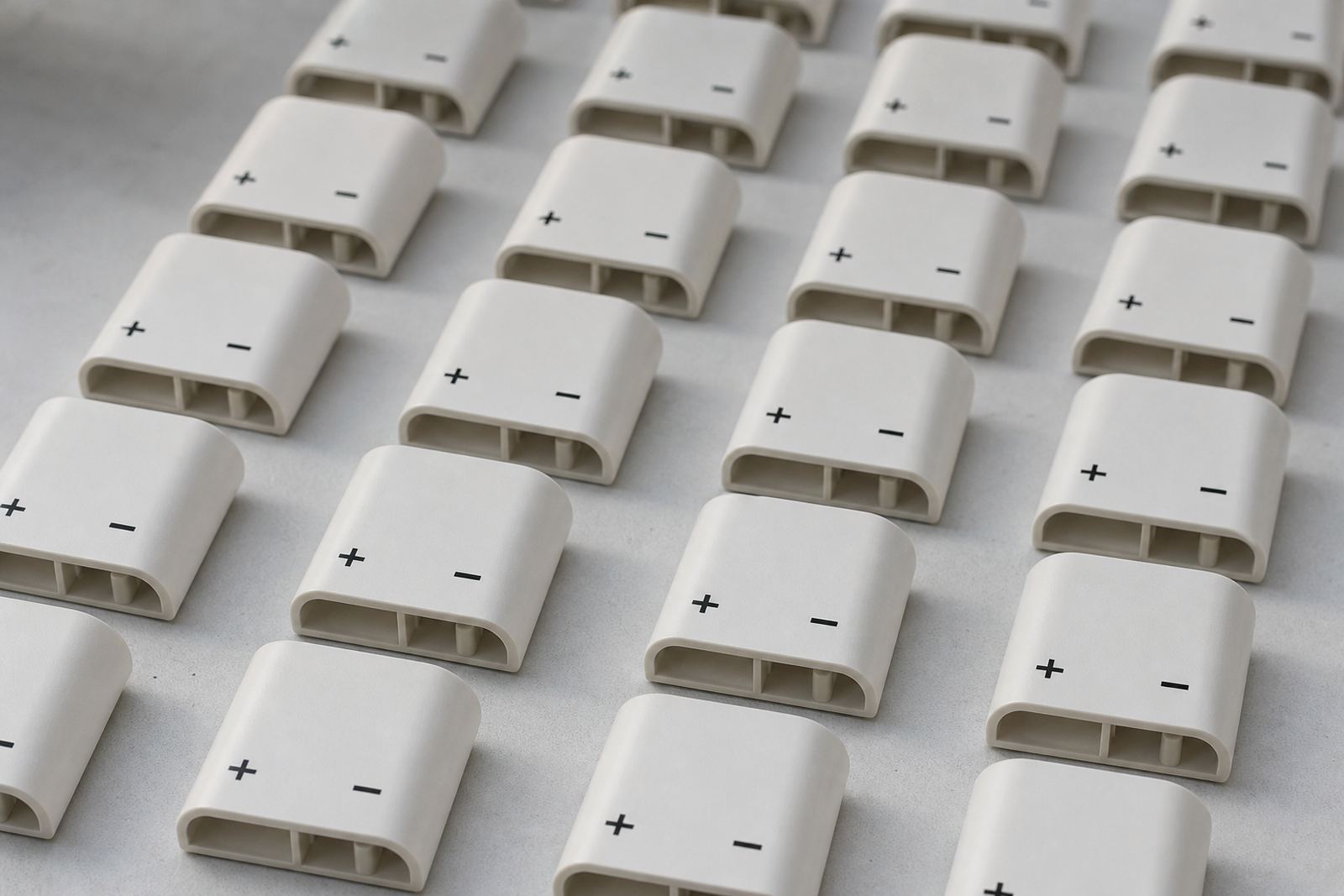
The final wearable cases carried a clean, subtle brand mark on the curved face, with the print sitting neatly in the space allowed by the housing design. The result looked intentional rather than stamped on at the last minute, which was important for a product that would be seen by end users and handled by assembly staff. The print stayed readable without dominating the case.
From a process point of view, the main win was consistency. The parts matched across the batch and the print position remained steady, so the client could continue with assembly without sorting out visual rejects. The ink selection and curing choice supported the handling expected in normal production. No drama, just a proper finished part.
We also kept the job practical for the client’s own compliance work. As with any medical or electronic component, the customer remains responsible for device compliance and final product validation. Our role is to provide a dependable marking process and samples that support their internal checks.
- Neat subtle branding on a curved face
- Consistent registration across the batch
- Suitable for handling during assembly
- Simple integration into the client’s production flow
Kept for the next batch
If we were taking on a similar wearable case job again, we would follow the same sequence: confirm the print area early, test the ink on the actual part, and build the fixture before committing to the full run. That order matters when the surface is curved and the visual standard is high. It keeps the process controlled and avoids chasing problems later.
We would also keep the branding restrained unless the product calls for stronger artwork. On small electronics and wearable housings, less is often better. A well placed logo on the right face gives the product a proper finish without making the part look overworked. In this case, the understated approach matched the product and the client’s market very well.
For manufacturers across Durban, Johannesburg, Cape Town, Pretoria and Gqeberha, we handle this sort of work from our base in Westmead, Pinetown, with support for nearby areas such as New Germany and Westville. For a pad printing run, write to PadPrinters through the contact page form with your part, artwork and run size when they need artwork preparation, adhesion test samples, rerun job control or dispatch packing handled properly.
Run details
| Project | Hillcrest Wearable Cases |
|---|---|
| Location | Hillcrest, KwaZulu-Natal |
| Work Type | Pad printed branding on wearable device cases |
| Print Surface | Gently curved face on small moulded housings |
| Timeline | 3 weeks from sample to dispatch |
| Services Used | Artwork Preparation, Logo Redraws, Adhesion Test Samples, Plate Exposure, Plate Etching, Fixture Making, Trial Sample Runs, Curing Method Selection, Rerun Job Control, Dispatch Packing |