
Cape Town brief for round dial components
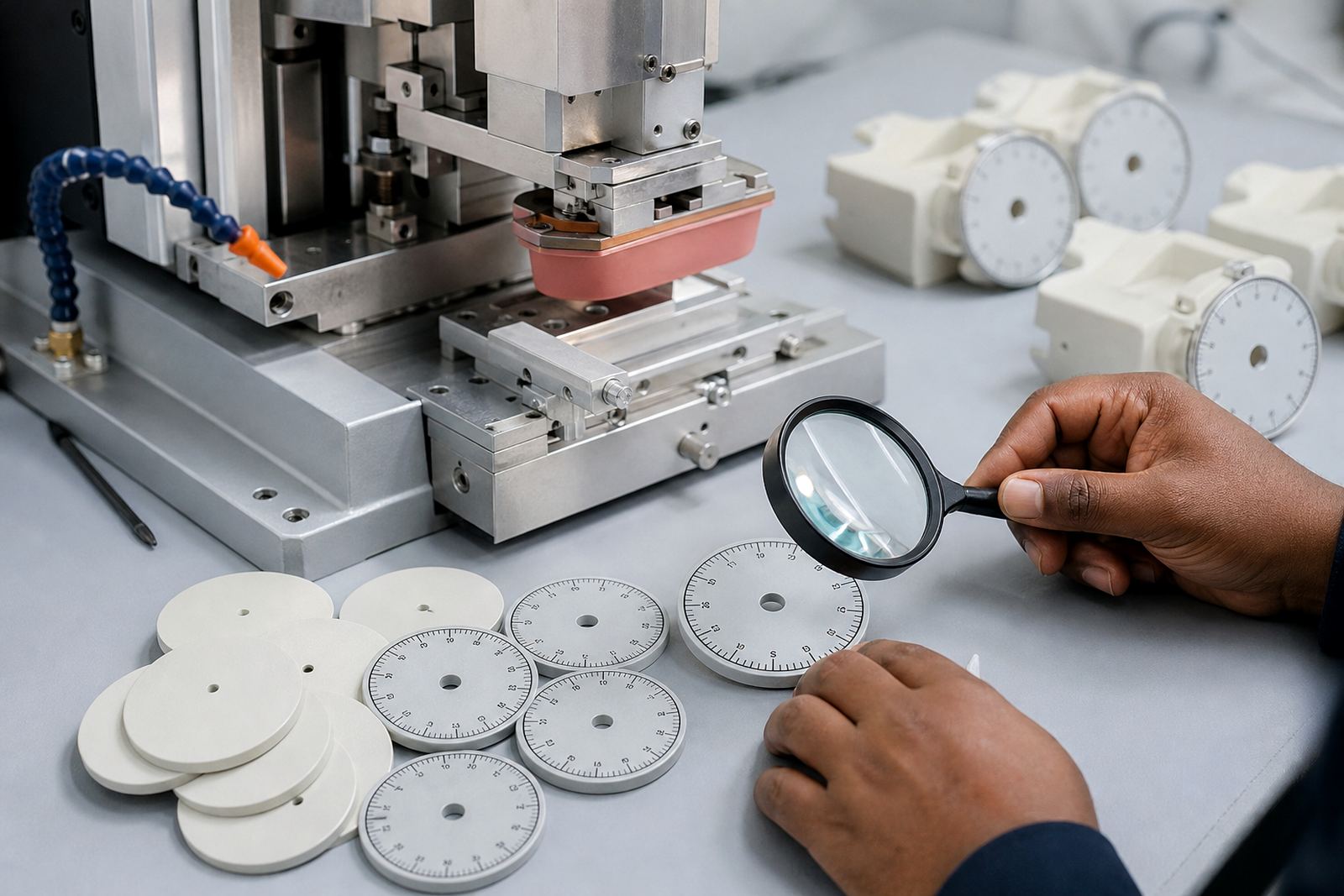
The client was a manufacturer in Cape Town working with round dial faces that needed clear markings, fine graduation lines and repeatable positioning on small circular parts. The parts were going into an assembly where the printed detail had to stay legible after handling, fitting and routine cleaning, so the marking process had to suit both appearance and use.
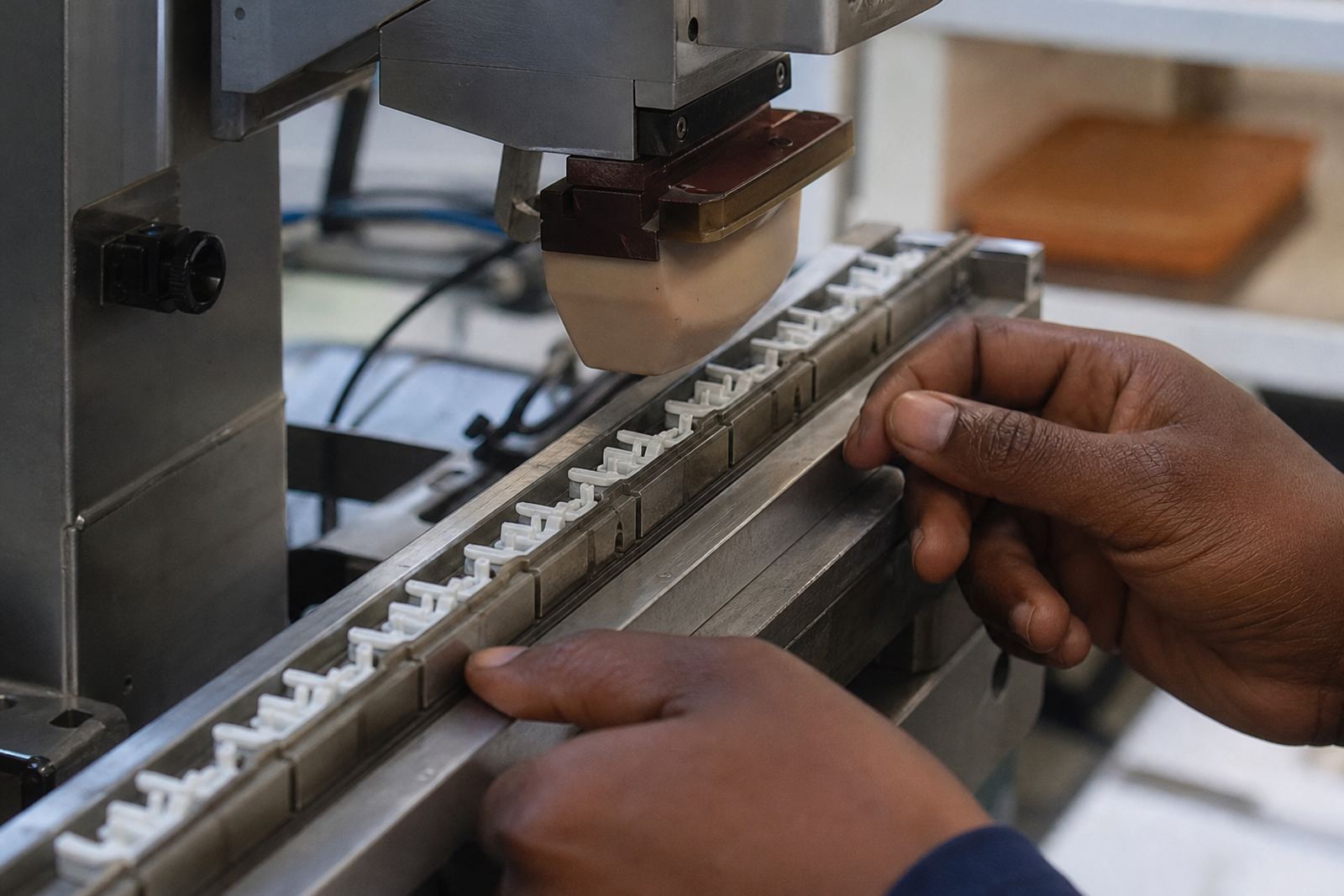
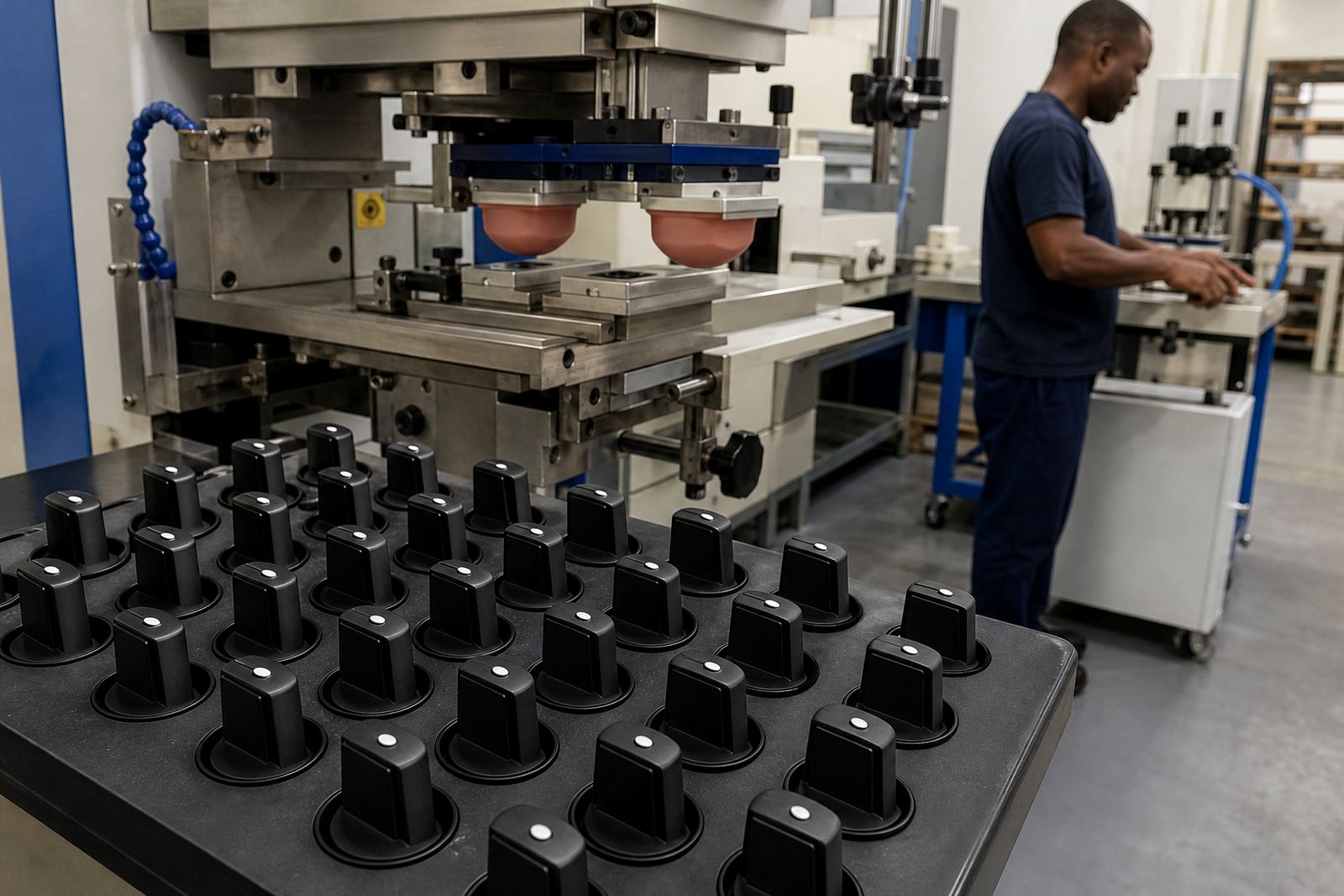
Pad printing was a good fit because the artwork could be transferred from an etched plate by a silicone pad onto a curved or slightly uneven surface. That matters on dial faces, where a flat screen process would not always keep the print sharp at the edges. The brief also called for a practical finish that could be checked early in the job, not after a full batch had already been run.
- Component type: round dial faces
- Marking type: fine graduations and reference marks
- Location: Cape Town
- Production method: pad printing with trial alignment samples
Constraints that shaped the print setup
The main challenge was keeping the markings centred and consistent on a small circular face. Even a slight shift in the fixture would show up on the graduations and make the scale look off. We also had to work with the ink system so the print would sit cleanly on the substrate and cure well for handling after packing.
Another constraint was the need to control the job in stages. Rather than pushing straight into a full run, we used trial samples to confirm position, ink density and line clarity. That saved time later and gave the client a clear signoff point before the main quantity went through. In this kind of work, a missed alignment on the first sample can cost a full batch, so we take the setup slow at the start.
- Alignment had to stay tight across all faces
- Linework needed to stay fine and readable
- Ink curing had to suit handling and packing
- Samples were required before production
What we supplied and how we handled the job
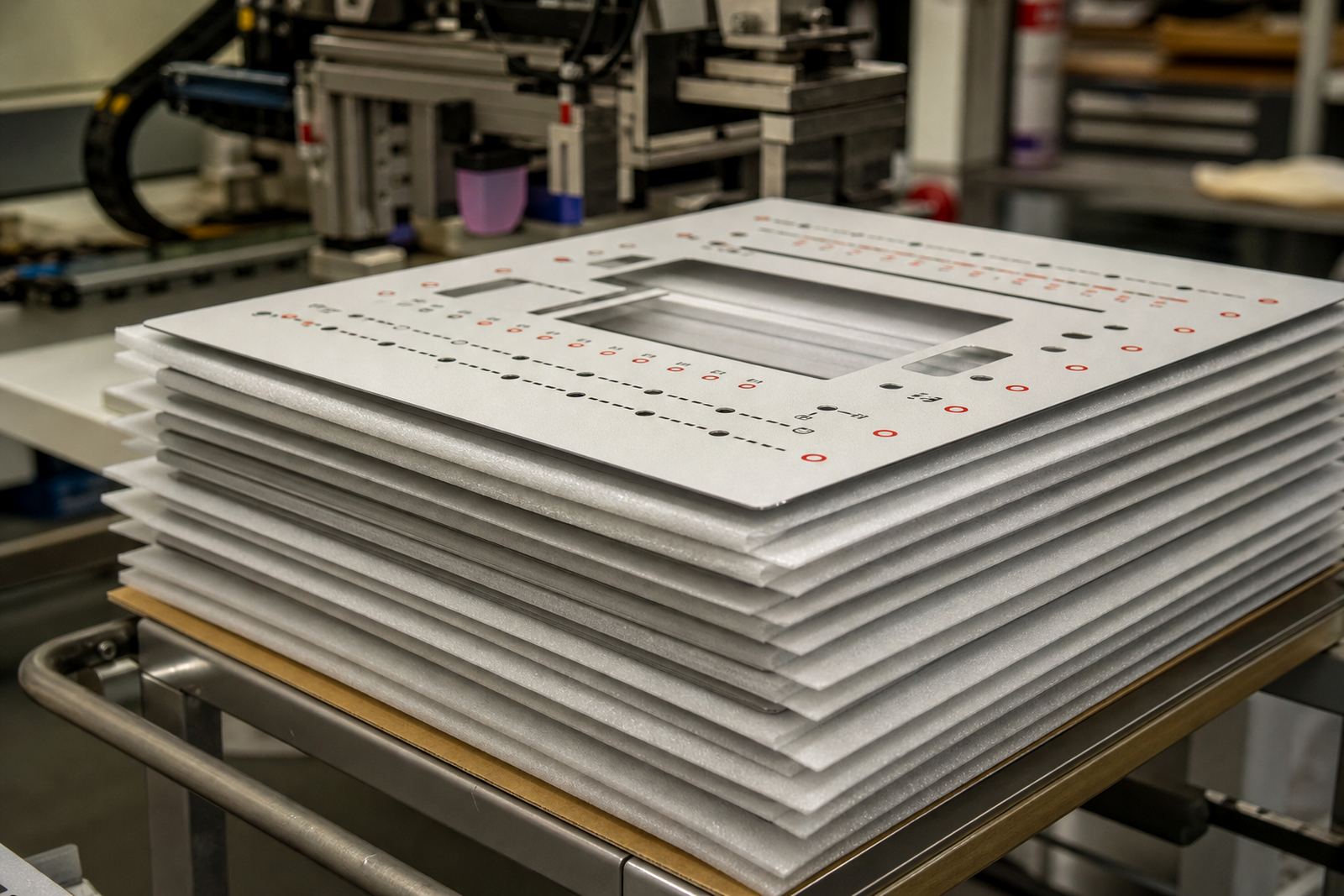
We prepared the artwork for the dial markings, checked the print area and arranged the plate work so the graduations and reference points would land in the right place. Where needed, we adjusted the artwork for print gain and the actual pad transfer, since a line that looks fine on screen can behave differently once it is moved through the plate, pad and substrate.
Our team then set up the fixture, ran adhesion test samples and used trial alignment samples to lock in the position. After that we moved into the production run, with controls in place for rerun job control so the finished parts stayed consistent if the client needed more units later. The printed parts were then packed for dispatch with the handling needs of delicate components in mind, no shortcuts.
- Artwork preparation and logo or scale redraws where needed
- Print area planning for round faces
- Plate exposure and plate etching
- Fixture making for repeatable positioning
- Trial sample runs before full production
Timeline from first samples to finished print run
This job moved through setup and approval in a short but careful window of about two weeks. The first stage covered artwork checks, plate preparation and fixture setting. The second stage was sample testing, where we checked the graduations under working light and confirmed that the ink coverage and edge definition were acceptable. Only after that did we move into the final print run.
Because the parts were for a manufacturer with its own assembly sequence, timing mattered. We kept the process moving without rushing the cure stage, since printed markings that are handled too early can mark or smear. A clean job is better than a fast one, and in this case the extra time at setup paid off later. The client received parts ready for their own compliance checks and assembly process.
- Week 1: artwork, plate work and fixture preparation
- Week 2: trial samples, approval and production
- Final stage: curing, inspection and dispatch packing
Results on the dial faces
The finished dial faces showed clean graduations, consistent registration and a neat appearance across the run. The trial samples helped confirm the print position before volume production, which reduced the risk of rework and kept the job steady from start to finish. For small round parts like these, that early sample check makes a real difference.
From a production point of view, the job also showed how pad printing works well on components that need precise markings without heavy ink build. The prints were durable enough for routine handling and assembly, while still staying fine enough for a technical face. There was less chance of visual drift between parts, which is what the client needed for a repeatable result.
- Fine graduations stayed clear and readable
- Registration remained consistent across the batch
- Trial samples reduced setup risk
- Parts were packed for safe dispatch
What we would carry forward on the next Cape Town run
If we were repeating this type of Cape Town dial face job, we would use the same sample first approach and the same fixture discipline. For round components, that is still the safest way to keep the centre point true and the graduations aligned. We would also keep close control on curing method selection, because the right cure depends on the substrate, the ink and how the part will be handled after printing.
Proper planning matters most here: set the print area correctly, test adhesion early, and keep the artwork true to the actual part size. Customers remain responsible for their own device compliance, but we can help by producing clear, consistent markings that support the rest of the process. That is what this job needed and it is what we aim to repeat on similar work across South Africa.
- Keep the trial sample stage in place
- Confirm fixture alignment before volume printing
- Match curing to the substrate and handling needs
- Use rerun control for future batches
Run details
| Project | Cape Town dial faces |
|---|---|
| Client type | Manufacturer |
| Location | Cape Town |
| Part type | Round dial components |
| Marking detail | Fine graduations and reference marks |
| Timeline | About 2 weeks |