
How UV Curable Inks Work on Fine Component Marking
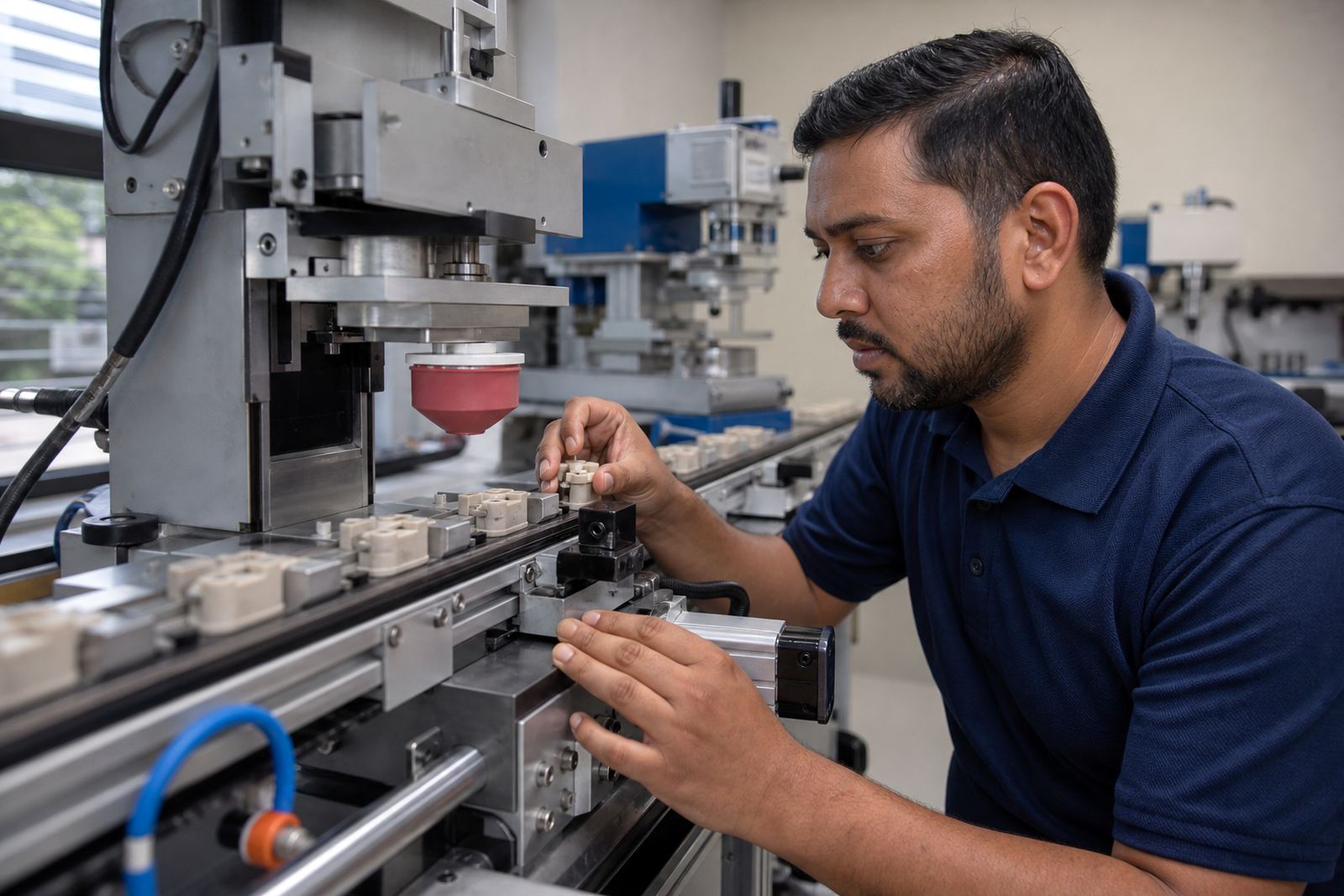
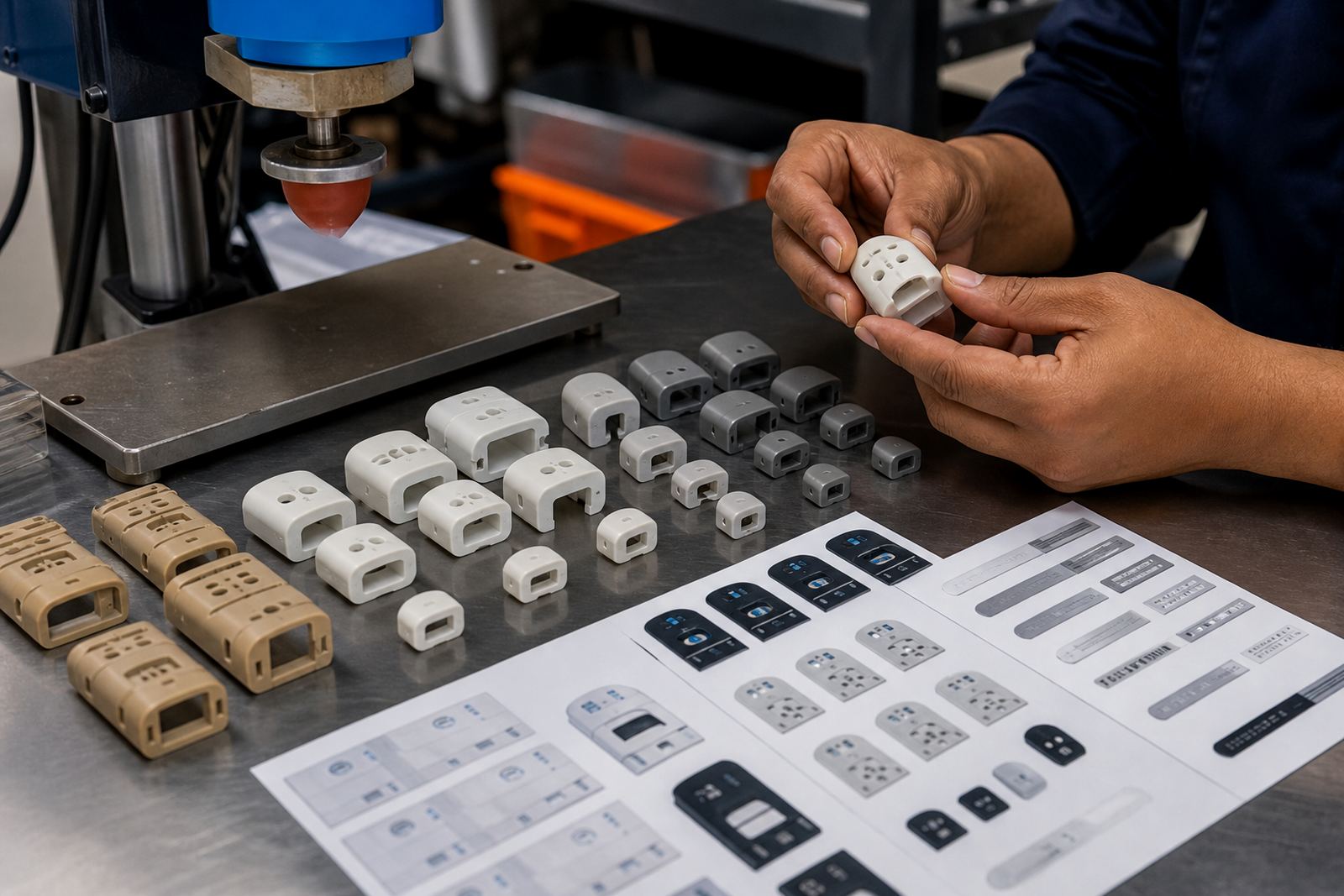
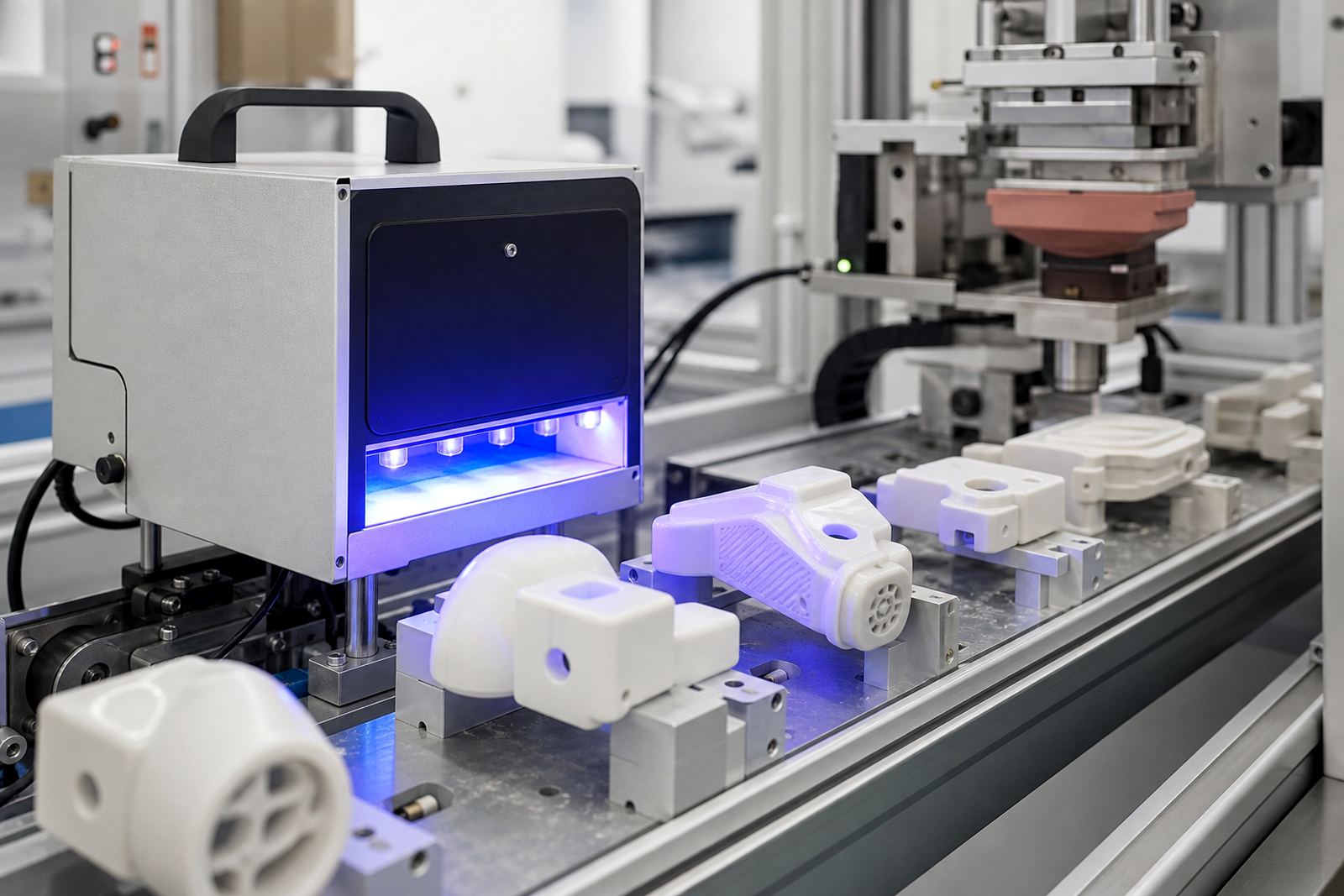
UV curable inks are formulated to stay workable during printing, then harden when exposed to the correct UV light source. In pad printing, that means the ink is transferred from the etched plate to a silicone pad, then onto the part, and cured soon after on the line or in a controlled station. The result is a crisp mark with good edge definition for small text, symbols, serials and simple logos on suitable substrates.
Speed is often the main advantage on medical and electronic parts. Once the print is transferred and exposed correctly, the surface can be handled sooner than with many solvent based systems. That helps where parts must move through assembly, inspection, or packing without long drying racks taking up space. It also reduces the chance of dust settling into a wet print, which matters on clean-looking component finishes.
UV curable inks are not a fit for every material or every product shape. Surface energy, mould release residue, texture, and the final cleaning process all affect adhesion. We normally assess the part first and run trial sample prints before approving a method for repeat work.
Typical Sizes, Colours and Application Formats
UV curable ink systems are usually supplied in working packs sized to suit batch printing rather than large-volume general painting. On pad printing lines, the ink is mixed and adjusted for the plate, the part, and the expected production pace. Colour options are matched to the job where possible, including opaque, standard process tones, and special mixed colours for labels or branding marks.
- Small batch packs for trial runs and limited production
- Production packs for repeat jobs with consistent ink drawdown
- Colour-matched options for logos, legends and identification marks
- Adjustable viscosity for finer detail or broader coverage
- Single pass or multi pass print setups depending on image size
The right pack size should match the weekly or monthly run rate for medical and electronic components. A small recurring order may suit compact packs and controlled mixing, while higher throughput work needs a supply plan that reduces changeovers. We also check whether the print is one colour or if the part needs a second hit for coverage on dark plastics or textured surfaces.
Where UV Curable Inks Suit Best
These inks are commonly used where the printed item moves quickly to the next stage and the surface must stay clean and precise. They can suit plastic housings, moulded control parts, instrument panels, medical device shells, button caps, tags, and certain electronic enclosures. They are often chosen where the mark needs to stand up to normal handling, light cleaning, and repeated assembly contact.
They are especially useful on parts that benefit from short cure times and limited waiting. In a production environment that runs between Durban, Johannesburg, Cape Town, Pretoria and Gqeberha, that can help keep dispatch moving and reduce bottlenecks caused by drying racks. Coastal humidity in places like Durban may also make cure control more important, so the room conditions and cure method should be considered together.
- Best for repeat production on compatible plastics and coated surfaces
- Useful where fast handling after print is needed
- Suitable for compact markings, warning legends and part identification
- Can support multi-step assembly lines with less waiting time
Trial runs and approval
UV curable ink work depends on the correct curing setup. That usually means a UV lamp or curing station matched to the ink chemistry and line speed, together with safe shielding and clear operator access. The system must deliver enough energy for full cure, not just a surface dry. Under-curing can leave the print soft, reduce adhesion, and cause wear during handling.
Good airflow, clean benches and stable temperature help with repeat results. If the parts are delicate or very small, the fixture must hold them in the same position every time so the print lands correctly and the cure is even.
Care, Storage and Routine Servicing
UV curable inks should be handled carefully because premature exposure to light can affect working life in the cup or reservoir. Keep containers closed when not in use, store them away from direct sunlight, and follow the mixing and pot life guidance set for the job. If the ink starts to thicken or skin over, it can affect transfer and produce print defects.
Routine servicing of the printing setup matters just as much as the ink. Plates should be cleaned properly, silicone pads inspected for wear, and curing equipment checked for output consistency. A worn pad can blur the image, while poor plate cleaning can leave residue that changes the print quality from one run to the next. We also recommend keeping a record of trial settings, because a small change in part finish or mould batch can shift the result.
- Keep ink containers sealed between runs
- Avoid stray light exposure at the workstation
- Clean plates, cups and tooling after each job
- Replace worn pads before detail starts to soften
Before you approve a run
Before ordering UV curable inks for a pad printing job, it helps to confirm the substrate, the print area, the required colour, and the number of parts in each run. You should also know whether the mark must survive wiping, alcohol based cleaning, heat, or repeated handling. For medical and electronic products, the customer remains responsible for final device compliance, so the print method should be checked against the product's own requirements and validation process.
Bring the part sample, artwork, and any existing print reference if available. We can assist with artwork preparation, logo redraws, print area planning, colour matching, adhesion test samples, plate exposure, plate etching, fixture making, trial sample runs, curing method selection, rerun job control and dispatch packing. For teams in Westmead, Pinetown, New Germany, Westville, Durban, Johannesburg, Pretoria, Cape Town and Gqeberha, that support helps narrow down the right ink option before production starts. It saves time when the same part has to be printed again later and the result must stay consistent.
If the component has a curved face, a recessed area, or a very small target zone, tell us that upfront. Those details affect the pad shape, the plate layout and the curing approach.
Run details
| Ink type | UV responsive pad printing ink for selected medical and electronic component markings |
|---|---|
| Cure method | UV light exposure matched to ink system and production speed |
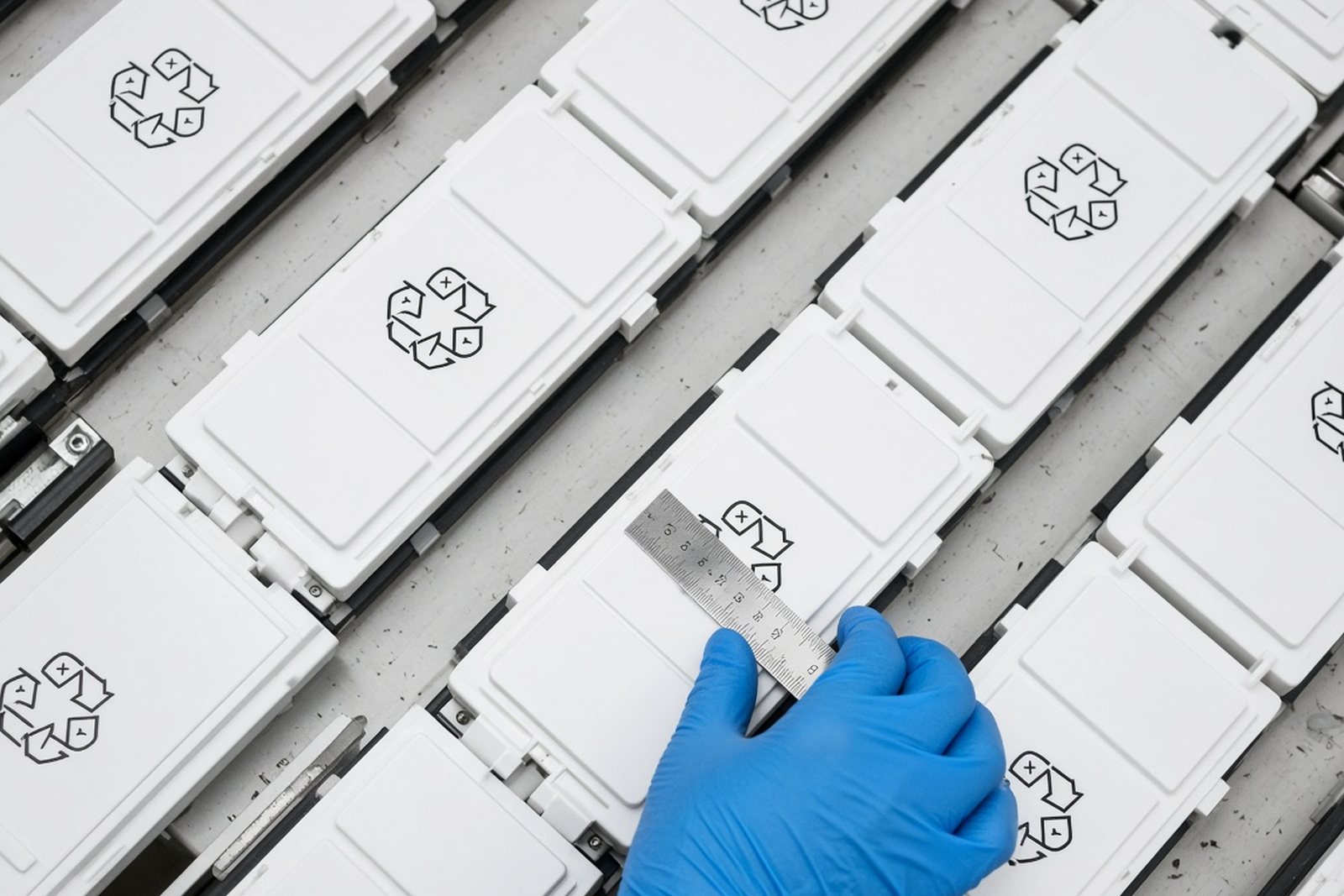
| Typical mark types | Serials, icons, legends, small logos and identification marks |
| Suitable surfaces | Compatible plastics, coated parts and selected moulded components |
| Setup needs | Pad printer, etched plate, silicone pad, fixtures and UV curing station |