
What Tube Clamp Printing Is Used For
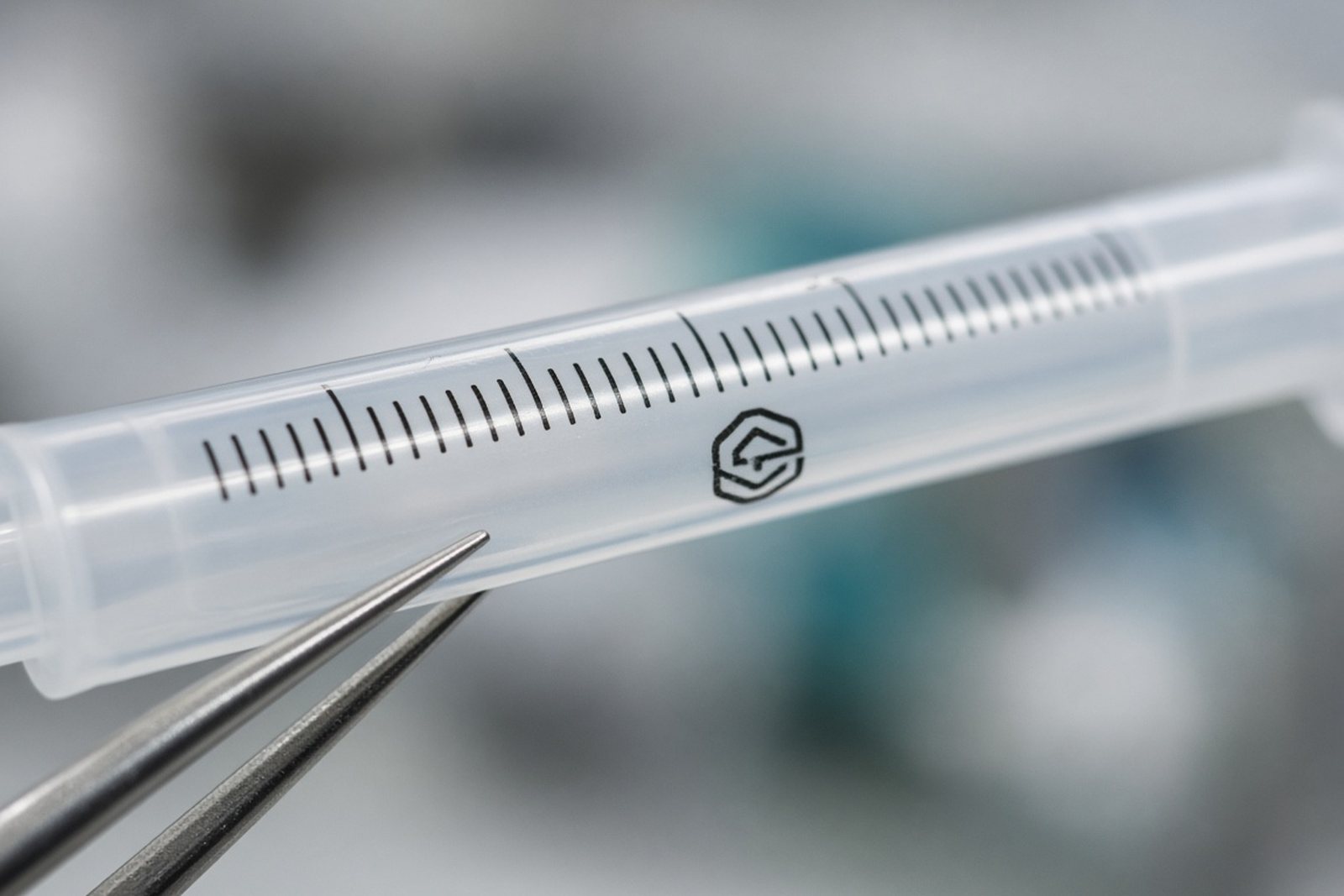
Tube clamp printing adds functional marks to medical style clamps and clips used on tubing, cable bundles and small assemblies. The aim is practical identification, not decoration. Common marks include open and close symbols, flow direction, size codes, brand identifiers, cavity numbers and handling notes that help operators fit the right part in the right place.
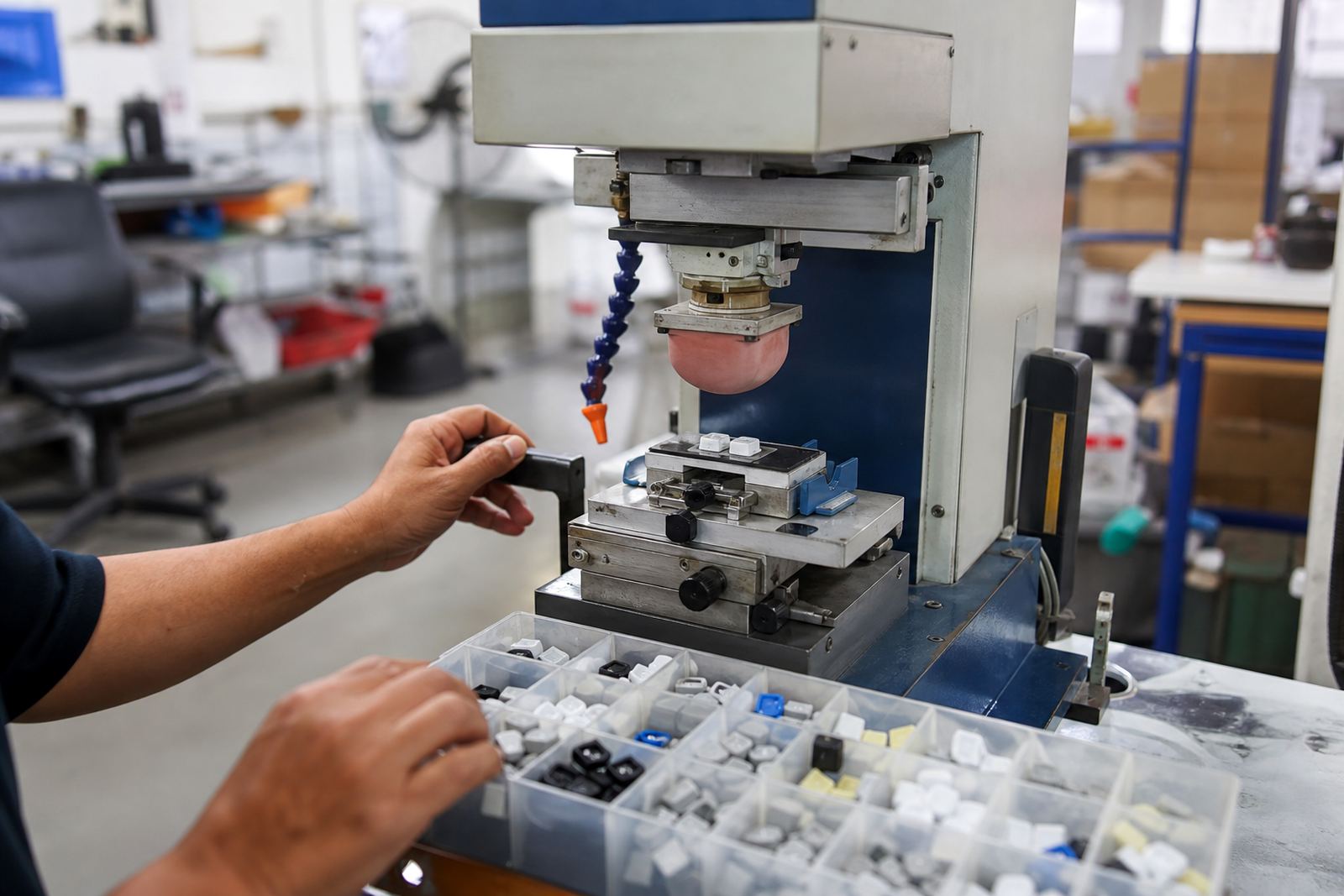
Pad printing is often chosen for medical and electronic components because it can place fine detail on curved, textured or irregular surfaces where flat printing will not hold. A silicone pad picks up ink from an etched plate and transfers it onto the part with steady pressure. The result is a clean mark on small faces, clips and clamp arms where space is limited and the surface may be slightly curved or moulded.
We work on polymer and engineered plastic parts, as well as selected coated components. The printed mark is only one part of the job though. Ink choice, cure method, surface condition and handling all affect the finish, so the process needs proper set-up and checking from the start.
Typical Sizes, Materials and Marking Options
Tube clamps and clips vary a lot in size, from small parts with a 6 mm marking area through to wider clamp faces of 25 mm or more. The print area may be flat, slightly domed or interrupted by ribs and hinge points. That is why artwork needs to be matched to the actual component, not just a drawing. At PadPrinters Medical, artwork preparation and print area planning are part of the job before any plate is exposed.
- Print area sizes from about 5 mm x 5 mm up to 30 mm x 15 mm, depending on the part
- Single colour or multiple colour markings where the part shape allows it
- Matt, satin or gloss ink finishes selected for the substrate and use case
- Fine text, symbols, arrows, batch codes and cavity marks
- Light or dark ink options for contrast on natural, white or coloured plastics
Some parts need only a tiny orientation mark, while others need a full icon set for operation and traceability. If the surface is very small, we will usually recommend a simplified layout with stronger line weight and fewer tiny features, because over detailed art can close up in the pad or shift on transfer.
Where Tube Clamp Printing Suits Best
Tube clamp printing suits manufacturers making medical style consumables, laboratory components, flow-control accessories and small electronic housings with clip features. It also works well for parts used in assembly lines where staff must identify the correct fitting quickly. This is especially useful where product families are similar and the wrong clamp can cause delays or rework.
Our clients across South Africa often need these marks for parts going into enclosed assemblies, clean handling areas or packed kits. In Durban and Pinetown, humidity can affect storage and handling, so ink and curing must be chosen with local conditions in mind. In Johannesburg and Pretoria, dry air and dust can also change the way parts behave before printing, which means surface cleaning and static control matter. We also support customers in Cape Town and Gqeberha, where coastal moisture can affect adhesion if parts are not stored correctly before print.
Device compliance and end-use approvals remain the customer's responsibility. Our role is to apply the specified mark accurately, consistently and with the practical care needed for production work.
Sampling and setup
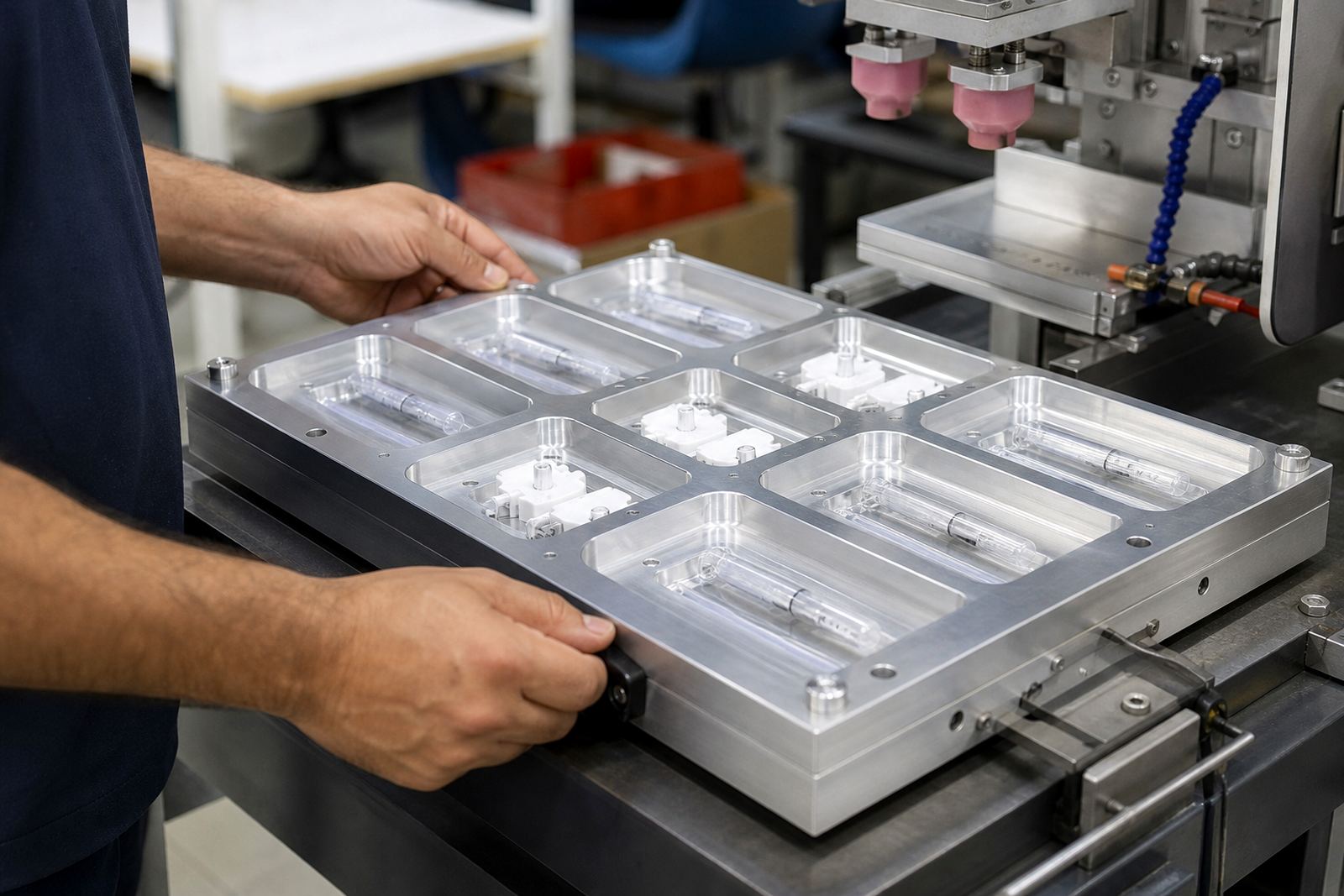
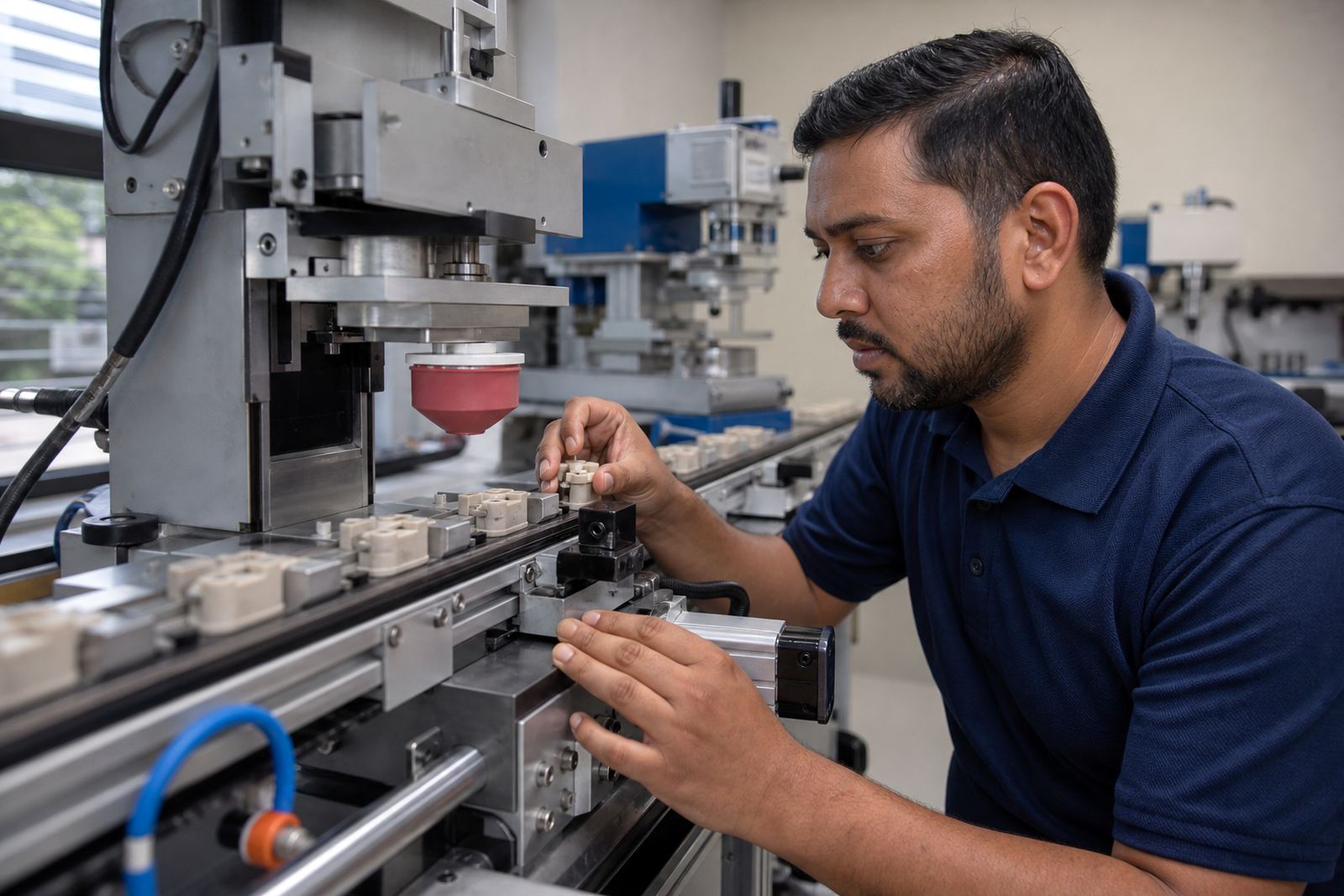
The part must sit in a repeatable fixture so the print lands in the same place every time. For small clamp arms and clips, even a slight twist can shift the mark off centre. Sanjay Dookhi handles artwork and plate work, while Mfundo Xaba handles machine setup for production runs. Naledi Kekana oversees production flow, and Lerato Mabunda checks quality during sampling and reruns.
- Stable bench or production table with enough room for loading and offloading
- Printed part fixture matched to the clamp shape and orientation
- Clean, dry parts with no mould release, oil or dust on the print face
- Where needed, curing space or controlled drying time before packing
Inks, Curing and Surface Care
For tube clamp printing, the ink system has to suit the plastic or coated surface being marked. Some parts need fast drying inks, while others benefit from a controlled cure so the mark resists handling, wiping and packing. Curing method selection is part of the service, because the wrong approach can leave the print soft, fragile or prone to scuffing.
Before printing, parts should be free from dust, grease and mould residue. A light wipe or approved cleaning step may be enough on some materials, but other substrates need more careful preparation. If a part arrives with surface stress, mould sheen or contamination, the ink may sit on top instead of keying properly. That is why adhesion test samples are useful before a full batch.
For care and servicing, keep printed parts away from abrasion during packing and avoid stacking them before the ink has fully settled. If the mark will face repeated handling, we can discuss a rerun job control process so the same plate, setup and ink choice are used again. This keeps the print consistent from one batch to the next.
What To Check Before Ordering Tube Clamp Printing
Before you send clamps or clips for marking, check the part dimensions, print face and the exact symbol or text you need. A good sample from the actual production part is better than a drawing alone, because wall thickness, texture and surface curvature can change the print result. If there are multiple clamp variants, label them clearly so the correct artwork goes to the correct part.
- Part material and colour
- Print location and maximum print area
- Artwork format, symbol size and required contrast
- Quantity per batch and whether reruns are expected
- Any fixture restrictions or handling notes
- Required finish, drying or curing time before packing
If you are not sure how much detail will fit, we can redraw the logo or mark, plan the print area and supply a trial sample run first. That is often the best way to confirm legibility on a small clamp face before production starts. Our Pinetown team supports customers through the enquiry form on the contact page, with local branches and support for Westmead, New Germany and Westville as well as Durban, Johannesburg, Pretoria, Cape Town and Gqeberha supply work.
Specialist Team For Medical Component Printing
Sibusiso Naicker leads the business as Managing Director, with support from a team that includes production, artwork, quality, client service and machine setup specialists. That matters on small parts like tube clamps, because every stage from plate exposure to dispatch packing affects the final mark.
We handle artwork preparation, logo redraws, colour matching, plate etching, fixture making, trial sample runs and dispatch packing for repeatable work. For manufacturers, that means one place to manage the detail around the print, without adding extra handling points. It also helps when a batch needs a minor adjustment after the first sample, since the same team can trace the job from setup to final pack.
For tube clamp printing, the main goal is simple: clear identification that stays readable, sits where it should and suits the part it is printed on.
Run details
| Product | Tube clamp printing for medical style clamps and clips |
|---|---|
| Print method | Pad printing with silicone pad transfer and etched plate |
| Typical marking area | About 5 mm x 5 mm to 30 mm x 15 mm, subject to part shape |
| Common inks | Plastic-compatible inks selected to suit substrate and curing method |
| Service area | Pinetown, Durban, Johannesburg, Pretoria, Cape Town and Gqeberha |