
What Steel Plate Etching Is Used For
Steel plate etching is the process of preparing a hard metal printing plate with a recessed image area for pad printing. In practical terms, the artwork is exposed and etched into the plate so the ink sits in the engraved areas before a silicone pad lifts and transfers it onto the part. For repeat work, this gives a dependable print face that can handle regular handling and production runs without the image changing from one batch to the next.
At our Westmead, Pinetown base, we use etched steel plates for medical and electronics work where small characters, fine linework, batch codes, symbols and logos need to stay readable. This suits manufacturers that need steady print quality on housings, switches, instrument parts, plastic trims and other small components.
Sizes, Thicknesses And Image Depth Options
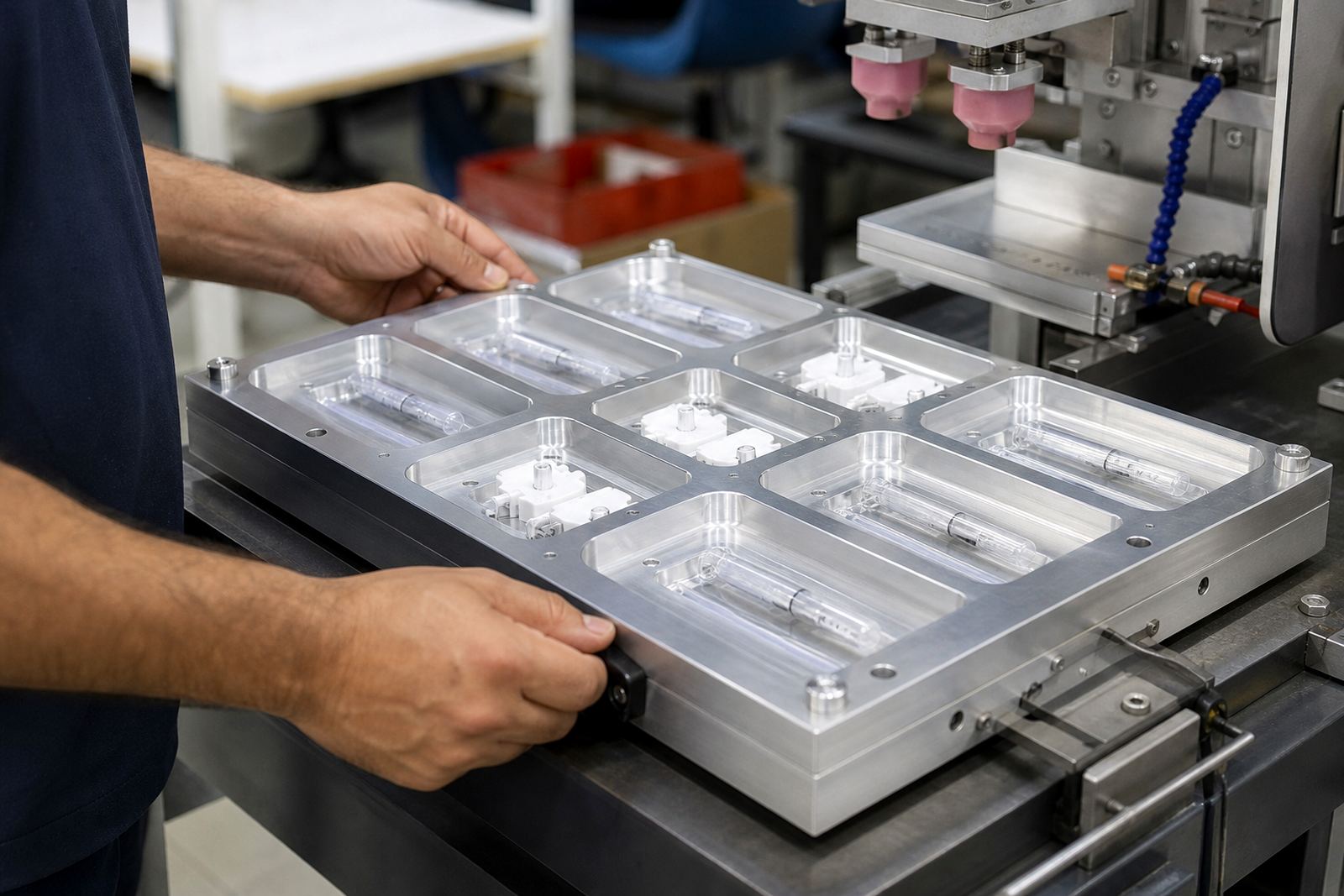
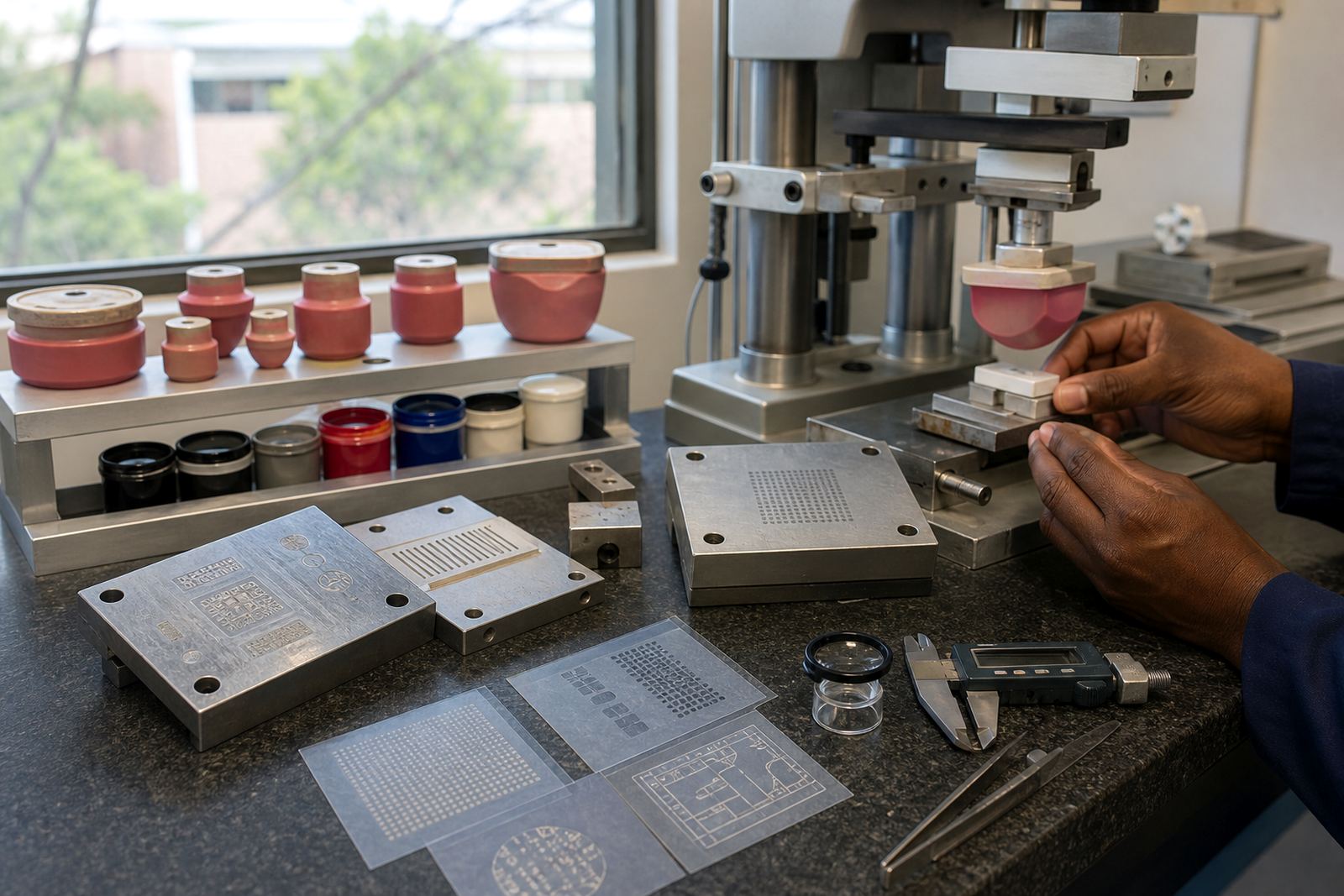
Steel plates are selected to suit the print area, the machine layout and the number of impressions required. The right size also depends on whether the part is small and flat, or shaped with curves, ribs and recesses. We plan plate size around the image size and the pad reach, so the transfer stays even and the etched area matches the job properly.
Common options are based on job size and tooling, for example:
- Small plates for compact logos, batch marks and part numbers
- Medium plates for multi-line product details or several repeats on one plate
- Thicker plate stock where longer plate life and more stable depth are needed
- Controlled etch depth for fine detail, light ink laydown or stronger ink deposit
- Single-image or multi-image layouts, depending on the fixture and production flow
We can also advise on whether a job needs a simple single plate or a set of plates for colour work, layered markings or different product variants.
Where Steel Plate Etching Suits Best
This product suits manufacturers who need a reliable cliché for pad printing on medical and electronic components across South Africa, including Durban, Johannesburg, Cape Town, Pretoria and Gqeberha. It is a good fit when the same marking will be printed again and again on the same part family, especially where the marking must stay sharp and legible across multiple production runs.
Typical applications include control panels, device housings, instrument casings, knobs, caps, medical device accessories, labware parts and electronic enclosures. It also works well where the surface has curves or uneven areas that a flat printing method would struggle with. Pad printing transfers the image through a silicone pad, so the etched plate needs to be clean, deep enough, and matched to the ink system and curing method used on the line.
How The Etched Plate Works In Production
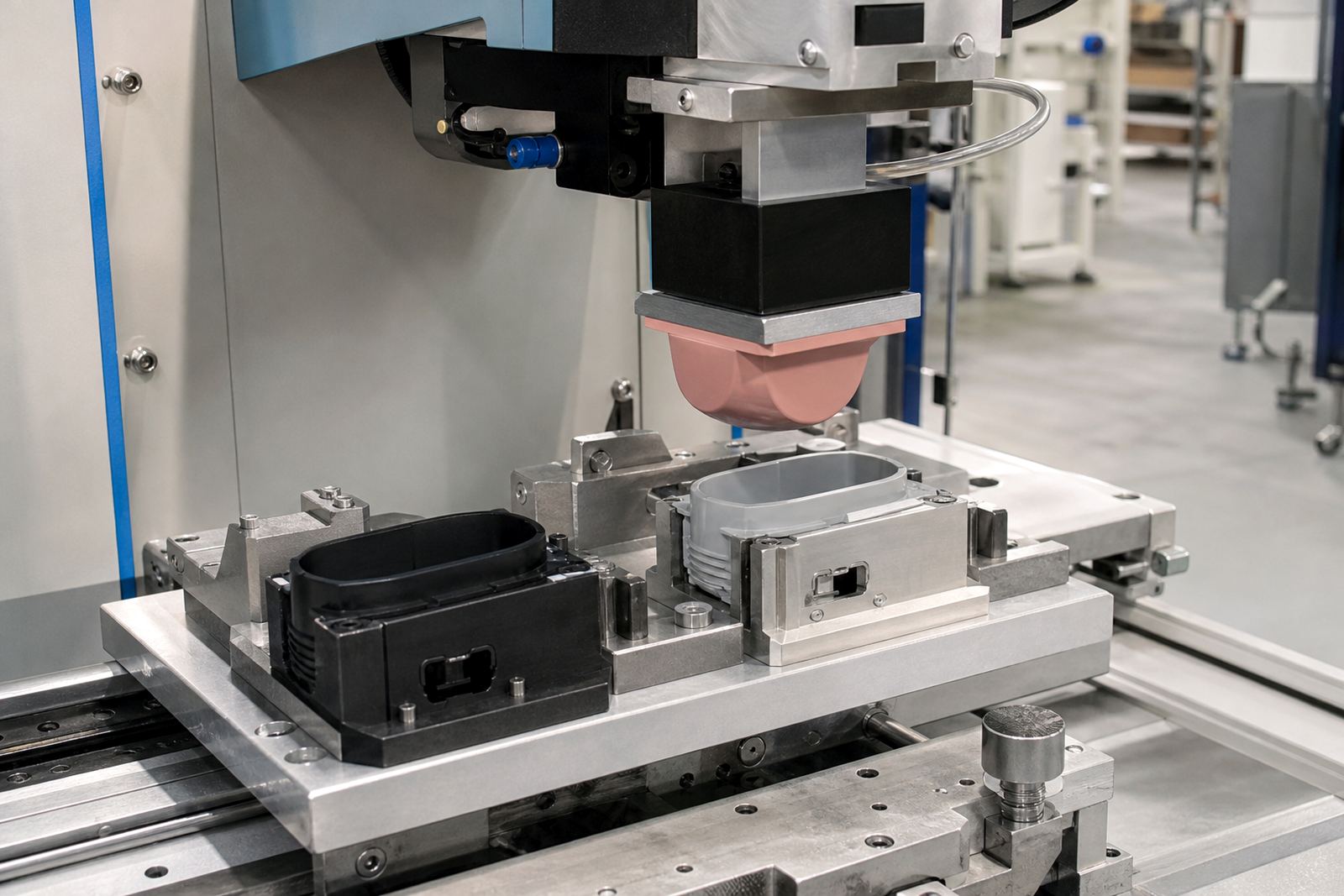
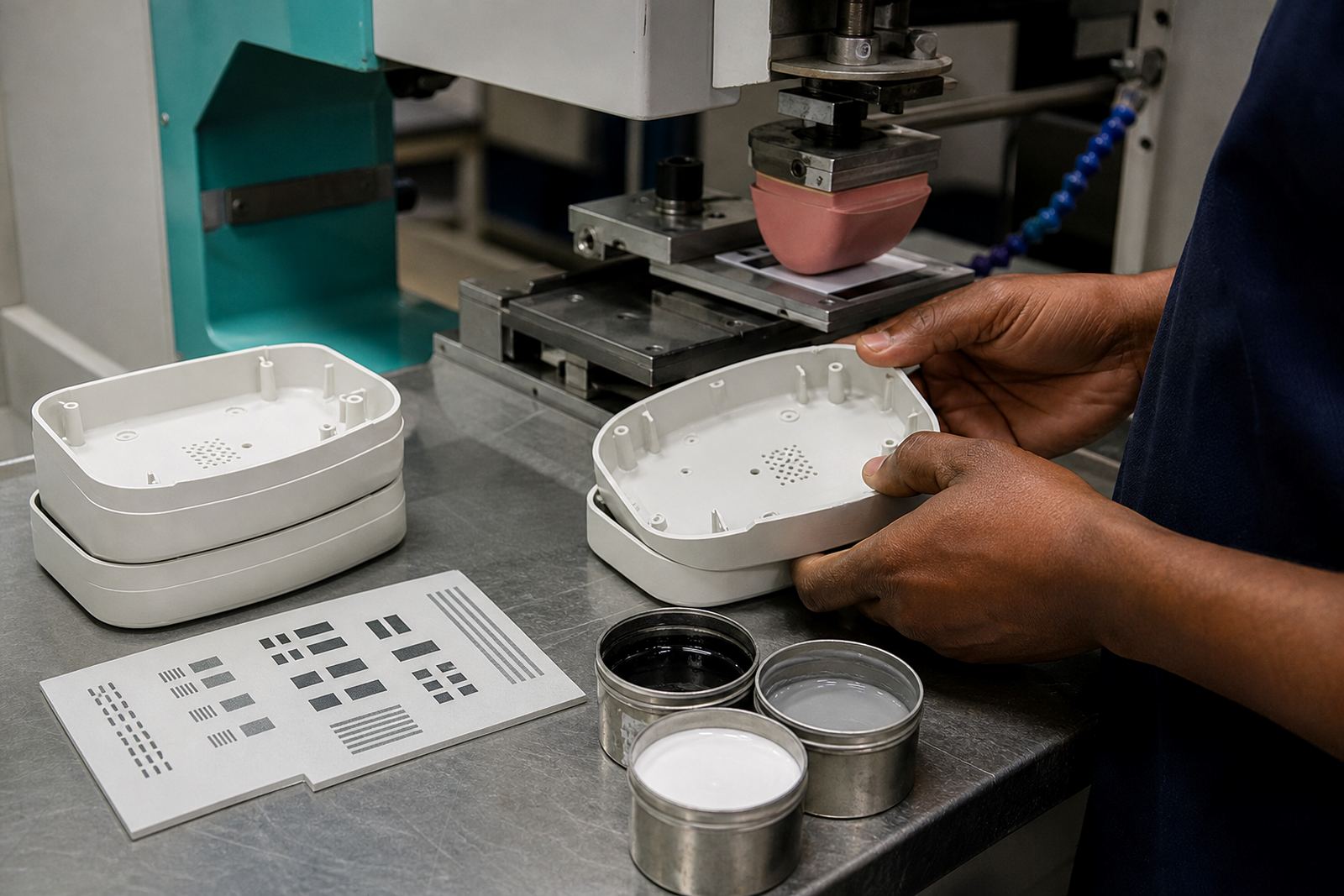
The plate is one part of a larger print setup. The ink fills the etched image area, the doctoring action clears the top surface, and the pad picks up the image before placing it onto the component. After transfer, the ink is cured or dried according to the material and the line process. That means the plate needs to be prepared with the finish, depth and sharpness that suit the chosen ink and the final handling on the product.
Consistent transfer is the main aim on medical and electronic parts. If the plate depth is wrong, the print can flood, break up or dry too quickly on press. A good etched plate helps reduce rework and keeps the job easier to repeat when the same item comes back months later.
- Stable image depth for repeat jobs
- Good ink release from the etched area
- Cleaner edge definition on small text and symbols
- Better control when using fine lines or compact artwork
Trial runs and approval
What matters is the production setup the plate will be used on, including the pad printing machine, fixtures, ink system and curing method. In some plants that may mean heat drying, forced air, or a curing stage matched to the ink type and substrate.
If you are planning a new line or moving a job from another supplier, it helps to check the size of the machine bed, the available fixtures, the loading method and the print sequence. In Durban and other coastal areas, humidity can also affect drying and ink behaviour, so plate depth and curing need to be considered together.
Care, Servicing And Repeat Job Control
Etched steel plates should be handled carefully because scratches, contamination and poor storage can all affect print quality. Keep plates clean, dry and wrapped or stored in a way that prevents metal contact. If a plate is reused for the same job, check that the image area is still sharp and the surface has not picked up dried ink or debris from previous runs.
Our team also supports rerun job control, which is useful when a manufacturer needs the same marking repeated with the same artwork and settings. That includes checking the plate against the approved sample, confirming the colour match where needed, and keeping the print area planning consistent from batch to batch. A missing note on ink cure or pad size can cause delays later, so it is worth keeping the original job details together.
- Store plates flat and dry
- Avoid scratching the etched image
- Keep approved samples with the job file
- Check whether the same fixture and pad size will be used again
What To Check When Ordering Steel Plate Etching
Before ordering, have the artwork, part sample and print area details ready. The plate must suit the actual component, not just the drawing, because small changes in curvature, texture or recess depth can affect the transfer. If the part is for a medical or electronic use, it is the customer’s responsibility to make sure the final marking meets their own device compliance and approval requirements.
Useful details to provide include the text size, logo artwork, number of colours if applicable, substrate type, expected run quantity and whether you need trial sample runs before full production. If you are in Pinetown, New Germany or Westville, or anywhere else in South Africa, we can work from your enquiry form details and guide the plate choice, plate exposure and plate etching process to suit the job.
For repeat production, the best results usually come from clear artwork, a confirmed print area, and a plate made for the same machine and ink system that will be used on the line. That keeps the job practical, predictable and easier to rerun when stock comes back into production.
Run details
| Material | Steel plate for pad printing clichés |
|---|---|
| Use | Repeat production markings on medical and electronic components |
| Plate Size | Selected to suit artwork and print area, from small part marks to larger layouts |
| Image Depth | Controlled etch depth for fine detail, ink deposit and transfer consistency |
| Production Fit | Suitable for repeat jobs, trial runs and rerun job control |
| Service Areas | Westmead, Pinetown, Durban, Johannesburg, Cape Town, Pretoria, Gqeberha |