
What Sensor Housing Printing Covers
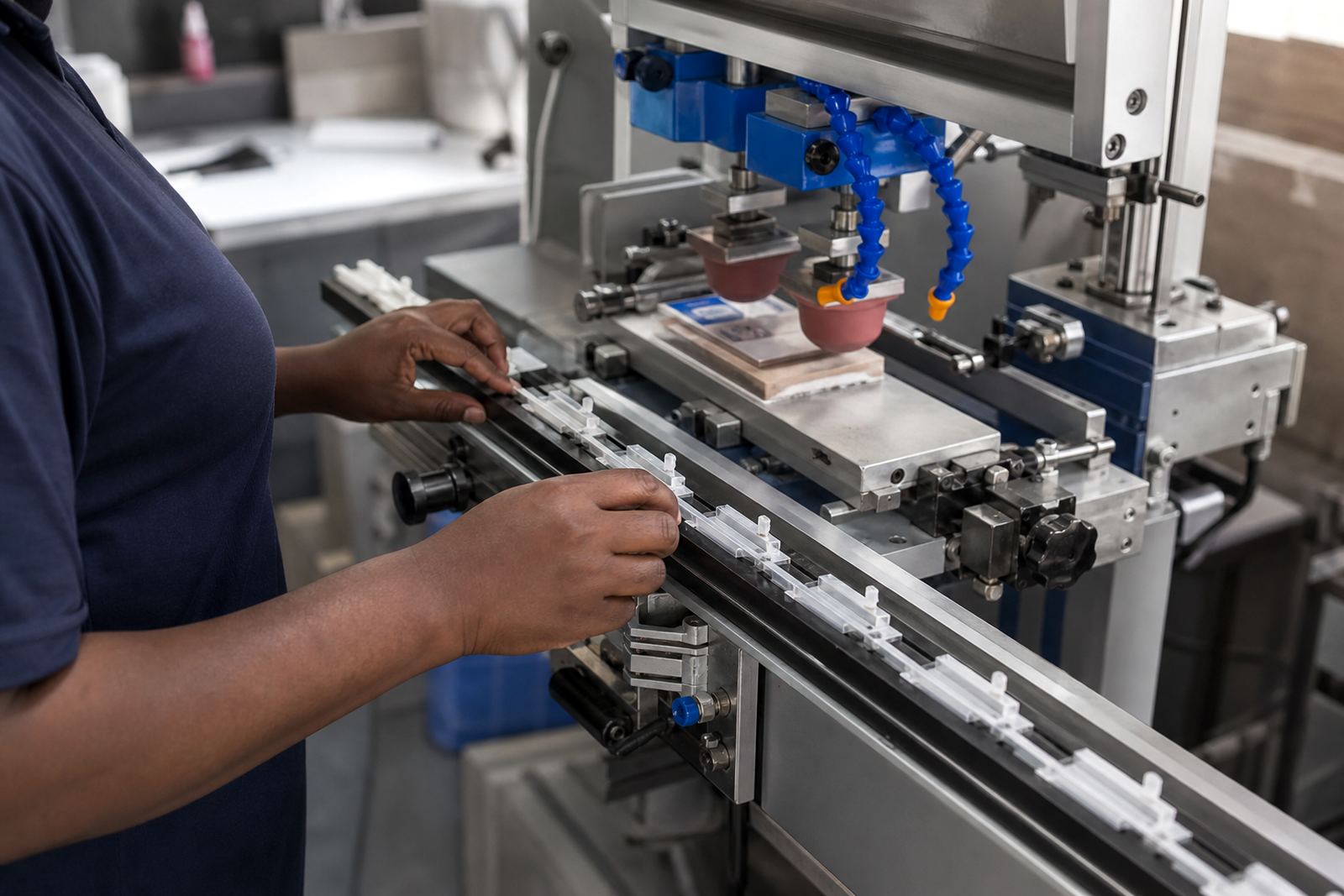
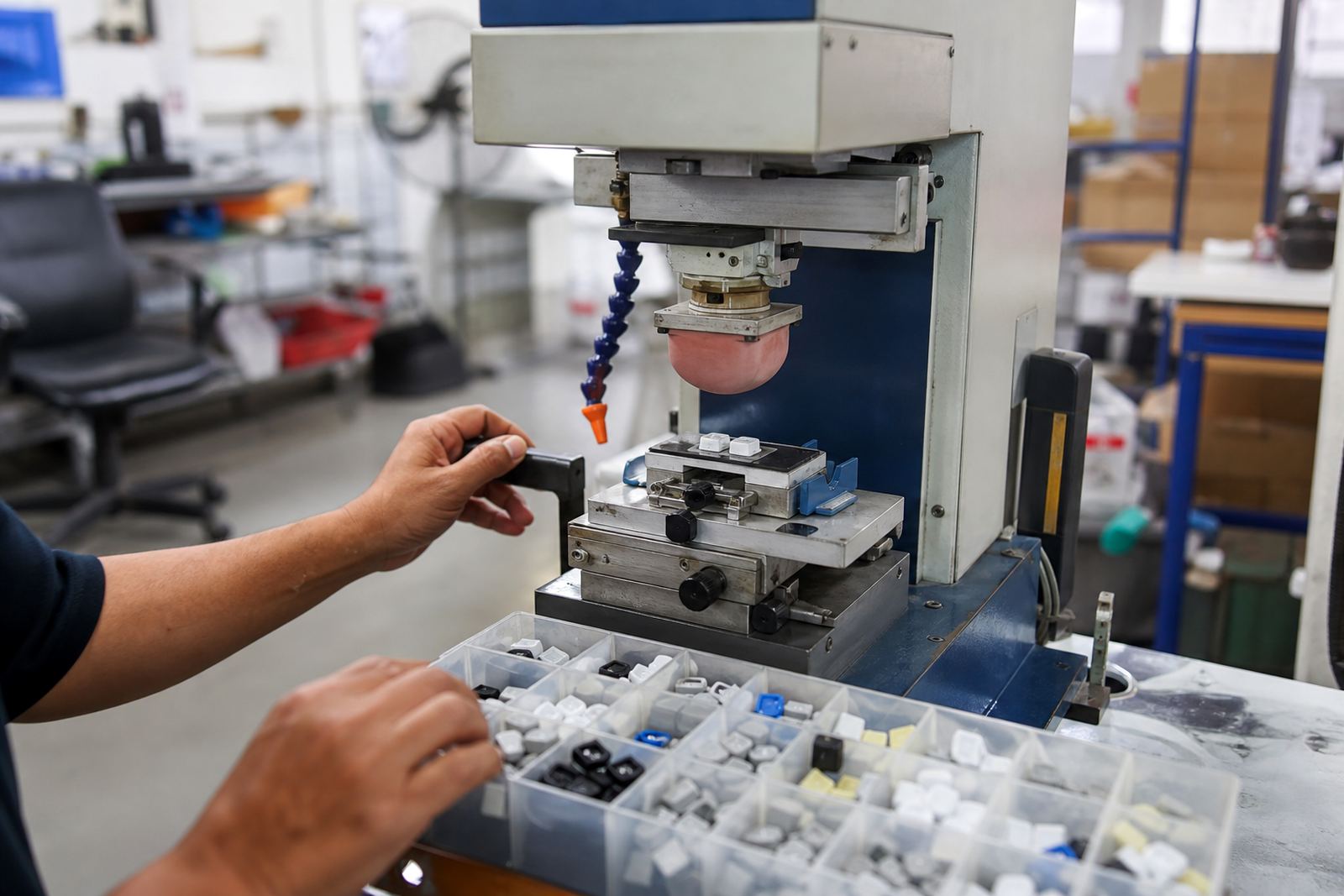
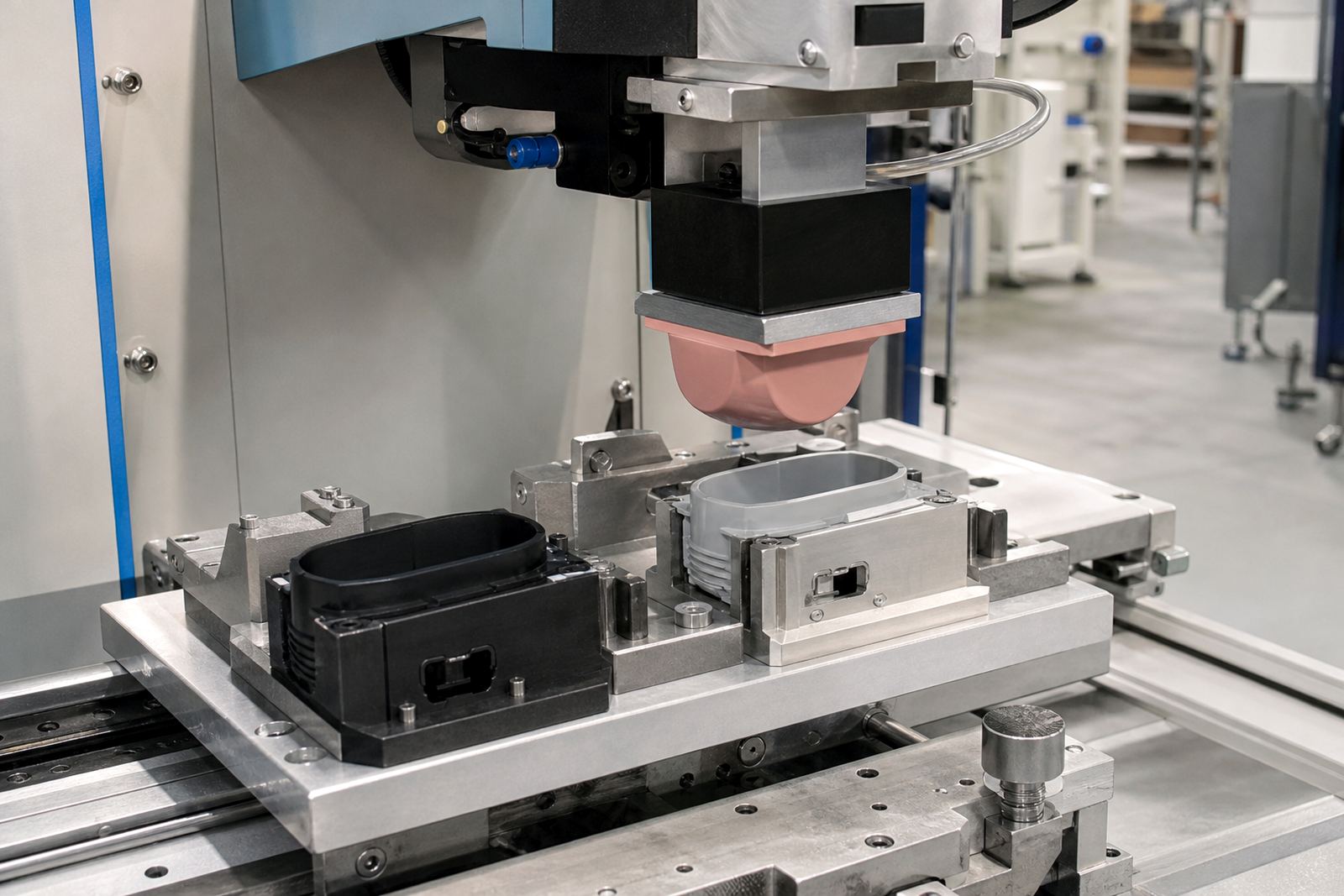
Sensor housing printing is the pad printing of text, icons, part numbers, polarity marks and warning symbols onto small enclosures and related components. The method uses a silicone pad to pick up ink from an etched plate and transfer it onto shaped parts, including curved sides, recessed faces and narrow ledges where screen printing can struggle.
On medical and electronic parts, the aim is a mark that stays sharp enough for line inspection and assembly work. We handle compact housings, sensor caps, covers, brackets and small support parts in production runs and repeat batches. The printed mark can be single colour or a few colours, depending on the part geometry and the artwork supplied.
- Suitable for moulded plastic housings and coated components
- Works on flat, curved and slightly irregular surfaces
- Useful for part codes, direction arrows, icons and identification text
Where The Process Suits Your Parts
This service suits manufacturers that need clear marking on compact parts used in instruments, monitoring devices, test equipment and control units. It is often chosen when the surface area is small, the part has detail close to the edge, or the customer needs repeated marks in the same location across many units.
We also work with parts that need readable marking after light cleaning or regular handling. In coastal areas such as Durban, a good ink system and proper curing help reduce early wear from humidity and salt in the air. For inland production in Johannesburg or Pretoria, the focus is often on keeping the print crisp through assembly, packing and storage.
- Best for small housing faces, end caps and sensor bodies
- Useful where labels would peel or shift during use
- Can support traceability marks and assembly orientation marks
Sizes, Surfaces And Print Options
We set up each job around the part size, wall shape and the area available for marking. Small housings may only allow a few millimetres of print height, while larger covers can take longer text blocks, logos or multi-line identifiers. The artwork needs to match the final print area, not just the flat drawing, because curved or stepped faces can alter spacing.
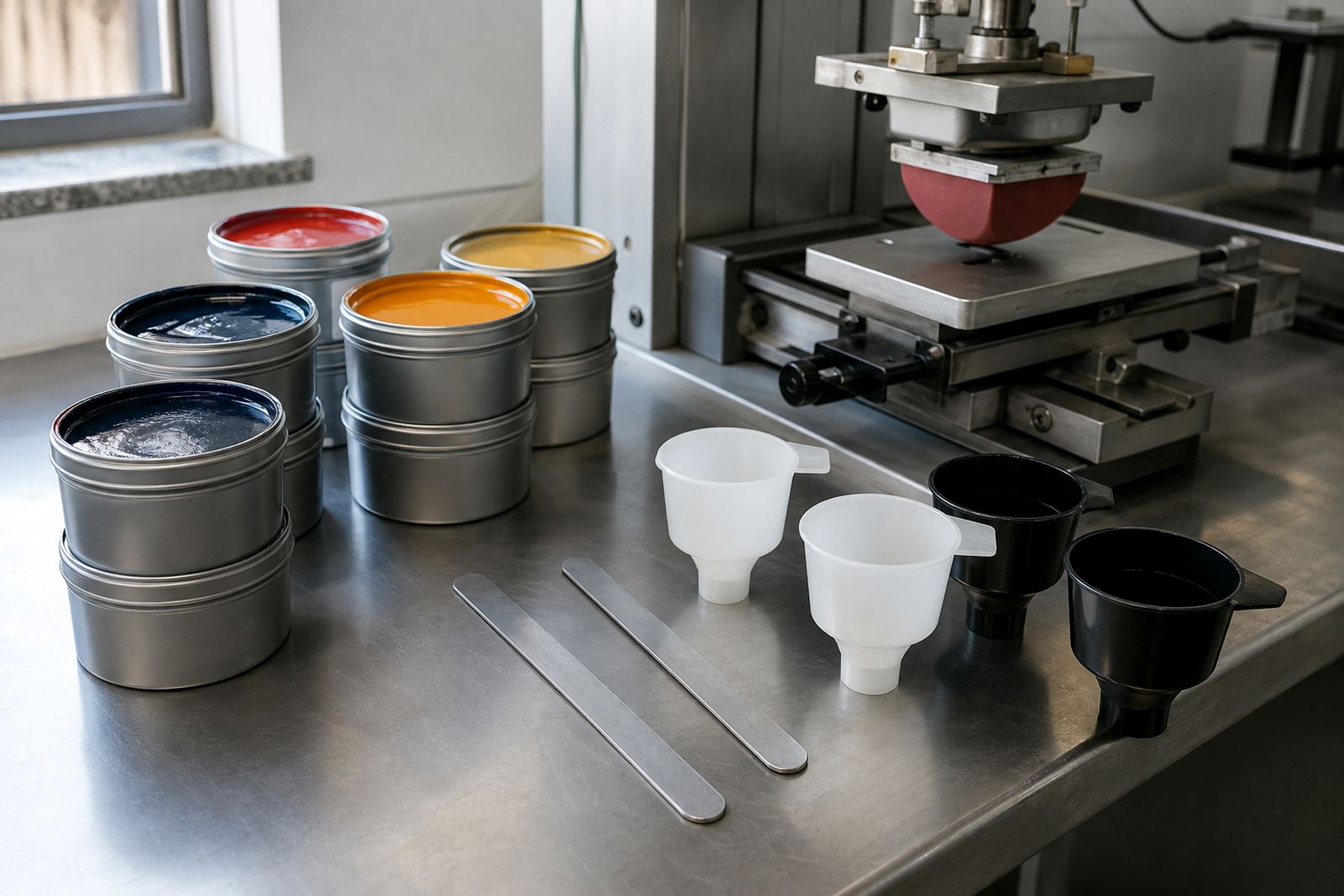
Common options include one-colour marking, fine line work, repeat job control and fixture making for parts that must sit in the same position every time. Where needed, we prepare the artwork, redraw logos for print, and check the registration before running a full batch. Adhesion test samples help confirm whether the chosen ink and cure method suit the substrate.
- Print areas from tiny marks to larger face panels
- Single colour or multi-colour where the part allows it
- Fixture making for repeatable positioning
Trial runs and approval
Pad printing equipment needs a stable bench area, clean handling space and enough room for part loading, plate changes and drying or curing. Depending on the part and ink system, curing may use air drying, heat assisted drying or another controlled method selected for the substrate. We plan this around the production pace and the level of handling the part will see after printing.
On busy lines in New Germany or Westville, setup space and workflow matter as much as the machine footprint.
- Needs a clean, stable area for print and drying work
Care, Servicing And Repeat Jobs
Once a sensor housing is printed, the mark should be handled carefully until the ink has fully cured. After that, care is usually simple: keep the parts free from harsh scraping, solvent soak tests unless approved, and rough packing that can rub the print before assembly. If the housing will be cleaned during use, that should be checked during sample approval so the ink system and cure method suit the application.
For repeat work, we keep job control on file so the same part can be rerun with consistent placement and colour. This matters when manufacturers need to keep the same mark across batches made months apart. Lerato Mabunda, our Quality Coordinator, checks that sample and repeat work stay aligned before dispatch packing.
- Keep parts clean and avoid abrasion before full cure
- Store printed parts away from dust and direct handling
- Repeat jobs benefit from fixture control and saved setup notes
What To Send Us Before Ordering
To quote and set up sensor housing printing properly, send the part drawing or sample, the exact marking area and the quantity needed. It helps to know whether the part is moulded plastic, coated metal or another finished surface, because adhesion and curing choices change with the substrate. We also need to know if the mark must stay readable after cleaning, heat, light contact or assembly with other components.
Sibusiso Naicker leads the team from our Westmead base in Pinetown, with support from Naledi Kekana, Sanjay Dookhi, Yashika Sewpersad and Mfundo Xaba. We assist manufacturers across Durban, Johannesburg, Cape Town, Pretoria and Gqeberha through the quote form on our contact page, including branch support for Pinetown Printing Support, Durban Manufacturers, Johannesburg Supply, Pretoria Supply, Cape Town Supply, Gqeberha Supply, New Germany Support and Westville Support.
- Part sample or drawing with marking position clearly shown
- Material type and any surface treatment details
- Required quantity, colours and repeat order timing
Run details
| Process | Pad printing with silicone pad transfer |
|---|---|
| Typical substrates | Moulded plastics, coated parts and finished housings |
| Mark types | Text, logos, symbols, part numbers and orientation marks |
| Curing options | Air drying, heat assisted drying or other controlled method |
| Setup support | Artwork preparation, plate exposure, plate etching and fixture making |
| Service area | Pinetown, Durban and nationwide supply to major SA centres |