
Fine marking for compact parts and tight print areas
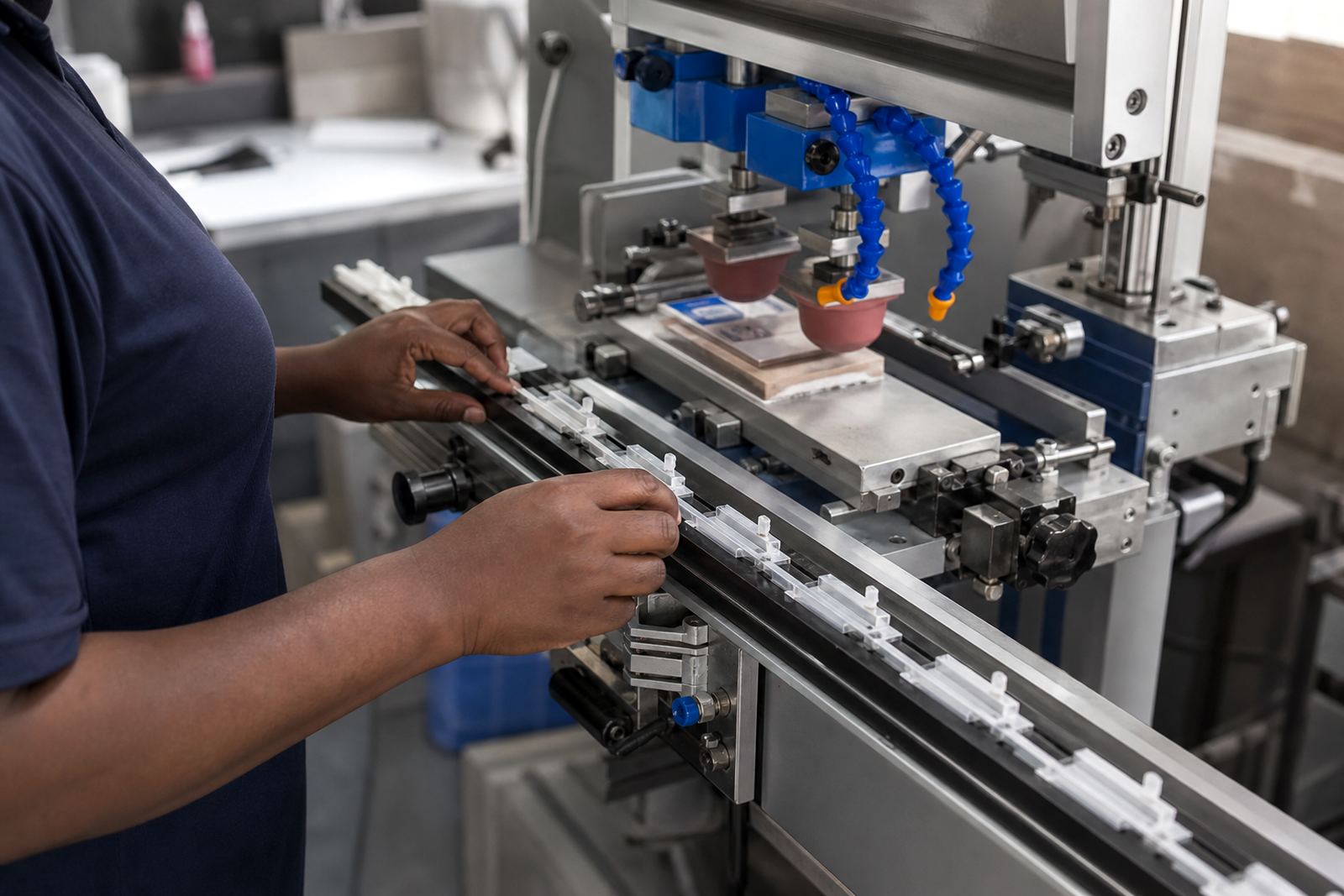
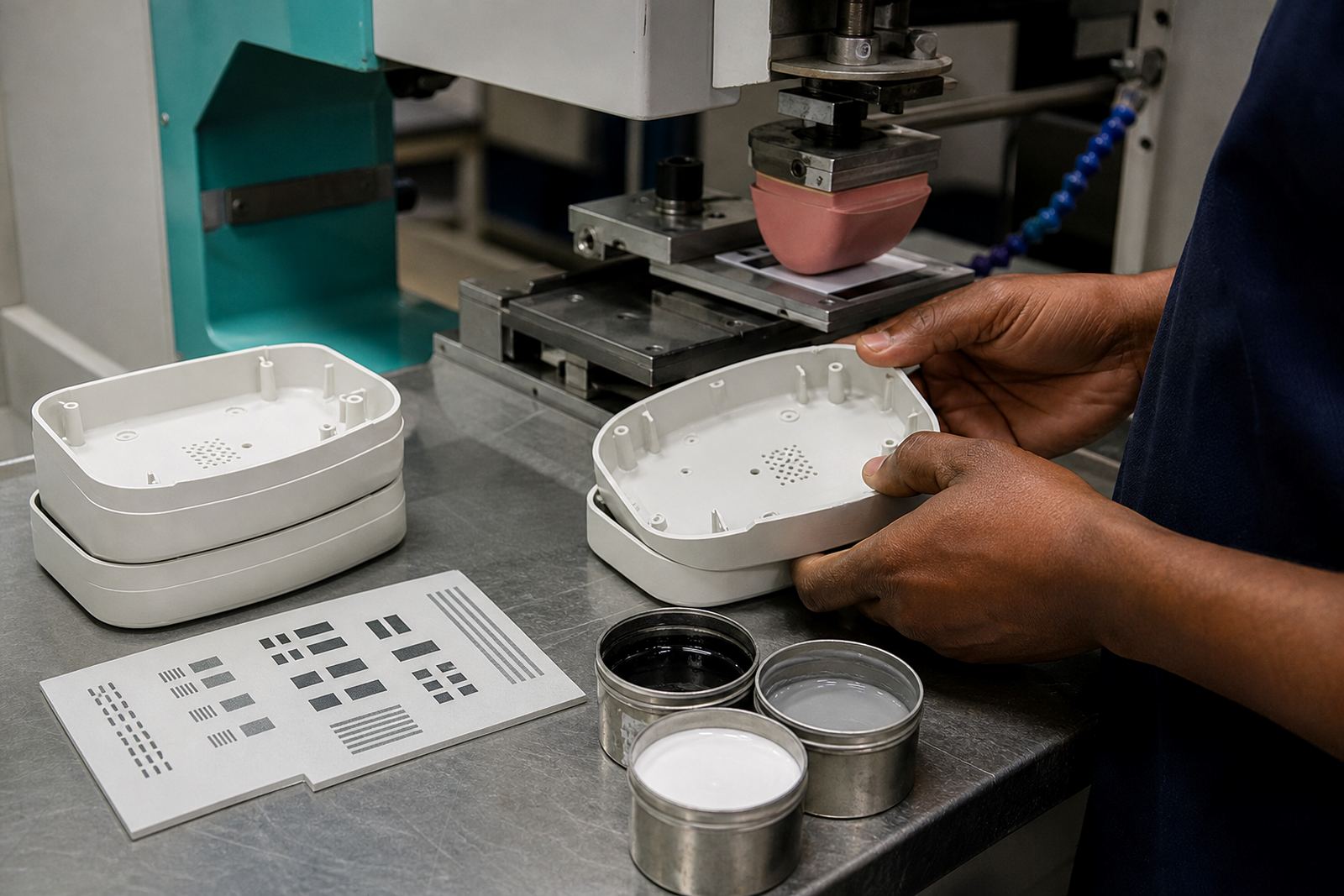
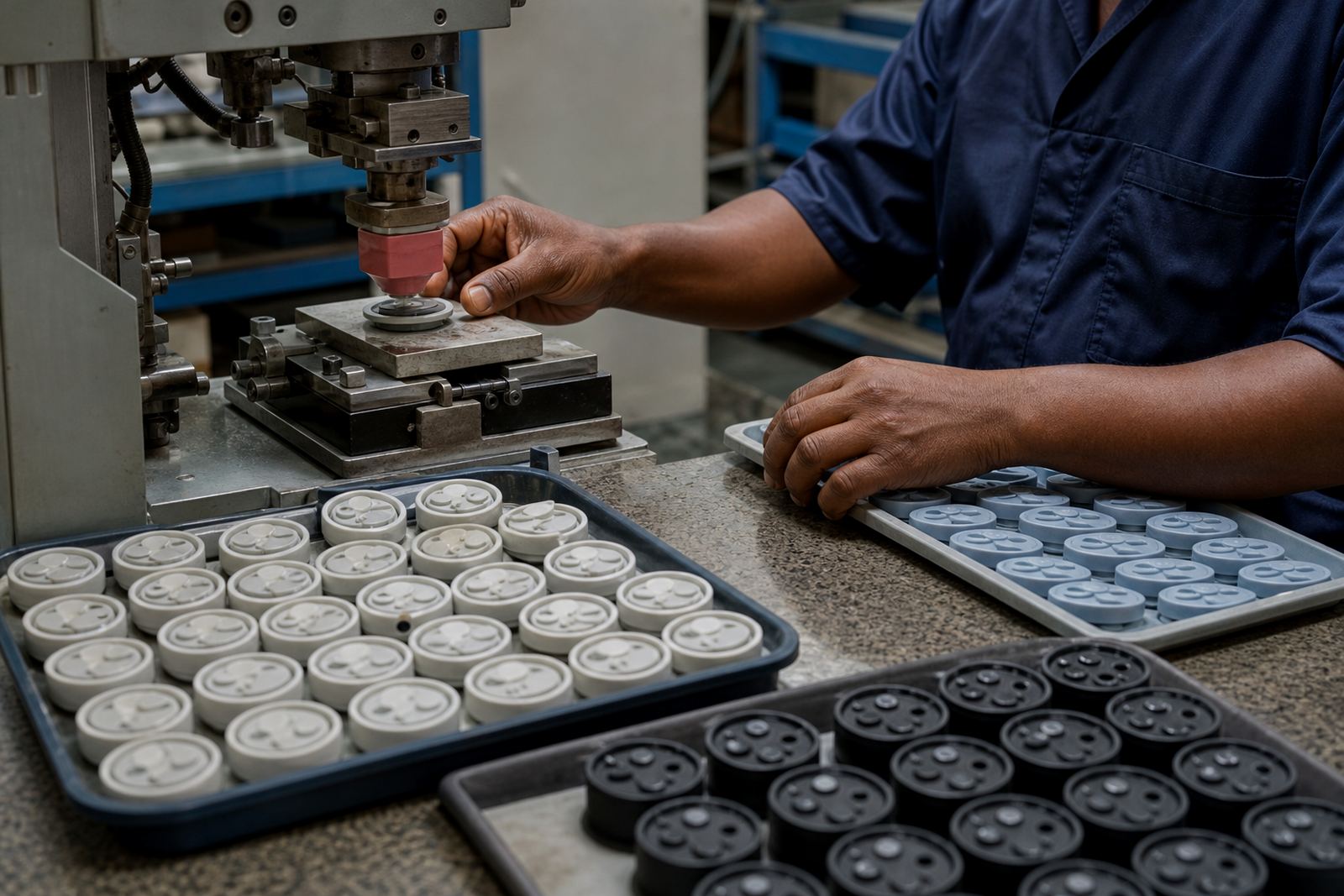
Small part marking is used where space is limited but the marking still has to stay legible. That can include injection moulded housings, caps, buttons, covers, bezels, connectors and other compact parts used in medical and electronic assemblies. Pad printing is well suited to these shapes because a silicone pad can pick up ink from an etched plate and transfer it onto curved, textured or slightly uneven surfaces with good repeatability.
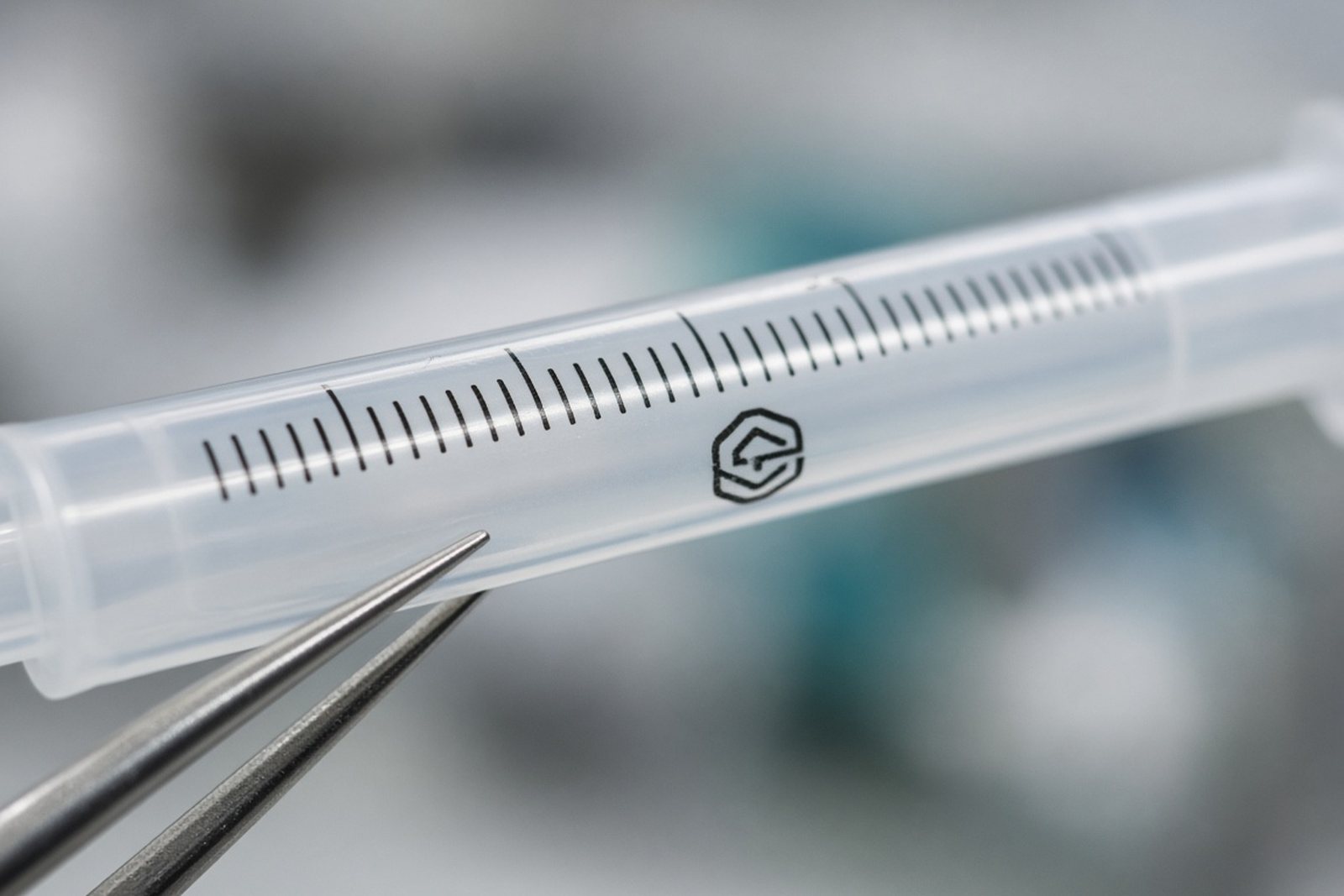
Clarity, traceability and repeatable placement matter more than decoration on medical and electronic parts. Fine text, icons, numbering, symbols, direction marks and simple logos all need to sit in the correct position and stay stable after normal handling. Depending on the substrate and the end use, we can work with single pass or multi pass printing, and we can set up the ink system and curing method to suit the part and the material. The customer remains responsible for their own device compliance and marking requirements.
What the process includes on our side
Small part work starts with artwork review and print area planning. We check line weight, character height, spacing, contrast, and whether the design needs to be simplified for a smaller target area. If needed we do logo redraws, plate exposure, plate etching, and trial sample runs before a production run starts. That helps reduce waste and keeps the first articles close to the approved sample.
For moulded parts, the ink choice and curing method matter just as much as the artwork. Some plastics need a pre test and careful surface prep, especially where mould release, dust or handling residue can affect adhesion. Inks may be air dried, heat cured, or UV cured depending on the part and the line speed. We also plan rerun job control so repeat jobs can be matched to the approved set as closely as possible.
- Artwork preparation for fine detail and small characters
- Adhesion test samples on the intended substrate
- Fixture making for small or awkward parts
- Colour matching for black, white, grey and spot colours
- Rerun control for repeat production orders
Where small part marking suits best
This service suits manufacturers that need consistent marking on parts that are too small for straightforward screen printing or where labels will not last. Common uses include medical component housings, electronic knobs, device covers, switch parts, connectors, pen style parts, cartridges, buttons and small control pieces. It also suits assemblies where a mark must remain clear after wiping, packing and repeated handling in the workshop or in the field.
Because we work with manufacturers across Durban, Johannesburg, Cape Town, Pretoria and Gqeberha, the parts we see vary a lot in size and material. Some are smooth glossy mouldings, some have fine texture, and some are compact parts with limited flat area. Small part marking works best when the mark is planned around the part shape from the start rather than added at the end.
- Medical device components and housings
- Electronic enclosures and control parts
- Small caps, plugs, buttons and clips
- Parts with curved or slightly irregular surfaces
- Production runs that need stable repeat marking
Sizes, print options and registration control
Small part marking is usually about precision rather than size alone. We work with compact print areas and fine detail layouts that need accurate registration from one part to the next. The actual print size depends on the substrate, the shape of the part and the legibility needed for the application. In many cases the best result comes from using a controlled print zone rather than trying to cover more area than the surface can support.
Options can include one colour or multiple colours, simple serial style marking, basic identifiers, brand marks and small instruction symbols. Where required we can also help set up fixture support so the part sits in the same position during every stroke. That matters for consistency on short runs and long runs alike. For parts with tight tolerances, we recommend confirming the artwork at actual size before plate production and sample printing.
- Fine text and symbols for small footprints
- Single or multi colour pad printing
- Curved, recessed or slightly textured surfaces
- Custom fixtures for improved repeatability
- Sample approval before full production
Care, servicing and what to check before placing an order
Like any precision printing process, small part marking works best when the equipment is kept clean and the consumables are monitored. Pads wear over time, plates need the right exposure, and inks need to be mixed and cured according to the job. If the parts are dusty, oily or still carrying mould release, adhesion can suffer. Regular checks help keep the print stable and avoid rework that slows the line. A small amount of preventive care saves a lot of time later, and the process stays more reliablity focused.
Before placing an order, it helps to confirm the material type, part colour, surface texture, print area size, quantity, handling conditions and whether the mark must survive cleaning chemicals or repeated contact. You should also confirm the artwork format, letter height, line thickness and any colour reference needed. If you are not sure, send a sample part with the enquiry and we can assess the printability from there.
- Material type and surface finish
- Exact print area and allowable mark size
- Expected handling, cleaning and storage conditions
- Artwork files or existing sample for redraw
- Quantity, repeat order needs and dispatch timing
From Westmead to factories nationwide
Our team in Westmead, Pinetown handles enquiries for Pinetown Printing Support, Durban Manufacturers, Johannesburg Supply, Pretoria Supply, Cape Town Supply, Gqeberha Supply, New Germany Support and Westville Support. The work is led by Sibusiso Naicker, with support from Naledi Kekana, Sanjay Dookhi, Lerato Mabunda, Yashika Sewpersad and Mfundo Xaba. Each job is handled with the practical checks needed for compact parts, including sample approval, print control and packing for dispatch.
Small part marking is a good fit when a manufacturer needs clear, steady markings on parts that cannot afford messy printing or weak adhesion. Whether the job is for a medical component, an electronic housing or a small moulded fitting, the aim is the same: accurate placement, consistent finish and a result that holds up in use. Write to PadPrinters through the contact page form and we work from there on the next step, sample or repeat run.
Run details
| Service type | Precision pad printing for small medical and electronic parts |
|---|---|
| Typical substrates | Moulded plastics, coated components and other printable parts after test confirmation |
| Print formats | Fine text, symbols, simple logos, identifiers and small multi colour marks |
| Curing options | Air dry, heat cured or UV cured depending on material and line speed |
| Production support | Artwork redraws, plate work, fixture making, trial samples and rerun control |
| Base | Westmead, Pinetown, KwaZulu-Natal |