
What catheter part marking does on small components
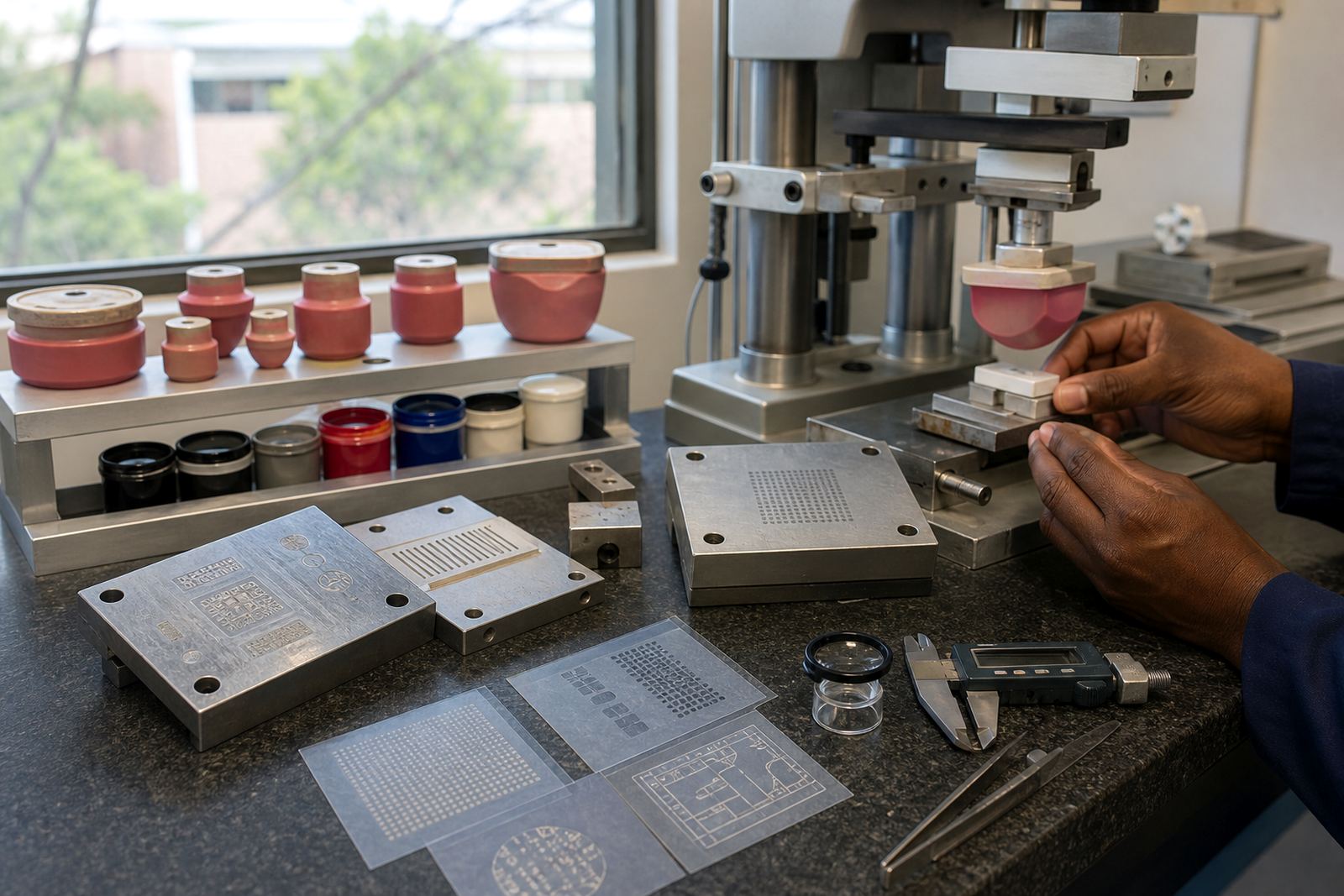
Catheter part marking uses pad printing to place fine text, symbols, batch codes, orientation marks and logo marks onto selected catheter related parts and accessory pieces. The process suits curved, tapered and uneven surfaces where screen printing or flatbed methods are not practical. A silicone pad picks up ink from an etched plate and transfers it onto the part with controlled pressure, which helps keep the mark clean on small surfaces.
This service is usually used on plastic, polymer and coated components where the mark must stay clear during handling, assembly and sterilisation processes that the customer has chosen for the device. The finished mark depends on the part material, surface energy, ink system and any curing step used after printing. Customers remain responsible for confirming their own device compliance and product validation, while we focus on applying consistent marking as specified.
- Suitable for curved and narrow catheter accessories
- Useful for part identifiers, orientation marks and simple branding
- Works with selected plastics, coated parts and accessory housings
- Best when the artwork is kept small, clear and repeatable
Part sizes, artwork limits and practical options
For catheter related marking, the practical size range is usually driven by the print area rather than the overall part size. Small print faces can still take clear marks if the artwork is planned properly and the fixture holds the component in the same position every time. Fine lines, tiny characters and small symbols are possible, but the best result comes from keeping the design simple and allowing enough space for the pad to land evenly.
We can work with single colour marks and repeated part codes on batches of accessory components. When a part has a narrow shoulder, ribbed surface or rounded body, the print area must be checked against the pad size and the plate layout. If the mark is too close to an edge or mould line, ink transfer can become inconsistent. That is why artwork preparation and print area planning are part of the job, not an afterthought.
- Small text and symbols for part identification
- Single or repeat print positions on one component
- Colour matching where the substrate and ink allow it
- Trial sample runs before volume work starts
Where this marking suits best in production
This service suits medical and electronics manufacturers who need repeatable marking on accessory parts, connectors, housings, clips, caps and other small items linked to catheter assemblies. It is also useful for electronic components that sit near the same production flow, where clear identification helps with assembly checks and traceability. In Durban, Johannesburg, Cape Town, Pretoria and Gqeberha, many manufacturers want marking that can move from prototype to production without changing the whole line.
Because pad printing is precise and relatively compact, it works well in plants where floor space is limited or where printing needs to happen at a workstation rather than on a long line. In Westmead, Pinetown and New Germany, we often see customers looking for consistent markings that can be checked quickly during packing or final assembly.
- Accessory parts and small housings
- Line-side printing in tight production areas
- Batch marking for assembly and packing checks
- Support for manufacturers across South Africa
Trial runs and approval
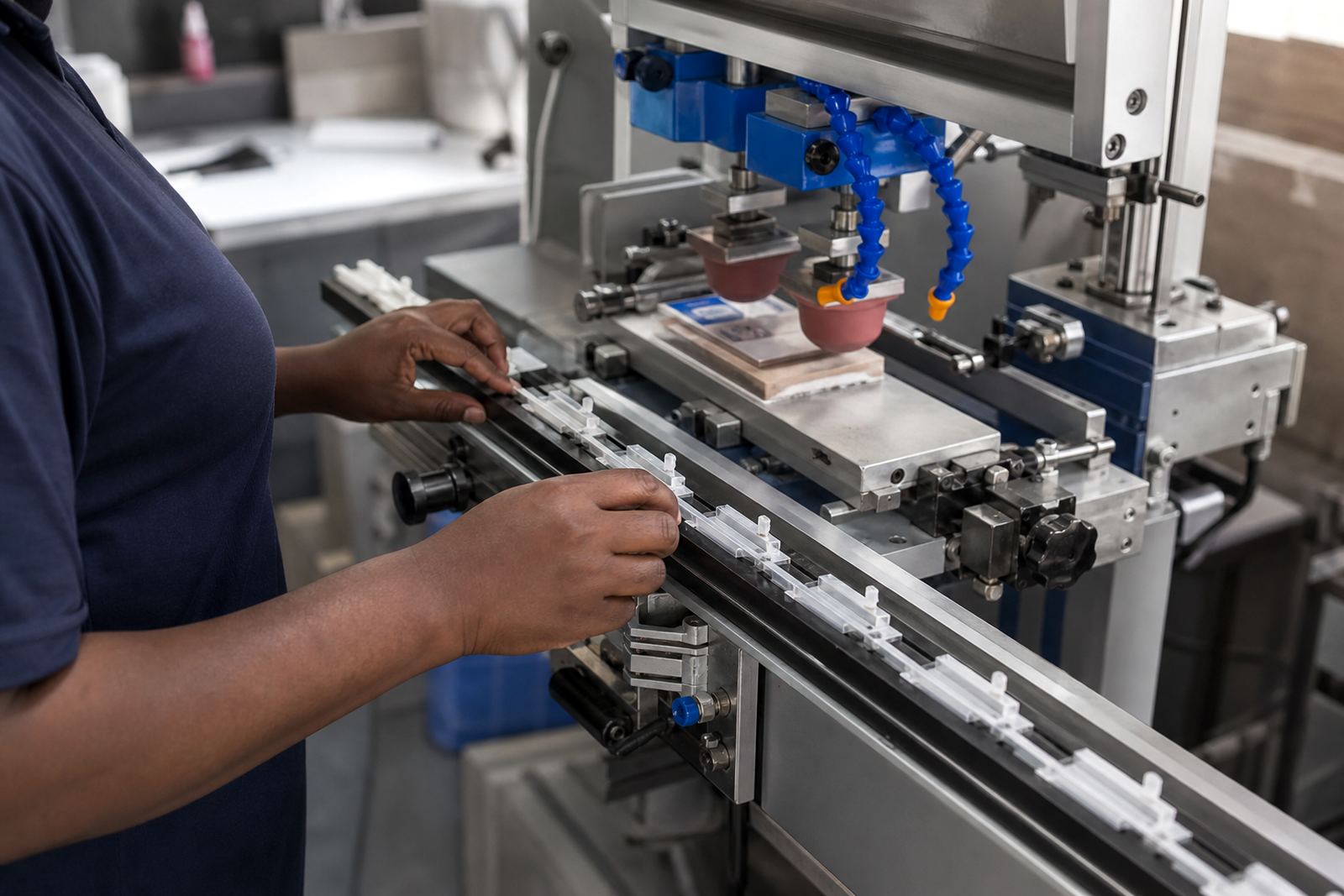
The exact setup depends on the part, the fixture and whether the job is manual, semi-automatic or linked to another production step. A stable table, clean working area and controlled lighting make it easier to keep registration and inspect the print under good conditions.
Where compressed air is needed for certain fixtures or machine actions, we confirm the pressure and connection requirements before setup. Coastal humidity in Durban can also affect drying times and ink behaviour, so the process must be set up with local conditions in mind.
- Bench or cell installation with good access and lighting
- Compressed air only where the setup requires it
- Fixture design checked against the actual part geometry
Care, servicing and repeat job control
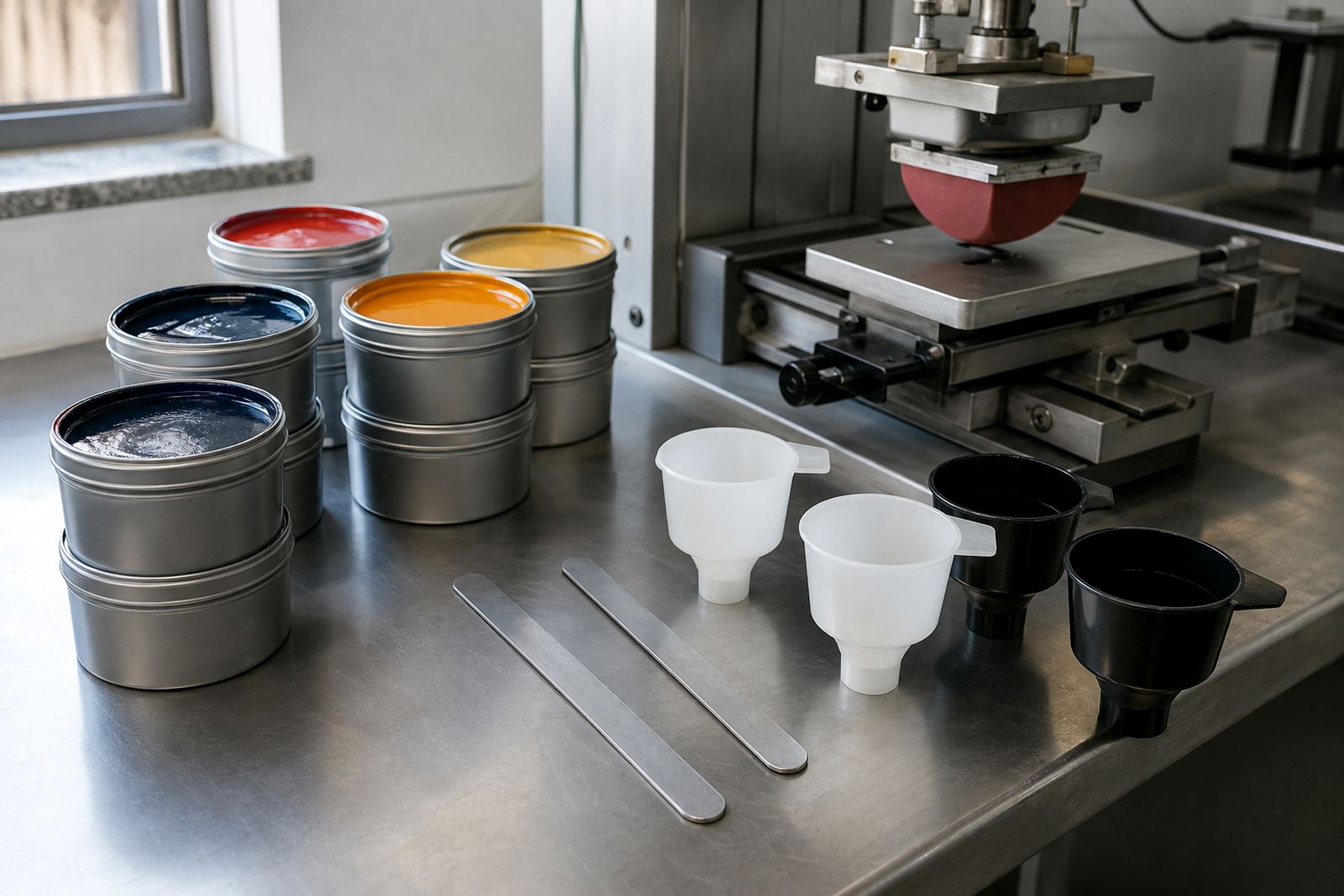
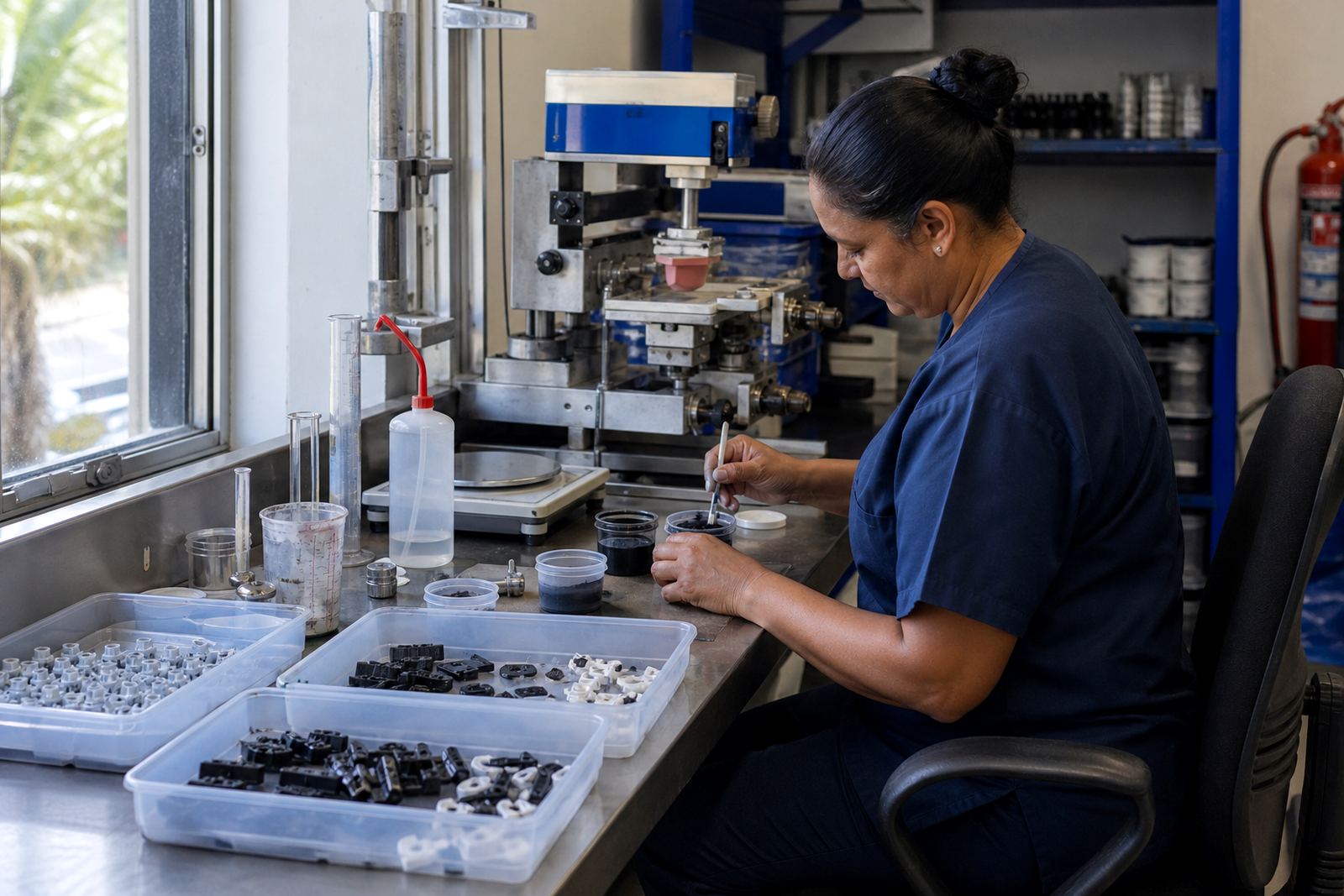
Good care keeps catheter part marking consistent over time. Pads wear, plates need checking and inks must be mixed and handled correctly. If a part starts showing light print, edge break-up or a shift in position, the issue can come from pad wear, plate depth, curing changes or the part itself. Regular sample checks help catch these problems before they affect a batch.
For follow-up jobs, the aim is to keep the same plate, approved artwork and print settings as far as possible. That makes rerun job control easier and reduces the chance of unwanted variation. We also support adhesion test samples, plate exposure, plate etching, fixture making and dispatch packing, which helps keep the job moving from sample stage to full production. Lerato Mabunda, our Quality Coordinator, looks closely at sample consistency, while Sanjay Dookhi handles artwork and plate work and Mfundo Xaba manages machine setup.
If a customer changes the part material, mould finish or curing method, the print result may change as well. That is why any change should be checked before the job is released again. Sibusiso Naicker leads the team from Westmead, Pinetown, with support from Naledi Kekana in production and Yashika Sewpersad in client services for enquiries through our contact page.
What matters before placing an order
Before ordering catheter part marking, check the exact part name, substrate, surface finish and where the mark must sit on the component. It helps to know whether the mark is for internal identification, assembly orientation or external labelling. The more precise the part information, the easier it is to match the plate, pad and fixture to the job.
It also helps to send samples for review and confirm whether the mark must survive a specific sterilisation process, cleaning step or handling cycle. Because these factors differ from one manufacturer to another, the print method and ink system need to be chosen for the actual application. Please also confirm the expected quantity, whether the job is a once-off sample run or repeat production, and whether the parts will be packed loose or in trays. That affects print handling and dispatch packing.
- Part drawing or clear photos with dimensions
- Artwork file or a clean sample of the existing mark
- Substrate type and any surface treatment details
- Required print position, orientation and quantity
- Any curing or handling limits after print
Run details
| Marking method | Pad printing with silicone pad transfer from etched plate |
|---|---|
| Typical applications | Catheter related accessory parts, small housings, connectors and related components |
| Print options | Single colour marks, small text, symbols and part codes |
| Setup types | Manual, semi-automatic or line-side workstation use |
| Service area | Pinetown, Durban and manufacturers across South Africa including Johannesburg, Cape Town, Pretoria and Gqeberha |