
What button legend printing does on small parts
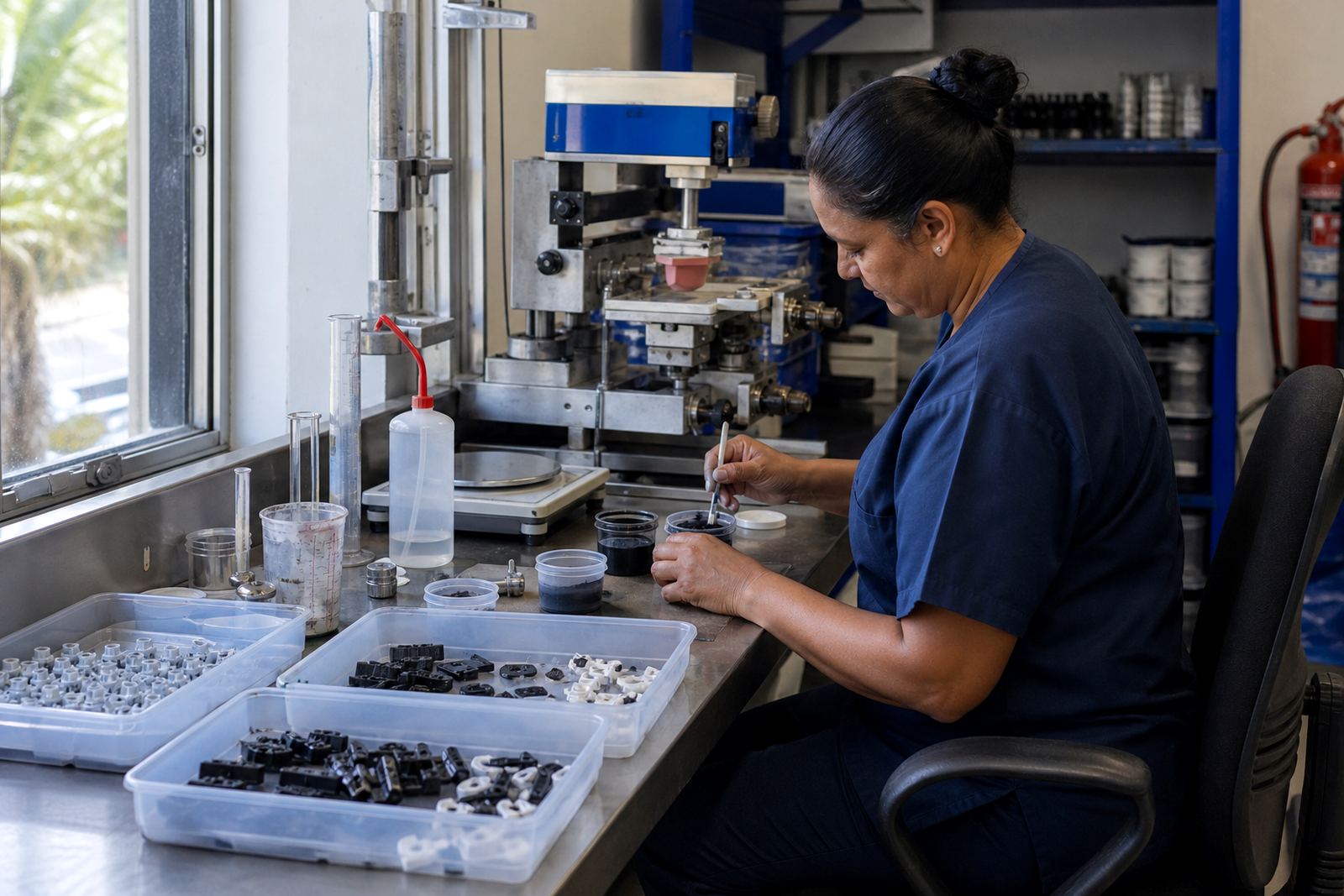
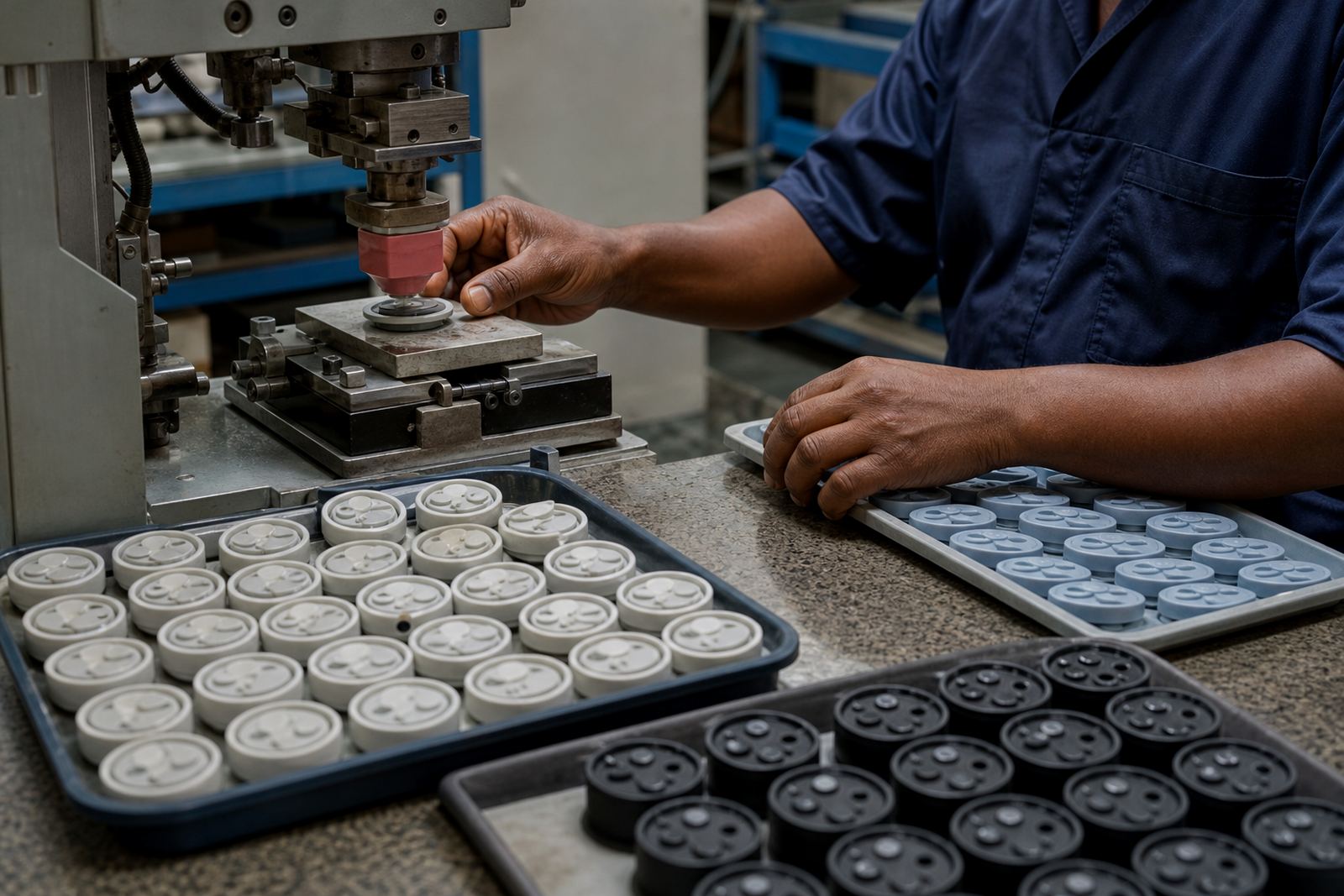
Button legends are the words, numbers and symbols that tell the user what each key or cap does. On medical equipment and electronic panels, that mark has to stay legible after cleaning, repeated pressing and general handling. Pad printing is well suited to this because a silicone pad can pick up ink from an etched plate and transfer it onto curved, recessed or slightly uneven surfaces with good control.
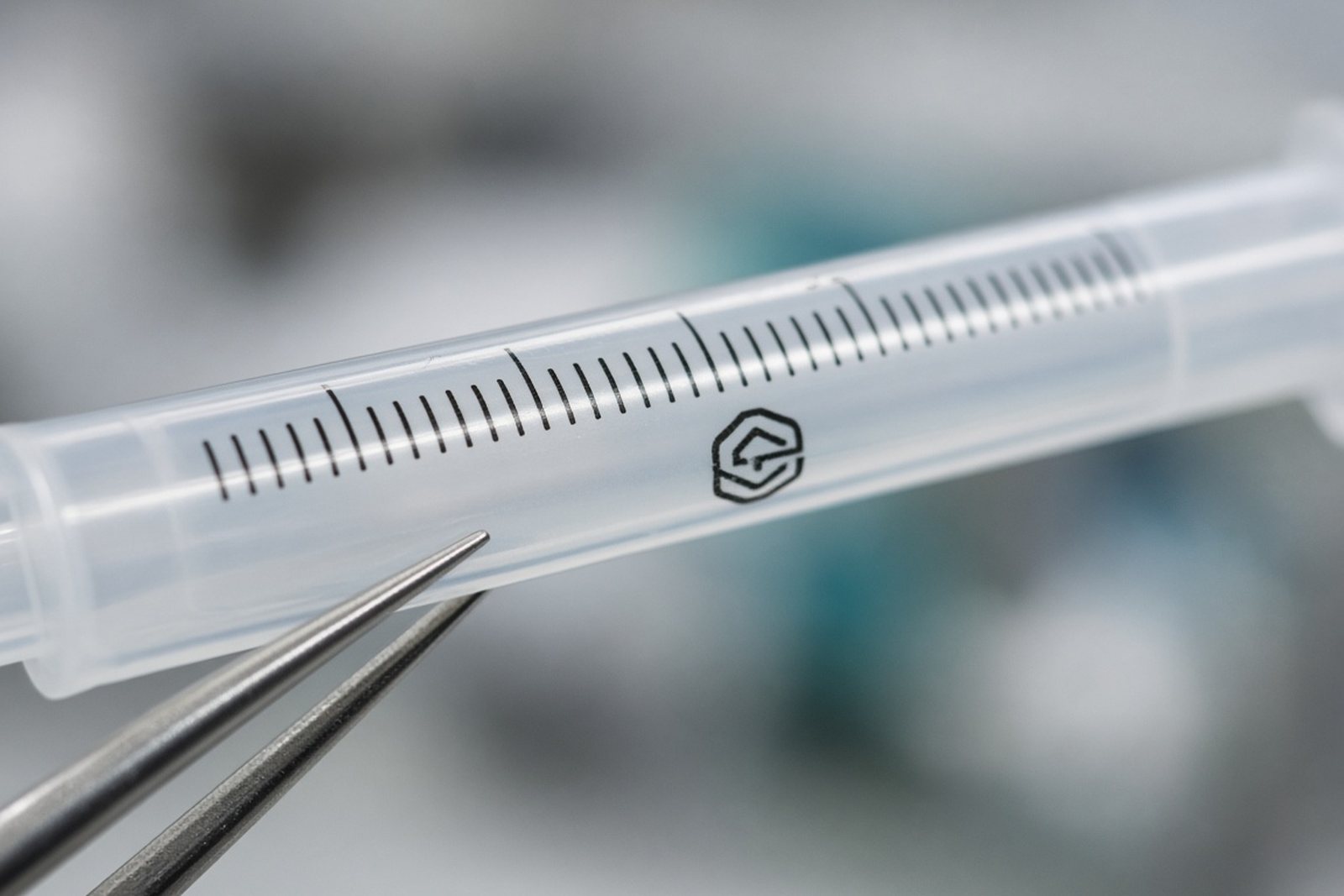
For membrane style keys, plastic buttons and control caps, the aim is a neat legend with consistent line weight and clean edges. The print can be applied as a single colour mark, or as a matched colour to suit the housing and panel layout. We work with small character sizes, fine icons and repeated button sets where alignment matters from unit to unit.
Typical applications include medical control heads, handheld devices, keypad overlays, laboratory instruments and compact electronic assemblies. If the part has a shallow dome, a soft touch surface or a narrow print area, the set-up must be adjusted carefully so the mark lands where it should and stays readable.
Suitable sizes, formats and print area limits
Button legends are usually printed on small to medium parts, with the exact size depending on the button face and the surrounding housing. We can work on single keys, grouped keys, selector caps and moulded panels where the legend needs to sit inside a defined print window. Fine text and simple symbols are best kept clear and bold enough for day to day use.
When planning a job, the usable print area matters more than the overall part size. The pad must reach the full legend area without smearing onto raised edges or leaving a weak print at the corners. For curved or domed parts, we also look at how much of the face can be contacted in one pass.
- Small legends: 3 mm to 8 mm text height, depending on font and panel contrast
- Standard button faces: 8 mm to 20 mm print areas for letters, numbers or icons
- Larger control caps and selector buttons: repeat positions can be set for batches with the same layout
- Multi-language legends: possible where the artwork is supplied cleanly and the spacing is checked before plate exposure
- Colour options: single colour prints are most common, with darker inks used where contrast is needed
Where button legends suit medical and electronic products
This type of print suits products that must be used quickly and accurately, often in low light or under time pressure. In medical rooms, labs, production lines and service environments, the operator needs to read the control at a glance. A clear legend can reduce mistakes and helps the part feel properly finished.
It is commonly used on parts that see regular cleaning, contact with gloves or light abrasion from repeated use. The printed legend must still be checked by the manufacturer for the complete device, because the final compliance and product validation remain the client’s responsibility. Our role is to produce a consistent mark on the part as specified.
- Membrane style keys on instruments and control panels
- Plastic buttons on handheld or wall mounted units
- Control caps for rotary selectors and push controls
- Front panels where each function needs a fixed legend
- Short-run replacement parts where repeatability is important
Ink selection, curing and durability checks
The right ink matters as much as the artwork. Different plastics and coatings accept ink differently, so we look at adhesion, surface energy and the way the part will be handled after printing. Some jobs need a harder curing response, while others are better suited to a lower heat process where the substrate cannot take too much stress.
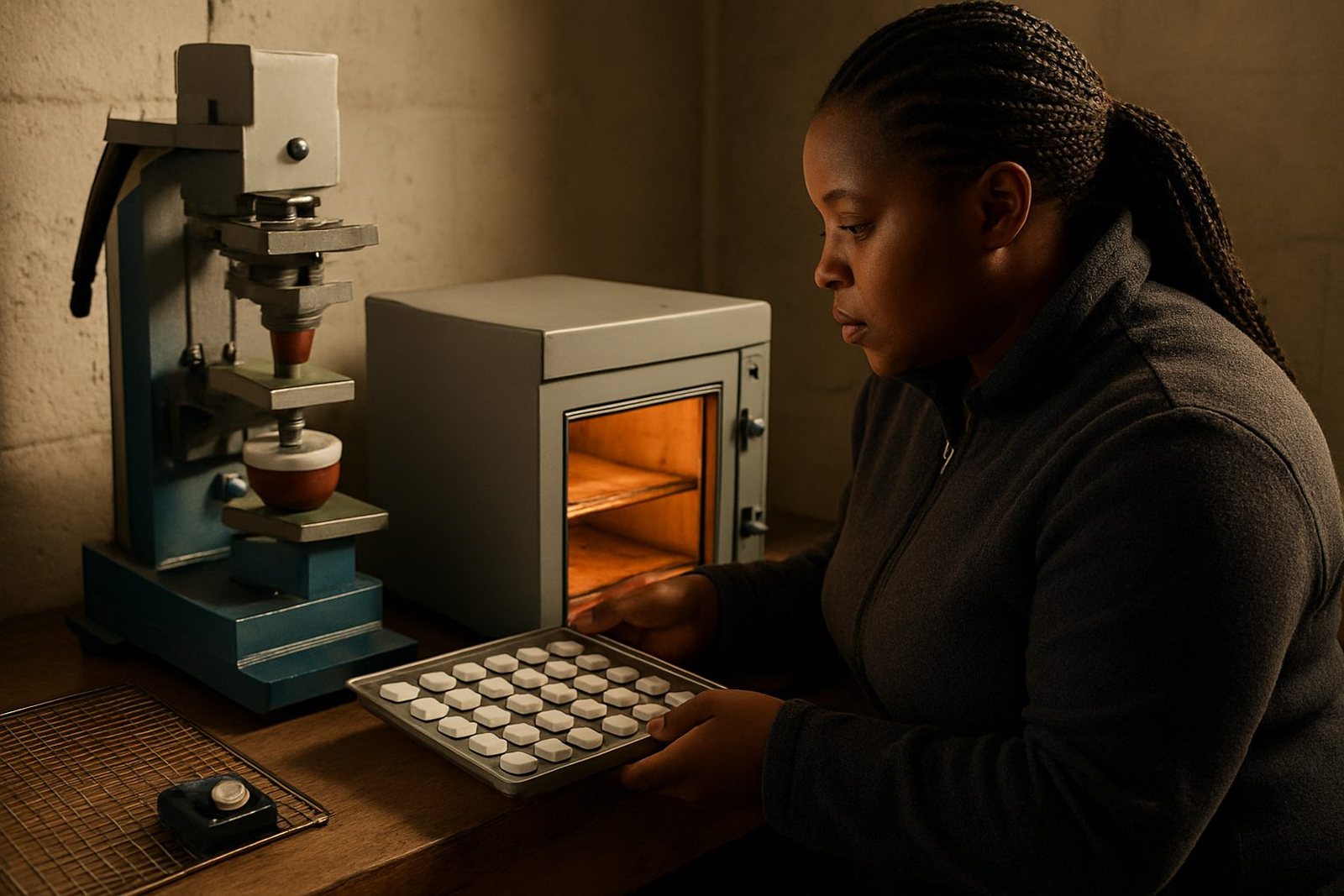
Curing can be by air drying, heat assisted drying or another suitable method, depending on the material and job requirements. The printed part should be fully cured before packing or assembly, otherwise the legend may mark too early and lose quality in handling. We can also prepare adhesion test samples before full production so the print method is checked against the actual part.
- Adhesion test samples available before full run
- Colour matching for darker legends or branded keys
- Print trials to check legibility, placement and transfer quality
- Repeat job control for reorders so the legend stays consistent
- Careful drying and curing control to reduce marking during packing
Sampling and setup
Button legend printing is done in our production area in Westmead, Pinetown, where we keep the process controlled from artwork through to dispatch packing. The main needs are a stable work area, clean parts, agreed artwork and enough time for sample approval before the batch runs.
For clients sending parts from Durban, Johannesburg, Cape Town, Pretoria or Gqeberha, packing must protect the button faces from rub marks and dust. Parts should be supplied clean, free from mould release or oil, and packed so the legend area does not scuff in transit. If a fixture is needed to hold the part during printing, we can make that as part of the set-up.
A neat set-up usually saves time later, because a button with a slight wobble or a rough edge can shift the print position and create rework. It is worth checking the part finish, the clip fit and the marking area before release to production.
What to confirm before you order button legends
Good ordering information helps us set up the plate, the fixture and the ink correctly first time. If the artwork is incomplete, we can help with logo redraws, print area planning and plate preparation, but it is still best to define the legend content clearly at the start. The more exact the instructions, the cleaner the batch outcome.
Please confirm the following details with your enquiry so we can assess the job properly and advise on the process. If there are revisions, we can run rerun job control on follow-up jobs to keep the marks consistent from batch to batch.
- Part material and surface finish
- Legend text, symbols and any font preference
- Button size, curvature and print area dimensions
- Colour required and whether contrast is critical
- Expected cleaning method and handling after print
- Quantity, batch split and delivery location
We support manufacturers through our enquiry form on the contact page, with work handled by Sibusiso Naicker and the team in production, artwork, quality and dispatch. Areas supported include Pinetown, New Germany, Westville, Durban, Johannesburg, Pretoria, Cape Town and Gqeberha. If you need legends on membrane style keys, plastic buttons or control caps, we can quote the set-up properly and keep the marking practical for the part.
Run details
| Print method | Pad printing onto button faces, caps and membrane style keys |
|---|---|
| Typical marking | Legends, numbers, symbols, icons and short control text |
| Suitable substrates | Moulded plastics, coated parts and selected control components |
| Artwork support | Logo redraws, print area planning and plate exposure |
| Quality checks | Trial sample runs, adhesion test samples and rerun job control |
| Service area | Westmead, Pinetown, Durban, Johannesburg, Pretoria, Cape Town and Gqeberha |