
Clean single colour marking for small parts
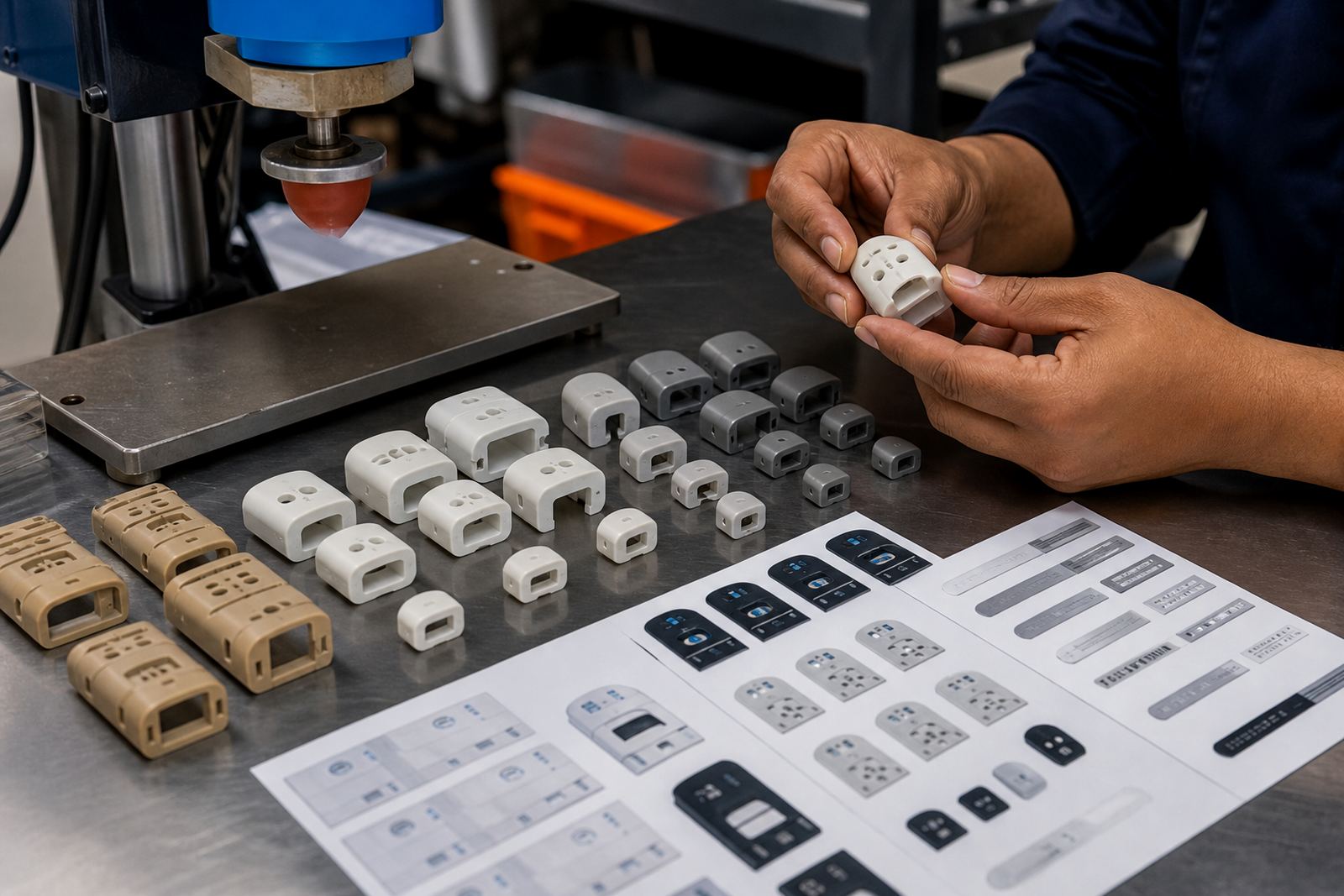
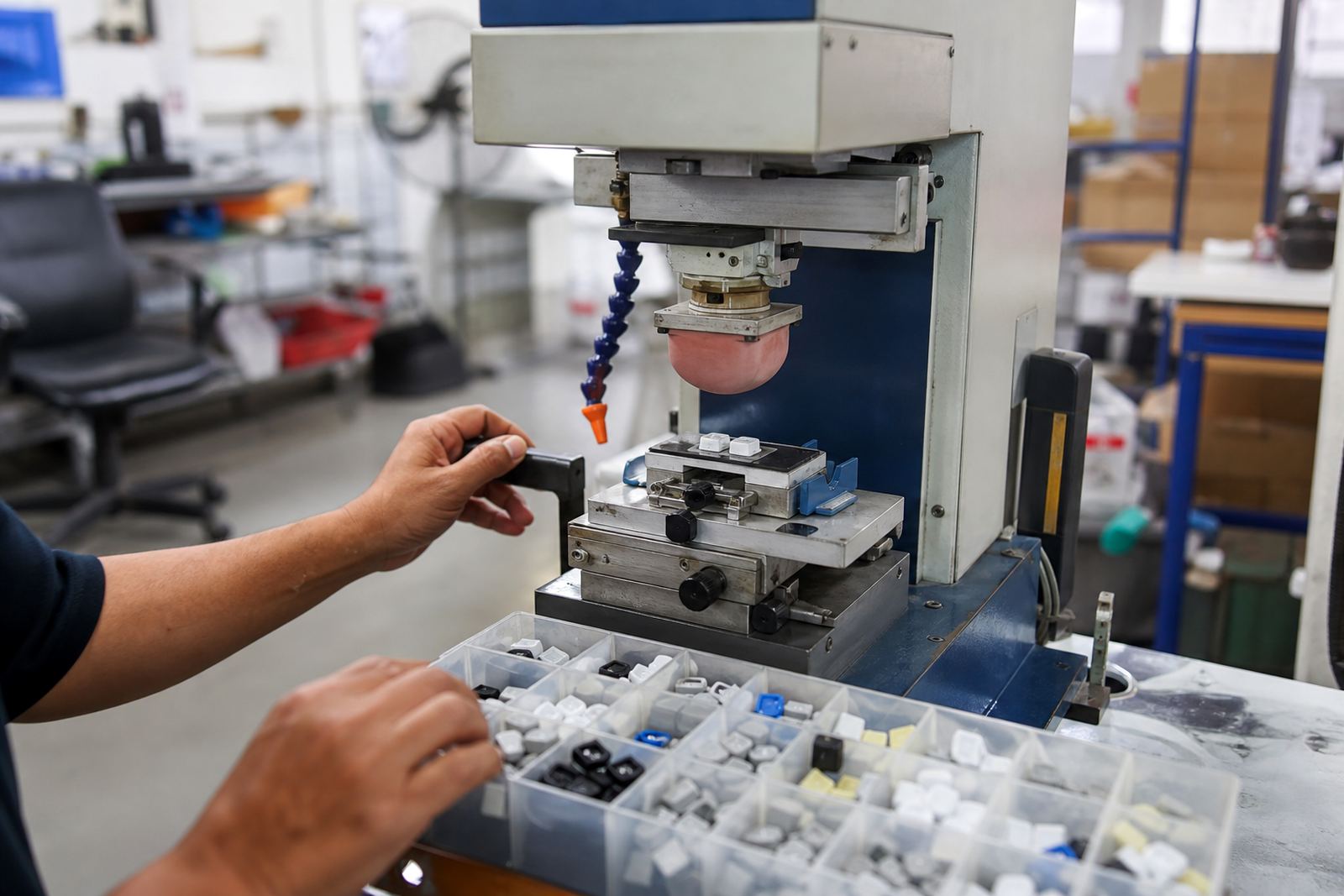
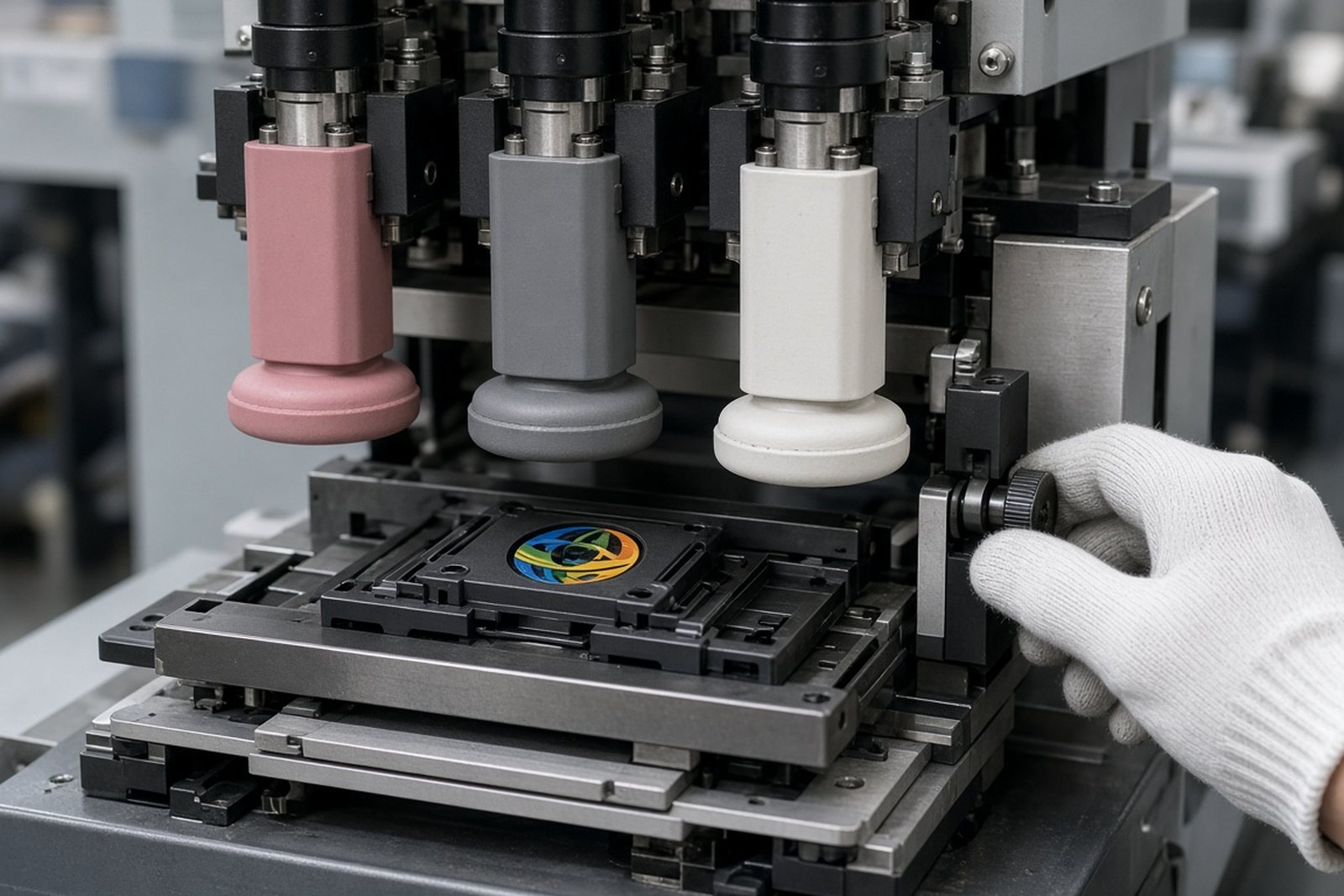
Single colour pad printing uses a soft silicone pad to pick up ink from an etched plate and transfer it onto a shaped surface. That makes it suitable for curved housings, switches, housings, caps, buttons and small device parts where screen printing or labels may not sit properly. For medical and electronics work, the main goal is clear identification that stays readable through handling, cleaning and normal production movement.
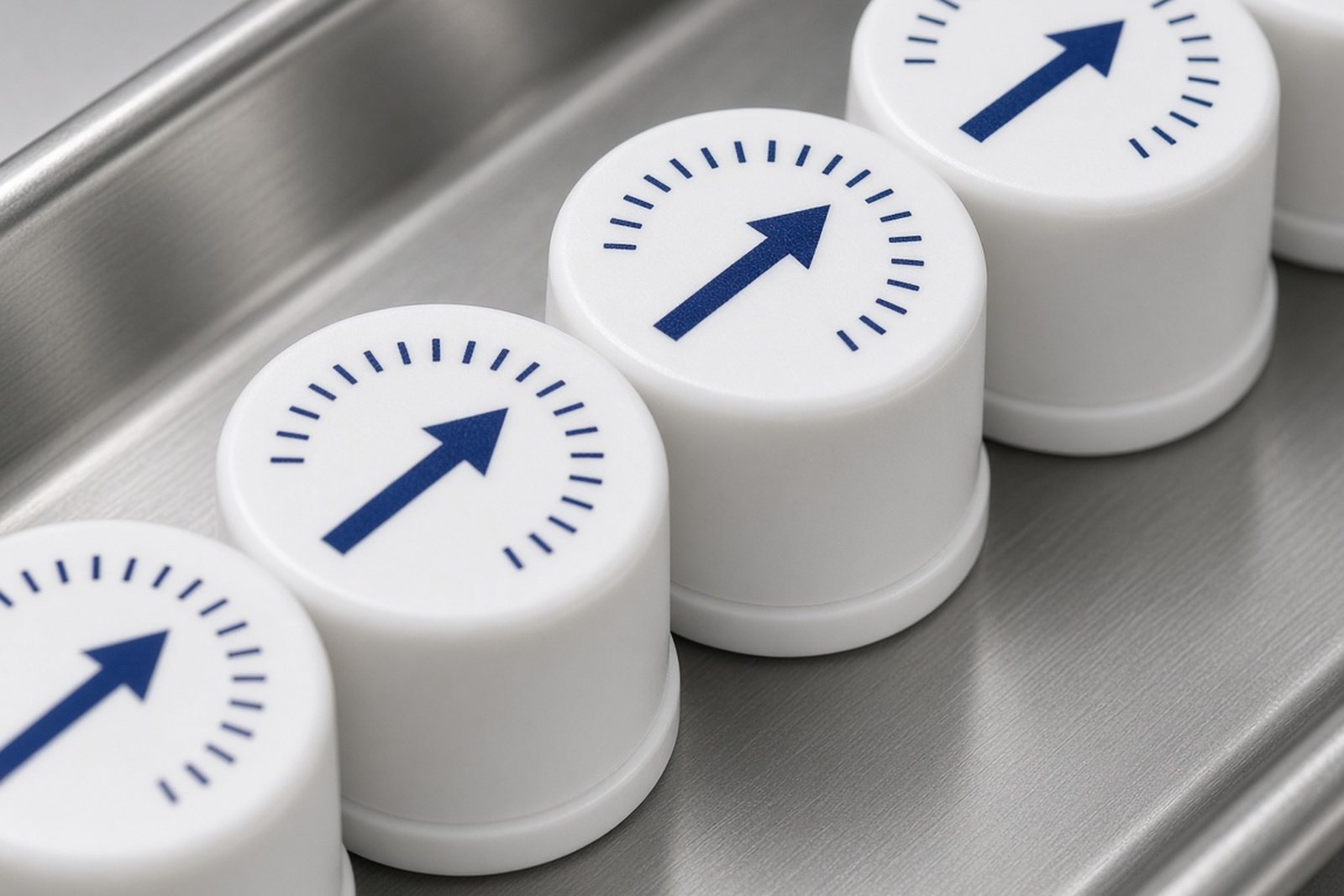
We set this up for plain symbols, reference marks, scale lines, simple logos and part numbers in one colour only. The result is neat and controlled, with consistent placement from one part to the next. For manufacturers in Pinetown, Durban, Johannesburg, Pretoria, Cape Town and Gqeberha, it is a practical way to keep marking tidy without adding extra complexity to the part.
Because every part shape behaves differently, the print method is matched to the surface, the ink type and the curing route. A glossy ABS cover, a textured moulding and a medical plastic shell may all need different handling. That is where trial samples matter, especially if the part has tight edges or a print area smaller than a 5 cent coin.
Where one colour printing suits best
This option suits work where the marking must be fast to read and simple to verify. It is commonly used for control panels, sensor bodies, small switch parts, instrument housings, cable accessories and component covers. In medical production it can help with batch or reference marks on non-sterile outer parts, while electronics customers often use it for icons, polarity marks and numbering.
- Symbols and icons for controls or settings
- Part numbers, batch references and simple codes
- Scale marks, alignment points and single line indicators
- Simple branding on small moulded parts
- Marking on plastic, coated metal and certain engineered surfaces
We also see it used on short-run jobs where the artwork is uncomplicated but the placement must still be accurate. One colour can be the right choice when a client wants dependable marking without multiple passes. It keeps setup time lower and the job easier to control during repeat production.
Sizes, print areas and practical options
Single colour pad printing is flexible, but the useful print area is still governed by the part shape, the pad size and the flat or curved space available. Small pads are used for compact details, while larger pads suit wider graphics or longer lines of text. The artwork may be reduced, redrawn or repositioned so the final mark lands squarely on the available surface.
Typical options include shallow or deep etched plates, different pad profiles, and fixtures made to hold the part steady during the print cycle. On some jobs the print area is only 8 mm wide, on others it may be wider than 40 mm. The key is matching the pad and plate to the actual component, not just the drawing. If the surface is heavily curved or has ribs nearby, the fixture and artwork layout must allow for that. A quick trial sample can save a lot of back-and-forth later on.
- Small detail printing for tight component faces
- Single or repeat marks across several part positions
- Fixture-based positioning for consistent placement
- Ink choice matched to substrate and handling needs
- Curing selection based on production speed and material type
Trial runs and approval
Pad printing equipment for this type of work is usually set up in a clean production area with a stable bench or frame, clear access for operator movement and enough space for part loading and curing. The exact footprint depends on the machine size, fixture arrangement and whether drying or curing is done inline or separately. A basic setup can fit into a modest workshop bay, while higher output work needs more room for parts flow and inspection.
We also consider local conditions such as coastal humidity in Durban and the Midlands, because those can affect ink behaviour and drying times. In warmer inland towns, solvent flash-off may be quicker, while at the coast the process may need a little more control. That is normal production planning, not a problem in itself, but it must be accounted for before a job goes live.
Care, servicing and day-to-day control
Single colour printing stays consistent when the plate, pad and ink system are kept in good order. Pads should be checked for wear, flattening or surface damage. Plates need to stay clean and correctly etched. Fixtures must hold the part without movement, because even a small shift can affect alignment on fine marks. Ink is another key factor and should be mixed and handled the same way each shift.
Routine servicing normally includes cleaning the inking system, checking doctoring edges, confirming pad condition and reviewing curing performance. If parts start showing pale print, feathering or slight offset, the issue is often with setup rather than the artwork. A simple inspection schedule helps catch this early. Some customers keep a sample board nearby so operators can compare each batch against an approved reference, which is a practical way to avoid rework.
- Keep parts free of mould release, dust and handling oils
- Store inks and hardeners as directed for the specific job
- Inspect pad surface before each run
- Check print position after the first few samples
- Confirm cure and adhesion before packing
If a job is repeated later, it helps to retain the same artwork version, fixture notes and curing method. That makes rerun control easier and reduces the chance of small changes creeping in. For busy manufacturers, that kind of record keeping is just good shop-floor discipline.
What matters before placing an order
Before ordering single colour printing, it helps to confirm the actual part material, the printable area, the required colour and the type of mark needed. If the part is for a regulated device, the customer remains responsible for device compliance and for deciding whether the mark is suitable for the end application. Our role is to print accurately to the approved brief and to help with samples, plates and production control.
The most useful information is often straightforward: a clean drawing, a photo of the part, the exact position of the mark and whether the surface is smooth, textured or curved. If the part has a boss, slot or recess nearby, mention it. That can change the pad choice and the fixture layout. For one colour jobs, the simpler the brief the better, but the more detail we get up front, the less likely there is to be a hold-up during sample approval. It saves time and keeps the job moving.
- Material type and surface finish
- Exact print size and position
- Artwork in the clearest available format
- Expected handling, cleaning or wear on the part
- Required quantity and repeat order pattern
- Any curing preference or production timing limits
Clients across South Africa can reach us through the contact page form. From Westmead, Pinetown we support manufacturers in Durban, Johannesburg, Pretoria, Cape Town, Gqeberha and nearby industrial areas such as New Germany and Westville.
Run details
| Product type | Single colour pad printing for small parts |
|---|---|
| Typical use | Symbols, scales, part numbers and simple branding |
| Suitable substrates | Plastics, coated surfaces and selected metal parts |
| Print method | Silicone pad transfer from etched plate |
| Setup options | Custom fixtures, trial samples and rerun control |
| Base | Westmead, Pinetown, KwaZulu-Natal |