
Multi colour pad printing for small parts with tight visual demands
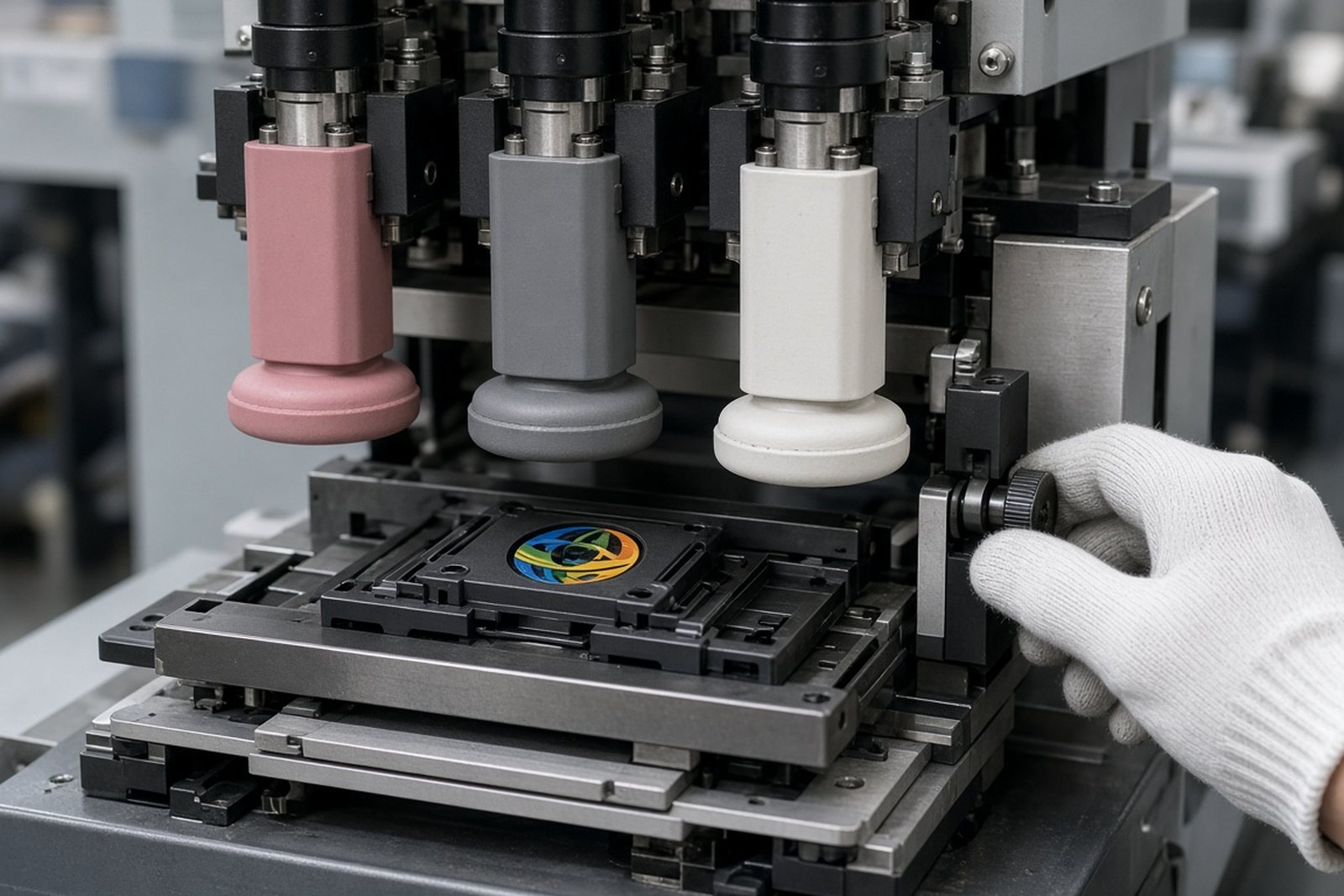
Multi colour pad printing transfers inks from etched plates onto a part by means of a silicone pad, one colour at a time. Each colour is matched to a separate plate and the print sequence is set so the marks land in the right place on housings, caps, keypads, switches, connectors and instrument parts. For medical and electronic components this matters because text, icons, warning marks and identification codes often sit close together on a small print area.
This process suits parts that are curved, recessed or uneven, where flatbed printing would struggle. We work with plastics, coated metals and other engineered surfaces commonly used by manufacturers in Durban, Johannesburg, Cape Town, Pretoria and Gqeberha.
- Single or multi colour layouts on small and medium parts
- Fine text, symbols, logos and orientation marks
- Layered visual layouts where the colours must register cleanly
Where multi colour printing suits medical and electronic components
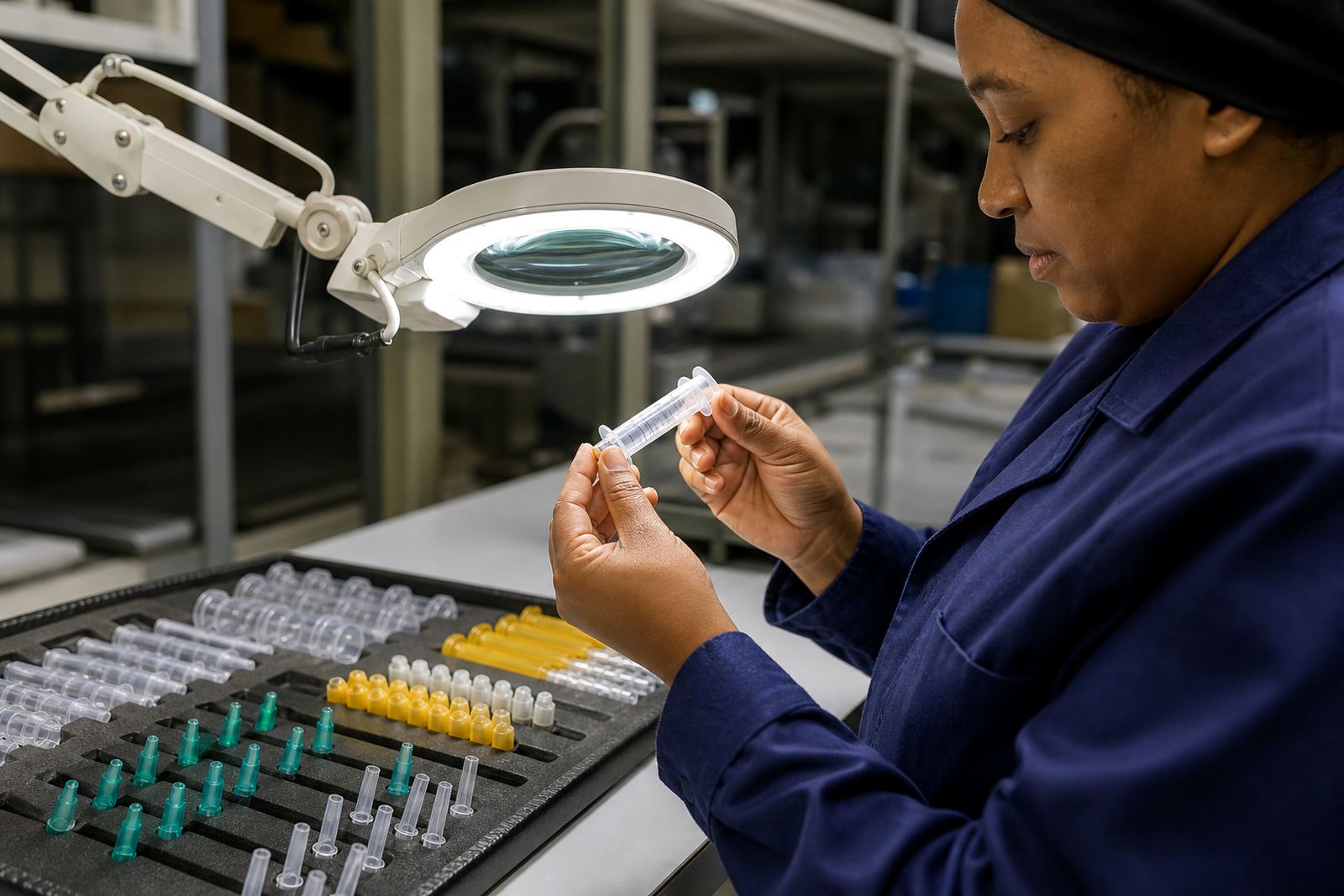
Multi colour printing is often chosen when the part must communicate more than one message at once. That can include caution marks, function icons, channel identification, measurement guides, brand marks and serial style information. On medical parts, the aim is usually clear identification and legibility. On electronic parts, the same process is used for control buttons, faceplates, casings and assemblies that need a neat finish under daily handling.
The method is practical for manufacturers that want the printing done after moulding or machining, once the part shape is final. It also works well where the part has a shallow curve or a mixed surface, as long as the print area can be defined accurately. A good layout saves later trouble, especially when the same component is used across several product variants.
- Medical housings, caps and control parts
- Electronic enclosures, buttons and front panels
- Small parts with multiple labels, icons or colour zones
Sizes, colour count and print area options
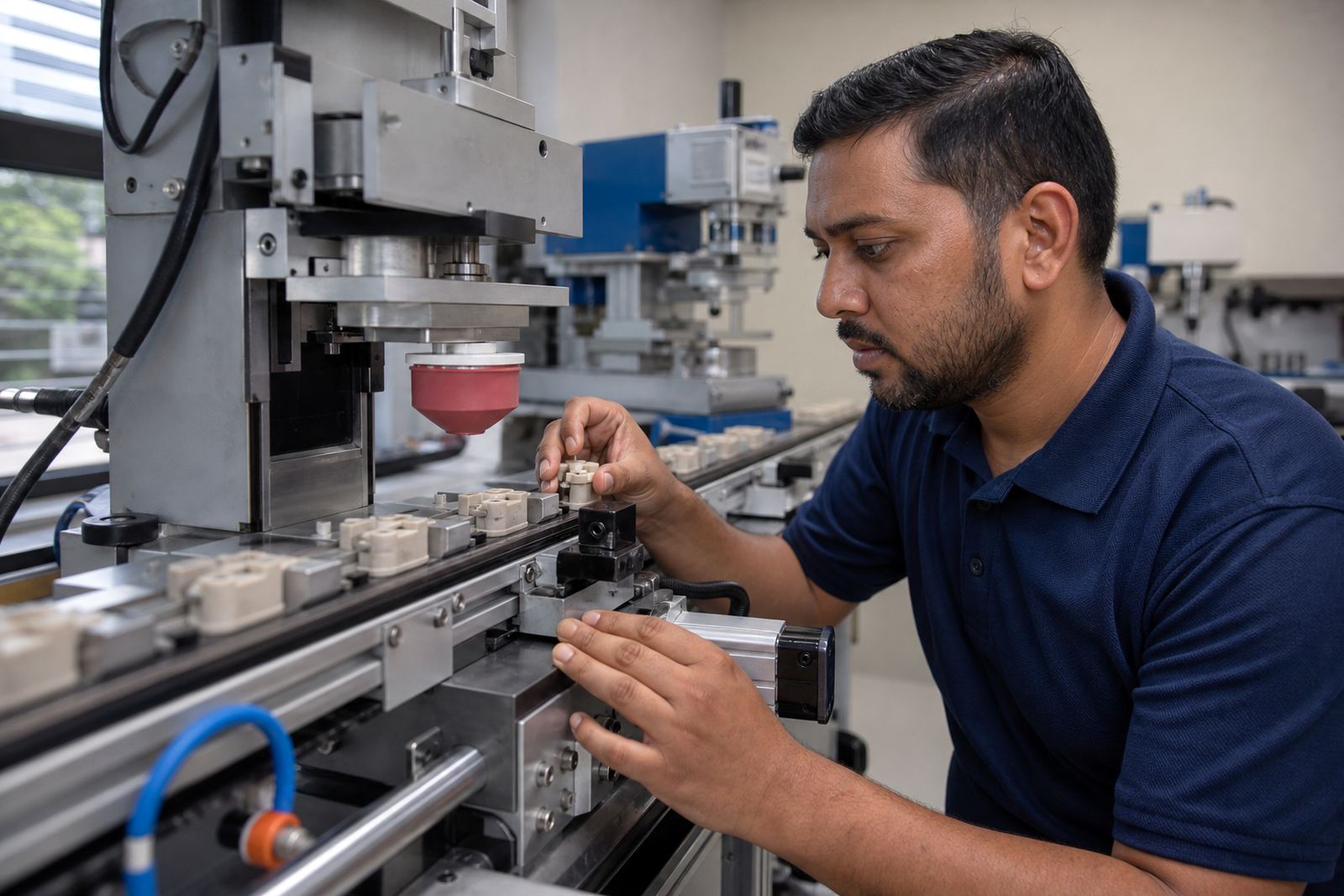
The setup depends on the component size, the space available for each colour and the amount of detail required. Most multi colour jobs need careful fixture making so the part sits in the same position for every pass. That is what keeps the layers lined up, even when the print area is only a few millimetres wide. We plan the artwork, the plate exposure and the print order together before any production run starts.
Because parts vary so much, we do not treat size as a one size answer. A small button cap needs a different approach from a full front panel or a long housing strip. The print area is checked against the part geometry, wall thickness and any raised ribs or recesses that may affect pad travel. If needed, we do adhesion test samples and trial runs before sign-off.
- Print areas from very small detail marks up to larger panel sections
- Two colour, three colour or more complex layered layouts
- Fixture designs to suit flat, curved or stepped surfaces
Trial runs and approval
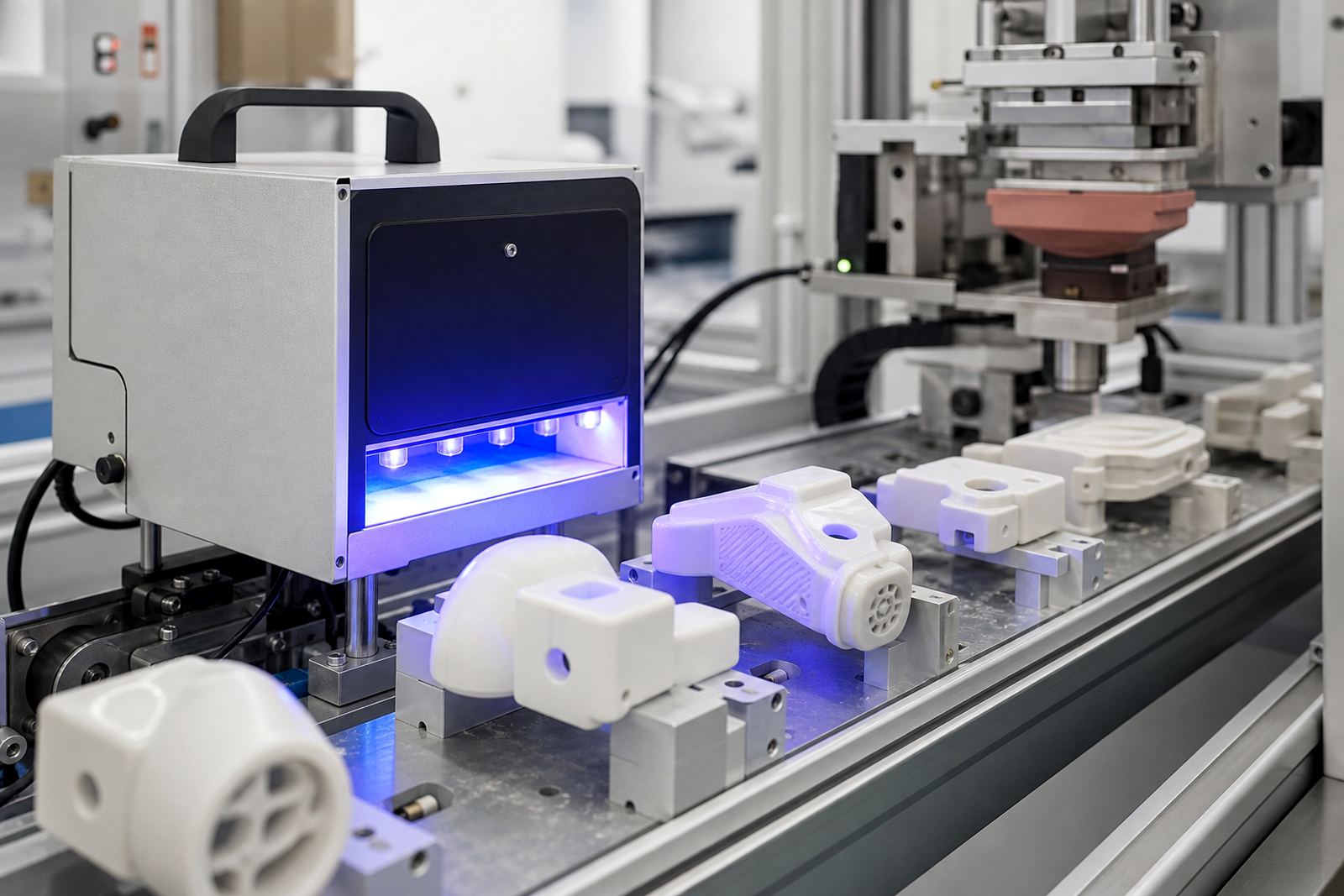
Multi colour pad printing is usually installed in a clean production space with stable benches, good part handling and enough room for fixtures, drying racks and inspection. The machine layout must allow easy loading, plate changes and safe curing or drying stages.
In some cases compressed air is also needed for pad movement or fixtures. We specify these details against the job before handover, including the space needed for operator access and job staging. In humid coastal conditions, especially around Durban, drying times and ink behaviour can shift a bit, so that has to be allowed for.
- Compressed air where the setup requires pneumatic movement
- Dry, dust controlled handling area for printed parts
Care, servicing and repeat job control
Good pad printing depends on regular cleaning, correct ink management and keeping plates, pads and fixtures in proper condition. Silicone pads wear over time and need inspection for surface damage, swelling or hardening. Plates should be checked for fine detail loss and fixture surfaces must stay clean so part position does not drift. If a part starts to show weak transfer or colour shift, the cause is often in setup, surface condition or curing rather than the artwork itself.
For repeat jobs, rerun control is important. We keep to the approved sample, confirm the print order and recheck the key settings before restarting a batch. That reduces variation and makes it easier to match earlier production. It also helps when a manufacturer is working across several sites or sending parts between Pinetown, Johannesburg and Cape Town for assembly.
- Inspect pads for wear and clean them with suitable methods
- Store plates and fixtures so they do not pick up dust or damage
- Keep approved samples for later reruns and comparison
What to check before placing a multi colour order
Before ordering, it helps to confirm the base material, surface finish, print area, colour count and whether the part will be handled, sterilised, assembled or exposed to heat. The more detail supplied at the start, the easier it is to plan the print sequence and curing method. For medical and electronic parts, the customer remains responsible for final device compliance and product suitability, so the print specification should fit into the wider manufacturing process.
It is also worth checking whether the artwork is final, whether any small text needs adjustment and whether the mark must stay within a specific edge distance. We can assist with logo redraws, print area planning, colour matching, adhesion test samples, plate etching, trial sample runs and dispatch packing. A clear brief keeps the job moving and cuts down on rework later.
- Part material, finish and exact print location
- Number of colours and required curing or drying method
- Any handling, assembly or compliance limits on the final part
Run details
| Process | Multi stage pad printing with separate plates and silicone pads for each colour |
|---|---|
| Suitable parts | Medical housings, caps, buttons, enclosures, faceplates and electronic components |
| Print count | Two colours, three colours or more, depending on artwork and part geometry |
| Surface types | Plastics, coated metals and other engineered component surfaces |
| Preparation options | Artwork Preparation, Colour Matching, Adhesion Test Samples, Fixture Making and Trial Sample Runs |
| Base of operations | Westmead, Pinetown, with supply support for Durban, Johannesburg, Pretoria, Cape Town and Gqeberha |