

What Scale and Graduation Printing Does
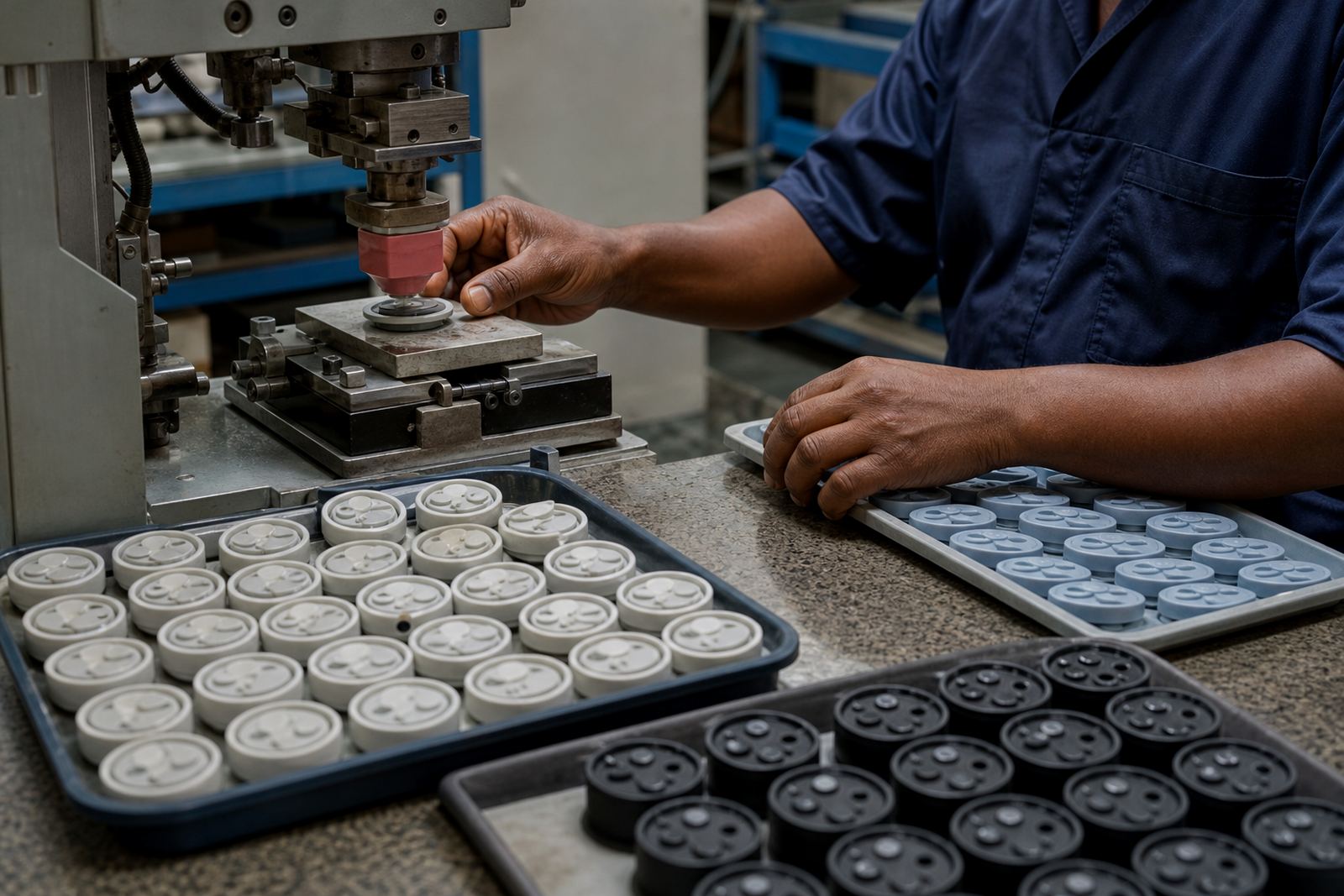
Scale and graduation printing places fine, repeatable markings onto shaped parts that are often too small, curved or awkward for screen work. A silicone pad lifts ink from an etched plate and transfers it onto the part, which makes it suitable for housings, caps, knobs, cartridges, housings and other functional components used in medical and electronic manufacture.
The goal is clear: lines, numerals and marker points must stay legible and aligned from one part to the next. In practice that means careful artwork, correct plate preparation and ink choice matched to the substrate. On smoother plastics and coated parts the print can be very sharp, while on slightly textured parts the setup needs closer checking to avoid broken lines or uneven fill.
Typical Sizes, Line Weights And Layout Options
Scale and graduation work is usually specified by the part size and the viewing distance. Fine tick marks may be only fractions of a millimetre wide, while larger indexing lines or dosage style bands need more coverage so they remain visible after handling and cleaning. We work from the finished component size, not just the artwork, because the print has to sit correctly around a curve, flat face or recessed section.
- Tick marks and index lines for knobs, selectors and control faces
- Graduation bands for dosage style or measured adjustment markings
- Numbering, arrows and reference symbols on functional parts
- Single colour or multi-stage print builds where contrast is important
- Small runs for trials, then repeat jobs with the same setup notes
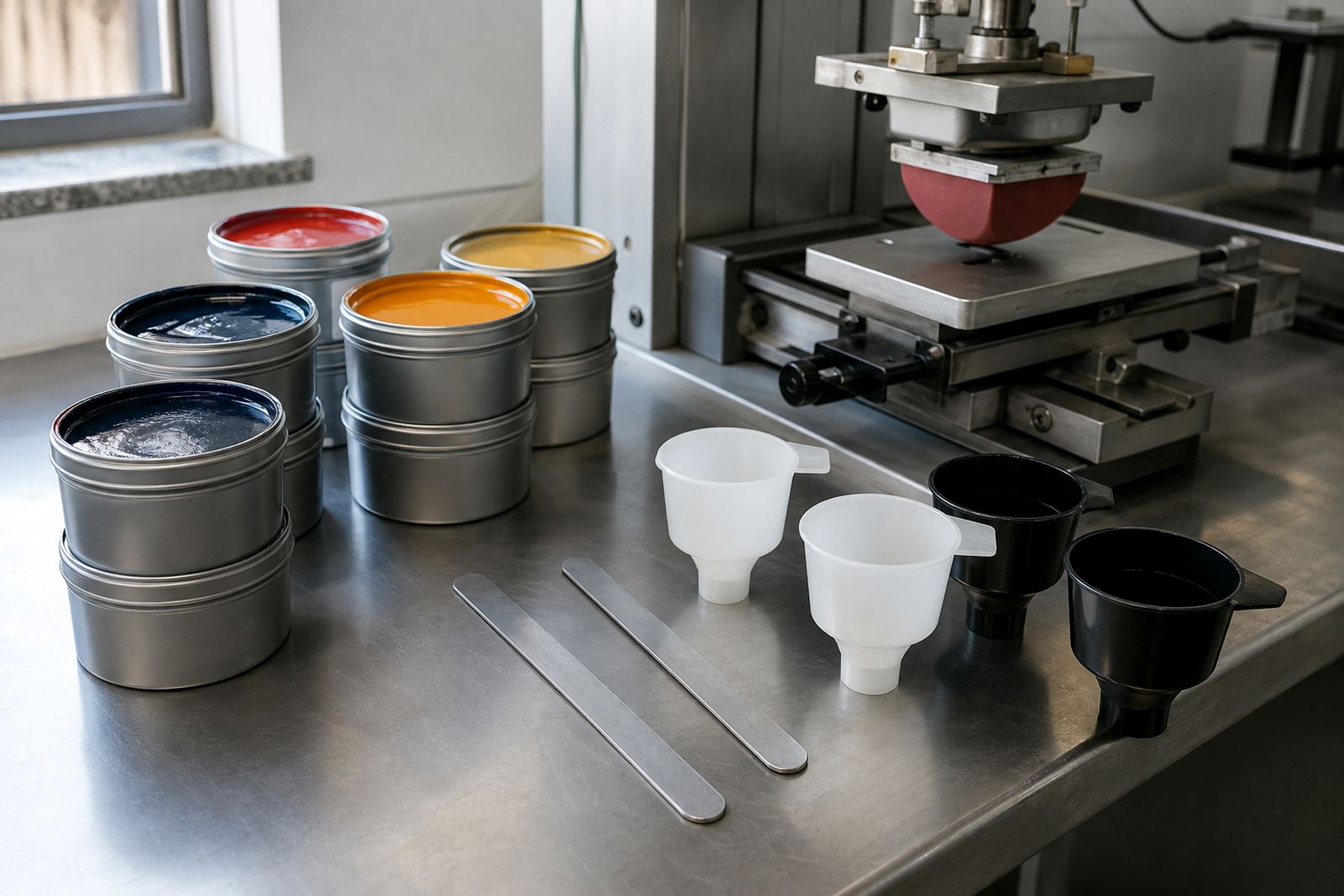
For many jobs, the best result comes from clean one-colour markings in black, white or a high-contrast process ink. Where the part colour is dark or glossy, the ink system and curing method need to be matched carefully so the graduations do not blur, lift or fade after use.
Where This Product Suits Best For Medical Parts
This type of marking suits manufacturers that need repeatable visual reference on production parts or finished assemblies. It is common on medical and electronic components where a technician or user must line up a setting, read a fill point, or confirm position at a glance. It also helps where a part passes through assembly, service or calibration stages and the markings must remain clear over time.
Because many of these parts are small, the surface detail matters. Raised ribs, shallow curves, mould lines and material sheen can all affect the final print. We usually plan the print area before plate exposure, then check the part against a sample run so the scale sits squarely and does not lose detail at the edges.
- Control knobs and selector caps
- Instrument housings and front panels
- Measuring sleeves, cartridges and dispensers
- Electronic casings, housings and switch bodies
- Small plastic or coated parts that need precise reference marks
Care, Servicing And Repeat Job Control
Once a scale or graduation is in production, consistency depends on keeping the same plate, ink mix, pad condition and curing settings. Pads wear with use and can pick up contamination from dust, mould release or handling residue. Plates can also lose detail if they are not stored and cleaned properly. A simple maintenance routine helps keep tick marks crisp and the spacing accurate across repeat runs.
For parts that move through assembly or cleaning, the print should be checked for scuffing, solvent resistance and readability after the intended process. If a client changes material, gloss level or mould supplier, the setup may need new samples. We keep rerun job control notes so later batches match the approved version as closely as possible.
- Keep printed parts away from abrasion during packing and transport
- Allow full cure time before stacking or bagging
- Check the first-off sample after any artwork, ink or material change
- Store spare parts and samples together for future comparison
What To Check Before Ordering Scale Markings
Before you place an order, check the exact part drawing, the print face, and the number of positions or increments needed. It helps to know whether the graduations are functional only, or whether they must also be easy to read for operators, technicians or end users. The more detail you can give at the start, the fewer delays there are during trial sampling.
We usually ask for the substrate material, the final surface finish, the required colour contrast and the area available for the print. If the part has a curved face or a very narrow band, that affects artwork spacing and plate layout. For multi-part jobs, it is also useful to note whether the same mark must appear on left and right hand versions, or whether the orientation changes between sizes.
- Part material and finish
- Print area dimensions and any curved surfaces
- Line spacing, number of graduations and text size
- Colour requirement and background colour of the part
- Heat tolerance, cleaning method and packing method
Clients across South Africa, from Durban and Johannesburg to Cape Town, Pretoria and Gqeberha, usually start with a sample run so the marking can be checked before full production. That keeps the process practical and reduces avoidable rework.
Run details
| Print method | Silicone pad transfer from etched plate |
|---|---|
| Typical markings | Tick marks, scales, numerals and dosage style graduations |
| Common substrates | Plastics, coated parts and smooth moulded components |
| Colour options | Single colour or layered contrast markings |
| Setup items | Artwork prep, plate exposure, plate etching and fixtures |
| Production control | Trial samples, curing selection, rerun control and dispatch packing |