
Fine marks for small parts and dense layouts
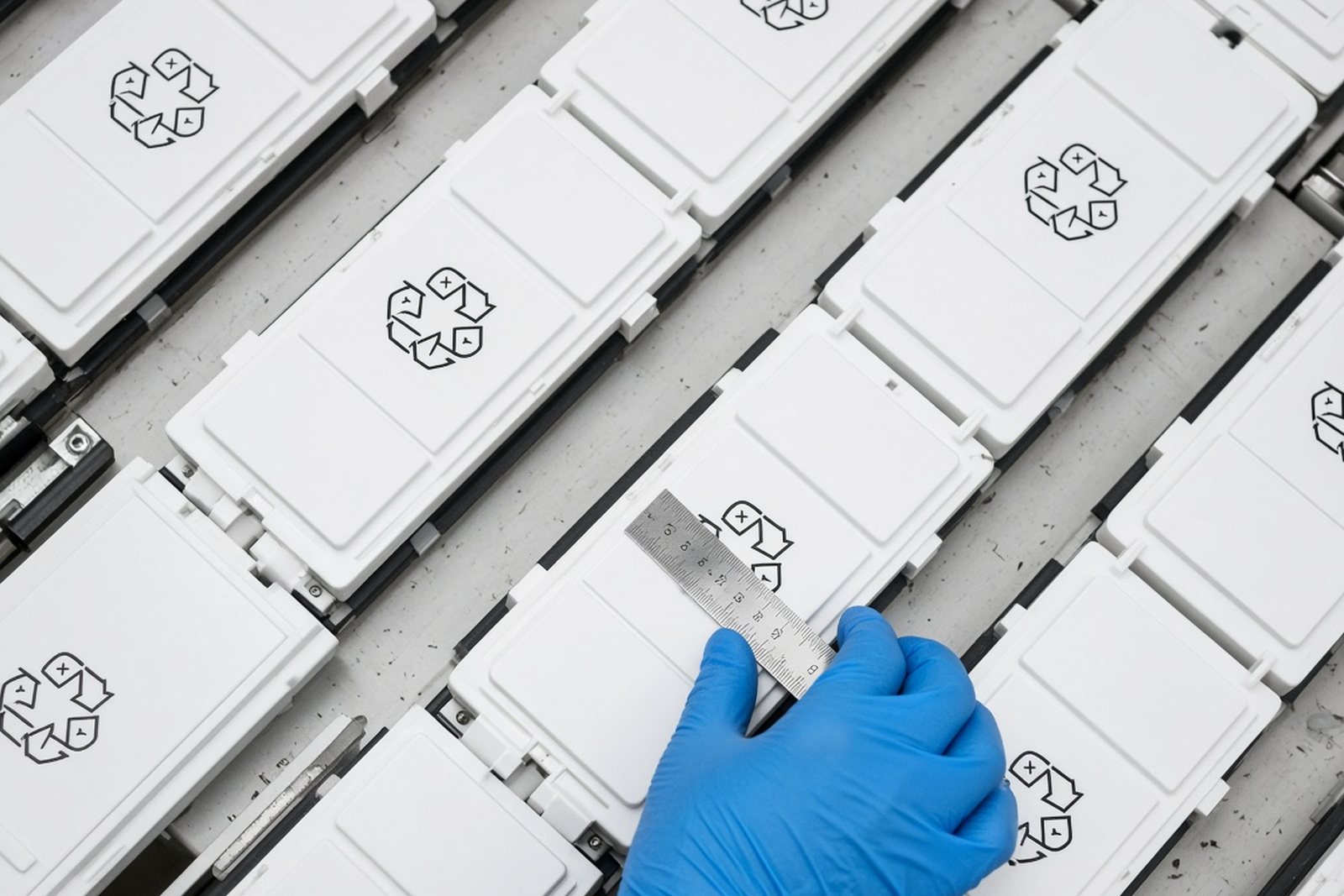
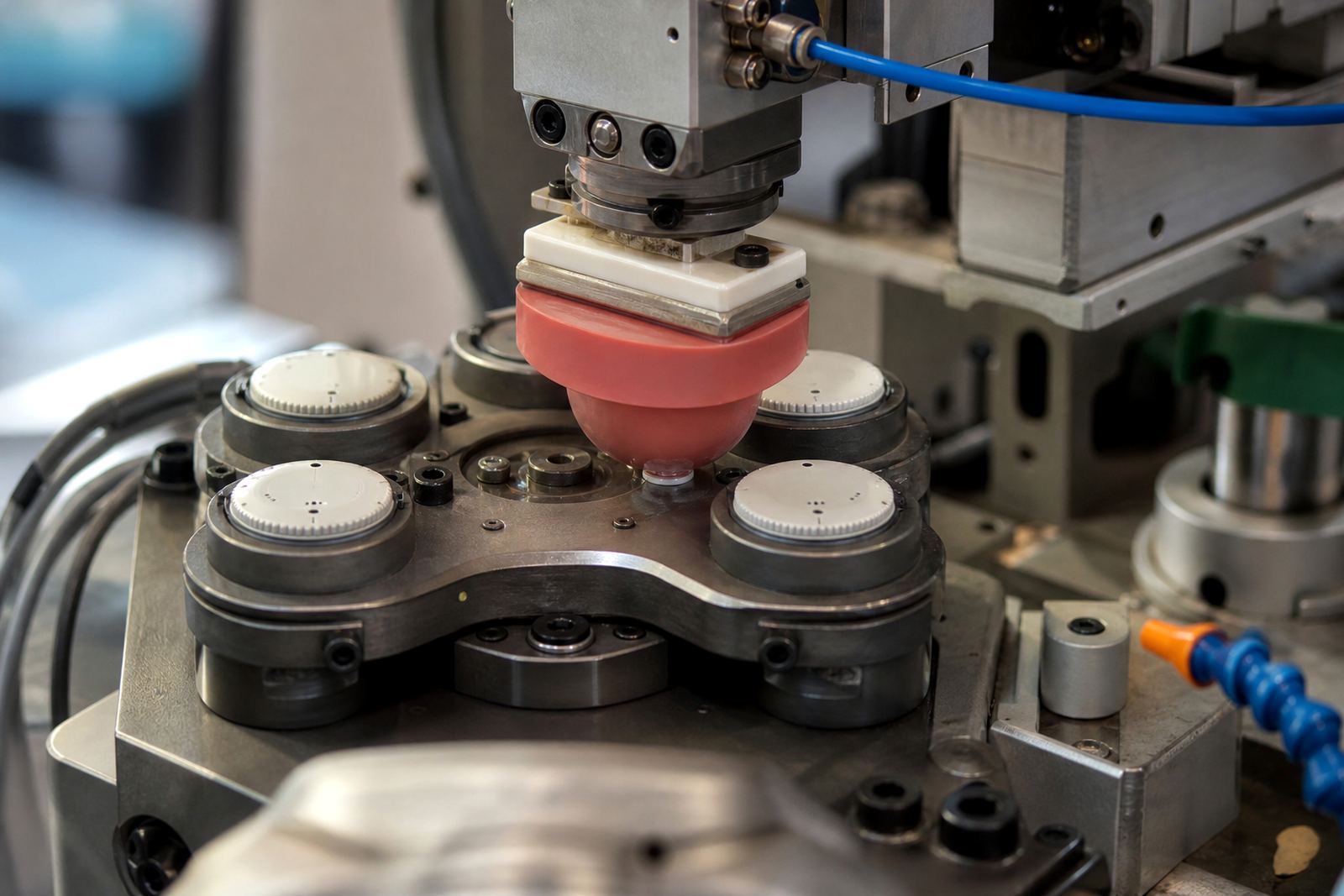
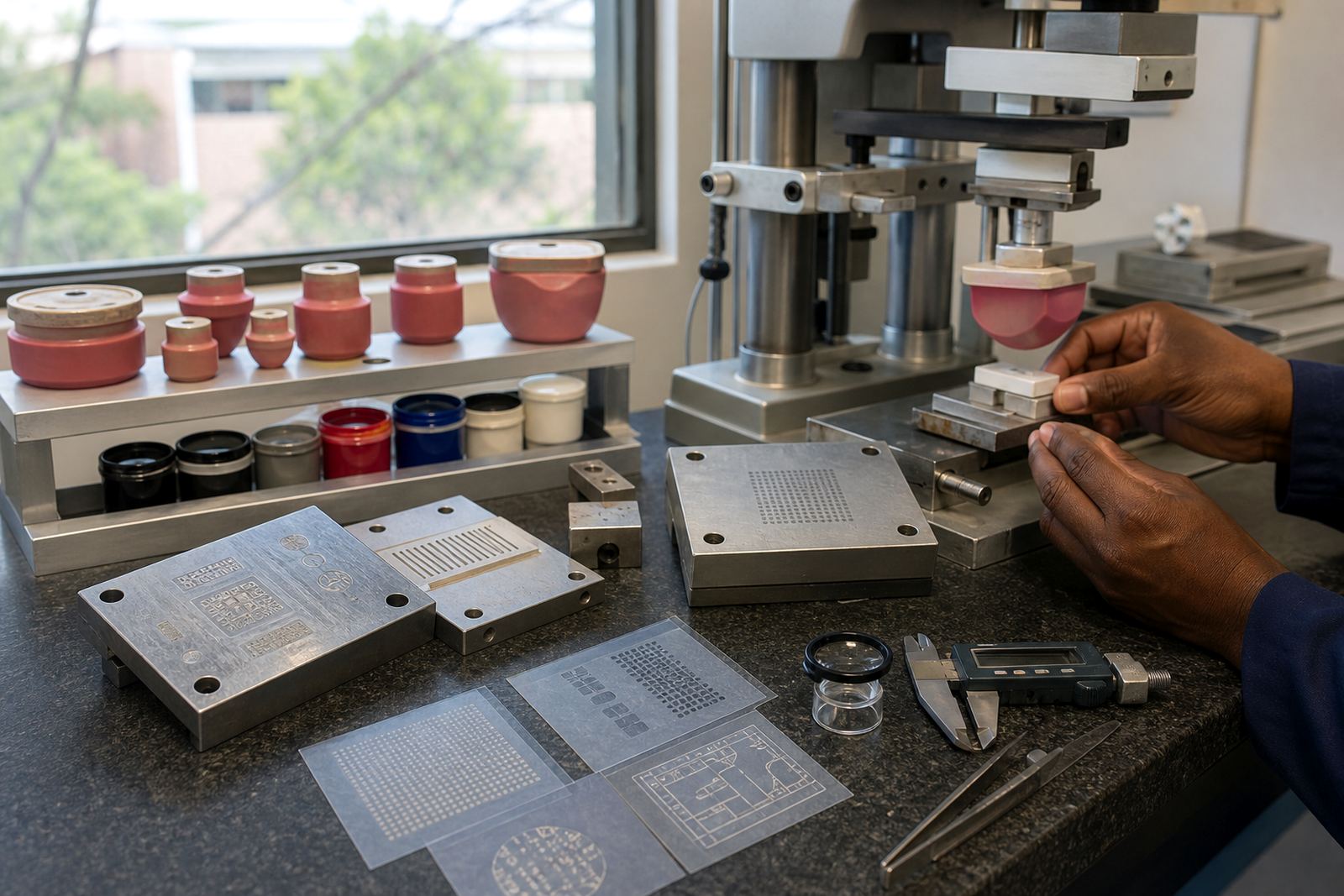
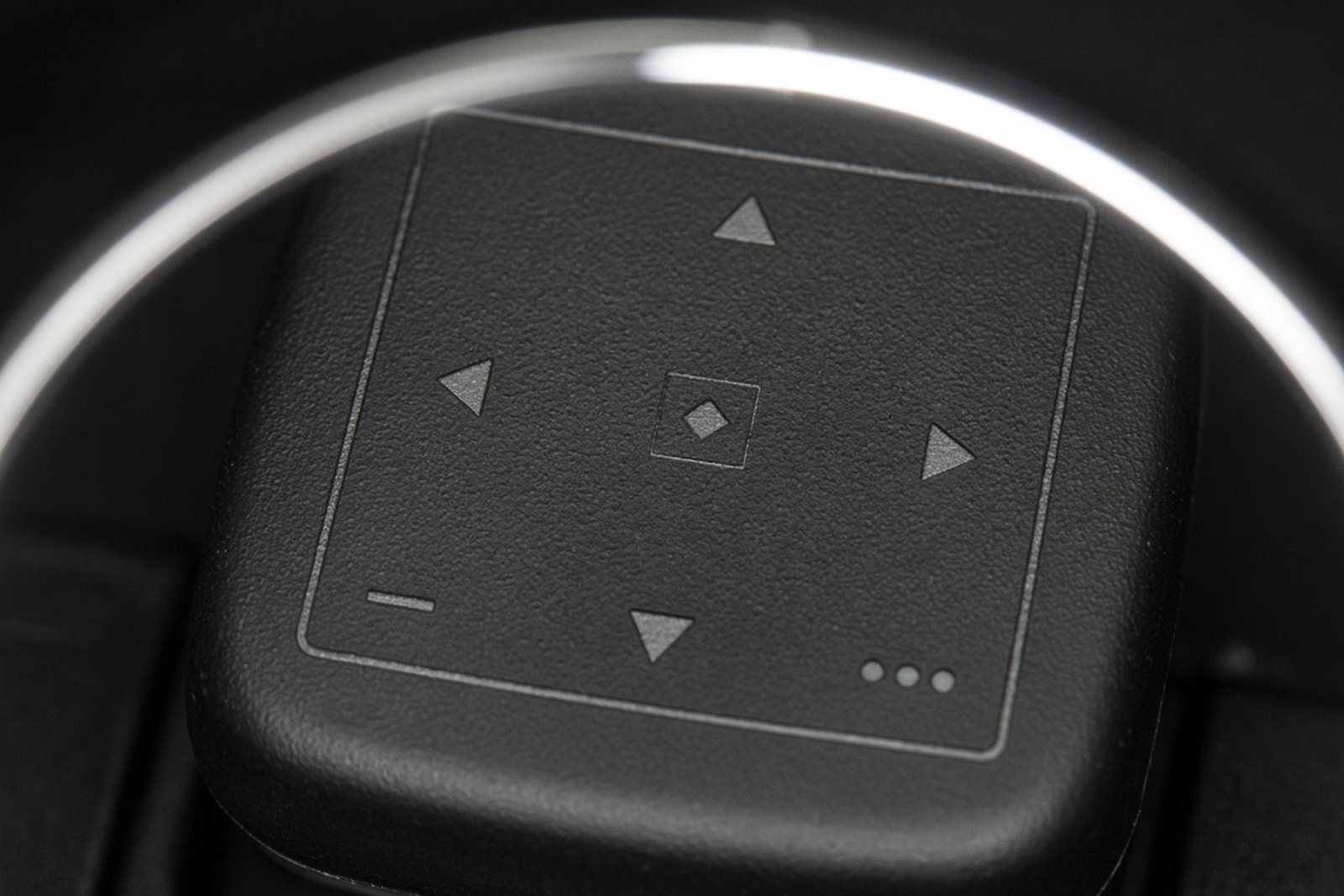
Micro Print Detail is used where the printable area is tight and the message still has to hold its shape. Typical work includes tiny reference marks, batch codes, polarity symbols, button legends, scale points and part identifiers on moulded plastics, coated metals and other handled components. In pad printing, an etched plate carries the image, a silicone pad lifts the ink and places it onto the part with very good control over curved, recessed or awkward faces.
This is the right choice when screen printing is too open or when labels and stickers are not practical. The process suits medical and electronic parts that are touched, cleaned, assembled, and checked many times during production.
- Fine lines and tiny text for control panels, housings and inserts
- Single colour or layered marks for clear contrast
- Short runs, repeat jobs and production support for manufacturers
What the pad printing process includes
Micro work starts with artwork preparation and print area planning. Text may need redraws, spacing changes or line thickening so the image survives transfer cleanly. From there we prepare the plate, set the ink mix, and check the pad shape and hardness for the part. The ink is then cured or dried according to the material, the required handling time and the production flow. For some parts, a faster cure is useful where lines move straight into the next assembly step. On others, a slower set gives better control and less risk of damage during handling.
Adhesion is checked on the actual substrate for medical and electronic components, because plastics, coatings and mould release residues can all affect the final result. Customers stay responsible for their own device compliance and final product approval, while we focus on the print process itself and the consistency of the mark.
- Artwork redraws for micro text and fine graphics
- Plate exposure and etching for sharp detail
- Curing method selection for handling, packing and downstream assembly
- Adhesion test samples before release to full production
Typical sizes, line weights and layout options
Every part is different, but micro print jobs generally need a smaller image area, tighter registration and careful spacing between features. We work with compact legends on items such as housings, caps, panels, connectors, button surrounds, plastic cartridges and small instrument parts. The exact size depends on the shape of the item, the flat area available, and whether the mark must sit on a curve, shoulder or recessed pocket.
As a guide, very fine text often needs to be opened up slightly so it prints cleanly and remains readable after curing. Thin lines may also need a controlled minimum width to avoid break-up. Where the layout is dense, we can help separate elements so the print does not crowd itself. That sort of adjustment saves time later, because a design that looks neat on screen can become unworkable on a small curved part.
- Small legends, icons and reference marks
- One or more colours where the substrate and artwork allow it
- Flat, curved, shallow recessed and irregular surfaces
- Trial sample runs to confirm legibility before a production run
Where micro printing suits manufacturing work
This service is well suited to manufacturers in the medical and electronics sectors who need repeatable identification on components rather than on cartons or manuals. It is often used on parts that are assembled in batches, inspected, then packed for dispatch. In Durban, Johannesburg, Cape Town, Pretoria and Gqeberha, the same basic need comes up again and again: the print must survive handling, cleaning and normal production movement without smudging or lifting.
Micro Print Detail also works well where there is limited room for a label, or where a label would lift at the edge. For electrical parts, the artwork may need to stay readable under bright light and close inspection. For medical components, the mark often needs to remain crisp on small surfaces that are cleaned and handled by different people on the line. We can also support rerun job control when the same part returns months later and the mark must match the earlier batch.
- Medical disposables and reusable component parts
- Electronic housings, controls and small fittings
- Parts that go through packing, assembly and dispatch packing
- Work for Durban Manufacturers, Johannesburg Supply and Cape Town Supply routes
Care, servicing and what to check before placing an order
Micro print jobs last longer when the equipment, plates and pads are kept in proper condition. Pads should be inspected for wear or surface damage, plates should be stored correctly, and the ink system should be cleaned after use so old residue does not affect the next job. If the job is a repeat, keep a sample part or approved sample aside so the next run can be matched against it. That is especially useful when the part colour, mould finish or supplier changes over time.
Before ordering, check the part material, the printable area, the final text size, the number of colours, and whether the mark must hold up to cleaning chemicals, handling or heat. If the design includes serial numbers, orientation marks or mirrored text, send those details early. Also note whether the part is smooth, textured, curved or recessed, because that affects pad choice and fixture making. If there is any doubt, request adhesion test samples first. It is a small step, but it can save a lot of rework later on.
- Confirm substrate, finish and printable area
- Provide artwork in the cleanest available format
- State the expected use, handling and cleaning conditions
- Ask for trial sample runs where the mark is very small
Support from our Westmead team
Our Westmead, Pinetown base supports clients across South Africa, with local help for Pinetown Printing Support, Durban Manufacturers, Johannesburg Supply, Pretoria Supply, Cape Town Supply, Gqeberha Supply, New Germany Support and Westville Support. The team includes Sibusiso Naicker as Managing Director, Naledi Kekana in Production, Sanjay Dookhi on artwork and plate work, Lerato Mabunda on quality checks, Yashika Sewpersad in client services and Mfundo Xaba on machine setup. That mix helps when a job needs quick artwork changes, a rerun, or better print area planning for a tiny part.
For a pad printing run, write to PadPrinters through the contact page form with your part, artwork and run size. From there, we can look at the artwork, the part, the ink choice and the curing method before the job is released. For micro print detail, the best results come from clear information at the start and a proper check of the sample before full production starts.
- Artwork Preparation and Logo Redraws
- Fixture Making and Trial Sample Runs
- Colour Matching and Adhesion Test Samples
- Dispatch Packing and Rerun Job Control
Run details
| Process | Pad printing with silicone pad transfer and controlled ink curing |
|---|---|
| Best for | Very small legends, fine lines and dense layouts on medical and electronic parts |
| Typical substrates | Moulded plastics, coated metals and other handled component surfaces |
| Output options | Single or multi-colour marks, trial samples, repeat jobs and rerun control |
| Base and reach | Westmead, Pinetown, serving Durban, Johannesburg, Pretoria, Cape Town and Gqeberha |