
What PCB Component Marking Covers
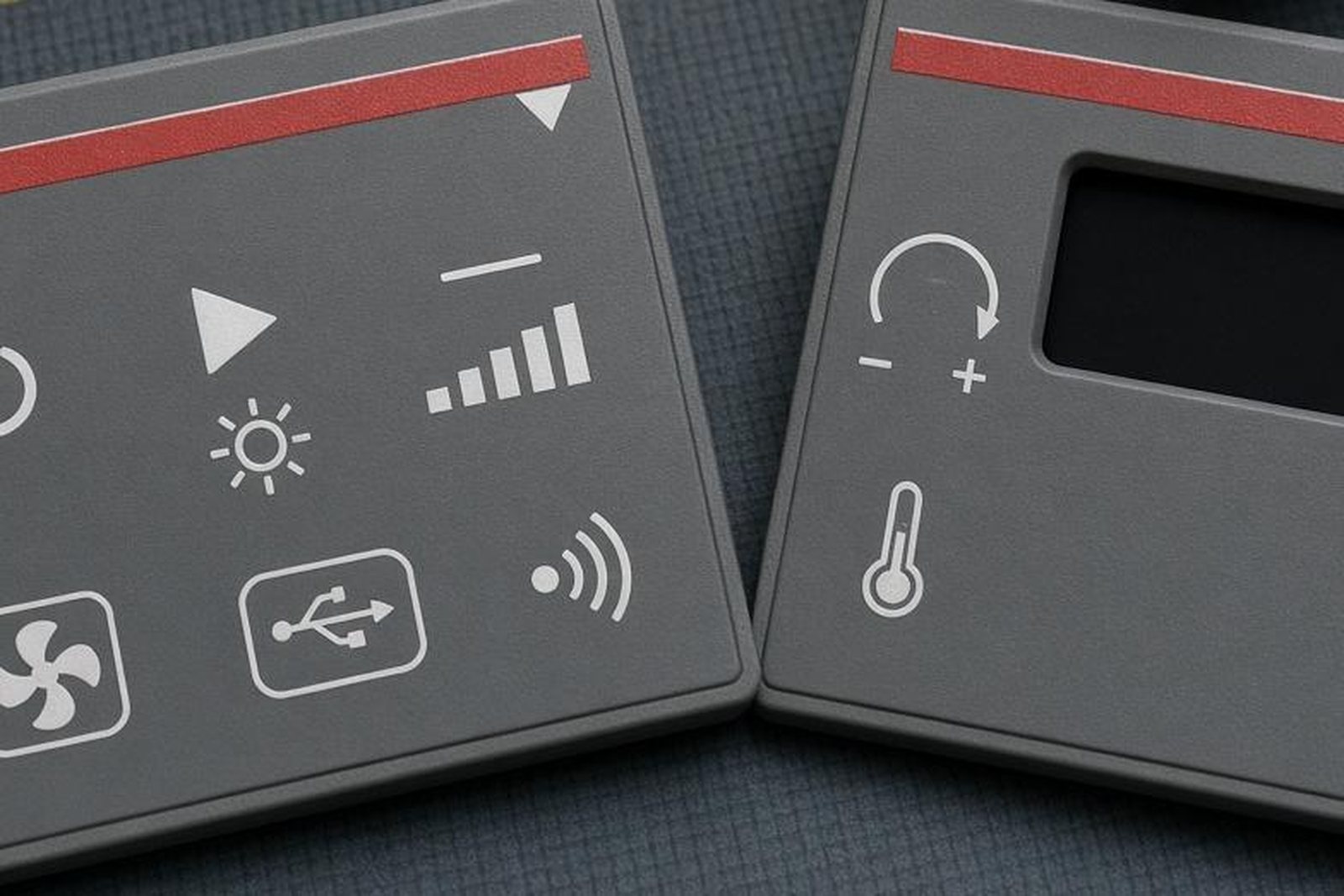
PCB carrier marking is the process of transferring ink from a etched plate to a silicone pad, then onto a carrier, tray, jig or support part used around printed circuit board assembly. It is suited to plastic parts with flats, ribs, recesses and awkward edges where labels lift off or engraving is too slow. The mark can carry part numbers, orientation arrows, station identifiers, colour bands and handling instructions for line staff.
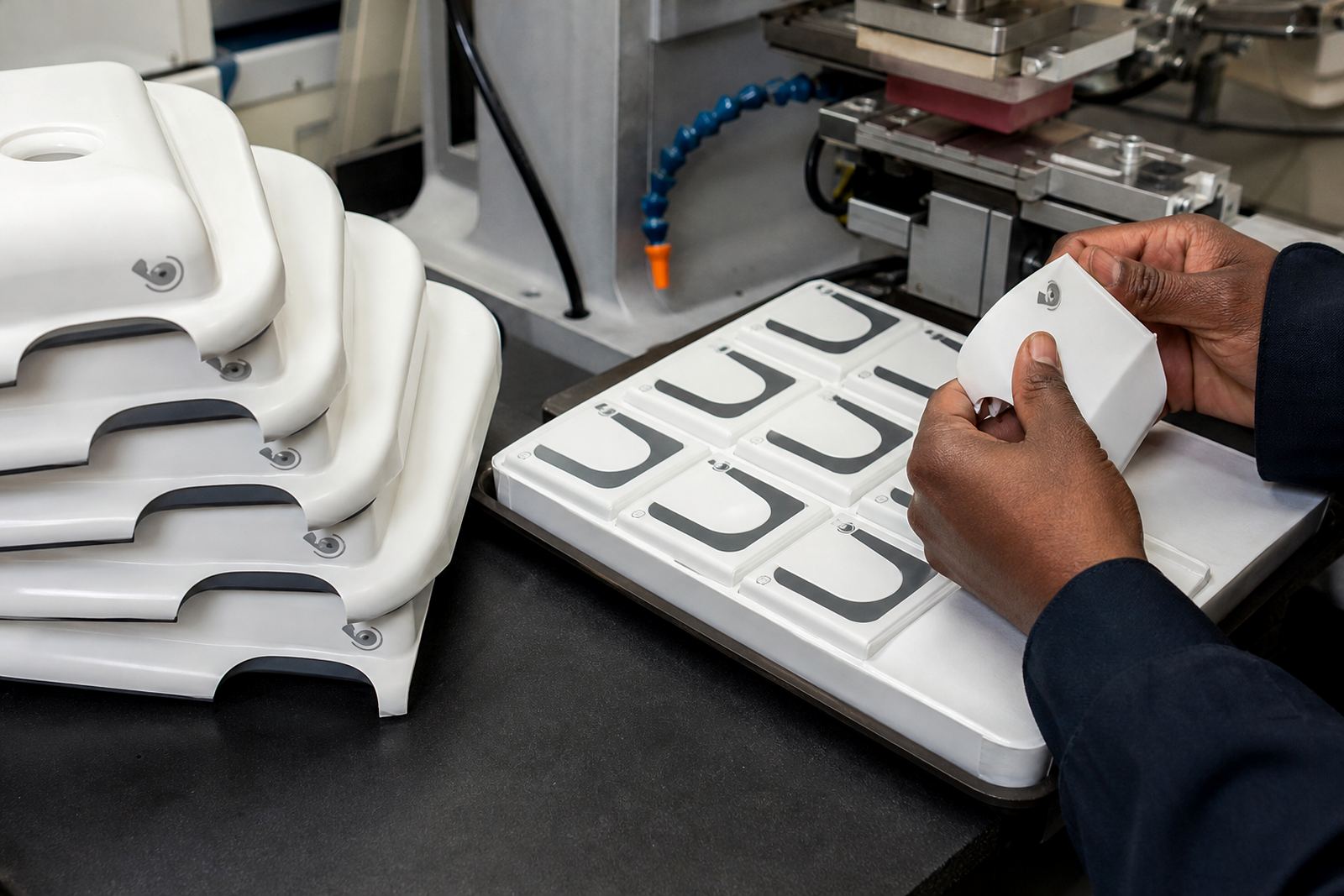
In practice, the work starts with artwork setup and print area planning so the marking sits where operators can read it without removing the part from the flow. We then prepare the plate, match the ink to the plastic surface and run adhesion samples before production. For Westmead, Pinetown based work and site deliveries into Durban industrial areas, this is a practical way to keep carrier parts legible through daily handling, cleaning and repeated use.
Customers stay responsible for their own device compliance and internal validation, but we can support the marking side with repeatable placement and controlled rerun job control once the approved layout is set.
Typical Parts, Sizes and Marking Options
This service suits carriers and support components made from common plastics used in electronics assembly, such as trays, frames, guides, mounting supports and small fixtures. Part shapes vary a lot, so the marking size is usually set around the usable print area, not just the overall size of the item. As a guide, marks can be small and technical, or larger for line side identification, depending on the moulded surface.
- Small part codes and batch identifiers for repeat handling
- Arrow marks, side markers and loading orientation signs
- Zone numbers for assembly, inspection and rework areas
- Short service notes such as clean only, handle here, or return position
- Single colour or two colour marking where contrast is needed
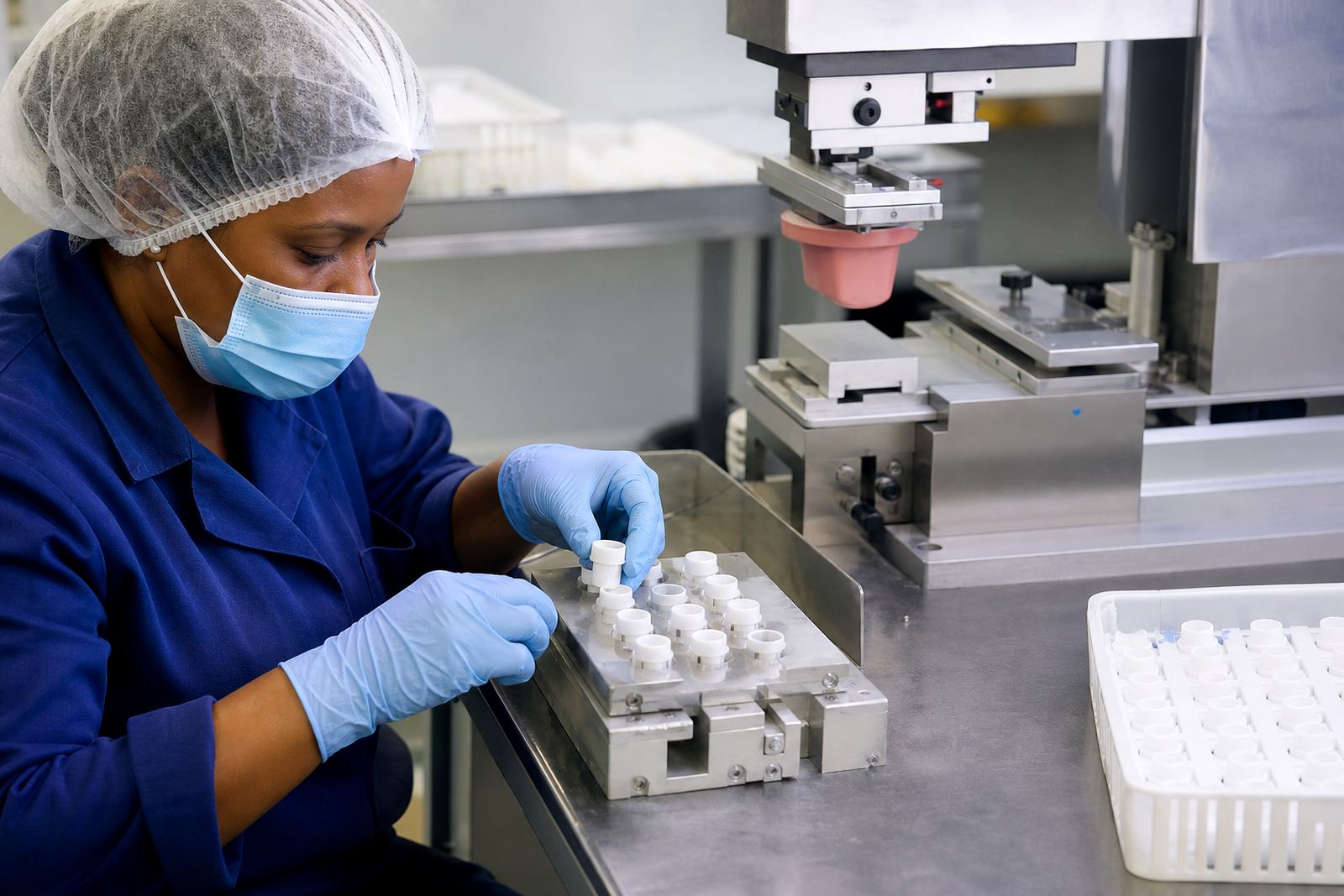
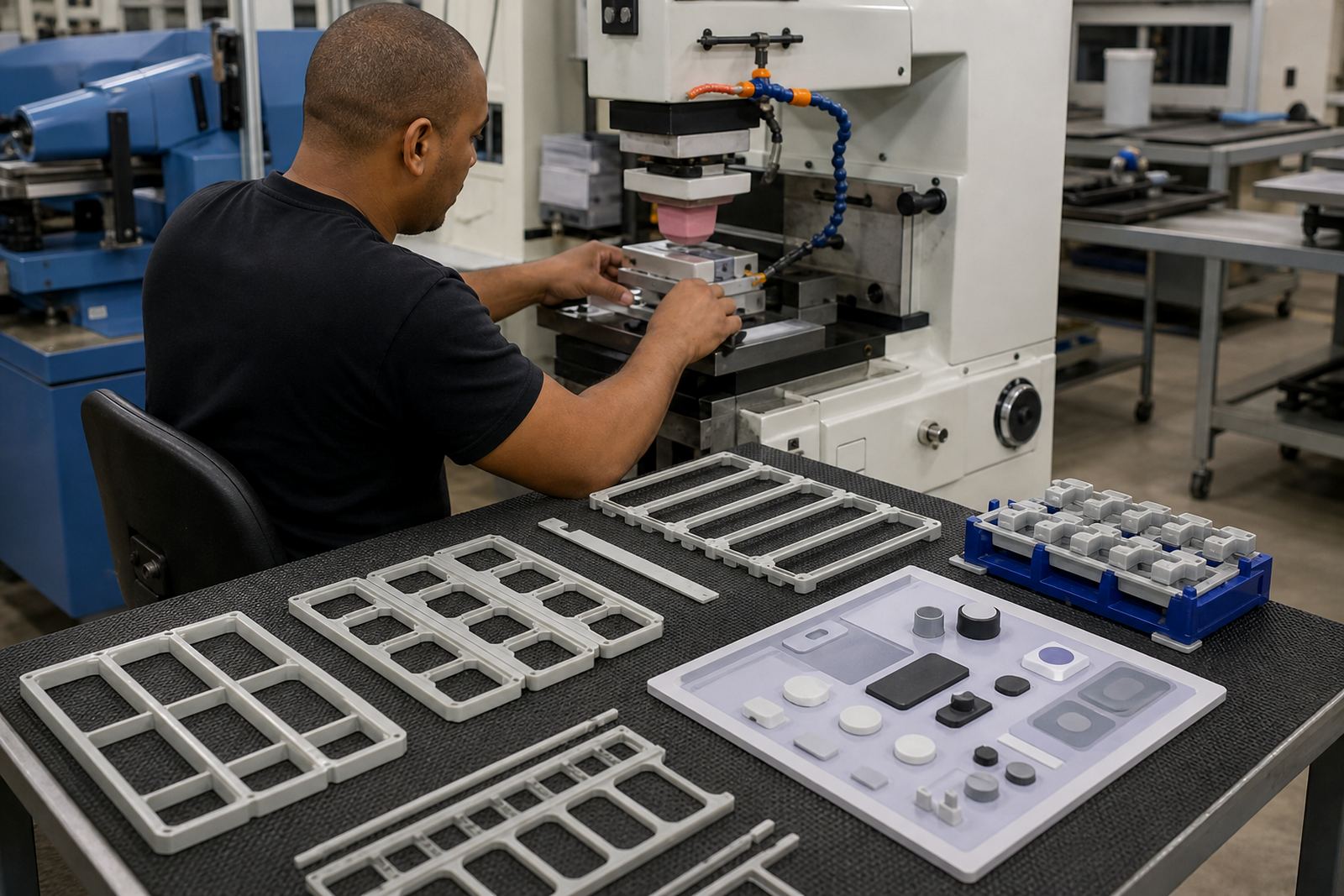
We can work on flat or lightly curved areas, and where needed we make or adjust fixtures so the part sits in the same position every time. That helps with print alignment on carriers that are narrow, moulded or irregular in shape. For larger support parts, the print can be split into more than one area if the part design allows it.
Ink, Curing and Adhesion on Plastics
Pad printing on carrier parts depends on the surface material, the cleaning method and how the finished part will be used. Some plastics accept ink well after surface preparation, while others need a different ink mix or a test sample before full production. We select the curing method to suit the part and the line, whether that means air drying, heat curing or another controlled process where appropriate.
For electronics work, the mark needs to resist light rubbing, repeated handling and ordinary factory cleaning. It also needs to stay readable under fluorescent or LED lighting where small text can disappear if the contrast is poor. We use trial sample runs and adhesion test samples to check that the print is holding before any larger run is released.
- Ink choice matched to the plastic substrate
- Surface preparation where the part needs it
- Curing method selected for speed and durability
- Test rubs and visual checks before bulk production
- Rerun control for steady colour and consistent output
Where PCB Component Marking Works Best
This product is a good fit for manufacturers and assembly houses that need repeatable identification on reusable plastic parts. It is commonly used on production carriers, component frames, loading aids and support pieces that travel between assembly, inspection, testing and packing. The method also works well where a label would wear off, peel at the corners or become unreadable after cleaning.
In Durban, Johannesburg, Cape Town, Pretoria and Gqeberha, the use cases are similar even though the working conditions differ. Coastal humidity can affect drying times and indoor storage, while inland sites may need more care around dust and static control.
We support customers from Pinetown Printing Support, Durban Manufacturers, Johannesburg Supply, Pretoria Supply, Cape Town Supply, Gqeberha Supply, New Germany Support and Westville Support, with the actual marking work handled from our Westmead base in Pinetown.
Trial runs and approval
PCB carrier marking does not require a complicated installation on the customer side, but the part flow needs to be organised. The printing area should allow for safe handling of trays or frames, space for drying racks or cure handling, and a clean packing zone so freshly marked parts are not scratched. If fixtures are used, they should be easy to load and repeatable for the operator.
When parts are packed for delivery or collection, they should be separated so the marked surface is not pressed against another hard piece. This is especially important for fine text, small symbols and parts with fresh ink that has not fully cured yet. A clean, dry route through the job makes a real difference to finish quality.
Care, servicing and rerun work for medical parts
Once PCB carrier marking is in use, the main care points are cleaning, storage and keeping the artwork record unchanged unless a revision is required. If carriers are washed, wiped or exposed to solvents, the ink choice has to suit that treatment. For repeated orders, it is best to keep the same approved sample, the same part reference and the same print position so the mark stays consistent from batch to batch.
We handle artwork preparation, plate exposure, plate etching, fixture making, trial sample runs, curing method selection and rerun job control. That means the same job can be repeated with fewer delays, provided the part itself has not changed. If the mould, colour or surface finish changes, a fresh adhesion check is the sensible next step.
- Keep approved samples with the production file
- Store carriers away from dust and direct heat
- Do not mix old and revised part versions
- Check for wear on fixtures and locate pins
- Request a rerun sample if the plastic or finish changes
Before you approve a run
Before ordering PCB carrier marking, it helps to confirm the part material, the exact print area, the wording or symbols needed and the finish expected on the final part. If the carrier has curved faces, deep ribs or textured sections, share that information early so the layout can be planned around the moulded shape. Good reference photos and a clean sample part save time at the artwork stage.
It is also important to check how the part is handled after printing. If it goes into storage bins, through cleaning, near heat or through a humid area, the ink and cure method should be matched to that use. For order planning, tell us the approximate batch size, whether one side or two sides must be marked, and whether the mark must stay readable from a fixed distance on the line.
From there we can prepare a practical sample, confirm the position, and set up the repeat run with the right plate and fixture. That is usually the best way to keep the process steady for manufacturers across South Africa.
Run details
| Process | Pad printed marking onto plastic PCB carriers, frames and support parts |
|---|---|
| Common mark size | From small part codes to larger line identification areas, depending on usable surface |
| Ink compatibility | Matched to the substrate after sample testing and adhesion checks |
| Curing options | Air dry, heat cure or controlled curing depending on part and production flow |
| Setup needs | Artwork, plate, fixture and a clean handling area |
| Service area | Pinetown, Durban, Johannesburg, Pretoria, Cape Town and Gqeberha |