
What clean handling means for pad printing
Clean handling methods reduce the chances of dust, grease, finger marks and loose fibres affecting a print on a small or sensitive part. In pad printing, the image is transferred from an etched plate onto a silicone pad, then onto the component. That transfer is quick, but the result still depends on how the part is handled before, during and after printing. If the surface is not clean or the part moves in the fixture, the print can ghost, blur or miss position by a small amount.
On medical and electronic components, tidy handling matters just as much as the ink choice. We plan the job around the part shape, the print area, the substrate and the cure method. That may mean extra cleaning, slower loading, antistatic control or a custom fixture so the operator always places the part in the same position. It is practical work, not fancy work, and it helps keep the line steady when orders are repeated later in the week.
Parts and sizes this service suits
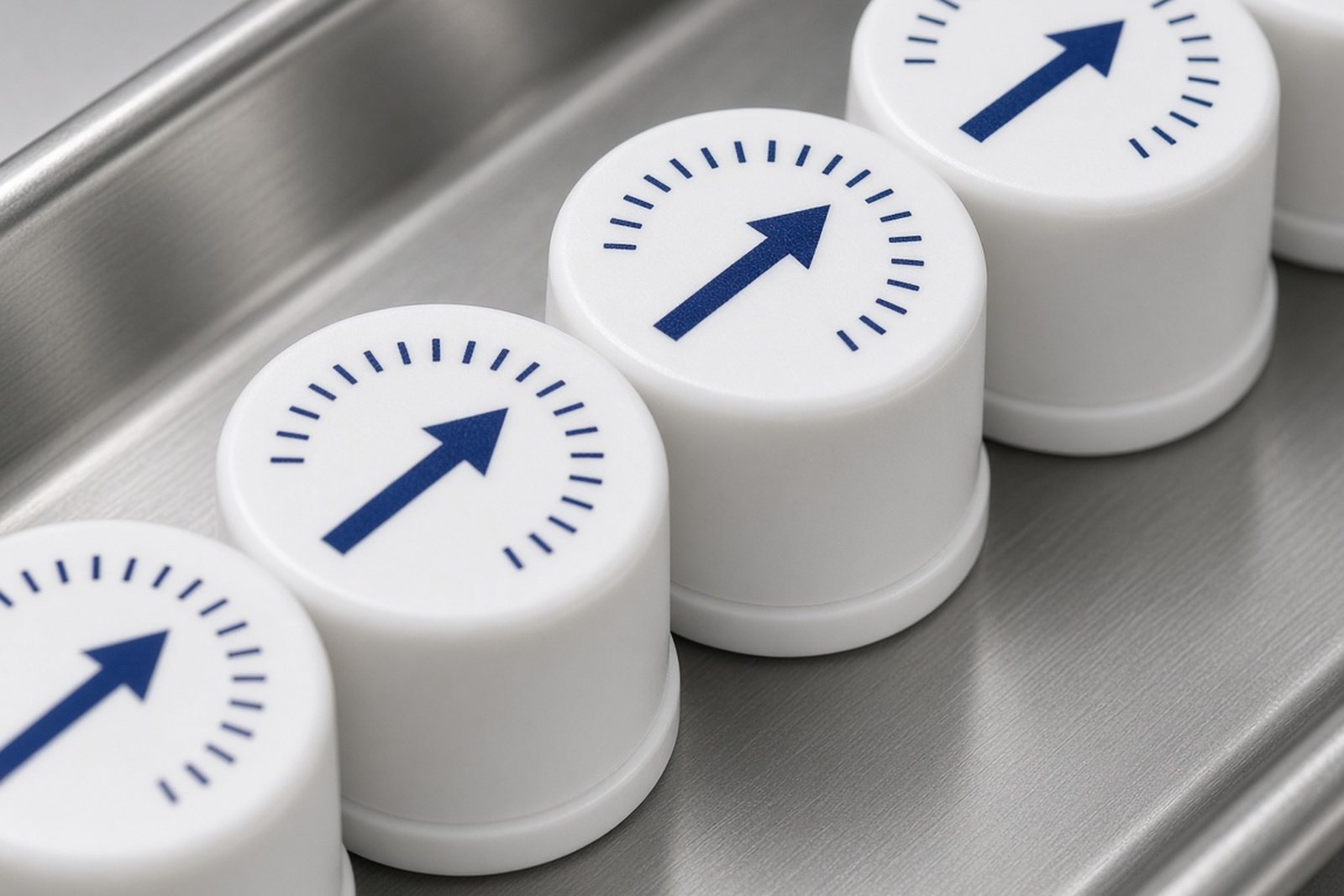
This service suits small to medium parts that need a neat printed mark without rough contact. Typical items include housings, knobs, caps, bezels, covers, switches, connectors, medical device shells and electronic control parts. The method works well where the print must sit in a defined area and stay readable after handling, cleaning or assembly. Because each component is different, we confirm the surface, the curve and the print position before we start production.
Common options are built around the part rather than a fixed catalogue size. We can work with single-item fixtures, tray loaded parts or grouped parts where several marks are printed in a repeatable cycle. If the job needs a fine logo, part number, directional mark or warning symbol, the setup can be adjusted to suit. A short trial run is often the best way to confirm the final look before full release.
- Small printed marks for labels, icons, arrows and reference codes
- Single-sided or multi-side marking where the part shape allows it
- Short runs, repeat jobs and controlled sample batches
- Parts that need low-contact handling during prep and packing
How the handling process is set up
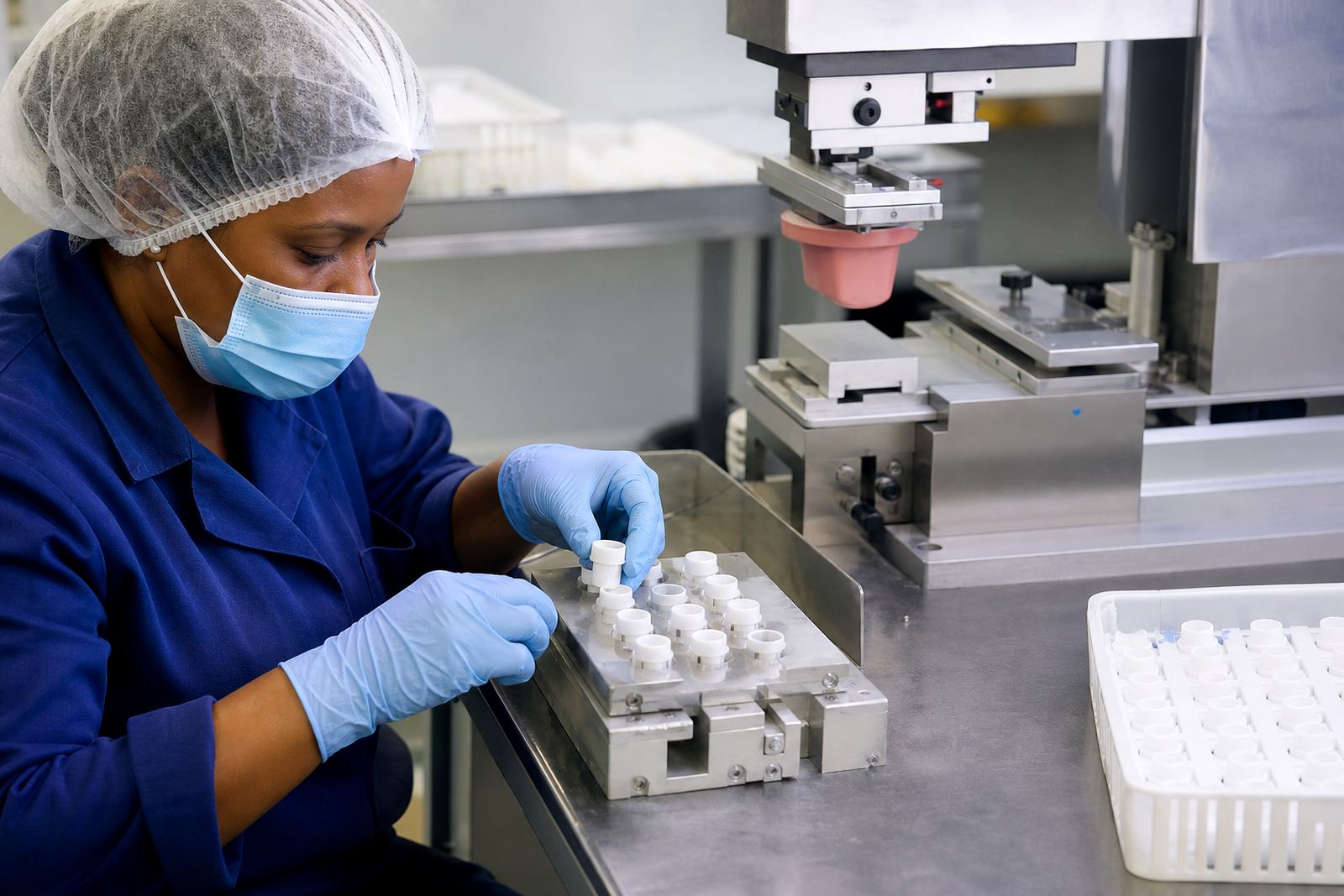
We start by checking the part surface, the existing finish and the print zone. Then we plan how the component will be held, cleaned and released through each stage. Some parts need a light wipe before print, while others need a fixture that keeps hands away from the marked area. Where static attracts dust, we can plan a cleaner loading method and keep the job area organised so parts do not rub together. In practice that means less rework and fewer damaged samples.
Artwork, plate exposure and print area planning all sit inside the handling plan. If the mark is too close to a seam, screw point or raised edge, the pad may not land evenly. Our team checks that before the first run, and if needed we suggest a better position or a different fixture shape. For follow-up jobs, rerun job control helps keep the same handling method in place so the result stays consistent from batch to batch.
- Artwork Preparation and Logo Redraws where line weight needs adjusting
- Print Area Planning for curved, flat or recessed surfaces
- Fixture Making for stable loading and repeat positioning
- Trial Sample Runs and Adhesion Test Samples before dispatch
Printing, curing and material choices
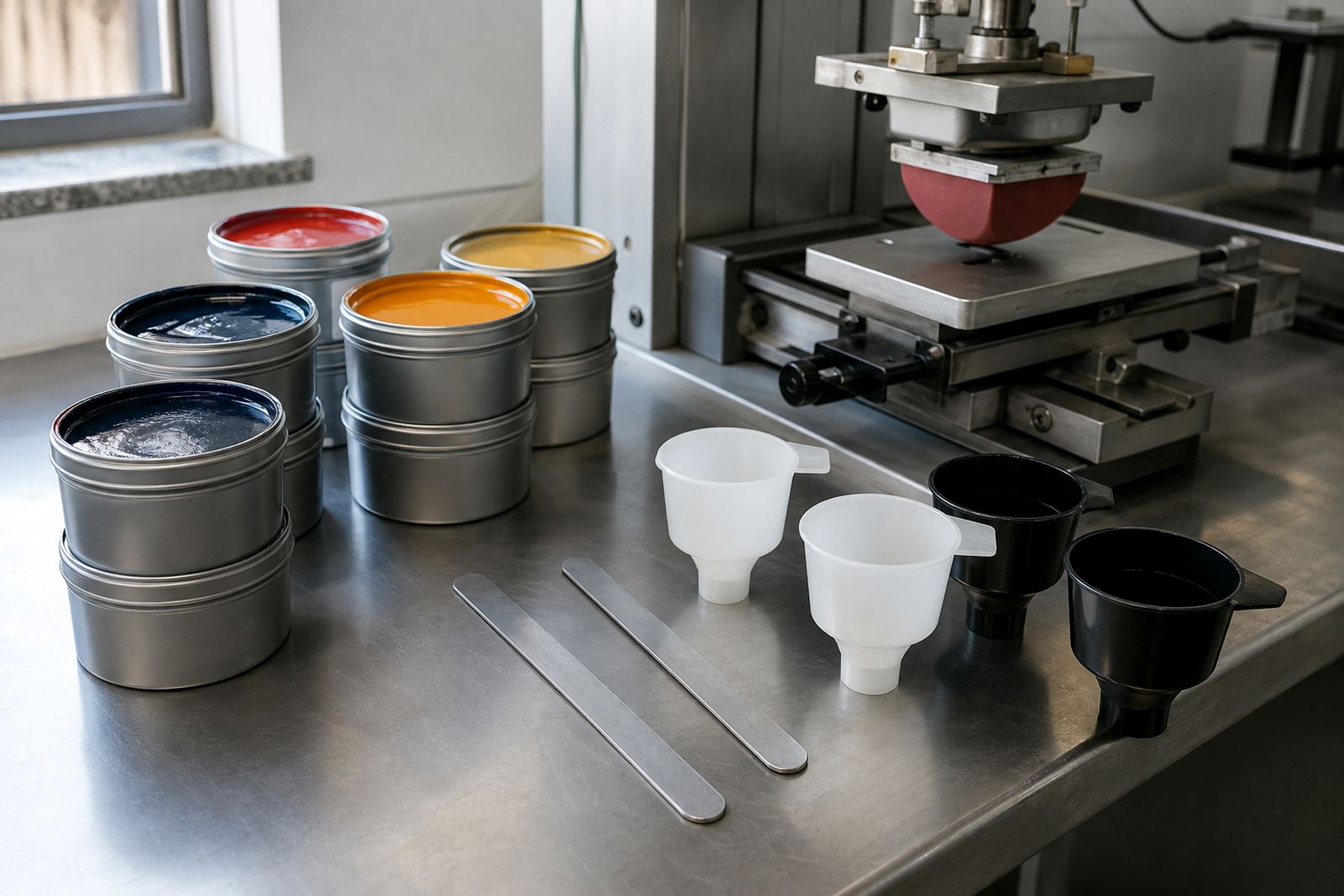
Pad printing uses a flexible silicone pad to pick up ink from an etched plate and transfer it onto the component. The ink must suit the material and the final use of the part. After printing, the mark may need air drying, heat curing or another controlled cure method, depending on the substrate and the production flow. The aim is a clean mark with good adhesion and a finish that fits the part's use without adding extra handling problems.
We select the curing method carefully because not every job needs the same treatment. Some parts can move on quickly after the print stage, while others need more time or a controlled temperature step. For sensitive electronic or medical items, the process is arranged so the ink cures without distortion or unnecessary heat on the part. That keeps the handling simple for your own assembly line and helps avoid delays when the parts go back into production.
Sampling and setup
Clean handling methods do not need a large plant room, but the work area should be set up with care. A stable bench or production line, enough space for parts in and out, and a clean loading zone are the basics.
We also consider coastal humidity in Durban and surrounding areas, because moisture can affect ink behaviour, drying times and dust control. If your site has municipal restrictions, shared loading bays or tight floor space, tell us early so the handling plan fits the real working conditions and not just the drawing.
- Allow clear access for part loading, drying and packing
- Keep the work area clean and free from loose powder, oil and fibres
Care, servicing and ordering checks
Good handling is easier to keep up when the equipment and fixtures are serviced properly. Pads wear over time and need replacing when the print starts to lose detail. Plates need to stay clean and undamaged, and fixtures should hold parts firmly without scuffing them. If the job uses solvents or cleaning agents, they should be managed safely so residue does not affect the next run. The more repeatable the setup, the easier it is to keep the print neat.
When ordering, check the surface material, the exact print position, the number of colours if more than one is needed, the quantity per batch and whether the parts will arrive loose or in trays. It also helps to confirm if the part has already been moulded, machined or coated, because that changes adhesion and handling. Please note that customers stay responsible for their own device compliance, testing and sign-off. We can prepare the print work, samples and packing, but the final product use still needs to be checked by the manufacturer.
- Confirm substrate type and any coating or texture on the part
- Provide artwork, size limits and the exact print area
- Tell us whether you need sample approval before full production
- State if the parts require special packing or dispatch separation
Local support from Pinetown to the major centres
PadPrinters Medical works from Westmead, Pinetown and supports manufacturers across Durban, Johannesburg, Cape Town, Pretoria and Gqeberha. We also assist clients in New Germany and Westville when they need careful print preparation, plate work or repeat job control. The service is built for practical factory use, whether you are running a small batch or a scheduled supply job that needs the same mark week after week.
The team is led by Sibusiso Naicker, with support from Naledi Kekana, Sanjay Dookhi, Lerato Mabunda, Yashika Sewpersad and Mfundo Xaba. That mix helps with artwork, setup, quality checks and client coordination from first enquiry through to dispatch packing. If you need a controlled way to handle sensitive parts before printing, this is the sort of job where a careful process saves time later and keeps the line tidier.
Run details
| Service type | Clean handling methods for pad printing preparation |
|---|---|
| Typical parts | Medical device shells, electronic housings, caps, bezels, knobs and switches |
| Print method | Silicone pad transfer from an etched plate with matched ink selection |
| Options | Fixture making, trial sample runs, curing method selection and rerun job control |
| Base | Westmead, Pinetown with service to Durban, Johannesburg, Cape Town, Pretoria and Gqeberha |