
What ESD Safe Ink Means in Pad Printing
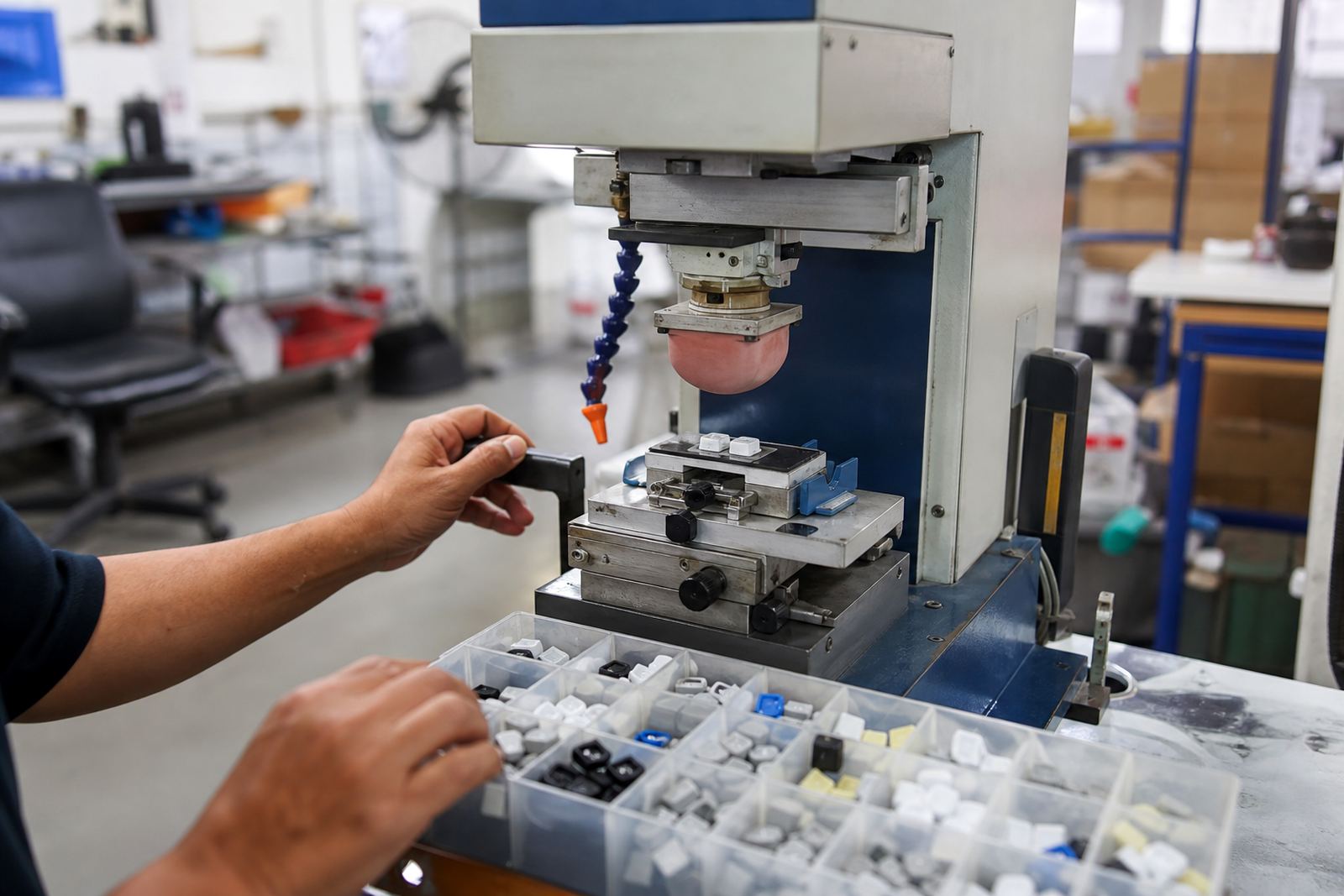
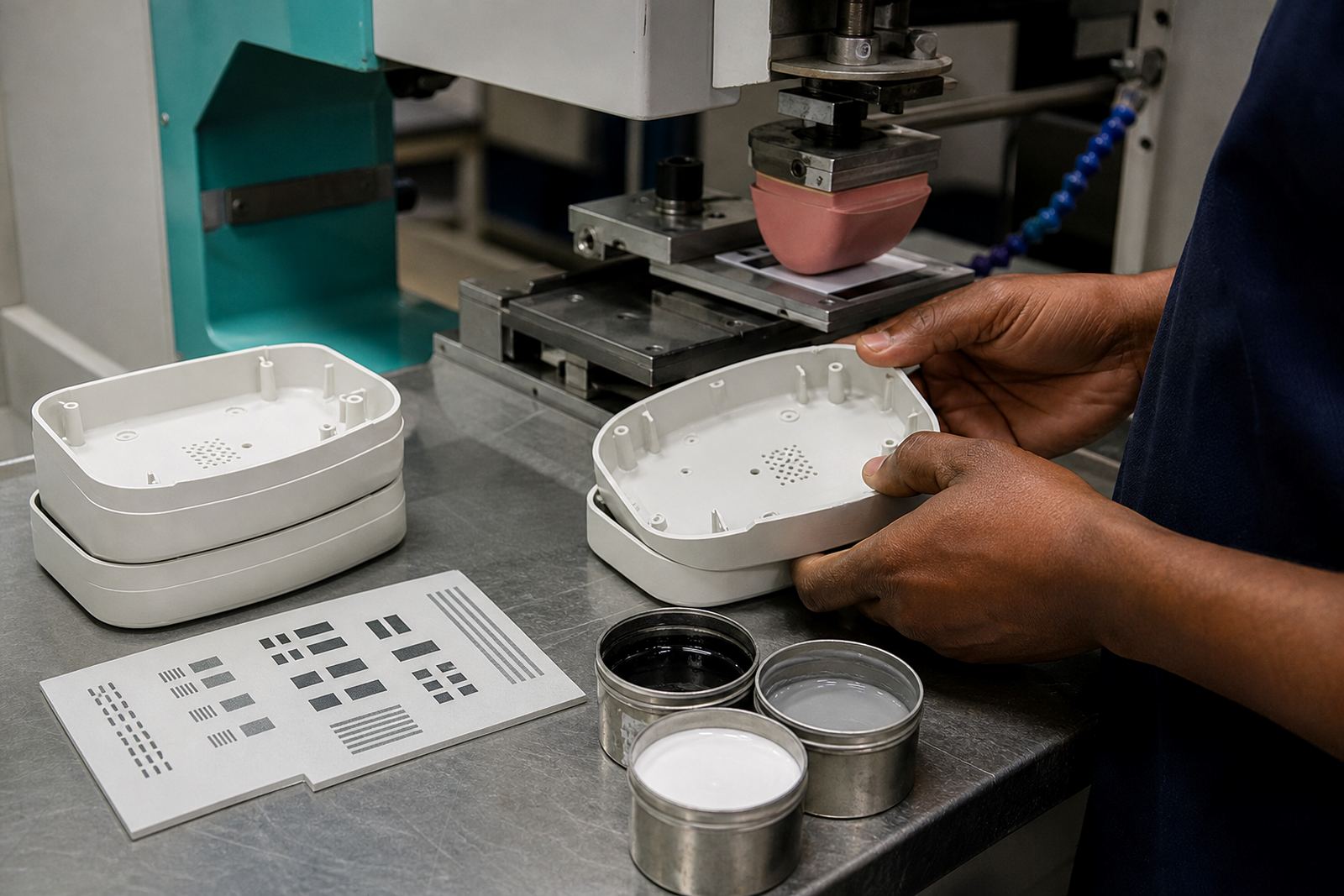
In pad printing, the artwork is etched into a plate, filled with ink, then lifted by a silicone pad and transferred onto the part. For medical and electronic components, the ink choice matters as much as the image itself because the mark has to bond properly, stay legible, and suit the handling conditions around the component. ESD safe ink options are used where the print area needs to support static sensitive production, with care taken not to introduce unnecessary contamination or handling issues.
These inks are selected for controlled marking on plastics, coated parts, housings, buttons, connectors and other small components. The right choice depends on the surface energy of the part, whether the item is moulded, painted, textured or polished, and how the part will be cleaned or sterilised later. Customers remain responsible for their own device compliance, so the print system should be checked alongside the product design and production process.
For many jobs, the goal is simple: a crisp mark that cures fully, resists normal handling, and fits the production line without slowing output. If the part moves through trays, feeders or packaging after printing, the ink must be matched to that full route, not only the print moment.
Where These Inks Suit Best
ESD safe ink options are commonly used on parts that sit in electronics assembly, instrumentation, control units and medical device sub-assemblies. They are useful where static build-up, fine markings or repeated handling can affect the process. That includes parts such as small housings, face plates, caps, covers, control legends, scale marks and identification fields.
- Small moulded parts with limited flat print area
- Electronic housings, bezels and switch surrounds
- Medical component shells and accessory parts
- Parts that need batch coding, symbols or trace marks
- Items handled in clean production areas or packed soon after printing
The same ink is not always right for every substrate. A part that prints well on ABS may behave differently on polycarbonate, coated aluminium or a filled engineering plastic. Heat, humidity and the cleaning products used in the plant can all affect adhesion, especially in Durban and other coastal areas where moisture levels can be high. It is worth testing early rather than discovering on the line that the mark rubs off or the cure takes too long.
Sizes, Formats and Finish Choices for medical parts
ESD safe ink options are usually supplied in practical production pack sizes rather than retail quantities, so the amount can match sample work, short runs or repeat production. We can plan around trial packs, standard batch quantities and ongoing supply where the same part comes back regularly. The exact size depends on the job, the number of colours, and how much testing is needed before release.
Finish matters too. Some parts need a matt mark to reduce glare under bright inspection lighting, while others need a cleaner gloss look for branding or legend clarity. Colour matching can be planned against the substrate, but the final result also depends on cure method, film thickness and surface treatment. A darker substrate may need a stronger contrast approach, while a pale housing can show fine detail more clearly.
- Single colour or multi-colour applications
- Fine text, symbols, scale marks and panel legends
- Short run samples, repeat batches and rerun jobs
- Matt or gloss finish depending on the part and use
If a job must be repeated later, we keep the artwork, plate and setup details together so the same mark can be produced again with less variation. That helps when manufacturers need consistency across branches or across plants in Johannesburg, Cape Town, Pretoria and Gqeberha.
Trial runs and approval
For some inks, air drying may be enough for simple jobs, while other parts need controlled heat curing or a longer dwell time before packing.
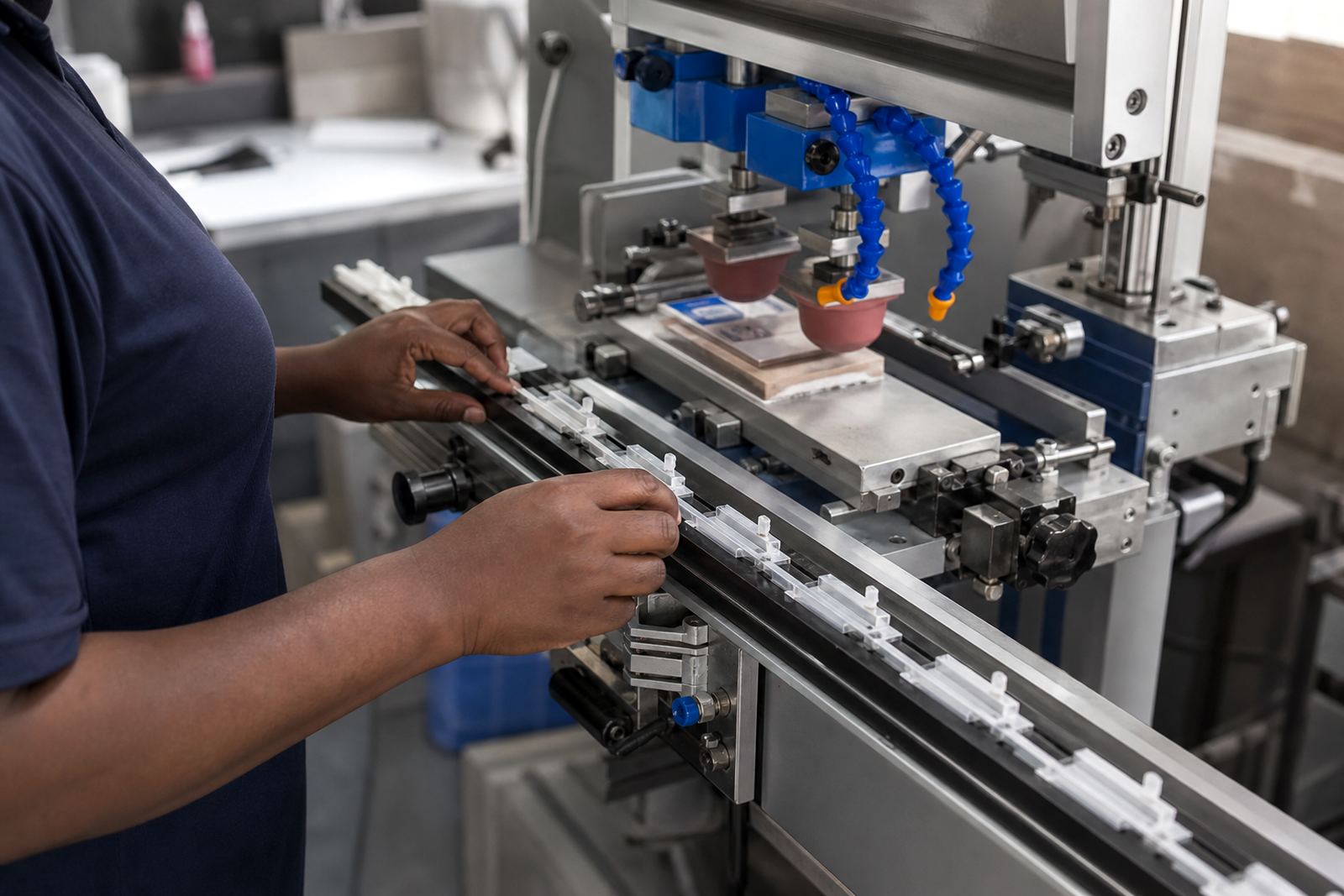
We look at whether the line uses manual loading, semi automated handling or a dedicated fixture. That affects how the ink is chosen, how fast the plate can cycle, and whether the print should be cured between passes or after the full image. In busy production areas, a steady print and cure flow is often better than chasing speed and having to rerun jobs later.
- Heat curing, air drying or mixed cure methods depending on ink system
- Space for loading, curing and part cooling before packing
- Fixtures for repeat placement and accurate print registration
The best result comes from matching the ink to the available cure method rather than forcing one process to fit another. That keeps the mark consistent and reduces the chance of waste.
Care, Servicing and Ongoing Print Control
Pad printing ink systems need regular control if the finish is to stay consistent. Solvent balance, plate condition, pad wear and temperature all affect the result. A pad that is worn or marked can transfer the image unevenly, and an old plate can give fuzzy edges or a weak fine line. On static sensitive components, that matters because the print often carries part identification, warning text or assembly marks that must stay clear.
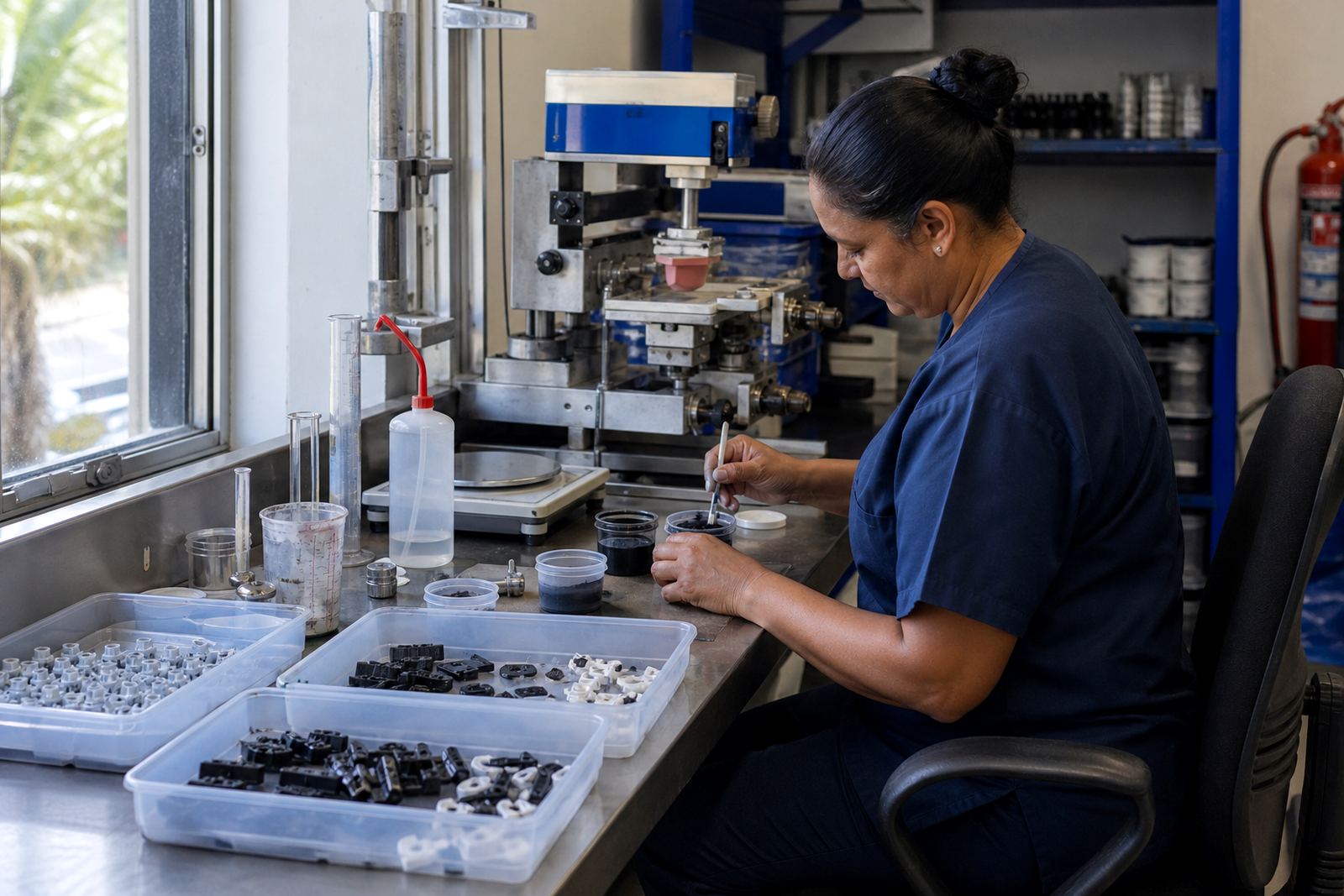
Routine care includes cleaning the tooling after use, checking the ink mix before each run, and watching how the mark cures under production conditions. If humidity changes or a different batch of parts arrives, the print may need a small setup adjustment. That is normal and part of keeping the job under control. We also advise trial sample runs and adhesion tests before full production, especially when a new substrate or surface finish is introduced.
When a job is rerun, our job control notes keep the same plate, fixture and curing details together. That trims setup time on the next production run and lowers the chance of small shifts slipping through unnoticed, which often leads to rework.
What to Check When Ordering for medical parts
When you order ESD safe ink options, the key details are the part material, the print area size, the required colour, and the way the part will be handled after printing. It also helps to know whether the component will be exposed to cleaning fluids, heat, moisture or final assembly friction. The more detail you provide at the start, the easier it is to choose the right ink and curing route.
- Substrate type and surface finish
- Print size, position and whether the mark is single or multi colour
- Expected handling, washing, sterilising or packing conditions
- Need for trial samples, adhesion testing or repeat job control
If you are supplying medical or electronic parts across South Africa, it is useful to keep the print specification written down before production starts. That gives your team and ours a clear reference for future runs, whether the job is going to Durban, Pretoria, Cape Town or Gqeberha. We can help with artwork preparation, colour matching, plate exposure, plate etching, fixture making, trial sample runs, curing method selection, rerun job control and dispatch packing.
Run details
| Product type | ESD safe pad printing ink options for static sensitive parts |
|---|---|
| Use | Marking on medical and electronic components with controlled adhesion and cure |
| Finish options | Matt or gloss depending on substrate and print requirement |
| Pack sizes | Trial quantities, standard production batches and repeat order supply |
| Curing | Air dry, heat cure or mixed method depending on the job |
| Service area | Pinetown, Durban, Johannesburg, Pretoria, Cape Town and Gqeberha |