
Why a cliché is not just a plate copy
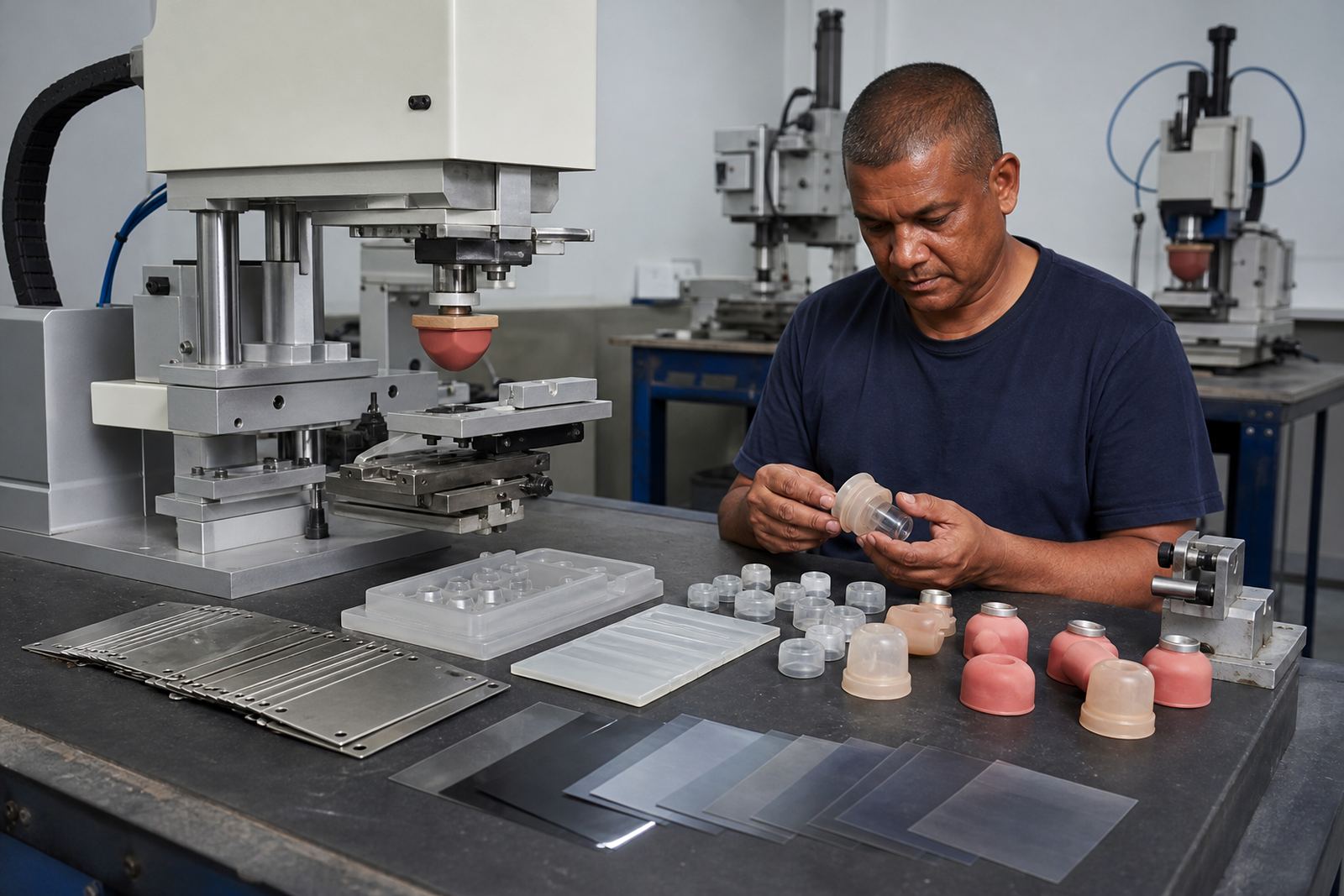
In pad printing, the cliché is the etched plate that carries the image before the silicone pad lifts it and transfers it onto the part. That means the cliché is not only a copy of the artwork, it is part of the whole print system. If the logo, text or symbol is too fine, too close to a curve, or too large for the available print area, the plate has to be planned around the component and not the other way round.
We assess the actual use of the item, the surface finish, and how the marking must sit on the component. A clean mark on a control housing, surgical accessory or plastic casing is only useful if it stays readable after handling, cleaning and normal use. Customers remain responsible for their own device compliance, so the print setup must support their own approval process and product checks.
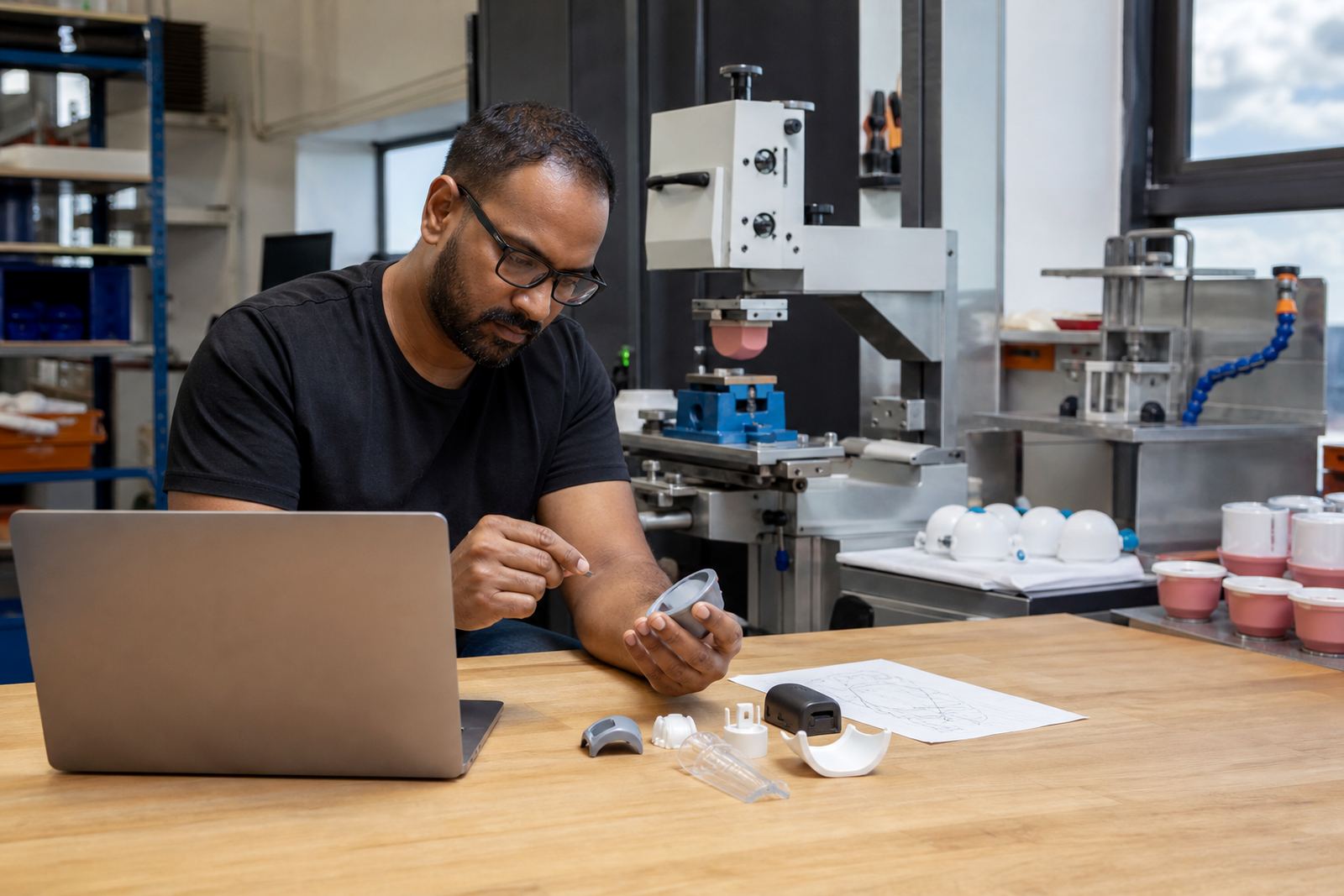
At our Westmead, Pinetown base we often see jobs where the artwork looks simple on screen but becomes tricky on a curved cap, small button or recessed panel. That is why cliché planning starts with the part, the dimensions and the print path, not only the logo file.
What causes artwork changes before print setup
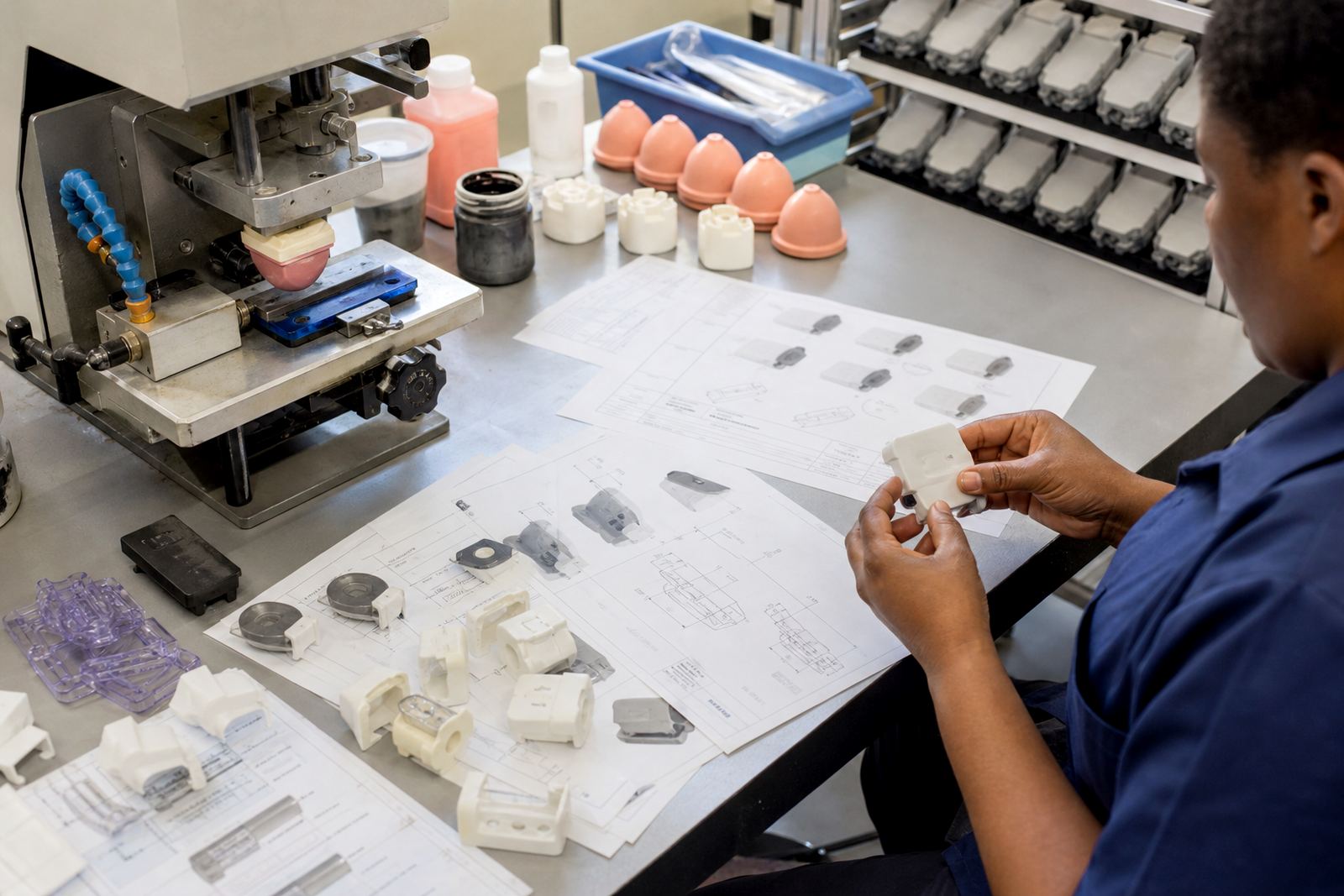
Artwork changes usually happen because the first file was created for a different process, or because the part itself has a tighter print area than expected. A screen graphic may need line cleaning, font changes or spacing adjustment so it can reproduce properly through the pad and onto the component. In medical and electronic work, even a small shift in size can affect legibility or positioning.
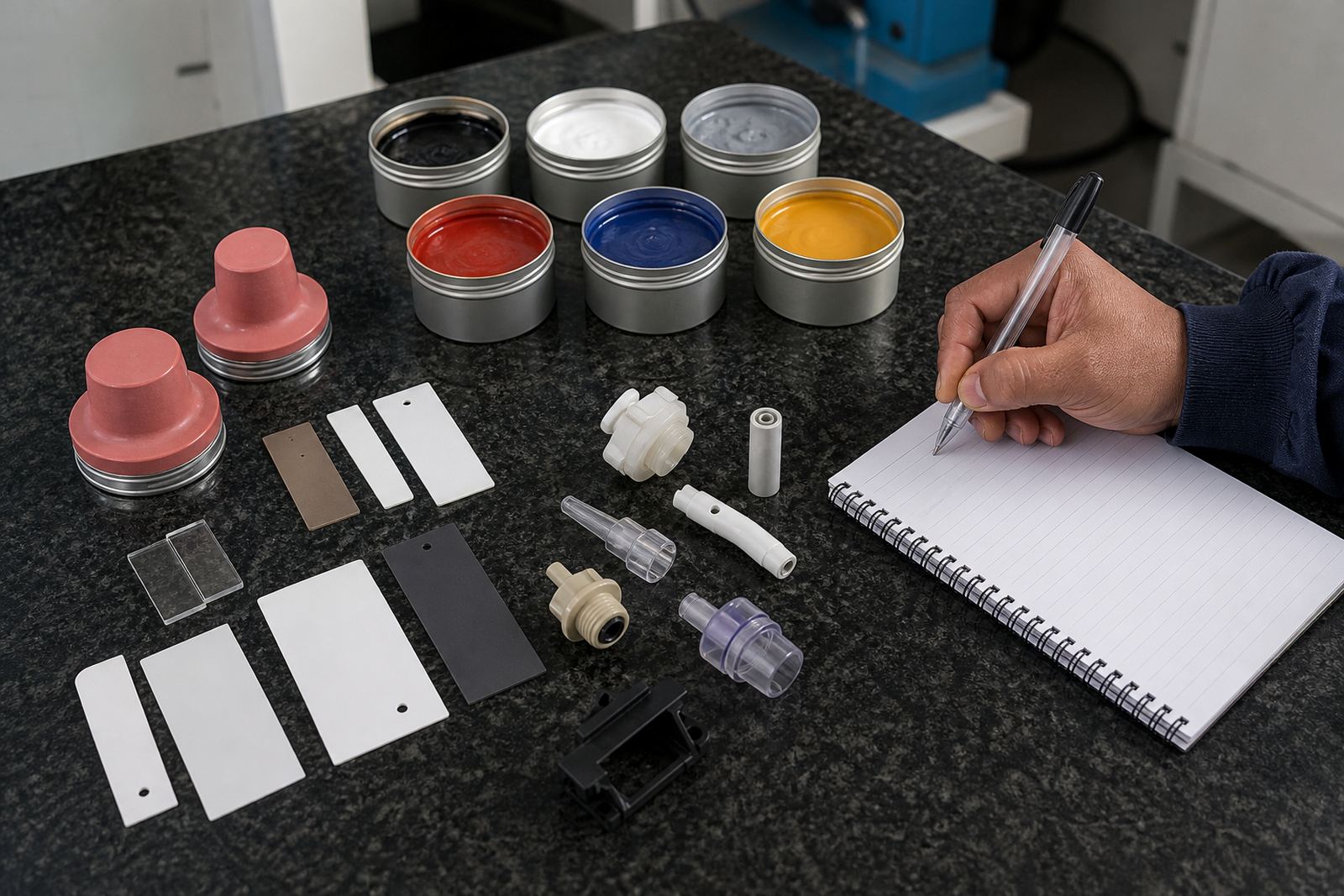
Colour matching also plays a part. Some marks need a darker tone for contrast on pale plastics, while others need a softer colour that still stays visible after curing. We also check whether the mark must sit on a flat zone, a radius or a textured surface, since each one changes how the silicone pad releases the ink. When there are multiple versions of the same product, artwork control matters even more so that each run follows the right variant.
- Check the final part dimensions, not only the drawing.
- Confirm text size and minimum line thickness early.
- Keep serial fields, logos and symbols separate where possible.
- Allow space for registration marks and fixture alignment.
How image size changes the plate plan
Image size affects the cliché layout, the pad pick-up, and how many impressions can be made before the operator needs to reset the job. A larger mark may need a wider plate area, while a tiny reference code may need closer control over exposure and etching so the detail stays sharp. If the image is moved a few millimetres, the fixture may also need to change so the transfer lands in the same place every time.
For example, a small medical handle and a wide electronics casing are planned differently even if both carry a logo and product code. The smaller item may need one precise hit with careful pad pressure, while the larger part may need staged placement or a different print sequence. When print area planning is done properly, there is less risk of waste, less time lost to adjustment, and fewer reruns later.
In Durban and Johannesburg, where customers often need repeat supply for different batches, keeping the plate plan organised helps avoid delays when the same job comes back months later. A clear record of the image size, ink set, curing method and fixture notes saves time and keeps each rerun consistent.
- Measure the actual print window on the part.
- Allow for curvature, lips, ribs and recessed zones.
- Confirm whether the artwork must be scaled up or down.
- Record the chosen setup for future reruns.
Choosing the right curing method for the substrate
Ink needs the right curing approach to stay where it is placed and to withstand day to day handling. Different plastics, coated parts and metal surfaces respond differently, so curing method selection is part of the job planning. Heat, air dry or other controlled curing approaches can each suit different substrates, but the choice depends on the part material and the production sequence.
Medical and electronic components often have narrow tolerances, so the cure must fit the part without distorting it or affecting the finish. If a part is sensitive to heat, the ink system and drying time need careful control. If the component will be handled in a warm plant or stored near the coast, especially around Durban, moisture and temperature can influence the job too. That is why trial sample runs are useful before full production starts.
We also consider whether the part will be packed immediately or moved through another assembly stage. The ink must be sufficiently cured for safe handling, but it must also remain crisp after packing and dispatch.
A practical checklist before reruns are released
Reruns are normal in manufacturing, but they work best when the original job file is complete. A rerun should not rely on memory alone. If the artwork changes, the plate notes, fixture notes and curing settings need to be checked again. A small revision in the logo or code may mean the old cliché is no longer suitable, even if the change looks minor on paper.
Before releasing a rerun, make sure the team has the latest approved artwork and understands what has changed. If the job is going to Pretoria, Cape Town, Gqeberha or elsewhere, packaging and dispatch packing must also protect the printed finish from rubbing or dust during transport.
- Confirm the current artwork revision.
- Check whether the existing cliché can be reused.
- Review adhesion test samples if the substrate has changed.
- Inspect fixtures, pad condition and plate exposure notes.
- Set aside time for a fresh trial sample run if needed.
How our team handles technical print support from Pinetown
Our team in Westmead, Pinetown handles artwork preparation, logo redraws, plate exposure, plate etching, fixture making and rerun job control for manufacturers across South Africa. That includes support for Durban manufacturers, Johannesburg supply, Pretoria supply, Cape Town supply, Gqeberha supply, as well as New Germany and Westville support. The aim is clear: get the mark right before production is committed.
Sibusiso Naicker leads the business as Managing Director, with Naledi Kekana managing production, Sanjay Dookhi handling artwork and plate work, Lerato Mabunda overseeing quality checks, Yashika Sewpersad managing client services, and Mfundo Xaba on machine setup. For many jobs, the best result comes from a quick review of the part, the file and the intended use before the first sample is made.
If you are planning a new medical or electronic marking, start with the product itself, the space available and the way the item will be used. That gives the cliché, ink and curing plan a proper foundation, and it reduces surprises once the order moves into production.