
A Small Trial Can Prevent a Big Production Problem
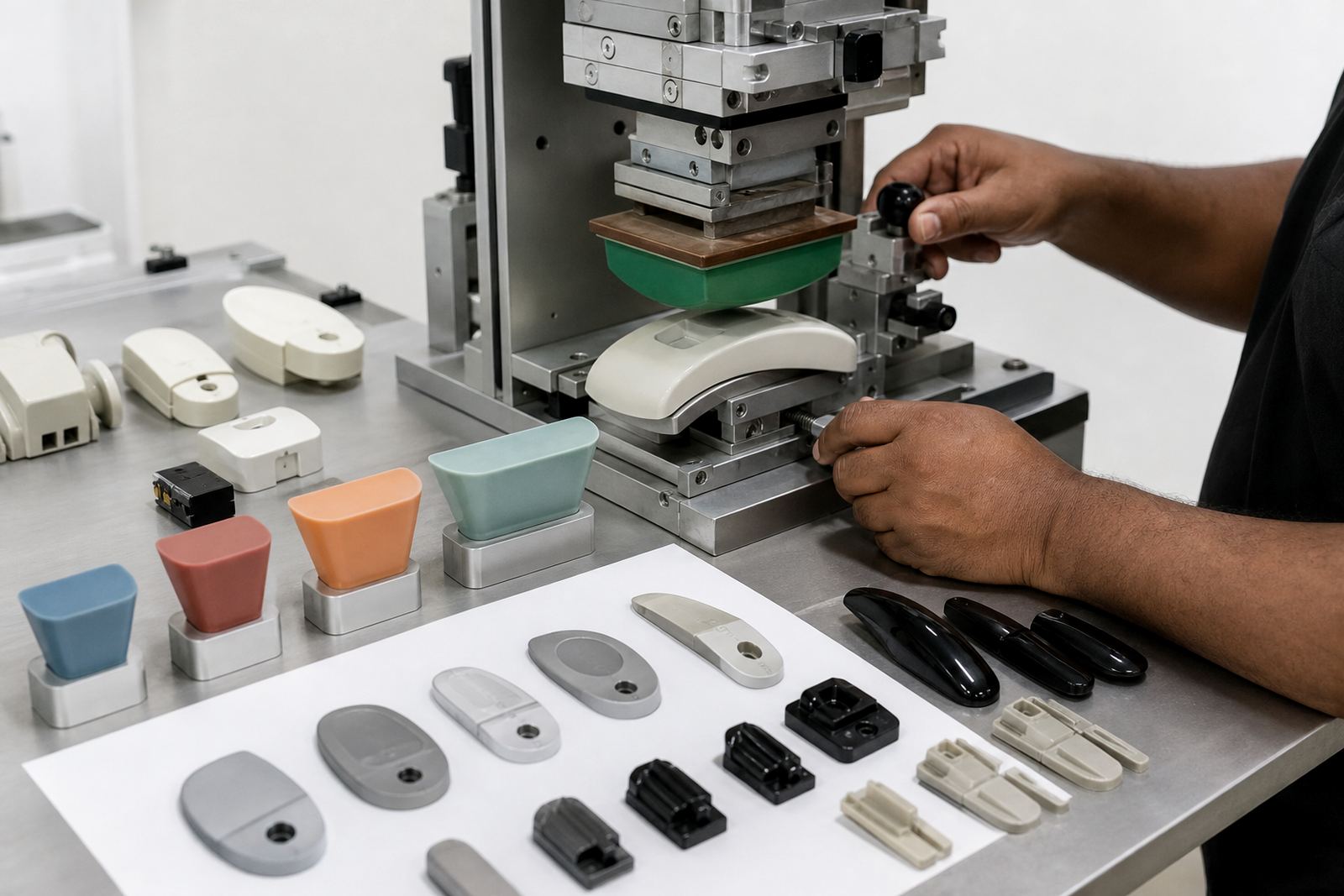
In pad printing, the artwork may be correct on screen but the real test starts when the silicone pad lifts ink from the etched plate and places it onto a curved, textured or very small component. That is where a sample run earns its place. It shows whether the print sits in the correct position, whether the line weight reads clearly and whether the ink transfers cleanly without smudging, skipping or spreading.
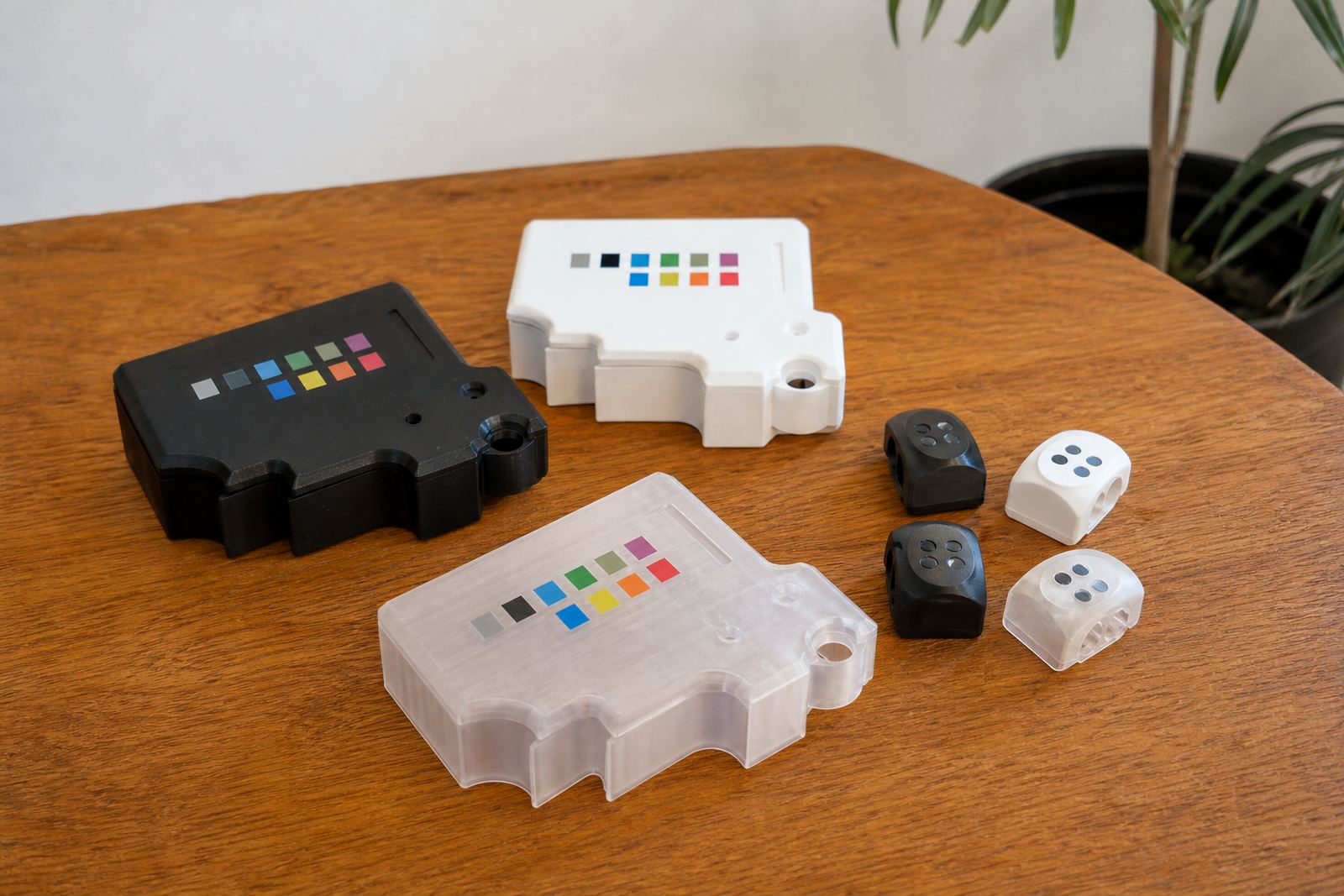
Even a small shift can matter on medical and electronic parts. A button label may need to sit square on a housing, while a medical control panel may need a clean, readable mark that stays legible after handling and cleaning. Sample runs let the team check the part, the ink and the curing method before larger quantities go through the same setup.
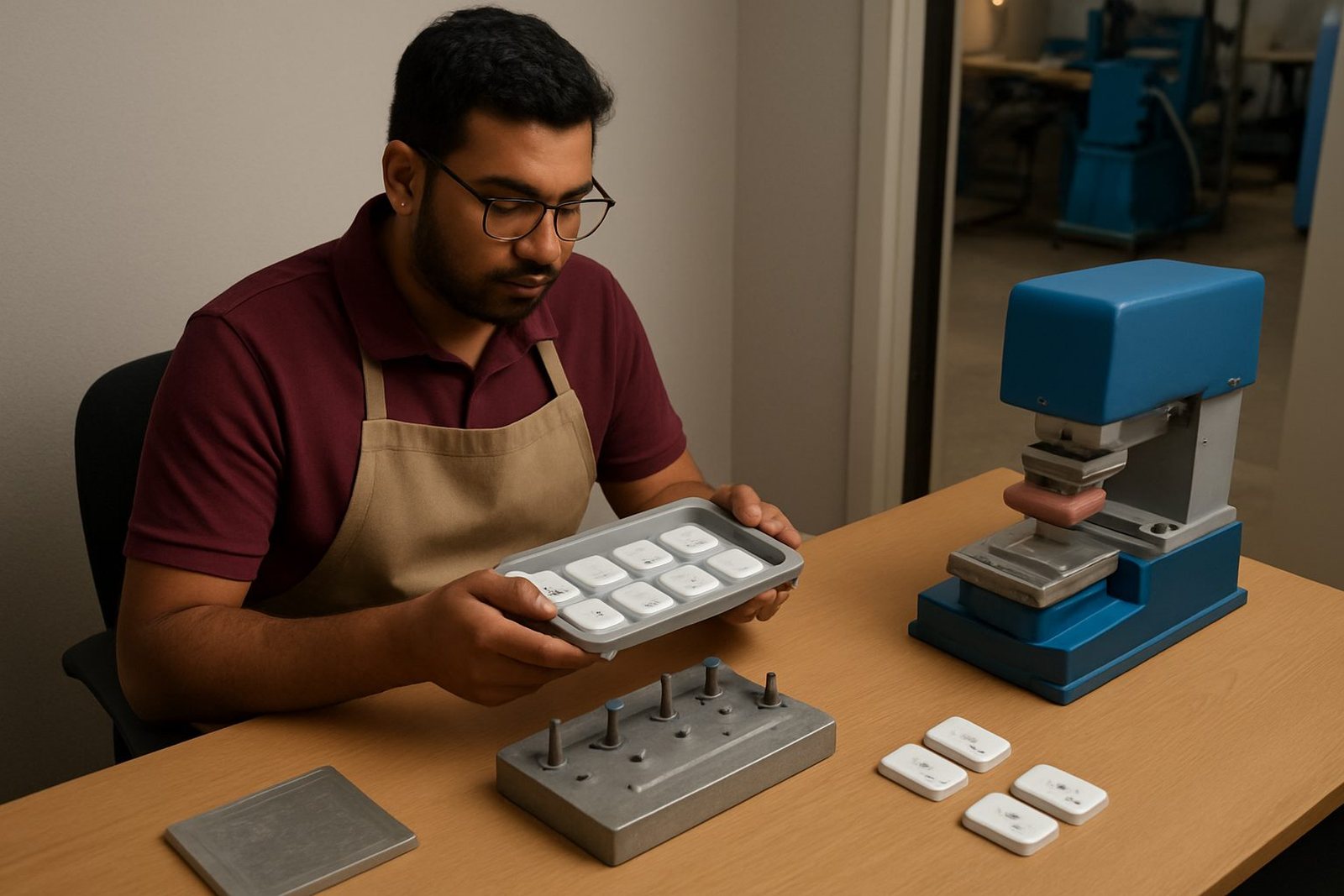
At our Westmead, Pinetown base, we use sample work to confirm the print area against the actual component, not just a drawing. That matters when parts come from different moulds or suppliers, or when a slight change in surface finish affects how the ink takes. One quick trial is often cheaper than discovering the issue after 500 parts are already printed.
What A Sample Run Checks Before Full Production
A proper sample run is more than a quick print. It is a controlled check of the full process, from plate exposure and plate etching through to ink selection, pad hardness, fixture making and curing. The aim is to see how the full system behaves on the exact component that will go into production.
- Print position on flat, curved or recessed areas
- Ink adhesion on the specific substrate
- Colour match against approved artwork or an existing part
- Line sharpness, detail transfer and edge consistency
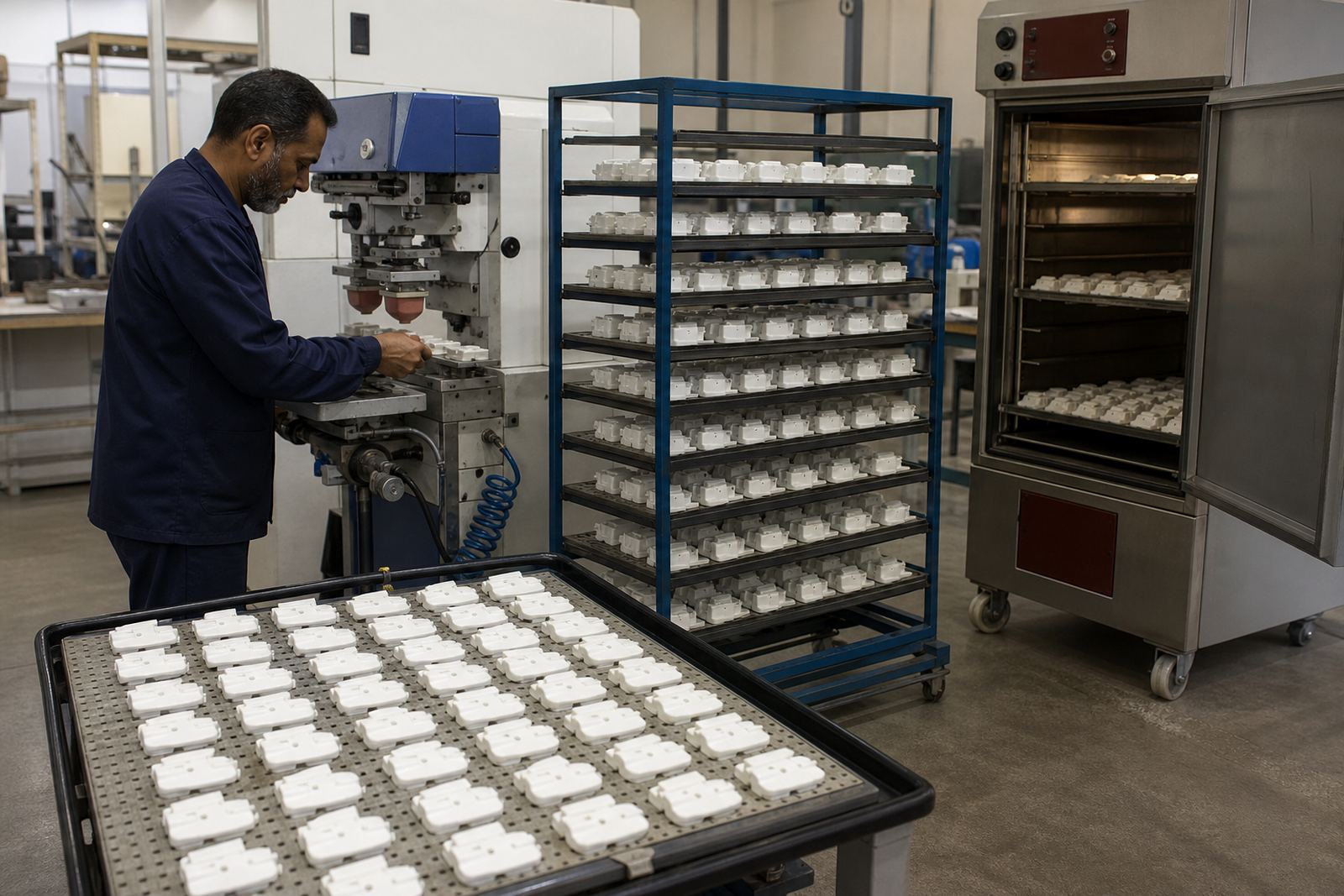
- Drying or curing behaviour under the chosen method
- Part handling, packing and stacking after print
This stage is also useful when the component has an unusual shape or a sensitive surface. A soft pad may reach into a deeper recess, while a firmer pad can suit a flatter face. Different inks and curing methods behave differently too. Some parts air dry well, while others need a controlled cure to help the print settle properly before packing.
Why Medical And Electronic Parts Need Extra Care
Medical and electronic components often have tight print areas, fine marking requirements and surfaces that do not forgive guesswork. A button housing, sensor cover, switch body or handheld device shell can have mould marks, slight curvature or a low-energy plastic surface that resists ink. If the sample is not checked properly, the final batch can show weak adhesion or poor registration.
That is why we treat sample runs as a practical control step rather than a formality. Customers remain responsible for their own device compliance and product approval, but the sample gives them real printed parts to assess before they sign off a production run. It is much easier to review a physical sample than to rely on a visual only on a computer screen.
For teams supplying manufacturers in Durban, Johannesburg, Cape Town, Pretoria and Gqeberha, this also helps reduce transport delays. A sample can be tested, reviewed and amended before the full batch is scheduled.
A Durban Example: When The First Test Saves The Second Run
A manufacturer in the Durban area may bring in a set of electronic control housings for a new product line. The artwork is already approved, but the surface on the moulded parts is slightly different from the earlier batch. On the first trial, the mark lands a fraction too low and the ink appears a touch lighter after curing. That is not a disaster, but it is a sign to stop and adjust.
From there the team can change the fixture position, review the artwork placement and test a different curing approach if needed. A second sample run then confirms the corrected print before the full order starts. That simple pause can prevent a large rerun job, which is always more costly than setting the process properly at the start.
In Westmead and New Germany, where many manufacturers run on tight schedules and send parts in and out by the pallet, this approach is practical. It keeps the line moving, but with enough control to catch issues before they become a bigger problem.
How Sample Runs Help With Follow-Up Jobs
Once a print has been approved, the sample record becomes a useful reference for future rerun job control. If the same part comes back months later, the team can compare the old sample with the new batch and check whether anything has changed in the substrate, mould finish or artwork file. That is especially helpful when a supplier changes resin or when a client updates a logo or instruction mark.
Repeat jobs are easier when the first sample was properly documented. Notes can be kept on plate settings, pad choice, ink mix, curing method and fixture alignment. This means the next run starts from a known point instead of from scratch.
- Less time spent rechecking artwork placement
- Faster setup on repeat jobs
- Better consistency between batches
- Clearer comparisons if the part changes later
For manufacturers working across South Africa, that consistency matters. A component printed for a plant in Pretoria should look and perform the same when a replacement batch is made for a site in Cape Town or Gqeberha. Sample runs help lock that down.
What Clients Should Bring To The First Sample
The best sample work starts with the right information and the right part. The actual component is ideal, along with the artwork file or a clear reference of what must appear on the part. If there is an existing sample or a previous printed item, bring that too. It helps the team compare line weight, colour and placement before the first pass is made.
It is also useful to say where the part will be used, whether it will be handled often, cleaned with chemicals or exposed to heat, moisture or coastal humidity. Those details affect ink choice and curing method. A mark that works well in dry inland conditions may behave differently in Durban's coastal air, so the sample should reflect the real use case where possible.
Good sample preparation is not about overcomplicating the job. It is simply making sure the first print is close enough to what the final batch must become. That saves time, protects stock and gives everyone a proper basis for sign off.
From Artwork To Approved Print, In The Right Order
Sample runs work best when the steps are followed in order: artwork preparation, logo redraws if needed, print area planning, plate exposure, plate etching, fixture making, trial sample runs and then the final production decision. Each step informs the next. If the print area is too tight or the artwork is not suited to the part shape, the sample will show it immediately.
That is the real value of the pilot stage. It turns assumptions into a physical result. On medical and electronic parts, that means the customer can review accuracy, adhesion and appearance before committing to volume. For a business supplying across South Africa, that is a sensible way to keep production steady and reduce unnecessary rework.
When the sample is right, the full run usually follows with far less trouble. That is why sample runs matter: they make the production job clearer before the first full tray is printed.