
What the silicone pad actually does
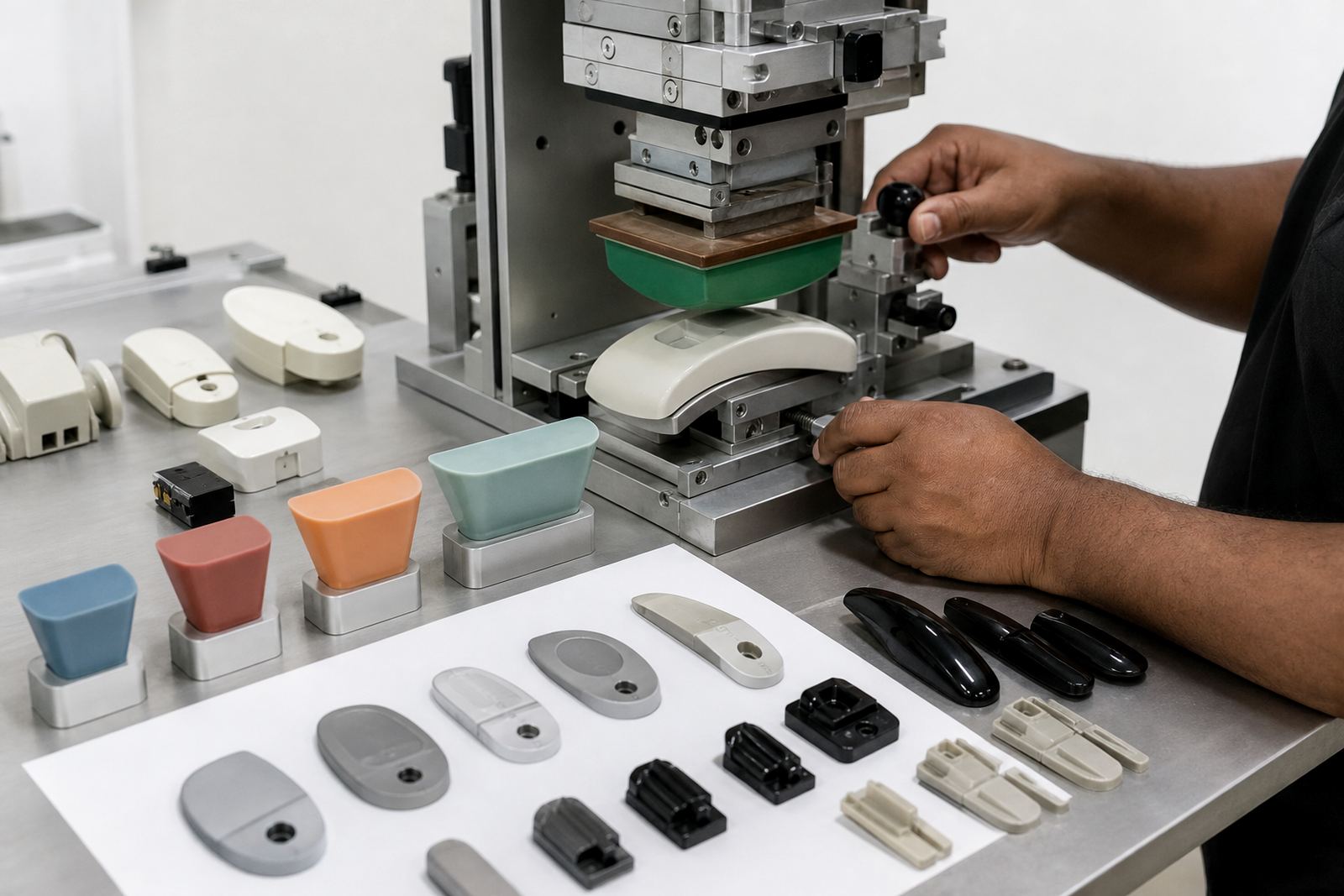
In pad printing, the image is first engraved into a plate, usually as a shallow etched area that holds ink. The silicone pad picks up that ink from the plate and then presses it onto the component. Because the pad is flexible, it can reach around corners, follow slight curves and land on small print areas where a flat process would struggle.
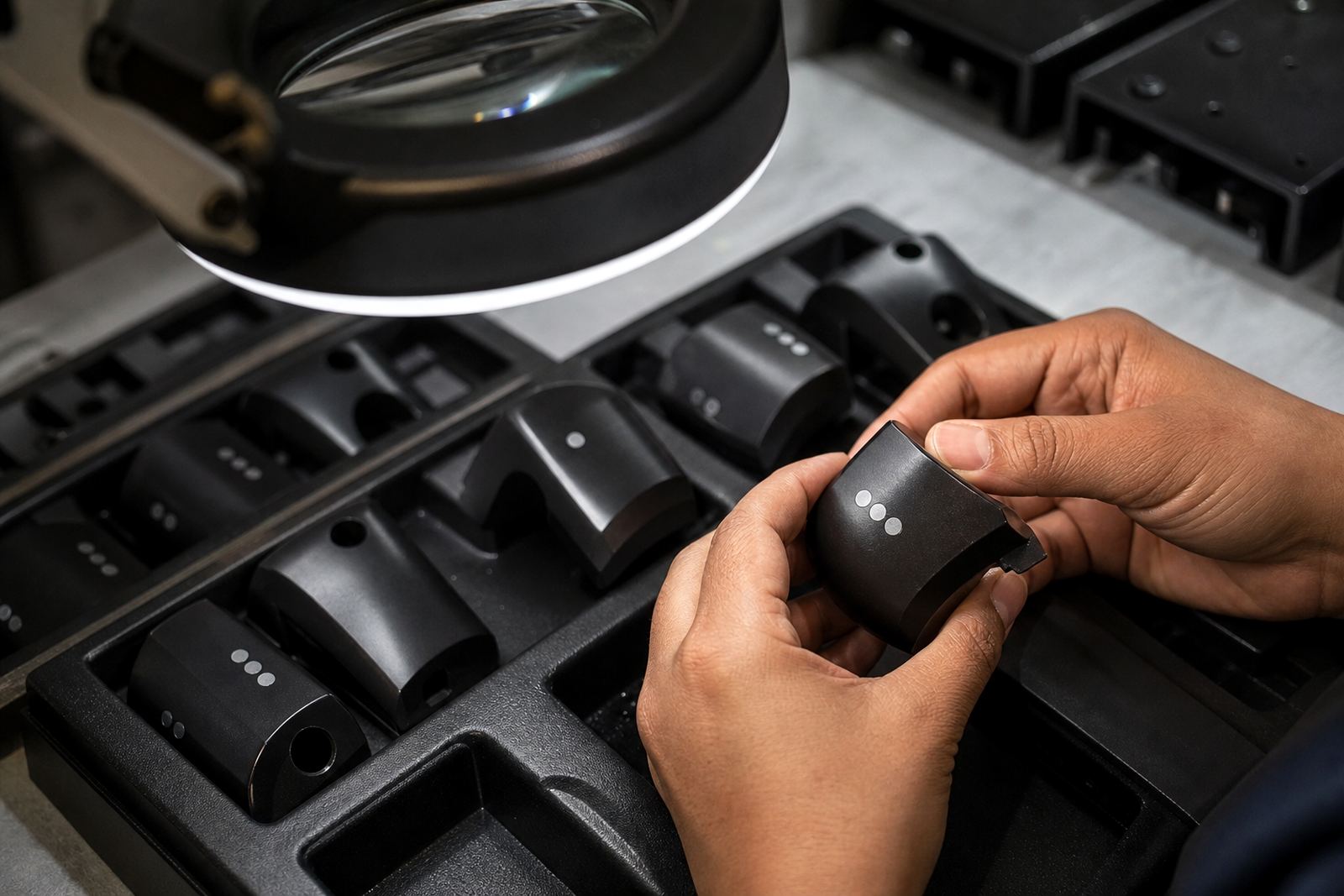
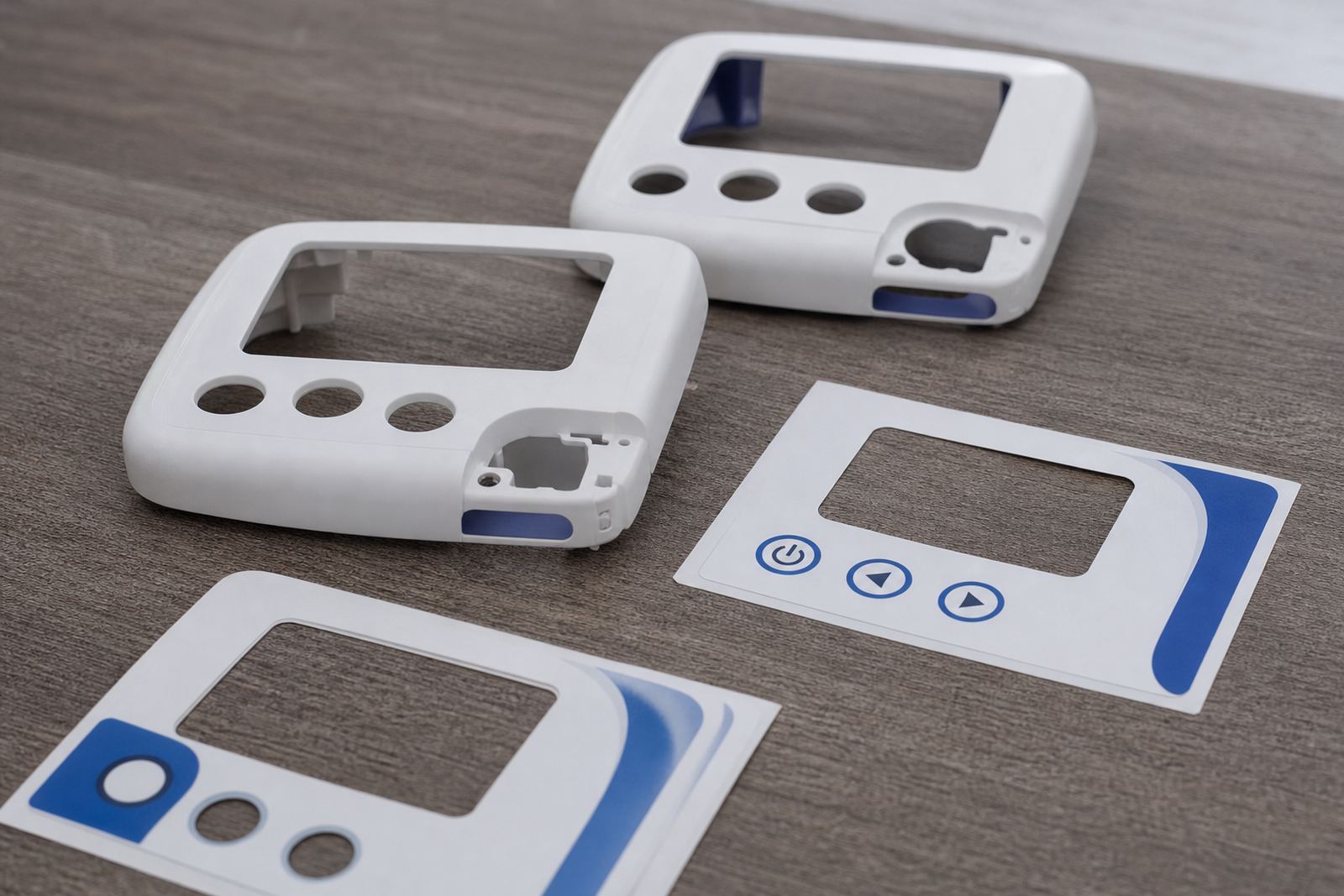
The pad is not just a soft block of material. It is a shaped transfer tool with a very specific job. Its surface has to release ink cleanly, while its body must compress enough to make contact without smearing the image. On medical housings, switches, connectors and control parts, that balance is what separates a clean mark from a blurred one.
At our Westmead base in Pinetown, we see this often on runs for manufacturers in Durban and further afield. A marking that looks fine on paper can fail on the part if the pad profile is wrong, or if the part surface has texture, mould release residue or a slight curve. That is why pad selection is as important as artwork prep and curing.
Why pad shape changes the image pickup
Pad shape controls how much of the etched image is picked up and how the ink is released. A pointed or narrow pad can reach into smaller recesses and tighter print zones, while a broader pad is better for larger legends and logos. The contact area must suit the image size, otherwise the pickup can be incomplete or the release uneven.
A pad that is too flat may pick up too much air and not press deep enough into the plate image. A pad that is too steep or too pointed may overload one side of the image and distort the transfer. The goal is a controlled deformation, not a hard press. The pad should roll onto the part in a predictable way so the ink film lands where it should.
- Small legends need a pad that can fit the print area without over-spreading the image.
- Curved parts often need a pad profile that releases from the centre outward.
- Deep or narrow features may need a pad with a more focused contact point.
For electronics, where markings are often close to clips, ports or moulded ribs, a slight mismatch in pad shape can create a cropped mark or a faint edge. The same applies to medical parts with recessed labelling zones, especially where the part geometry changes from one side to the other.
Hardness and compression work together
Pad hardness affects how the pad behaves under pressure. Softer pads compress more and can conform to uneven surfaces, but they may also spread the image too far if the force is excessive. Harder pads hold their shape better and can give sharper detail, though they may struggle on awkward contours or textured plastics.
Compression is the amount the pad squashes during the cycle. It needs to be enough to reach the print face, yet not so much that the pad bottom-outs or drags ink. Too little compression can leave gaps in the transfer. Too much can cause double edges, uneven ink deposit or an overloaded centre. The right setting depends on the part geometry, the plate depth and the ink system used.
When we set up a job, we look at the part first, then the image, then the pad. That order matters. A control button in Johannesburg may need a firmer pad than a soft-touch medical cap heading to Cape Town, even if the artwork is the same. The substrate, mould finish and expected handling all play a role.
- Softer pads suit irregular or slightly curved surfaces.
- Harder pads usually help with sharper detail and cleaner edges.
- Compression must be set so the pad releases the image without distortion.
Ink pickup, transfer and the role of curing
Once the pad lifts from the plate, the solvent in the ink starts flashing off and the ink surface skins over slightly. That is part of what helps the image release from the pad and stay on the plate long enough to transfer. If the timing is off, the ink can be too wet and stringy, or too dry and patchy. Pad behaviour and ink behaviour are linked all the way through the cycle.
After transfer, curing locks the print in place. Depending on the part and ink system, curing may involve air drying, heat curing or another controlled method. The pad must deposit the right film thickness so the cured mark is durable but not overbuilt. Too much ink can slow curing and affect fine detail. Too little can leave a thin, weak mark that wears off too soon.
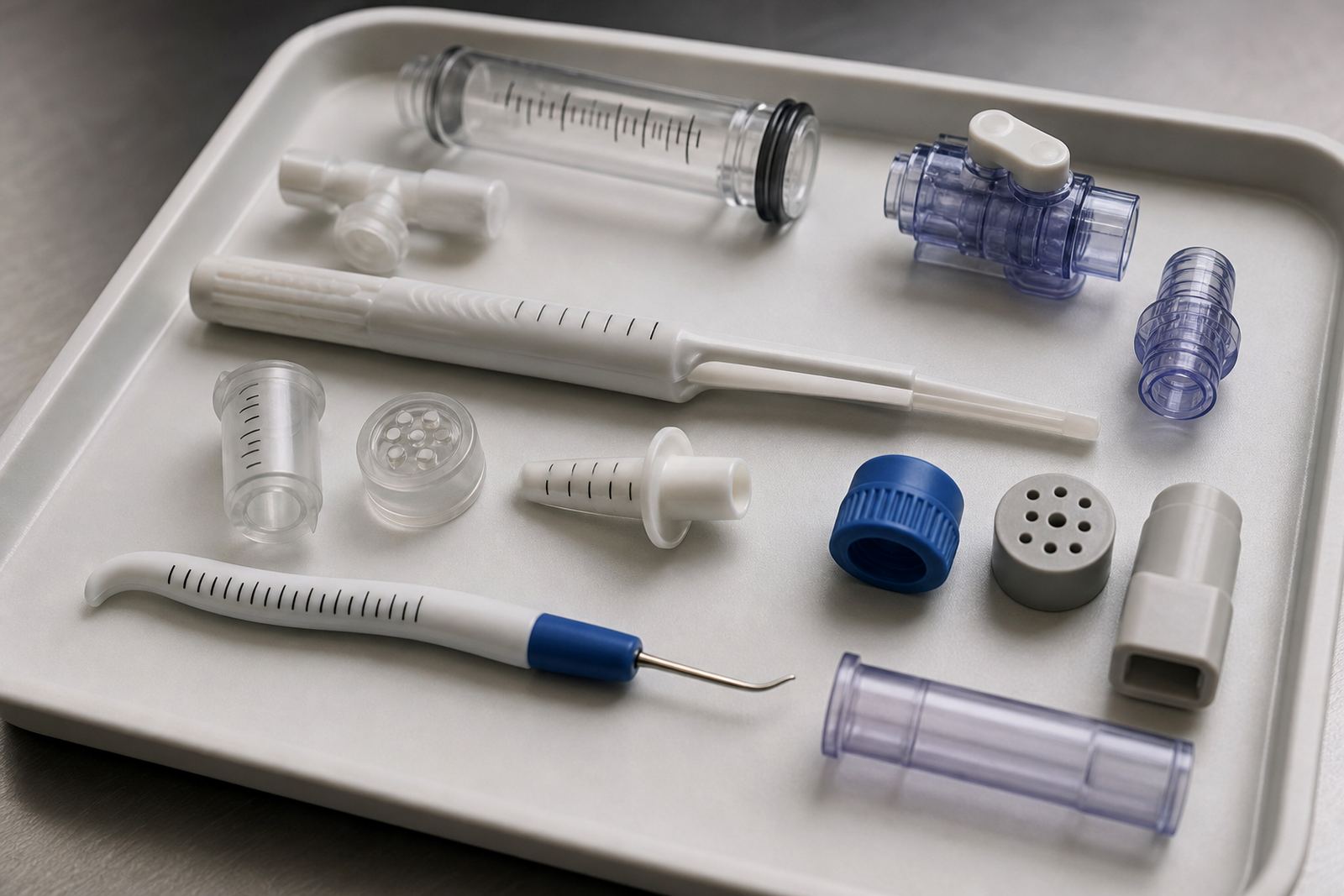
On medical and electronic parts, curing is not something to guess at. The method needs to suit the component material and the way the part will be handled in service. Customers remain responsible for their own device compliance, but the print process still has to be stable enough to support that responsibility. We help by selecting the curing method, running trial sample runs and checking repeatability before a production run starts.
Common faults that point to pad problems
When marks go wrong, the pad is often part of the story. It may be wearing out, picking up contamination or simply the wrong profile for the component. The symptoms are usually easy to spot once you know what to look for.
- Blurred edges can mean too much compression or a pad that is too soft for the job.
- Missing detail can point to poor pickup from the plate or a pad that is not contacting evenly.
- Ghosting or double images may come from the pad release timing or movement during transfer.
- Inconsistent colour density often links back to ink film control, plate depth or pad wear.
Coastal humidity in Durban can also affect ink behaviour and drying times, so the same setup that works well inland may need adjustment at the coast. In a Westmead production room, that might mean tweaking flash-off, changing compression slightly or selecting a different pad geometry before the job goes back into rotation. Small changes matter, and they can save a rerun.
From the print room: A local run
Take a small plastic control component for a Durban manufacturer, with a slightly recessed marking area and a narrow logo field. If the pad is too broad, the outer edges of the logo may distort. If it is too hard, the image may not reach the low section cleanly. The better approach is to choose a pad that narrows into the print zone, test the compression on a sample part and confirm how the ink releases after the plate pickup.
That same job may be run differently for a supplier sending product to Pretoria or Gqeberha, where the part design is similar but the substrate texture is not. One batch could need a small fixture adjustment, another a different curing cycle. This is why our service flow includes Artwork Preparation, Print Area Planning, Adhesion Test Samples, Plate Exposure, Fixture Making and Rerun Job Control. The pad does not work alone, it works as part of the full setup.
At PadPrinters Medical, our team under Sibusiso Naicker looks at the complete print path: artwork, plate, pad, ink and cure. Naledi Kekana handles production flow, Sanjay Dookhi manages artwork and plate work, and Lerato Mabunda checks quality against the agreed sample. That kind of discipline is what keeps a run consistent across Pinetown, Johannesburg and beyond.