
Why a second or third colour can solve a real marking problem
Single colour markings work well on many parts, but they can struggle when a label must do more than one job. A power symbol, polarity mark, warning triangle and batch reference may all sit on the same moulding or cover. If everything is the same colour, the operator has to work harder to read it and the user may miss the detail.
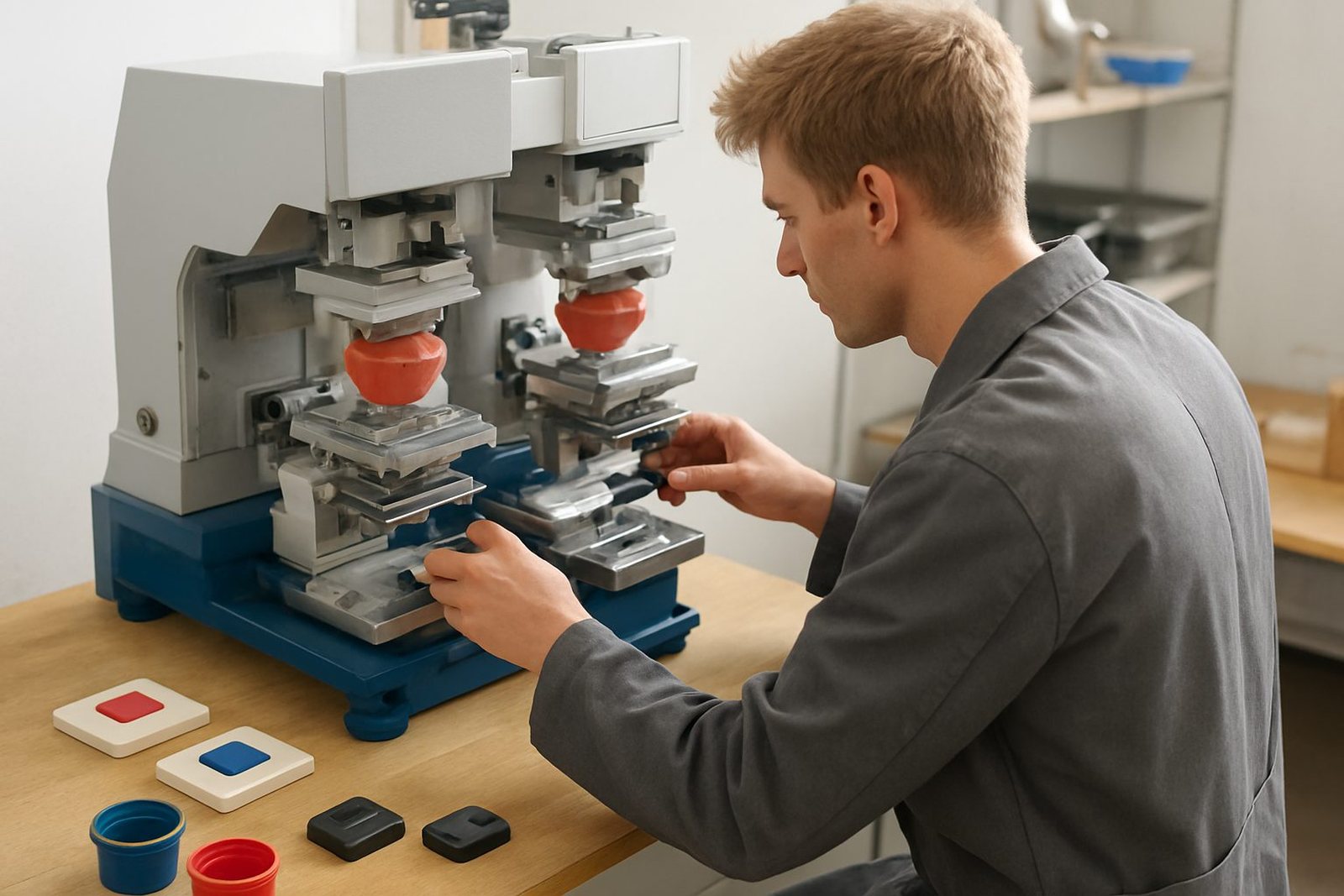
Multi colour pad printing gives each part of the artwork its own visual role. A red warning mark stands out from black text. A white line can sit on a dark housing to show orientation. On medical and electronic parts, this is often less about style and more about reducing mistakes during use, assembly or servicing. Even a small colour change can make a part easier to handle in a busy workshop or clinic.
How pad printing places clean colour on complex shapes
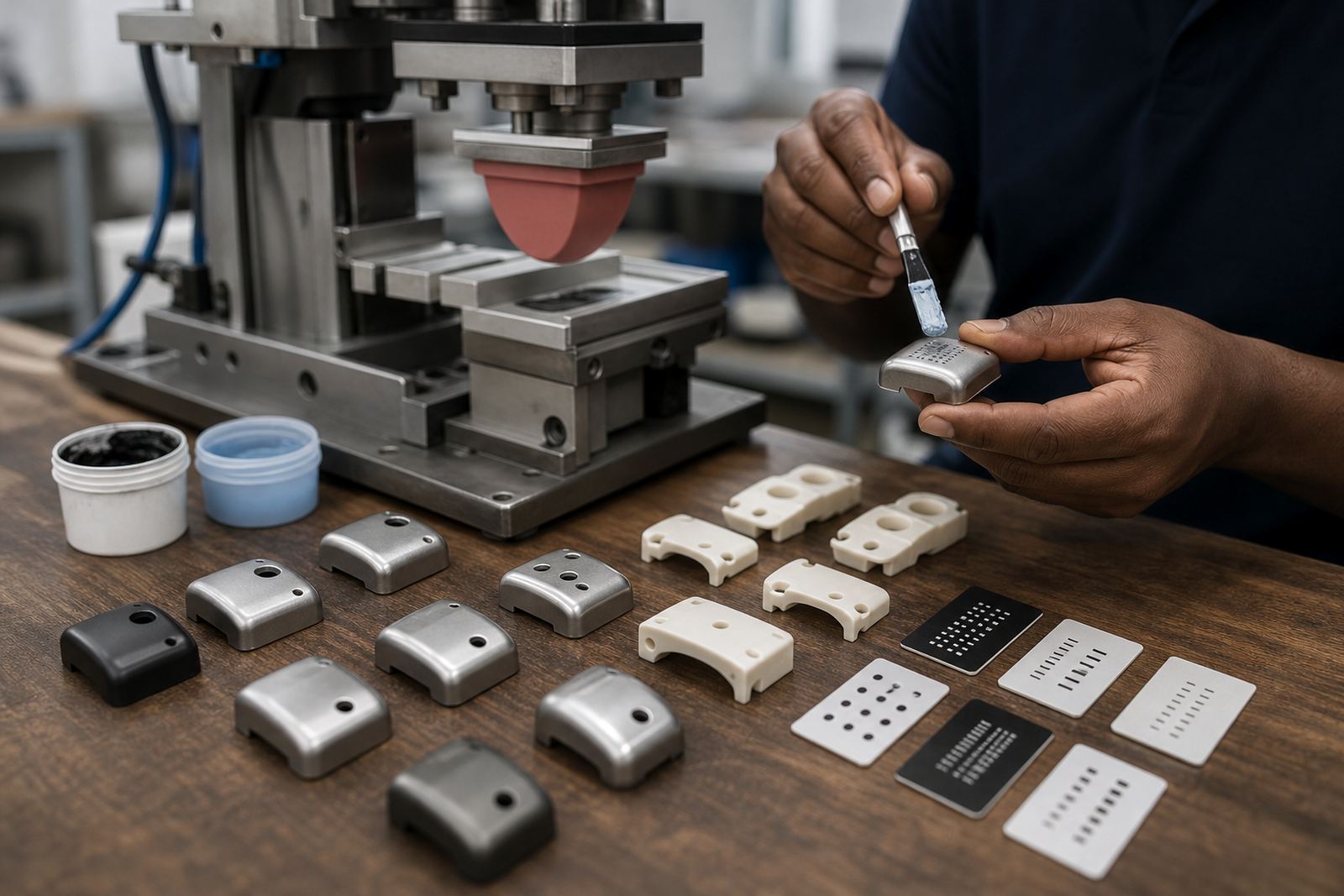
Pad printing uses an etched plate, a silicone pad and inks selected for the part material. The artwork is transferred from the plate to the pad, then pressed onto the component. Because the pad is flexible, it can follow curves, recesses, shallow ribs and small switch surrounds that would be difficult to print with other methods.
For multi colour work, each colour is built in sequence with careful registration. That means the first colour must sit in the right place before the next one lands on top or beside it. On small medical caps, control panels and instrument housings, the spacing between colours may be only a few tenths of a millimetre, so setup and repeat control matter a great deal. If the fixture is off by even a little, the colours can creep and the mark looks untidy.
When separate colours are worth the extra setup
Not every job needs more than one colour. The extra plate work and setup time only makes sense when it improves function or brand recognition. For manufacturers, the question is usually simple: does the extra colour help the end user read the part faster, use the device more safely or recognise the product more quickly on the line?
- When a control panel uses colour to separate functions, such as start, stop and alarm
- When a medical part needs a warning mark that must stand out from the body colour
- When a cable or connector requires clear polarity or orientation marks
- When a brand mark needs to stay visible on a dark or textured surface
- When service teams rely on colour coding for inspection or maintenance
On simple parts, one colour may still be the better choice. On more complicated interfaces, colour separation can save time for the user and reduce the chance of a mistake. That is often worth more than keeping the artwork plain.
Matching inks to the part and the working environment
Multi colour printing only holds up if the inks suit the substrate and the conditions the part will face. Some electronic housings sit in dry indoor spaces, while others are handled in factories with dust, cleaning agents or warmth from machines. Medical parts may need regular wiping and repeated handling. Coastal conditions around Durban and Pinetown can also bring humidity that affects drying and storage if the process is not managed properly.
Ink choice, curing method and test samples all play a part. A good print should dry properly, hold its edge and keep each colour from bleeding into the next. For some jobs a heat cure is suitable. For others, air drying or a different curing approach gives better results. The point is to match the process to the part not force every job through the same setting.
Local example from Westmead to the wider market
A practical example is a small control face used on a monitoring unit assembled in Durban. The part needed black text for the function names, a white icon for power, and a red warning cue near the stop feature. With one colour, the face looked tidy but the key marks blended together under workshop lighting. With three colours, the controls became easier to read at a glance and the printed face did not need a thicker label or added sticker.
That kind of work suits manufacturers in Westmead, Pinetown and New Germany where parts move quickly from design to production. It also matters for clients in Johannesburg, Pretoria, Cape Town and Gqeberha who need markings that stay consistent across batches. When a product moves between sites, colour coded printing helps keep the same visual standard, even if the assembly team changes.
What to plan before approving a multi colour job
Before a job is released, the artwork, print area and fixture need to be checked together. Multi colour work is not only about the image file. It is about how the part sits, where the pad can reach, and whether each colour has enough space to stay clean. If the print area is too crowded, colours may touch where they should not. If the surface texture changes across the part, the result may need trial samples before final approval.
- Confirm the exact print position on the actual part, not only on a drawing
- Check whether the colours need to overlap, sit side by side or stay fully separate
- Review line thickness and text size for legibility on the finished component
- Ask for adhesion test samples on the same material and finish
- Allow for rerun control so repeat jobs stay consistent over time
Because device compliance still rests with the customer, the marking plan should support their own checks and approvals. In practice, the better the artwork planning, the fewer surprises later. That includes fixture making, plate exposure, plate etching and trial sample runs before production starts.
Why multi colour work is often about control, not decoration
There is a common view that multi colour printing is mainly for branding. In medical and electronic manufacturing, it is more often about control. Clear colour separation can make a product easier to assemble, easier to inspect and easier to use. It can also help a manufacturer keep the same part family recognisable across different models.
At PadPrinters Medical in Westmead, Pinetown, the focus is on printed markings that are precise, repeatable and practical for production. With proper artwork preparation, colour matching, trial runs and dispatch packing, multi colour pad printing becomes a tool for clarity rather than decoration. For many parts, that difference matters every day.