
How pad printing transfers a marking onto a shaped part
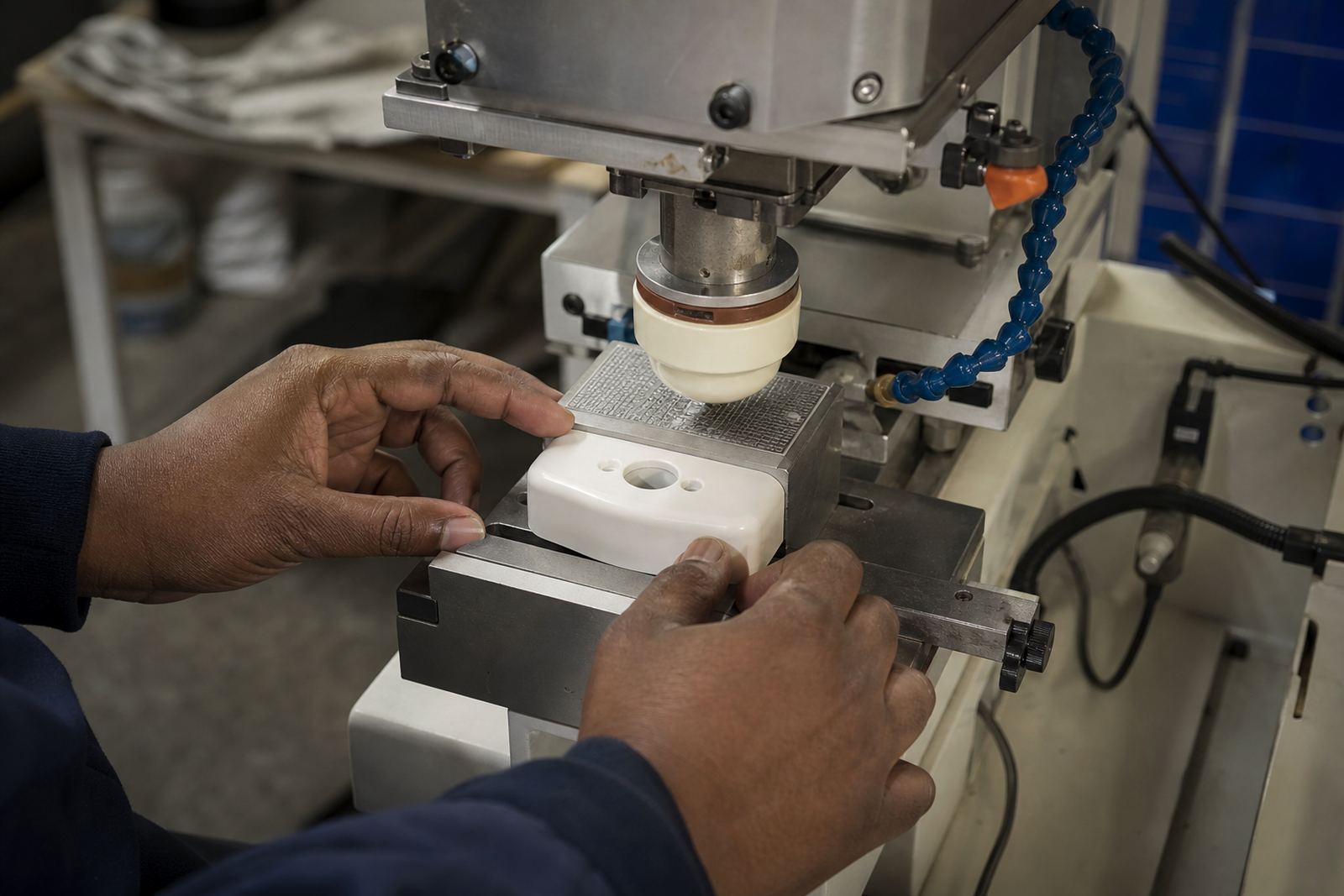
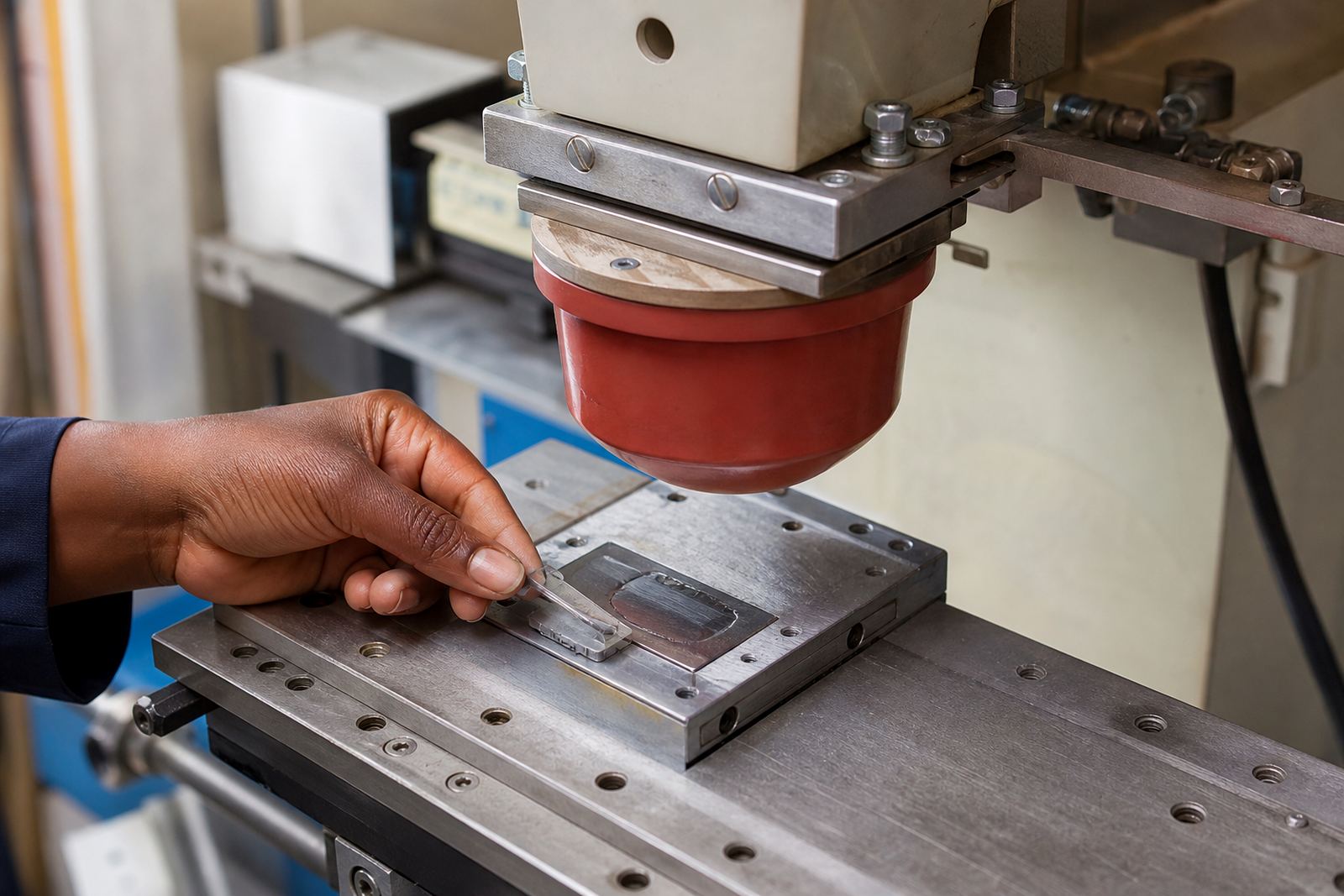
Pad printing works by moving ink from an etched plate onto a silicone pad, then from the pad onto the component surface. The pad compresses and lifts, which lets it reach curved, recessed, textured and irregular areas that are common on medical housings, instrument bodies and electronic casings. For parts made from plastics, coated metals or other smooth substrates, that controlled transfer is often the difference between a mark that lasts and one that smudges off too easily.
The process starts with artwork preparation. The mark must be sized for the print area, the lines need to remain legible at small scale and the plate must suit the level of detail needed. A good result depends on matching the image, the fixture and the ink system to the actual part, not just to the drawing. On smaller components there is little room for error, so setup matters as much as the print itself.
- Artwork is cleaned up for printability before plate making.
- A steel or polymer plate is etched with the image.
- Ink fills the etched image and the pad lifts the ink from the plate.
- The pad presses the image onto the part in a controlled stroke.
- The printed item is then cured or left to dry, depending on the ink system.
Pad printing for small medical and electronics parts
Medical and electronic parts often need tiny lettering, symbols, batch references or orientation marks. These marks must stay readable without affecting the part’s function or surface finish. Pad printing suits this kind of work because it can place detail where labels, stickers or larger print methods would be awkward. It also works well where the surface is not flat, which is common on moulded enclosures, knobs, caps, switches and handheld devices.
For manufacturers in Durban, Johannesburg, Cape Town, Pretoria and Gqeberha, pad printing is often chosen when consistency matters across repeat runs. If a component has a fixed print position, the job can be set up with a fixture so each part lands in the same place. That helps with alignment and reduces variation between batches.
Clients remain responsible for their own device compliance and product approvals. The print process supports the required marking, but it does not replace the customer’s own technical checks, regulatory assessment or quality sign-off.
The inks, curing and adhesion checks that protect the result
The right ink system is central to pad printing. Different substrates need different adhesion behaviour, and the ink has to work with the part surface, the drying time and the required resistance to handling. Some jobs need a fast dry, others need a more controlled curing method so the print can set properly before packing or assembly. Coastal humidity in Durban and nearby areas can also affect ink behaviour, so the production team has to work with the weather and not against it.
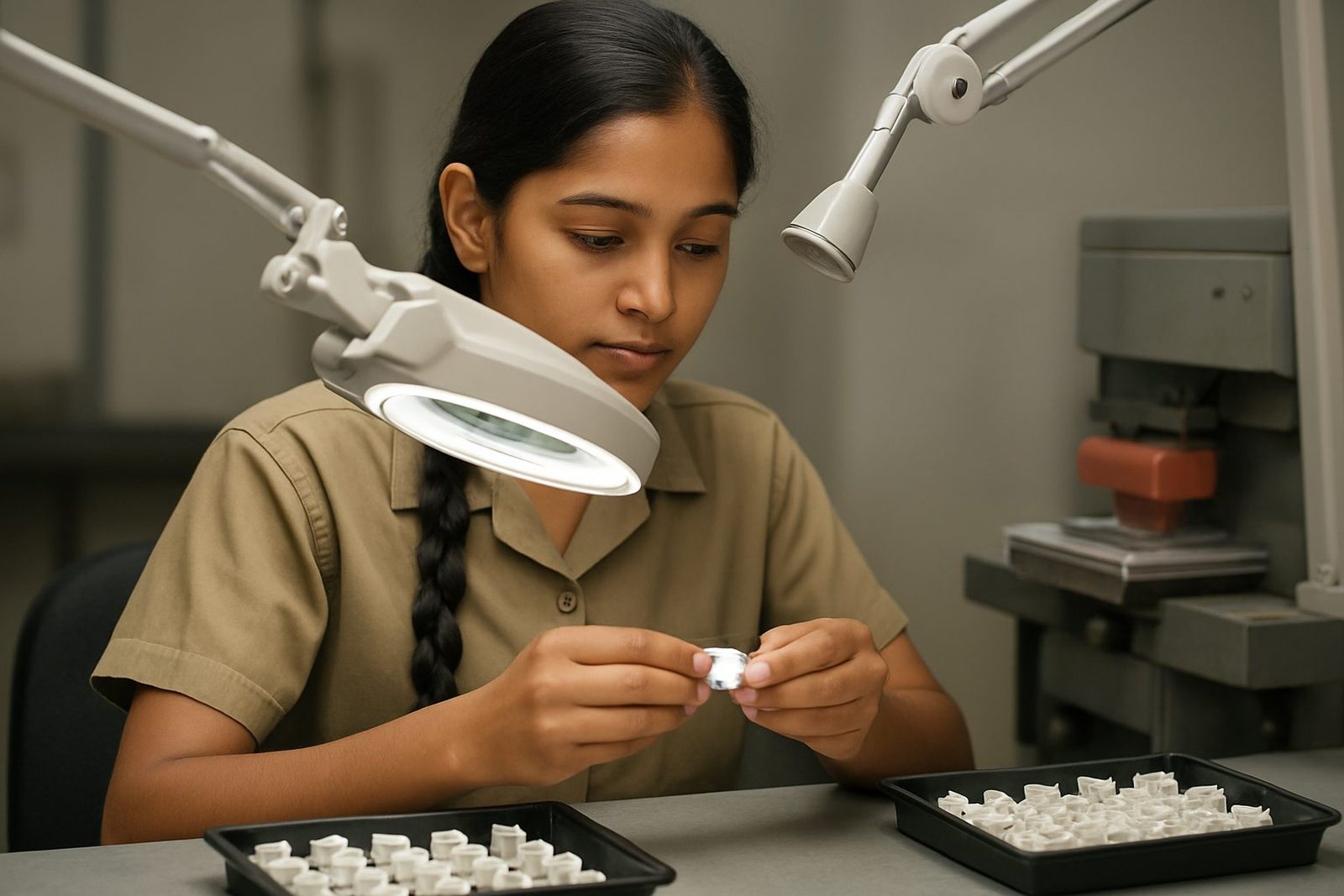
Before a production run, it is common to produce adhesion test samples. Those samples show whether the print grips the part properly, whether the colour reads clearly and whether the image survives normal handling. If the result is not right, the print setup can be adjusted before more parts are committed. That saves waste and keeps the job under control. A proper trial sample run is especially useful when the mark is small, because a minor change in plate depth or ink mix can make a visible difference.
- Colour matching keeps repeated jobs consistent.
- Curing method selection depends on the substrate and the line speed.
- Adhesion checks help confirm the ink bond before full production.
- Trial runs reduce rework on higher volume orders.
Fixtures, plate making and rerun control in a busy production environment
Good pad printing is not only about the pad and ink. The fixture keeps the part steady, the plate holds the image, and the machine setup keeps every movement in the same place. For awkward parts, fixture making becomes a practical part of the job. A simple, well made fixture can improve registration and cut down on rejected prints. In some cases, a part may need more than one print position, so the fixture has to support that sequence without shifting.
PadPrinters Medical in Westmead, Pinetown handles these details as part of day to day production support for manufacturers. The team includes Sibusiso Naicker as Managing Director, Naledi Kekana in production, Sanjay Dookhi on artwork and plate work, Lerato Mabunda on quality, Yashika Sewpersad in client services and Mfundo Xaba on machine setup. That kind of division matters when a customer needs a rerun months later and wants the same mark, the same placement and the same handling standard.
Rerun job control is particularly important for medical and electronic products because the print must remain consistent over time. If a company comes back with a repeat order, the previous plate data, fixture notes and sample references should be easy to retrieve. That keeps the job moving and reduces the chance of a mismatch between batches.
What to look for in a pad printing supplier
A manufacturer choosing a pad printing partner should look for practical control, not just a promise of neat output. The supplier should understand artwork preparation, print area planning, plate exposure, plate etching and the realities of running repeat jobs in South African conditions. They should also know when a job needs a test sample and when a change in curing or ink choice is likely to help. Experience with small components matters because the tolerance window is tight and the mark has to sit correctly on the product every time.
For clients across South Africa, from Durban and Pinetown through to Johannesburg, Pretoria, Cape Town and Gqeberha, the main question is whether the supplier can support the work from artwork to dispatch packing. That includes careful packing so printed parts are protected in transit and ready for the next stage. Local businesses in New Germany and Westville often need the same thing: a supplier that can handle short runs, repeat jobs and technical changes without turning the process into guesswork.
- Ask how artwork is prepared for small, detailed marks.
- Confirm how the supplier handles test samples and reruns.
- Check whether fixtures are made for awkward part shapes.
- Make sure print control is matched to your component and substrate.
Why pad printing still works well for precise component marking
Pad printing remains a reliable choice because it is simple in principle and exacting in practice. The method is well suited to small, detailed component marking where the image must follow the shape of the part and still read cleanly after handling. When setup is done properly, the process can produce consistent results across multiple batches, which is why it continues to support medical and electronic manufacturers who need detail more than decoration.
For a local example, imagine a Durban electronics supplier needing tiny orientation marks on moulded housings, with a mix of flat areas and slight curves. A label may not sit properly and direct print may struggle with the shape. Pad printing can place the mark into the right position, use a suitable ink system and cure the print so the part can move to assembly with less fuss. That practical approach is what makes the process useful, especially when production windows are tight and the next shipment is already booked.
If you need a clear, repeatable mark on small medical or electronic parts, pad printing is often the most direct answer. The key is careful setup, sensible testing and a supplier that understands the part before the first run starts.