
Why vector artwork matters before a plate is made
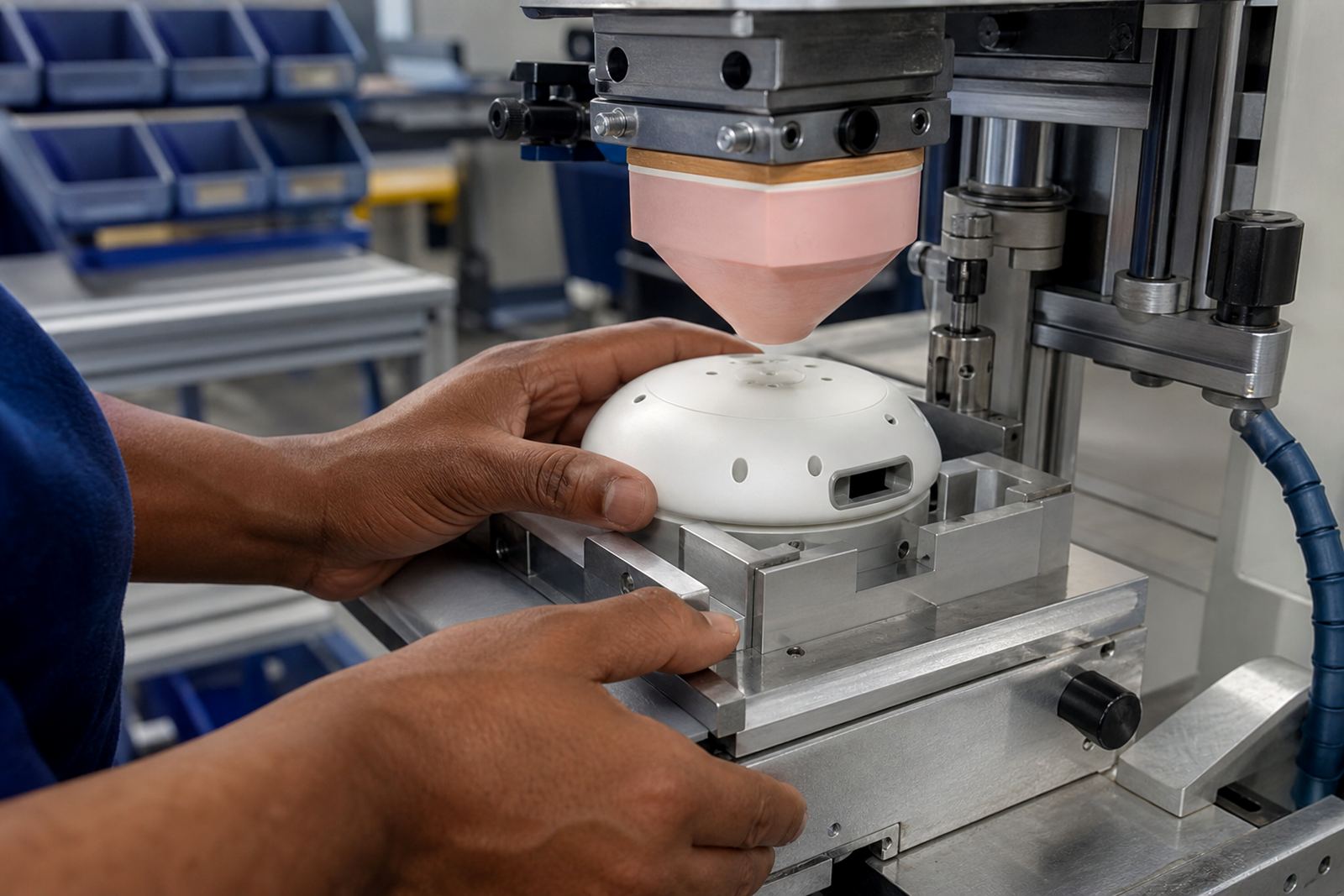
Pad printing depends on a prepared plate, a silicone pad and inks that transfer a mark onto a shaped part. When the source artwork is clean vector format, the plate maker can work from fixed lines and curves instead of trying to trace soft edges or pixel blocks. That usually gives better control over fine text, logos, symbols and small reference marks.
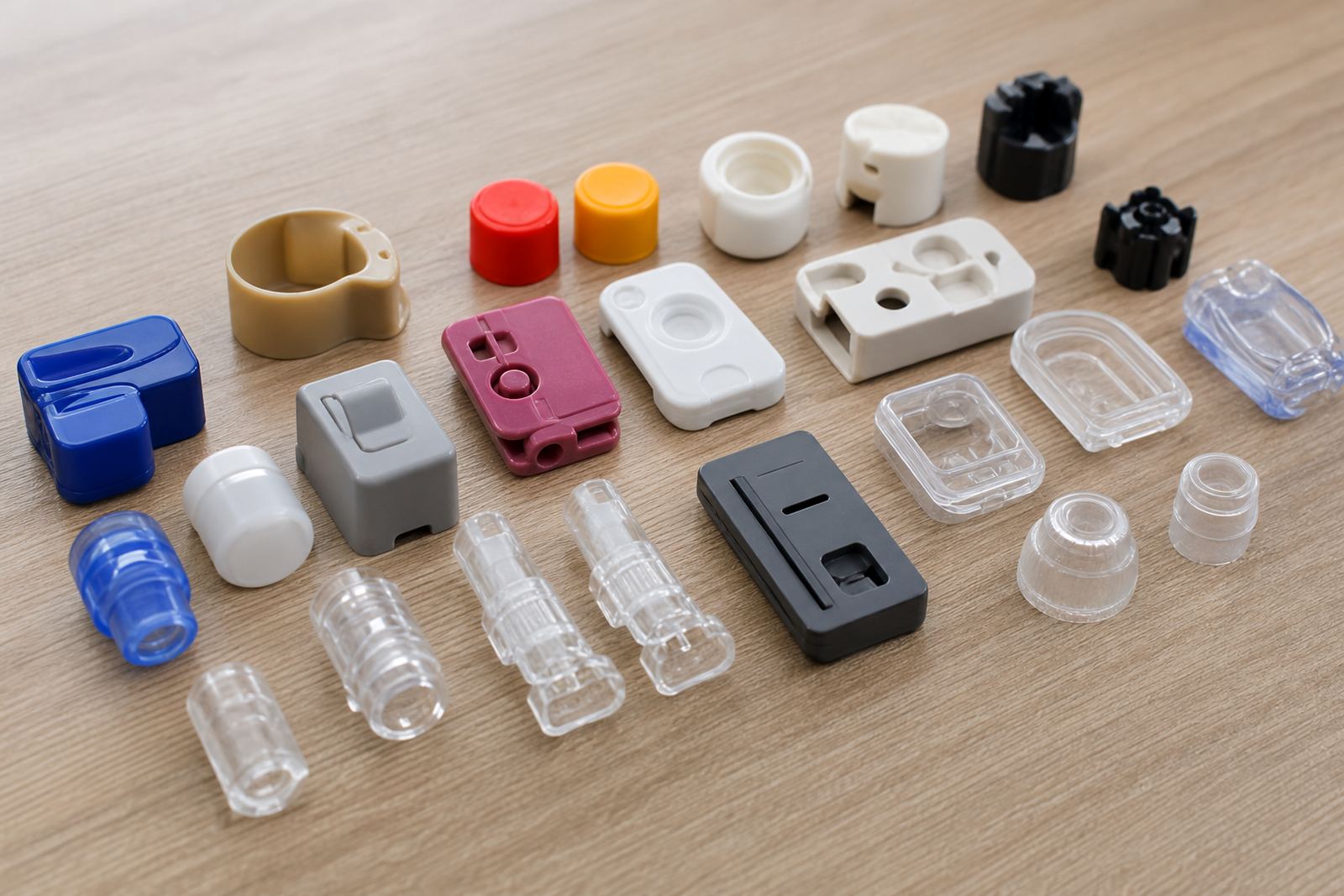
For medical housings, handheld testers, switch covers and plastic or coated components, a tidy file reduces guesswork. It helps the artwork keep its shape when it is reduced to a small print area.
What clean vector files usually allow us to check
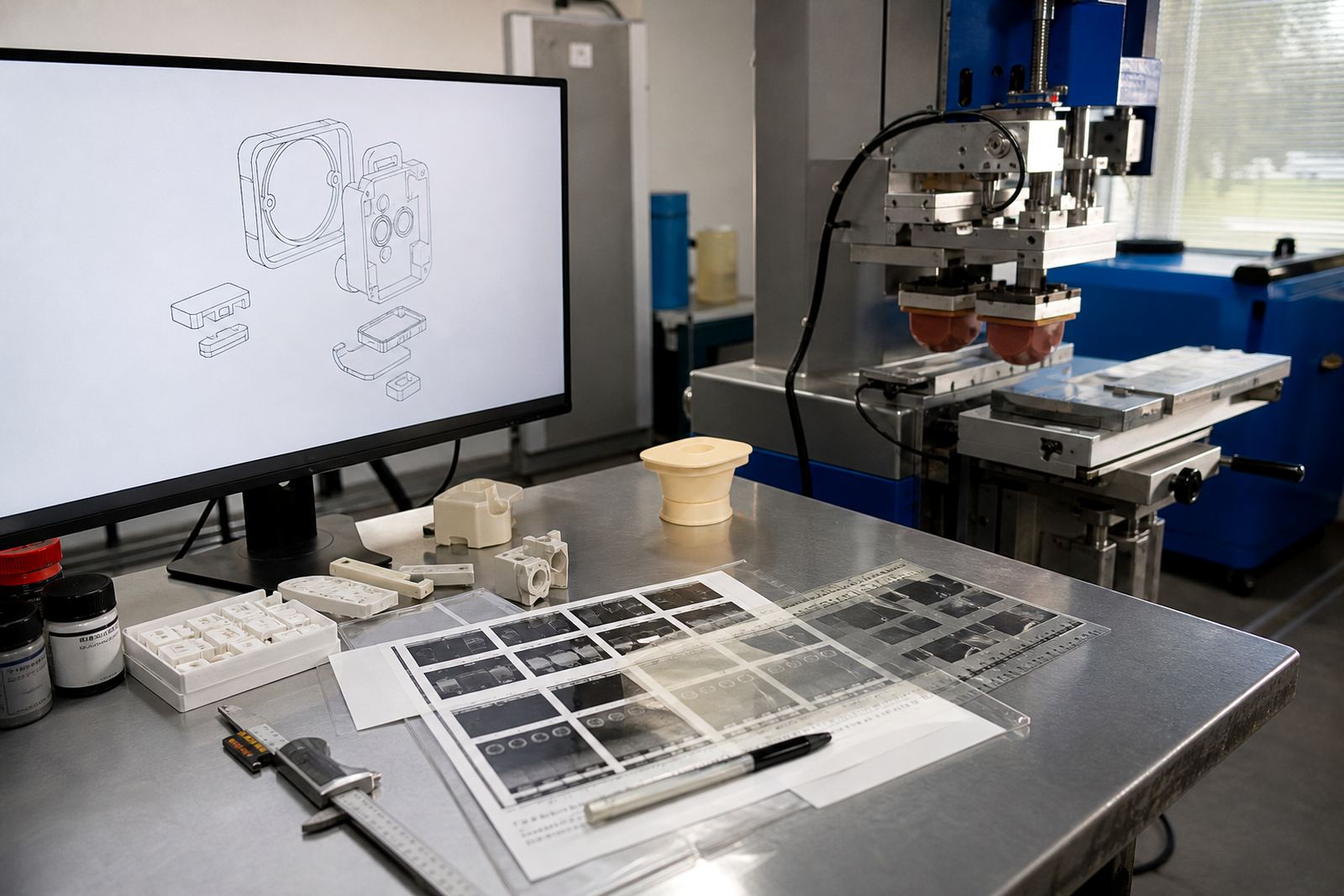
We look for files that stay sharp at any size and that separate cleanly by colour if the job needs more than one pass. If artwork arrives in the right format, the next steps are simpler: redraws are lighter, plate exposure is more accurate and print area planning can be done with fewer changes later.
- Lettering that holds at small sizes without filling in
- Logos with smooth curves and even stroke weight
- Solid shapes that do not break up when etched on the plate
- Line art that registers well on jigs and fixtures
- Artwork that can be matched to the actual moulded or printed area
When the file is not clean, we may still prepare it, but the job takes more checking. That can affect trial sample runs, rerun job control and the final curing method selection.
Small marks on medical and electronic parts need disciplined artwork
Medical and electronic components often leave very little room for error. A part may need batch coding, part numbers, direction arrows, polarity marks, calibration dots or a logo in a small field. If the artwork is not tidy the result can look heavy, clipped or uneven, and on some parts the mark can bridge detail that should stay open.
In practice, the artwork should suit the part, not the other way round. A clean vector file lets us plan the print area around curves, screw bosses, vents and recessed surfaces. It also helps when we are setting up fixture making for irregular parts that need the same position every time.
- Keep text readable at the actual print size, not just on screen
- Avoid decorative detail that will not survive transfer to the plate
- Use clear line art for icons, warnings and alignment marks
- Allow enough space around the mark for the pad to land cleanly
From file to plate: where artwork quality shows
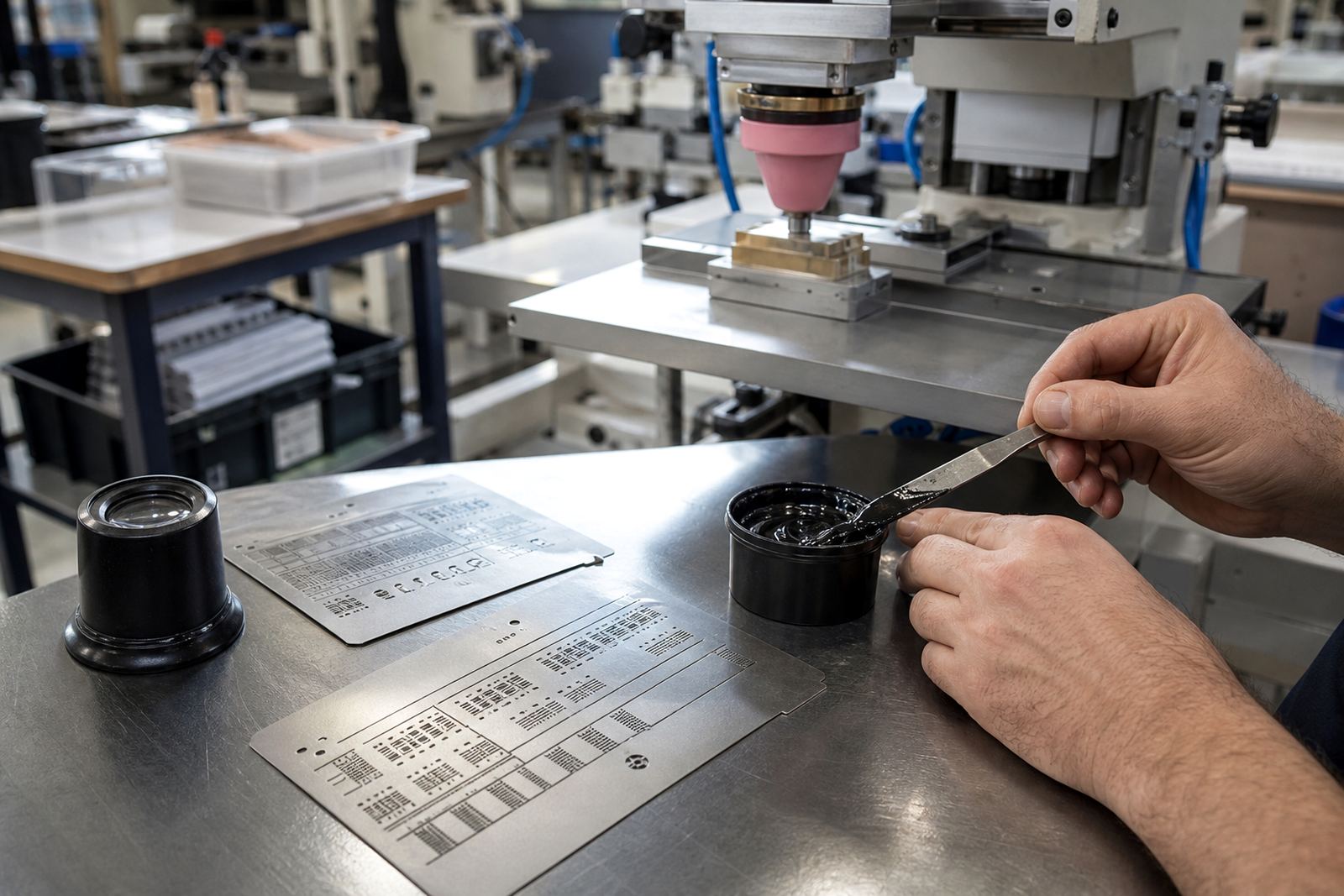
Once artwork is approved, it moves into plate exposure and plate etching. That is where any weakness in the file starts to show. Rough edges, poor contrast and stretched shapes can turn into a plate that does not carry ink evenly. Clean vector artwork gives the technician better control over the image area, and that usually supports steadier output from the first sample onward.
It also helps with colour matching when the print has to sit alongside a moulded colour, a coated finish or another printed layer. In a workshop that handles repeat work for clients across South Africa, a good file means less back and forth and fewer surprises when the first sample comes off the machine.
Why repeat jobs benefit from the same source artwork
Many manufacturers need the same mark to be repeated on new batches over months or years. If the original artwork is stored cleanly, future reruns are easier to control. That matters for dispatch packing, batch separation and keeping a consistent look across different production runs. It also helps when production shifts from one part supplier to another and the print still needs to land in the same position.
For sites in Pinetown, New Germany and Westville, and for customers further afield in Cape Town, Pretoria and Gqeberha, repeatability saves time. A stable vector source keeps the job closer to the original setup so the plate, pad pressure and curing can be matched with less adjustment. It is not magic, just good preparation and proper control.
- Keep one master file for each approved mark
- Record the part number and print area size with the file
- Note any special ink or curing method used on the job
- Store revision dates so old versions do not go back into production
Parts we marked for a plant in Westmead
A local manufacturer in Westmead may need a small logo and product code printed on an electronic casing with a curved face and a narrow recessed panel. If the customer sends a raster image saved from a website or a low-resolution PDF, the edge detail can become soft when the artwork is scaled down. With a proper vector file, the same mark stays clean and the plate maker can keep the code legible without crowding the logo.
That sort of job also shows why adhesion test samples and trial sample runs matter. The file must suit the part, but the ink still has to bond to the surface and cure properly for the end use. Customers remain responsible for their own device compliance and internal approval requirements, while we handle the print preparation and transfer process as accurately as possible.