
What a cliché actually does in pad printing
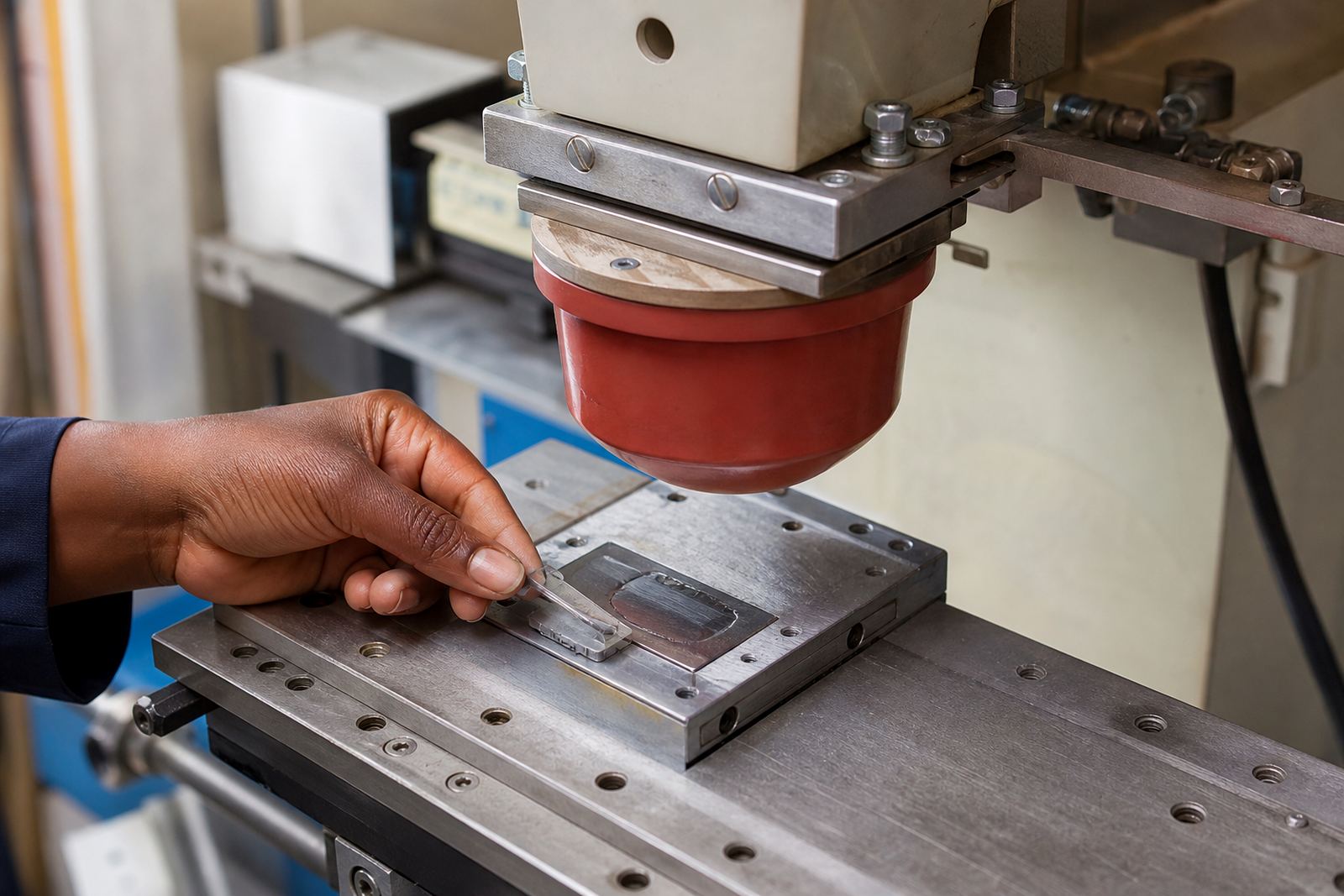
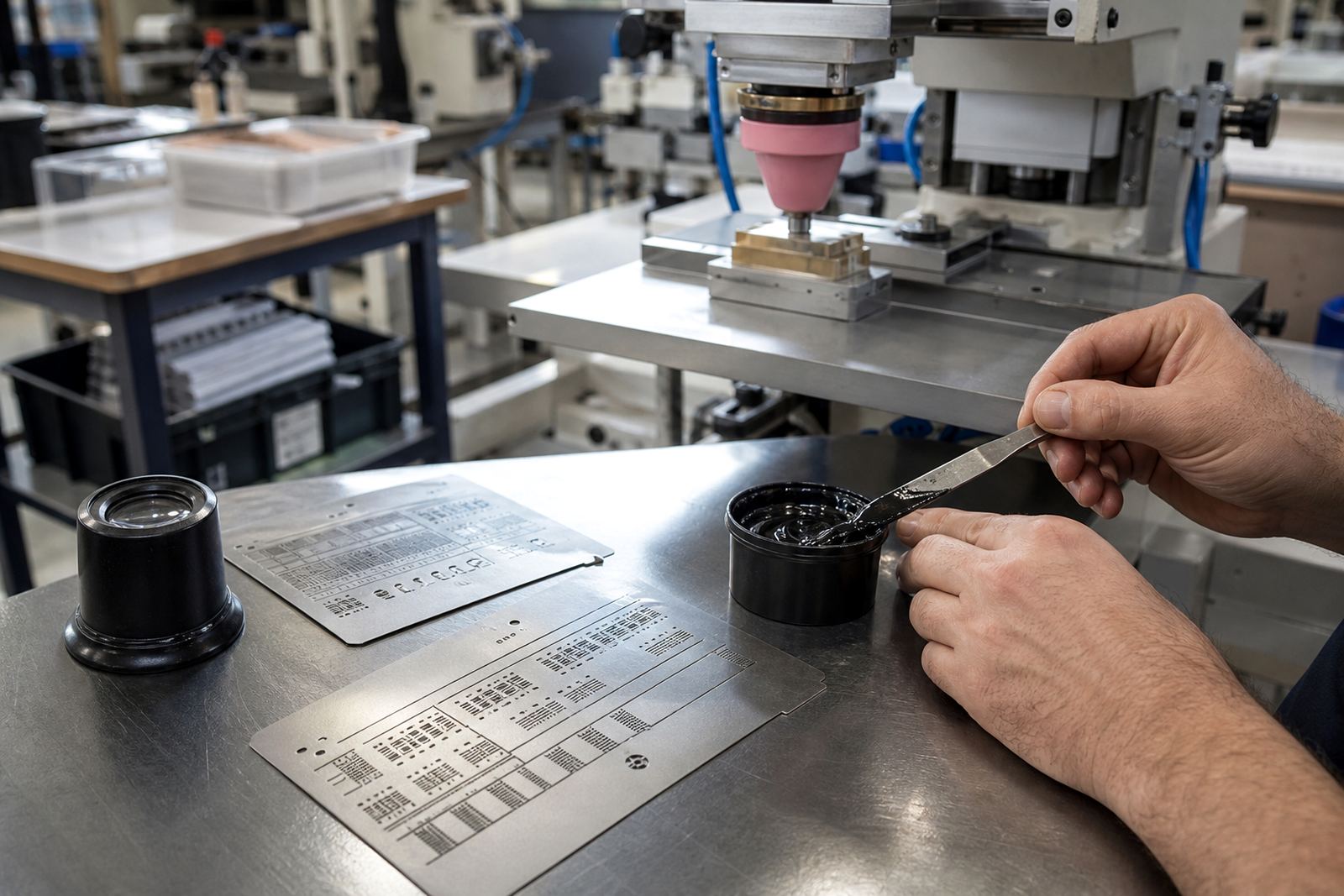
In pad printing, the cliché is the plate that holds the design after it has been etched. Ink sits in the etched image area, a doctor blade or ink cup clears the surface, and a silicone pad lifts the ink out of the recess and presses it onto the part. That simple cycle is why pad printing works so well on small, curved or uneven components where other print methods struggle.
Fine detail on medical and electronic parts depends on a cliché that can hold small text and thin lines without breaking up. If the image is too shallow, the mark may look weak. If it is too deep, the ink can flood the edges or dry unevenly. The plate is not just a holding tool, it is the foundation of print consistency.
Choosing the right plate depth for the job
Plate depth is one of the first decisions that affects print quality. A shallow etch can suit very fine lettering or small symbols, while a deeper etch may be better where the ink needs a bit more body. The right choice depends on the substrate, the ink system and the curing method, not only on the artwork itself.
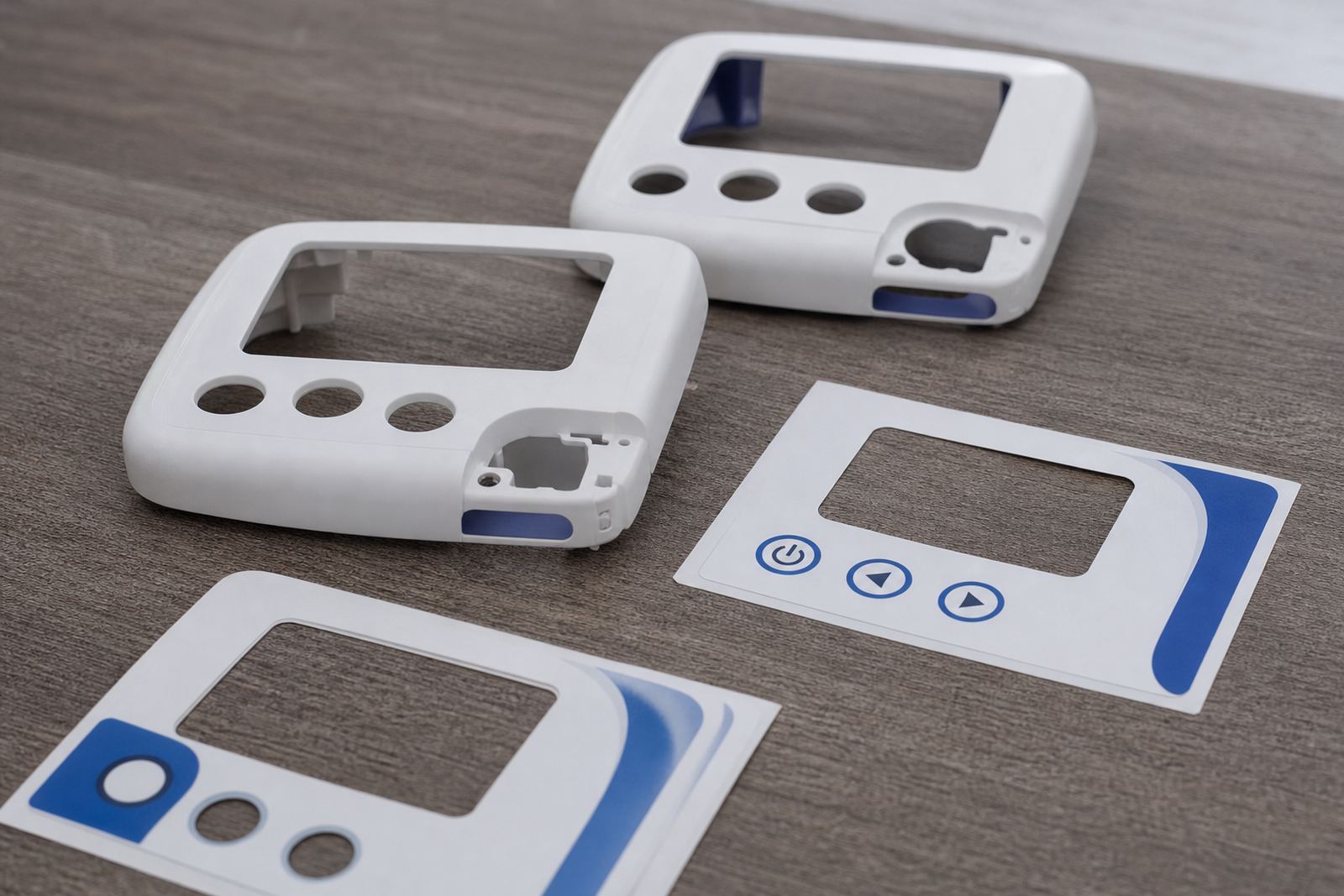
On medical housings, control buttons and electronic casings, small variations in depth can change the final edge definition. In a Westmead workshop in Pinetown, for example, a run of control faceplates might need one plate for crisp text and another for a larger warning icon. That keeps the print legible after handling, cleaning and repeated use.
- Finer detail usually needs a cleaner etch and careful ink release.
- Deeper etches can help with heavier coverage on some plastics and coated parts.
- Plate depth should match the pad shape and the part surface, not just the artwork.
Artwork setup before the plate is made
Good cliché work starts before etching, with proper artwork preparation. The image must be clean, correctly sized and checked against the actual print area. If the logo redraw is rough, the plate will reproduce those faults exactly. That is why layout, line thickness and spacing matter so much on small components.
Print area planning is especially important on medical and electronic parts where labels, icons and serial-style marks may need to fit into tight spaces. Our team at PadPrinters Medical handles redraws, plate exposure and plate etching in a controlled sequence, so the image on the plate matches the job on the part. Even a tiny shift can cause a bad fit on the fixture, and then the run slows down.
- Confirm the available print area on the actual component, not only on a drawing.
- Keep small text large enough to read after curing and handling.
- Allow space for fixtures, loading fingers and any surface curve.
Why silicone pads and ink choice matter as much as the plate
The cliché can only do its work if the pad and ink are matched properly. The silicone pad has to pick the ink cleanly from the etched recess and release it onto the part without smearing. The ink has to flow into the plate, stay open long enough for transfer, then cure in a way that suits the substrate.
On electronics, the mark may need to resist handling, light cleaning or warm operating conditions. On medical components, the surface may be smooth and the part may be small, so the ink needs careful adhesion testing before a full run. We provide adhesion test samples and trial sample runs so the job can be checked before production starts. Customers remain responsible for their own device compliance and final approval.
Curing methods and rerun control on repeat jobs
Curing is not a side issue, it is part of the print system. Some inks need heat, others air-dry or a controlled combination of both. If curing is rushed, the mark may feel dry but still fail under use. If it is too aggressive, delicate parts can warp or the ink finish can change.
For repeat work, rerun job control matters just as much as the first sample. The same cliché should give the same result when the setup is held steady, but only if the plate condition, ink mix, curing settings and fixture are tracked properly. In Durban humidity or on the coast near Gqeberha, drying behaviour can shift, so local conditions must be taken into account.
- Keep records of plate condition, ink batch and curing settings for repeat jobs.
- Use the same fixture and loading method when a job needs to repeat accurately.
A practical South African example on a small component
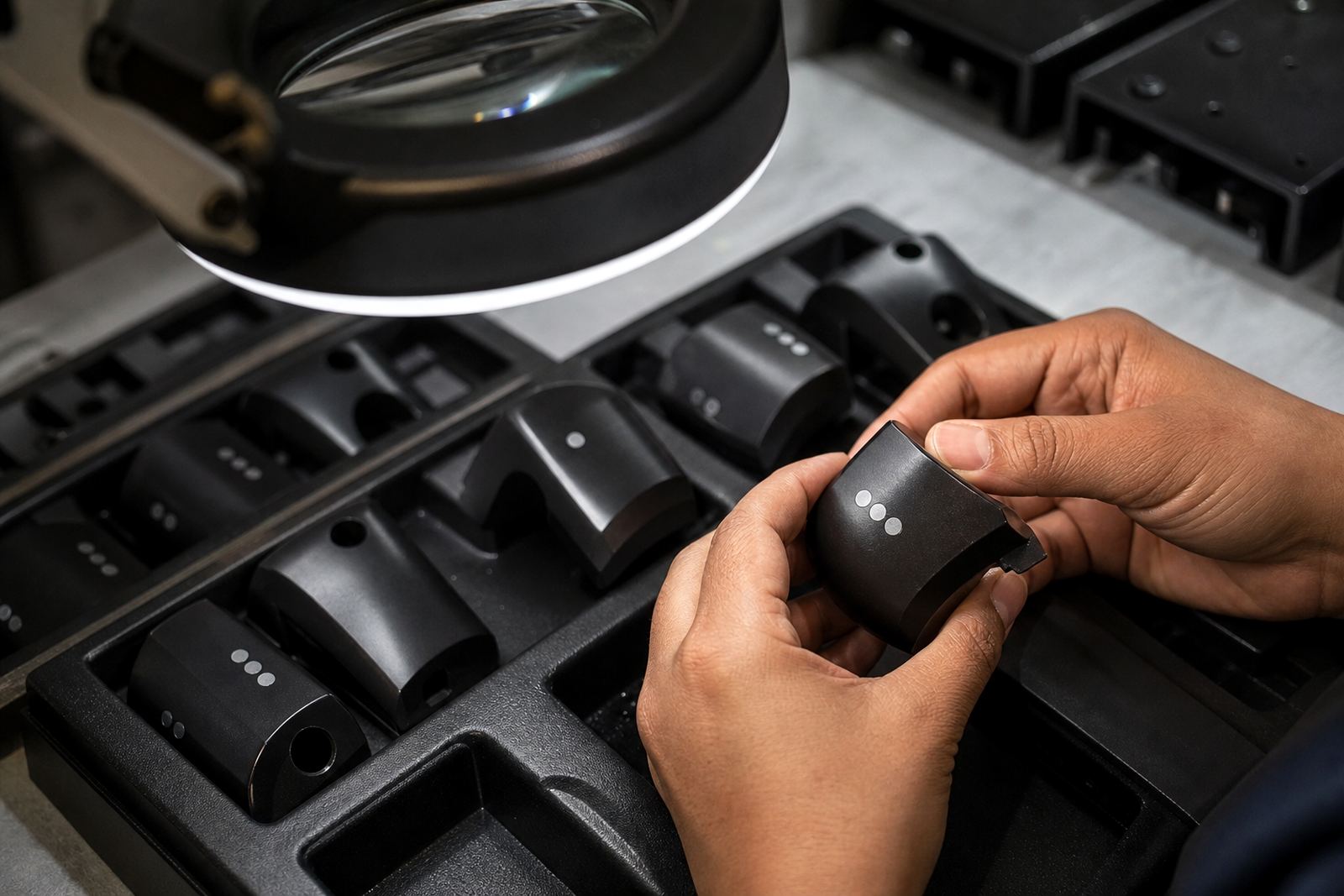
Say a manufacturer in Johannesburg needs a small control cap printed with a symbol, part code and warning mark. The artwork is checked, the print area is measured, and the plate is made to suit the smallest readable detail. A fixture holds the parts in the same position, the pad transfers the image, and the curing method is selected for the substrate and ink. That process sounds straightforward, but each step protects the final result.
For clients across Durban, Cape Town, Pretoria and Gqeberha, this kind of repeatable setup helps keep production moving without reworking parts. Our base in Westmead, Pinetown supports Artwork Preparation, Colour Matching, Trial Sample Runs, Fixture Making and Dispatch Packing, which keeps the job moving from first sample to production. When the cliché is right, the rest of the run is easier to control and a lot less wasteful.