
Why the room matters before the first print
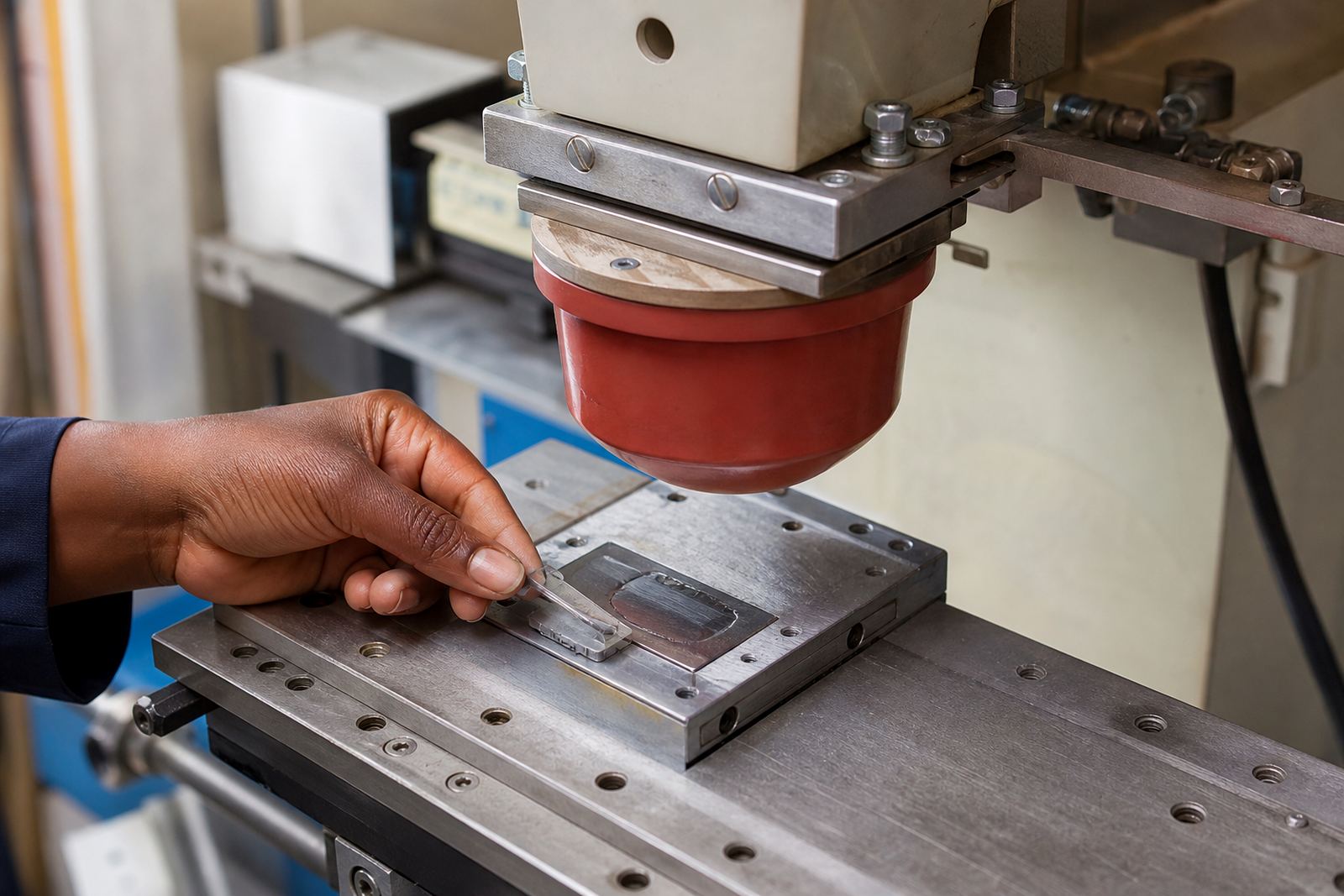
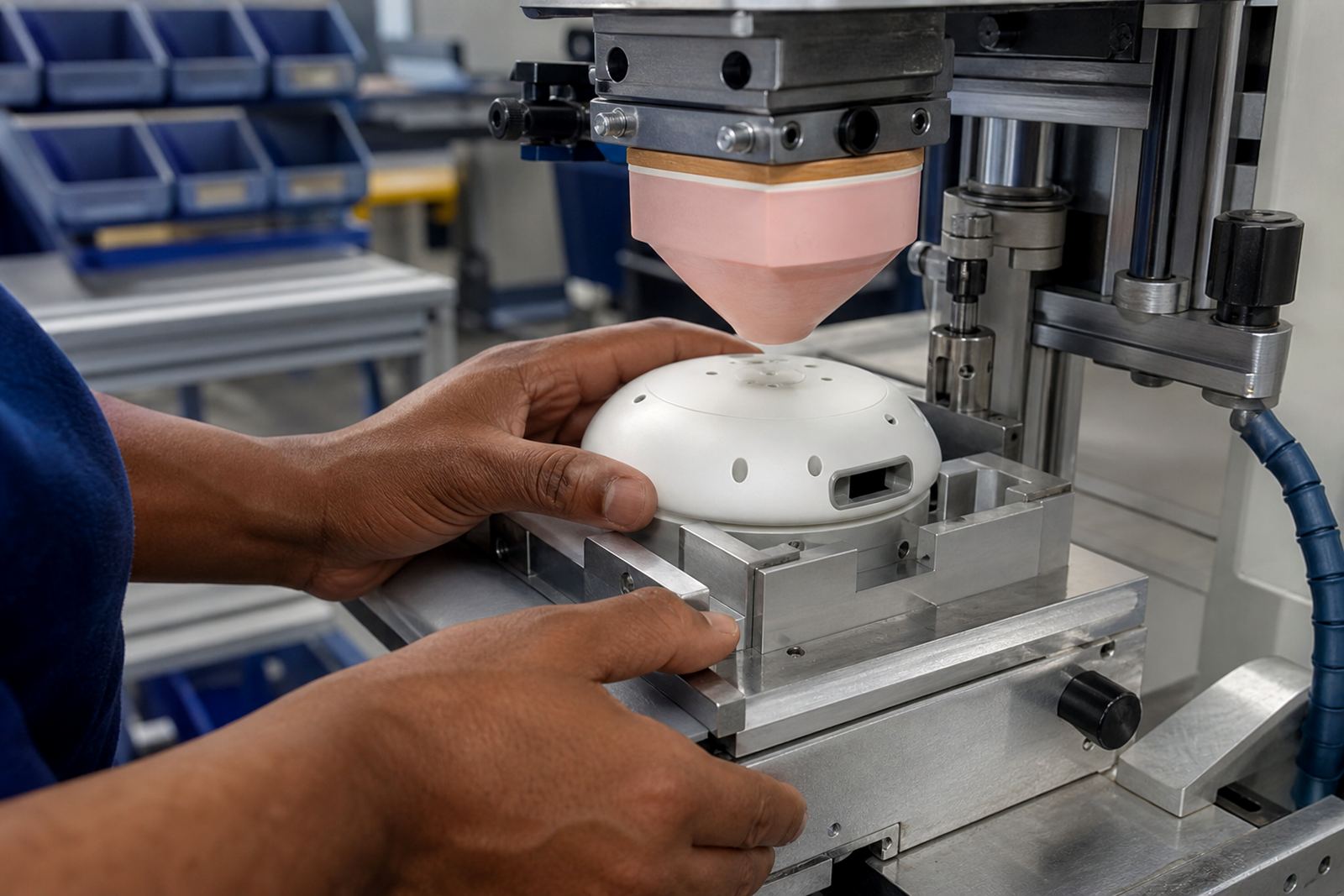
Pad printing depends on a controlled sequence: the plate picks up ink, the silicone pad lifts the image, then transfers it to the part and the ink starts to settle. If the room is too hot, too cold, dusty or breezy, that sequence changes. Ink can skin over too fast, stay wet for too long, or lose consistency from one shift to the next.
This matters on medical and electronic components because markings often need to stay legible on small curved or textured surfaces. A part that prints cleanly at 22 degrees in the morning may behave differently by mid afternoon if the room warms up, extraction changes, or the doors stay open. Good control starts with the basics: stable temperature, clean air, and a fixed drying approach for each job.
Temperature changes the way ink behaves
Temperature affects viscosity, open time and drying speed. In a cooler room, ink can feel heavier and may not release from the plate as cleanly. In a warm room, the solvent flashes off faster and the image can start to thicken before the pad has completed the transfer. Both can lead to pale prints, double edges or incomplete coverage.
In Westmead and the wider Pinetown area, afternoons can become warm quickly, especially in spaces with roller doors or limited extraction. In Durban the coastal climate adds another layer because humidity stays high and that can slow evaporation. The same print on a plastic switch housing or a small medical instrument body may need a different curing method in winter than in midsummer.
- Keep the print room at a stable working temperature where possible.
- Allow inks and parts to sit in the room before production, not straight from a hot delivery vehicle.
- Check the first samples at the start of each shift, not only after the job is under way.
Dust and lint are small problems until they are not
Dust is one of the most common causes of rework in pad printing. A tiny fibre can sit in the print area, create a pinhole, or leave a mark that looks like a scratch. On electronic parts it can also affect tiny legends, indicator marks and serial panels where the print area is already small. On medical parts, even a faint speck can make the marking look untidy and hard to read.
Dust control is not only about sweeping the floor. It includes packaging, storage, operator movement and the condition of the parts themselves. Components that arrive in open cartons, or that are unpacked near the machine, collect dirt quickly. Plastics can also carry static and attract lint from cleaning cloths or cardboard.
- Store clean parts in closed containers until just before printing.
- Use lint-free wiping methods where needed and avoid leaving fibres behind.
- Keep cardboard, trimming waste and loose film away from the print area.
- Set a cleaning routine for fixtures, pads and surrounding surfaces between runs.
Airflow can help drying or ruin the transfer
Air movement is useful for curing and solvent removal, but uncontrolled airflow can disturb the print before the ink has settled. A strong fan or an open door line can dry the ink too fast on the plate, which shortens the open time. That makes the image thinner and can cause patchy transfer. Too little airflow, on the other hand, leaves the ink hanging wet for longer than expected.
For this reason, drying needs to match the job. Some markings need a gentle controlled cure after transfer. Others benefit from a longer dwell time before packing. If the production area sits near a loading bay in Durban or a busy workshop in Johannesburg, the movement of air and people must be planned around the print cycle. One extra draft at the wrong moment can turn a clean mark into a repeat run.
Humidity and coastal conditions need extra attention
Humidity affects how some inks and curing systems behave, especially on plastic parts. Along the coast, moisture in the air can slow solvent release and alter the feel of the print during setup. In inland cities, the air may be drier and the same job can tighten up more quickly. That means print settings, curing method and sample approval all need to be checked in the actual production environment, not only in theory.
In Durban, a job that looks perfect on a sample in the morning can shift by the afternoon when humidity rises and the room warms up. In Cape Town, wind-driven dust can become a factor on certain days, especially if parts are unpacked near an open entrance. The answer is not guesswork, it is repeatable control of room conditions and a clear sample approval process.
- Test the job under the same conditions planned for production.
- Keep a note of temperature, humidity and drying behaviour for follow-up jobs.
- Review any change in part material, mould finish or surface treatment before restarting the run.
Local production checks that save time later
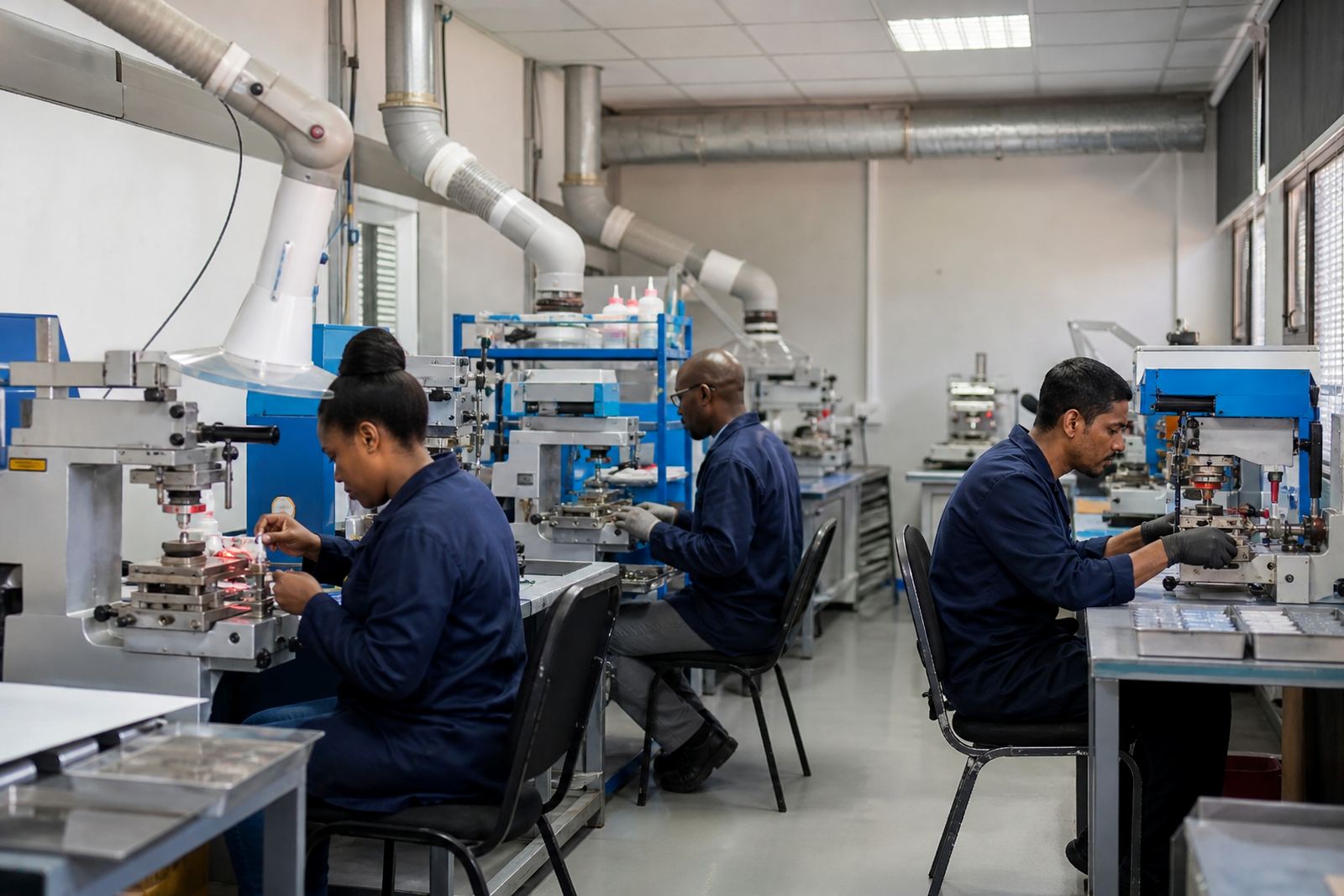
At the Westmead base, environmental checks should happen before the first production batch moves through the machine. That includes confirming the room temperature, checking for dust on the parts and fixtures, and confirming that the drying method suits the ink and substrate. For a small electronic cover, a slightly different airflow setting can be the difference between a crisp legend and one that smudges in packing.
Practical control also helps when jobs move between branches and support areas such as New Germany, Westville, Pretoria Supply or Gqeberha Supply. If a repeat order is set up using the same artwork and plate but the room conditions are different, the operator still needs to adjust the process. Customers remain responsible for their own device compliance, so the print must be checked against their internal requirements before release.
What to ask before you approve a run
A reliable pad printing job starts with questions about the environment as much as the artwork. If the part is sensitive, small or curved, a quick review of temperature, dust control and airflow can prevent waste. It is also worth confirming curing time, fixture stability and how the parts will be packed after printing. A rushed handover in a hot room can undo a good print in minutes.
For manufacturers in Durban, Johannesburg, Cape Town, Pretoria and Gqeberha, the practical approach is to treat environmental control as part of the job spec. The print area, the curing method and the packing sequence should all suit the room it will run in.
- Ask how temperature changes will be managed during the shift.
- Confirm whether the room has been prepared for dust and airflow control.
- Check the drying or curing method before the first full batch is released.