
Why a Prototype Print Is Only the First Step
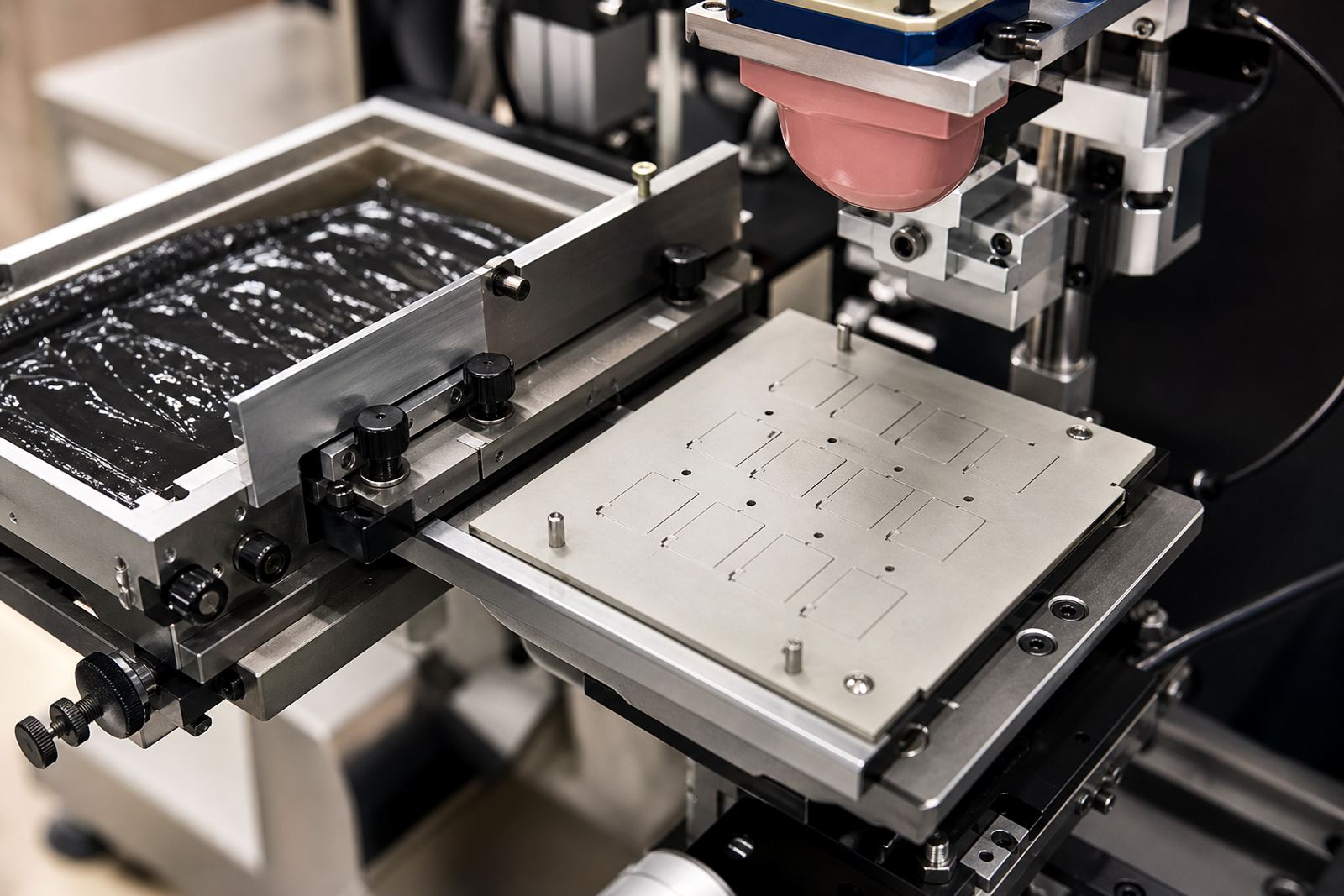
A prototype print is useful because it shows whether the artwork, part shape and ink system can work together. It also exposes the small issues that matter later, like curved surfaces, shallow recesses, mould lines, texture and the way a silicone pad releases ink onto the part.
At development stage, the job is often handled one piece at a time. That allows for quick changes to the artwork, pad shape, print area and curing method. Once the product moves into repeat manufacture, those same variables must be locked down so every batch matches the last. For medical and electronic parts, consistency matters as much as appearance, because the mark has to stay readable and placed correctly on the component.
Building a Repeatable Reference for the Line
The first step in moving from development to production is to create a stable reference. That means one agreed artwork file, one approved print position and one fixed method for setting up the job. Without that, each run starts from guesswork and small shifts creep in from operator to operator.
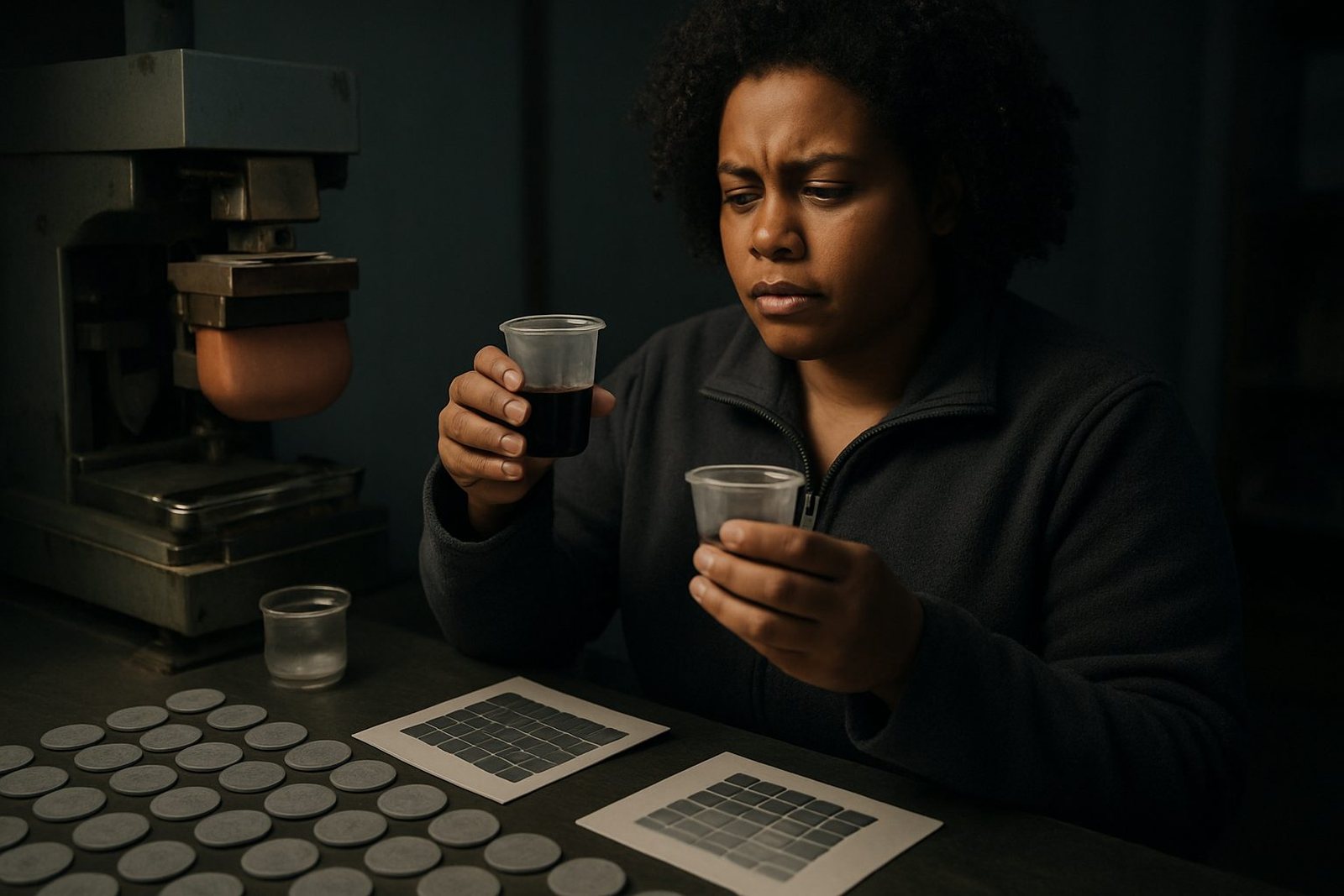
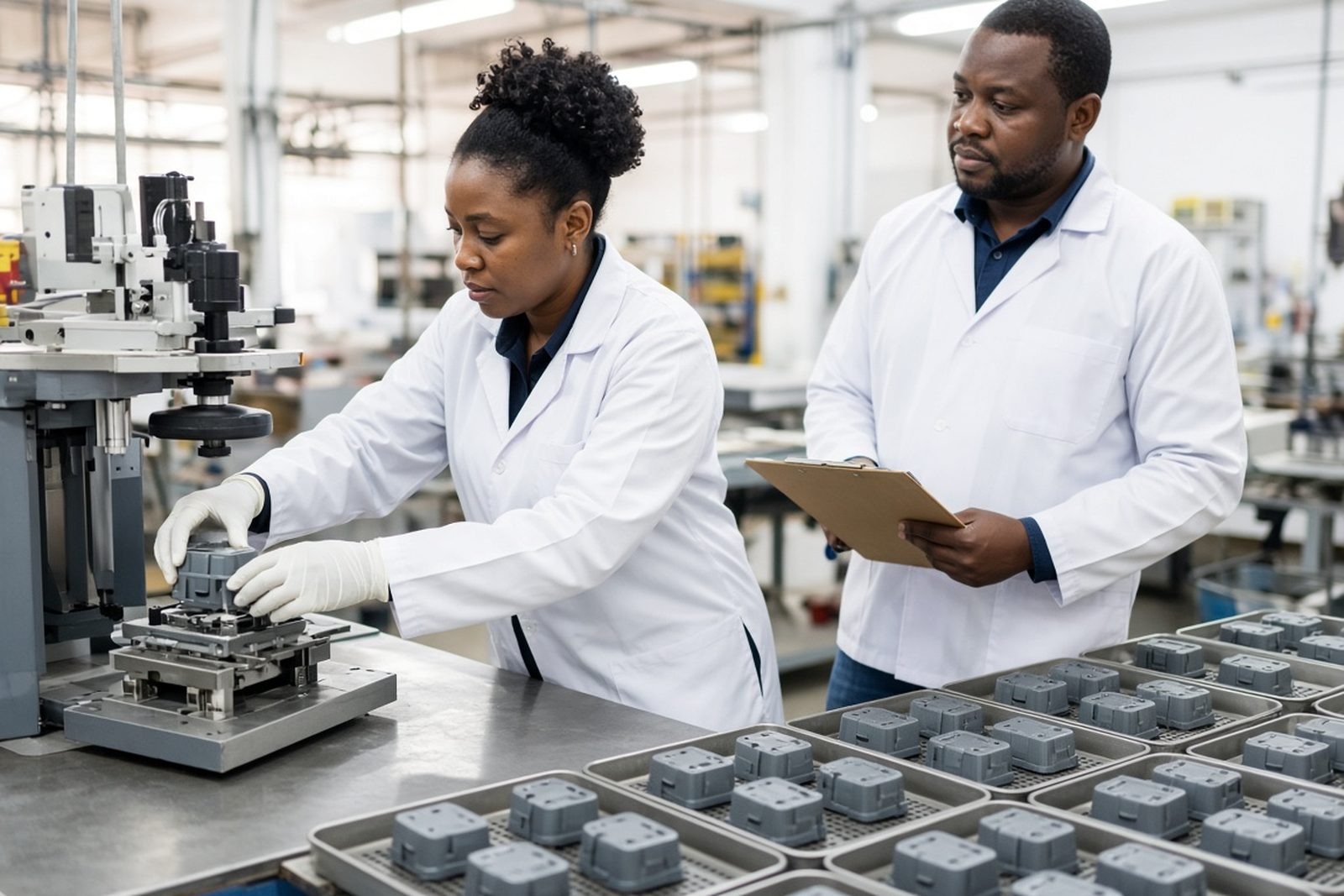
At our Westmead, Pinetown base, we work through artwork preparation, logo redraws, print area planning and colour matching before a job is signed off for repeat work. Lerato Mabunda checks that the sample is legible and placed correctly, while Sanjay Dookhi prepares the plate and Sibusiso Naicker reviews the practical setup with the production team. It is a steady approach but it keeps the job grounded in the real component, not only the drawing.
- One approved artwork version for every future rerun
- A fixed print area marked on the component or fixture
- A clear sample for colour and line thickness
- Written notes for curing, handling and packing
Fixtures Make the Difference on Medical and Electronic Parts
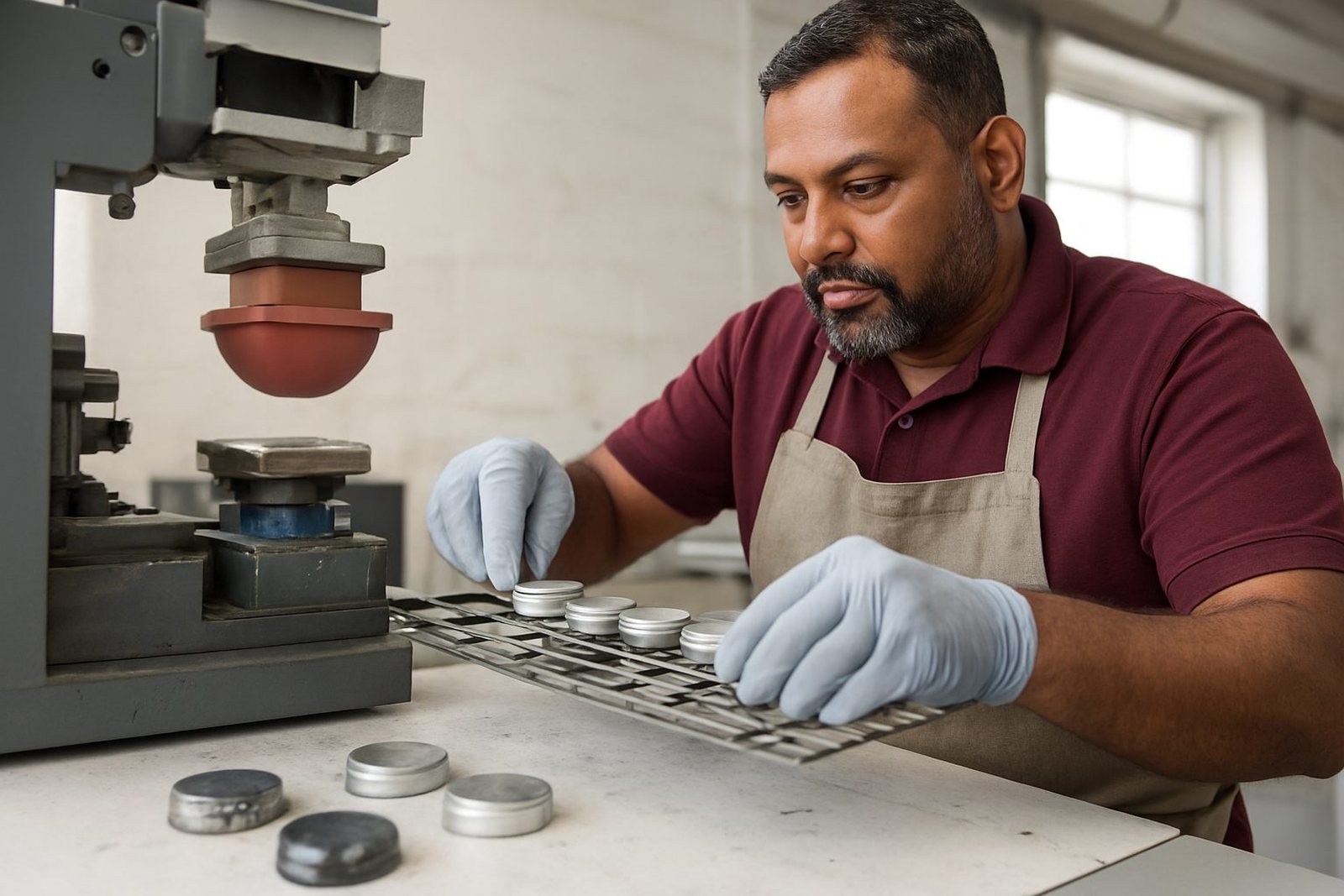
When parts are small, curved or delicate, fixture making becomes part of the print process. A good fixture holds the component in the same position every time, which helps the pad strike the same spot and keeps the print from walking across the part. On high volume runs, that repeatability reduces rejects and makes it easier to plan labour and cycle times.
For electronic housings, switches, bezels and medical device parts, the fixture must suit the shape without damaging the surface. Mfundo Xaba, our machine setup specialist, pays close attention to how the part sits in the nest because a fixture that is even slightly off can affect the whole batch.
Useful fixture checks include:
- Does the part sit flat without rocking?
- Can the operator load it the same way every time?
- Will the fixture protect the visible surface from scuffing?
- Does it still work after repeated cleaning and handling?
Ink, Adhesion and Curing Need to Match the Material
Pad printing is often chosen because it can transfer a fine mark onto awkward shapes using a silicone pad and a matched ink system. That said, the ink has to suit the substrate, the surface prep and the curing method. Plastic, coated metal and other medical or electronic component materials do not all behave the same way, so a sample that works on one part may not hold on another.
We use adhesion test samples and trial runs to check whether the print stands up to handling, cleaning and transport. Curing method selection is part of that decision. Some jobs need air drying, some need controlled heat and others need a different process to suit the part and the production line. The goal is not just to dry the ink, but to help it bond properly without distorting the component.
Before moving to production, it helps to confirm:
- Surface preparation is consistent from batch to batch
- The ink covers well without flooding fine details
- The cure time fits the line speed
- The print survives handling before packing and dispatch
Rerun Job Control Keeps the Same Result Months Later
Once a job has been approved, the hard part is keeping it the same when it comes back weeks or months later. Tooling wears, operators change and the customer may send a revised component without realising it has shifted by a fraction. Rerun job control helps prevent that by keeping records of plate exposure, plate etching, fixture settings and cure notes.
This is where production discipline matters. Yashika Sewpersad in client services will usually want to confirm what changed, if anything, before a rerun goes back into line. A small update to the housing, a different mould cavity or even a fresh supplier batch can affect print position and adhesion. Information that comes back with the order lets the line be set without trial and error.
For manufacturers in Durban, Johannesburg, Cape Town, Pretoria and Gqeberha, a repeat job should not feel like starting over. It should feel like returning to a known setup with the same print position, same ink behaviour and the same packing method.
A Pinetown Example: From One-Off Samples to Supply Runs
A local manufacturer in the Pinetown and Westmead area may begin with a few prototype housings for a medical device or a control panel part for an electronic assembly. The first samples are used to confirm line thickness, mark position and whether the text still reads clearly on a curved or textured surface. After that, the job can be turned into a repeat process with a fixture, approved plate and defined curing steps.
That is usually where the value shows. Instead of adjusting the setup each time, the team can load the part, print, cure and pack with less variation. It also helps when supply has to move between New Germany, Westville and the wider Durban area, because the process stays consistent even when deliveries are split across sites or shifts. Customers remain responsible for their own device compliance, but a stable marking process makes their work easier to manage.
Development to production is not about making the sample look nice once.