
Switchgear Marking for Small Control Parts
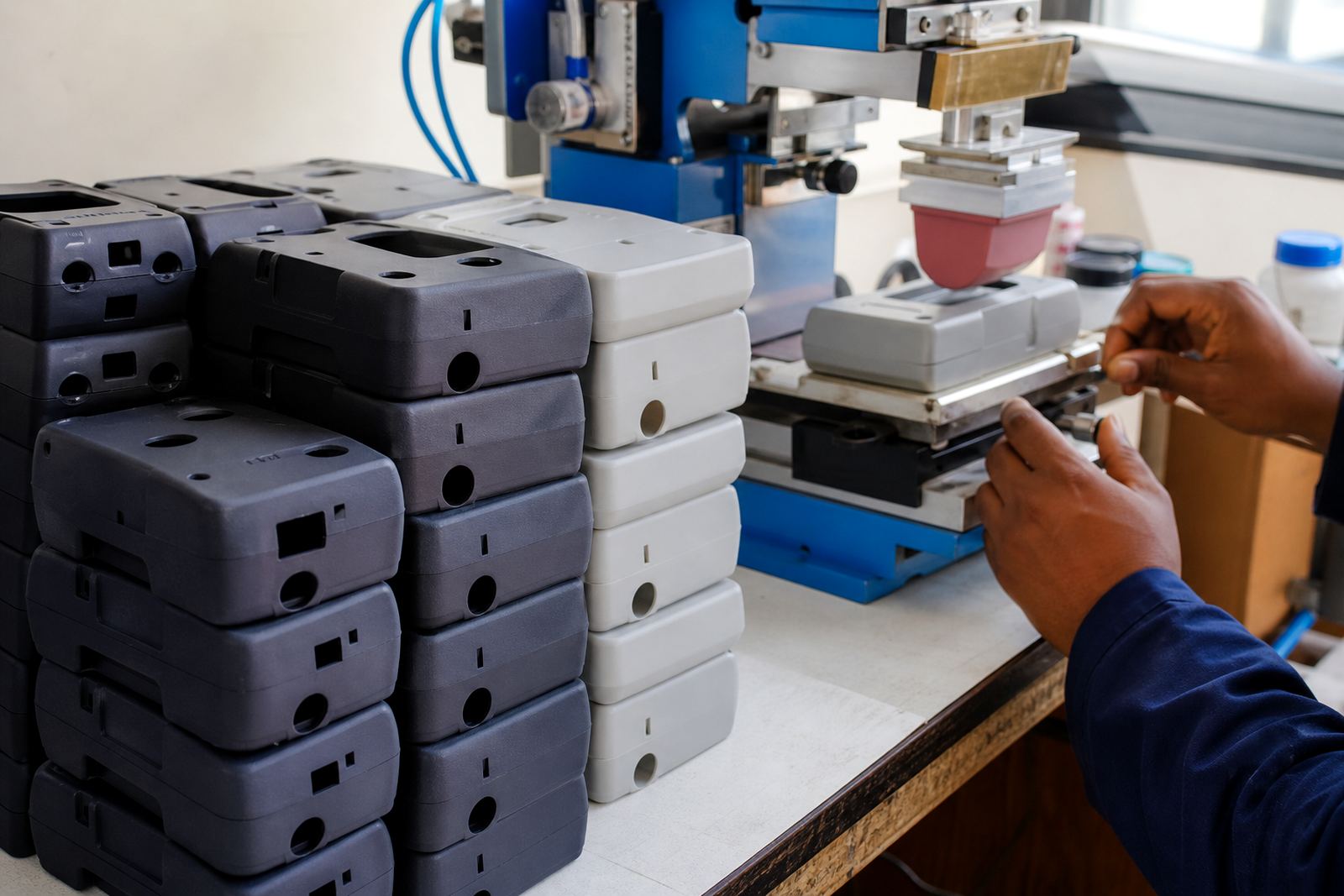
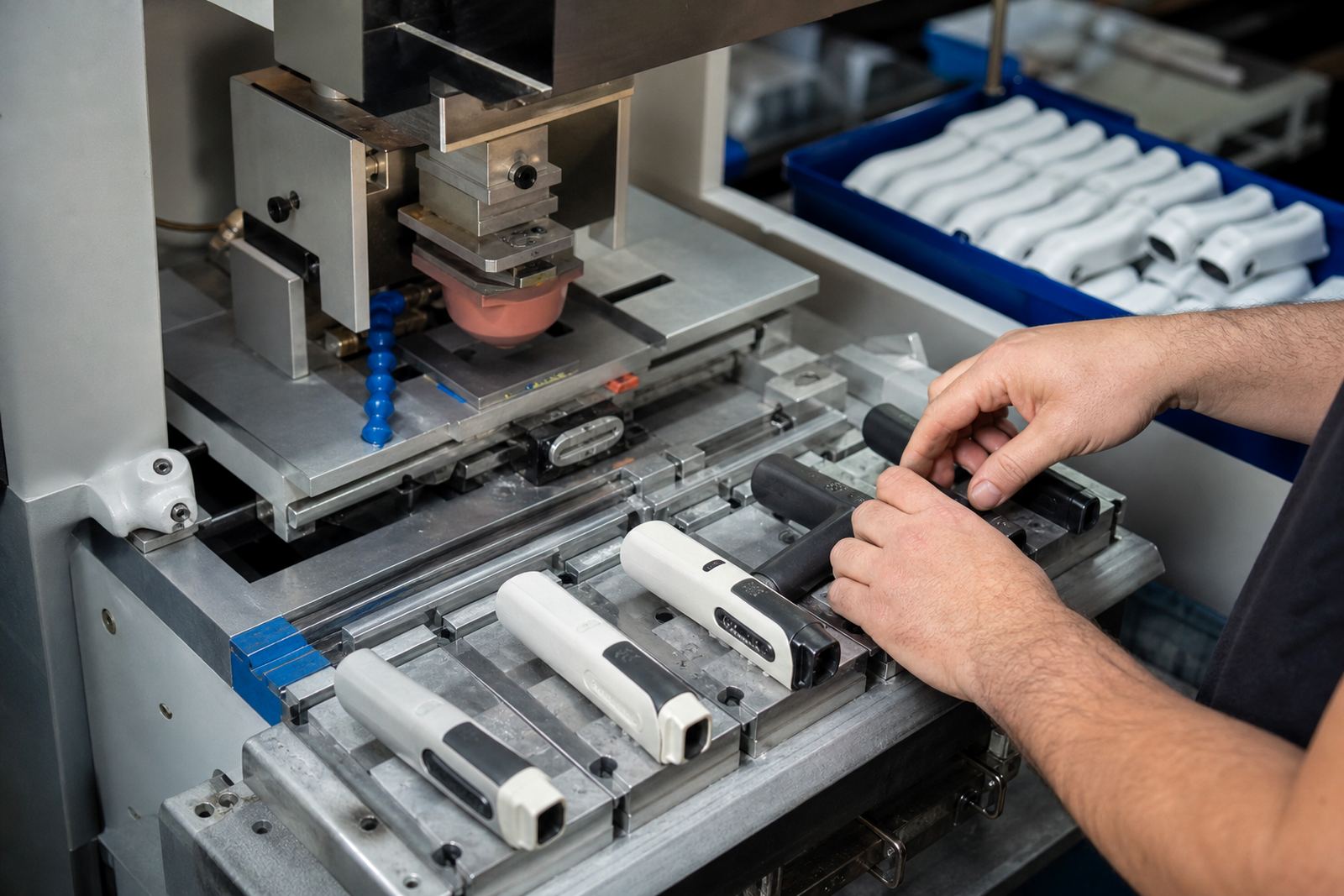
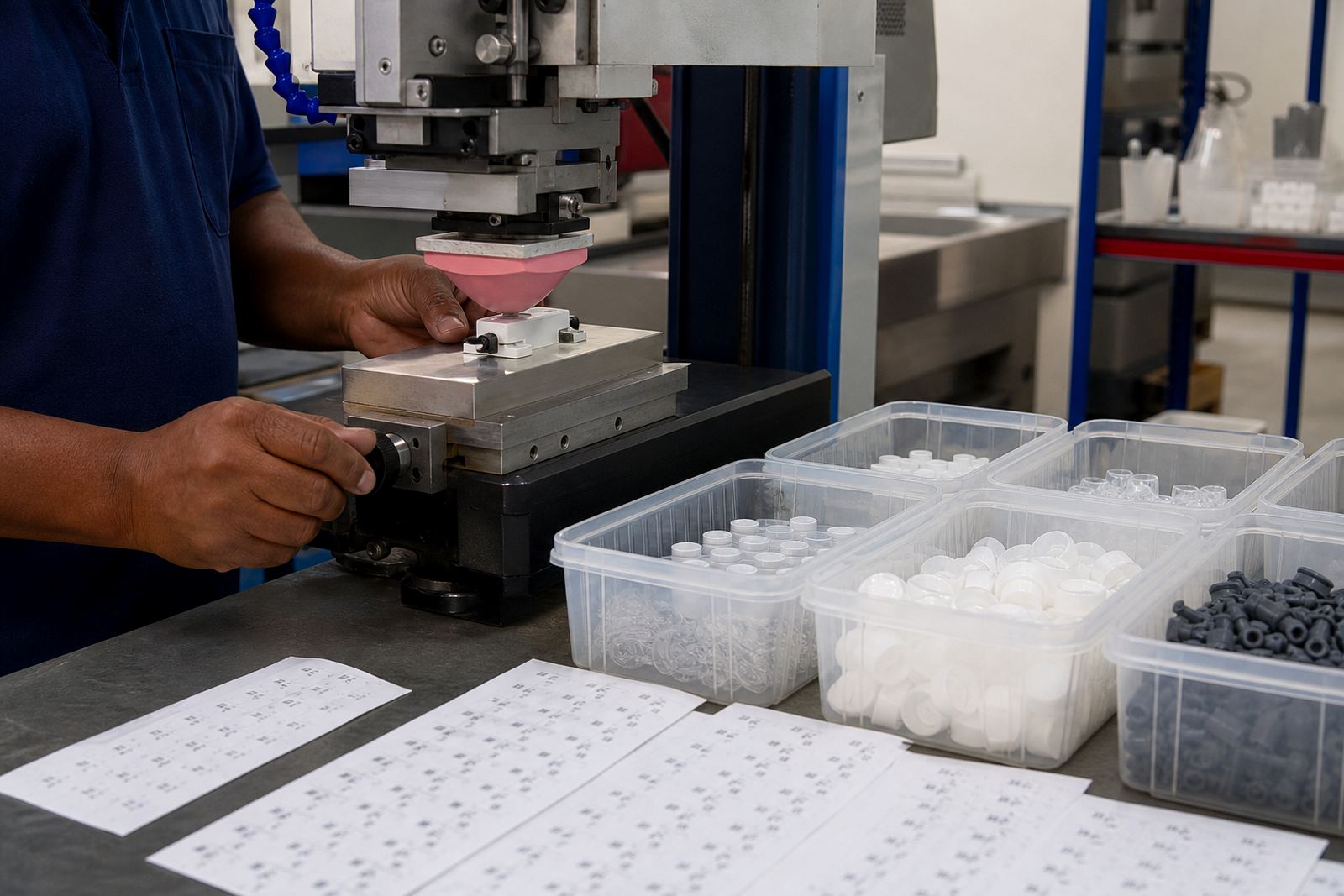
Switch caps, selector knobs, fascia inserts and similar control components need markings that are easy to read and hold up under regular use. In many production settings the parts are moulded in plastic, sometimes with a textured or curved surface, so the print method has to transfer fine detail without flooding the edges. Pad printing suits these shapes because the silicone pad can pick up ink from an etched plate and place it onto the part with controlled pressure.
For switchgear components, the usual requirement is crisp legends, position markers, direction symbols and status indicators. Some jobs need a single colour, others need two passes for better contrast. The final result depends on the base material, the surface finish and the curing method used after print transfer. If the component already has a mould line or a slight curve, that has to be allowed for before any plate work starts.
We work with manufacturers from Durban, Johannesburg, Cape Town, Pretoria and Gqeberha who need a practical marking method for production runs and later runs. The goal is straightforward: the print must sit in the right place, stay legible and line up with the control action of the component.
Typical Equipment and Parts We Handle
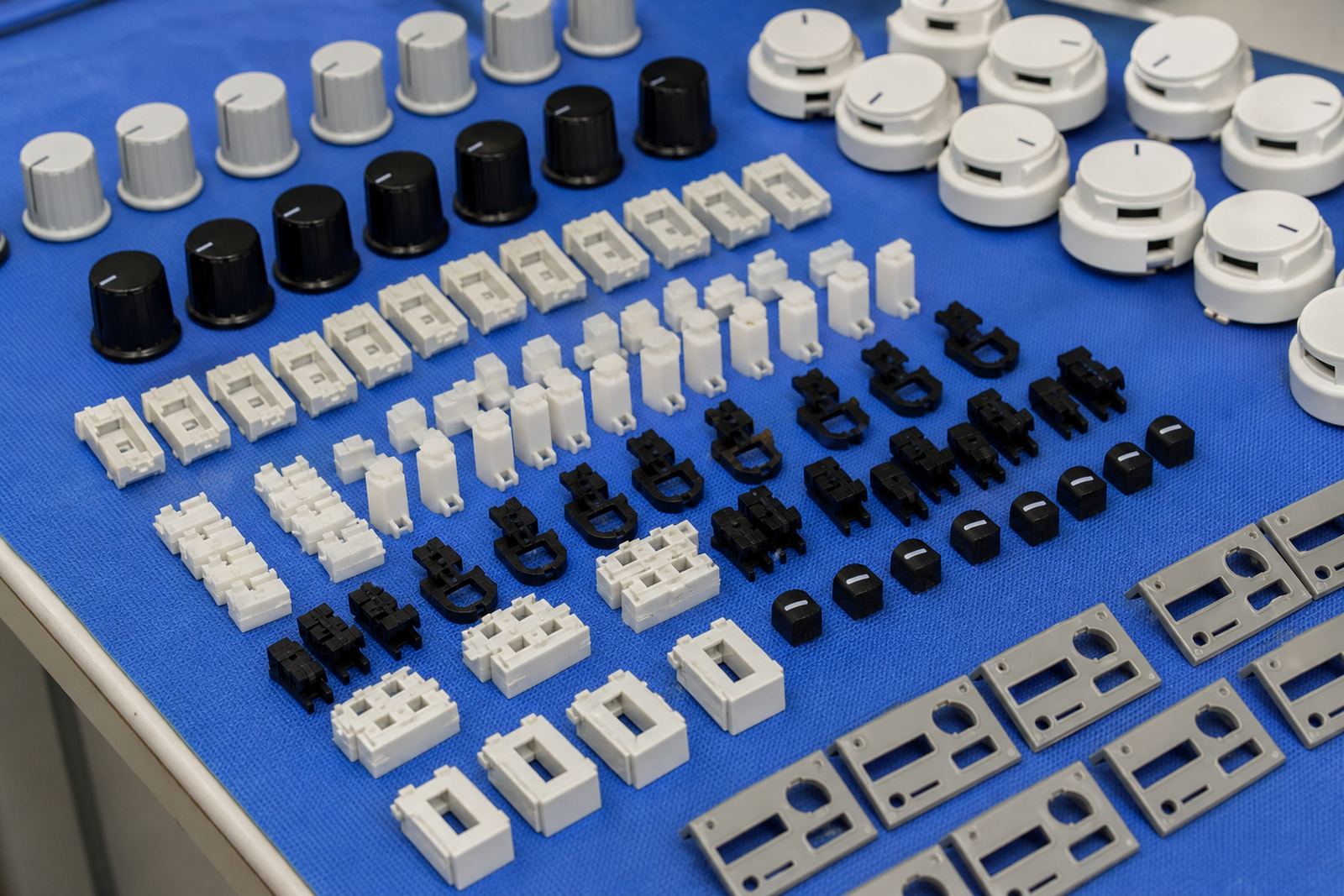
On this kind of job the parts are usually small, but the expectation for consistency is high. Common items include rotary selector knobs, pushbutton caps, switch surrounds, indicator bezels and printed legends on electrical control panels. The substrate may be ABS, polycarbonate, nylon or another moulded plastic, and each one behaves differently with inks and heat.
The process usually starts with artwork preparation and print area planning. If the supplied artwork is not clean enough for a plate, a redraw may be needed so lines, arrows and numbers hold their shape at final size. A plate is then exposed and etched, ink is mixed to suit the part and the transfer is trialled on samples before full production starts.
- Switch caps with position markings
- Selector knobs with directional legends
- Control inserts and face pieces
- Indicator parts with warning or status text
- Small electronic housings with part numbers or symbols
Because these components are often supplied in batches, rerun job control matters. If a customer comes back months later with the same part, the artwork, plate settings and print position must match the first order closely, otherwise the assembly line can end up with mismatched parts.
Layout and Planning Advice Before Printing Starts
Good layout work saves time later. For switchgear components, the print area should be checked against the actual moulded part rather than only the drawing. A symbol that looks fine on screen can sit too close to a radius or edge once it meets the physical part. We often advise clients to bring sample parts early so print area planning can be done properly before any full run.
If the part is going into a control panel or assembly with tight visual alignment, the fixture has to hold it consistently. That matters on curved knobs and shallow caps where one small shift can move the print off centre. It also matters where the legend must face a specific direction relative to a slot, pointer or stop mark. In plant rooms and workshops, poor alignment shows up quickly and causes rework.
For customers in coastal areas like Durban or Gqeberha, we also look at storage and handling before print. Humidity can affect certain inks and drying times, and dust on parts can spoil adhesion. In inland areas such as Pretoria or Johannesburg, static build-up and dry air can change how parts handle on the line. These are small details, but they make a difference to the final finish.
- Confirm the actual part, not only the drawing
- Allow for curves, ribs and mould lines
- Check legend size against final viewing distance
- Plan fixture points so the same position repeats every time
- Agree on curing method before production starts
Common Mistakes That Cost Time on Switchgear Jobs
One common mistake is trying to print very fine text that is smaller than the part can support. Another is leaving the artwork in a format that needs too much correction at plate stage. If the symbol or numbering is not cleaned up early, the print can look soft, broken or uneven. A third issue is using the wrong curing approach for the ink and substrate combination, which can leave the mark vulnerable to scratching or poor bond strength.
Adhesion tests are worth doing before a batch leaves the workshop. A quick sample run can show whether the ink grips properly, whether the colour reads clearly against the base material, and whether the print remains intact after handling. Where a part will face repeated turning or contact with gloves, that check is essential. Customers remain responsible for their own device compliance and final application suitability, but good sampling helps reduce avoidable surprises.
Another mistake is changing the print position after the first approved sample without resetting the job notes. On later work, a small shift of even a fraction can affect how the part reads on the assembly or in the final panel. That is why we keep rerun control and job records in place for parts that need future batches.
Budget Ranges for Small Component Pad Printing
Budget depends on the number of colours, the artwork condition, the quantity required and whether special fixtures or sample work are needed. For switchgear components, customers usually want a practical quote based on plate work, setup time, test samples and the production run itself. Small jobs with simple single colour marks can stay modest, while more detailed legends or multi-part setups cost more because of the extra preparation.
As a working guide, a straightforward short run may sit in the lower thousands of Rand, while a larger repeat batch with artwork redraws, plate work and fixture making will sit higher. Multi-colour work or jobs with repeated sample approval can move the total up again. The most useful way to budget is to match the quote to the part sample and the real quantity, not only the estimated run size.
For manufacturers in South Africa, the biggest cost saver is usually getting the artwork and part sample right before the job starts. That reduces reruns, avoids plate changes and cuts down on delays when production is tight. It also helps when the order has to move through packing and dispatch in time for assembly elsewhere.
How PadPrinters Medical Supports Manufacturers Nationwide
Our team includes Sibusiso Naicker as Managing Director, Naledi Kekana in production, Sanjay Dookhi handling artwork and plates, Lerato Mabunda on quality, Yashika Sewpersad in client services and Mfundo Xaba on machine setup. That mix helps when a job needs clean artwork, careful sample checks and steady production control.
For a pad printing run, write to PadPrinters through the contact page form with your part, artwork and run size, and we work with manufacturers across the country through Pinetown Printing Support, Durban Manufacturers, Johannesburg Supply, Pretoria Supply, Cape Town Supply, Gqeberha Supply, New Germany Support and Westville Support. For switchgear parts, we can assist with logo redraws, colour matching, adhesion test samples, plate etching, fixture making, trial sample runs and dispatch packing. It is a methodical process, not a rushed one, and that suits electrical control parts that have to function and look consistent.
When the part is small and the marking is critical, careful setup saves trouble later. That is the value of pad printing done properly on switch caps and selector knobs.
- Artwork Preparation
- Print Area Planning
- Colour Matching
- Adhesion Test Samples
- Trial Sample Runs
- Dispatch Packing