

What Print Area Planning Covers
Print area planning starts with the actual part in hand or a confirmed sample, then we study the shape, wall thickness, edge breaks, curves, ribs, recesses and any textured surfaces. For medical and electronic components, even a small change in the usable zone can affect how the silicone pad picks up the image and how evenly the ink transfers. At our Westmead, Pinetown base, the team reviews the part geometry before final artwork approval, so the marking is placed where it can be printed cleanly and read consistently.
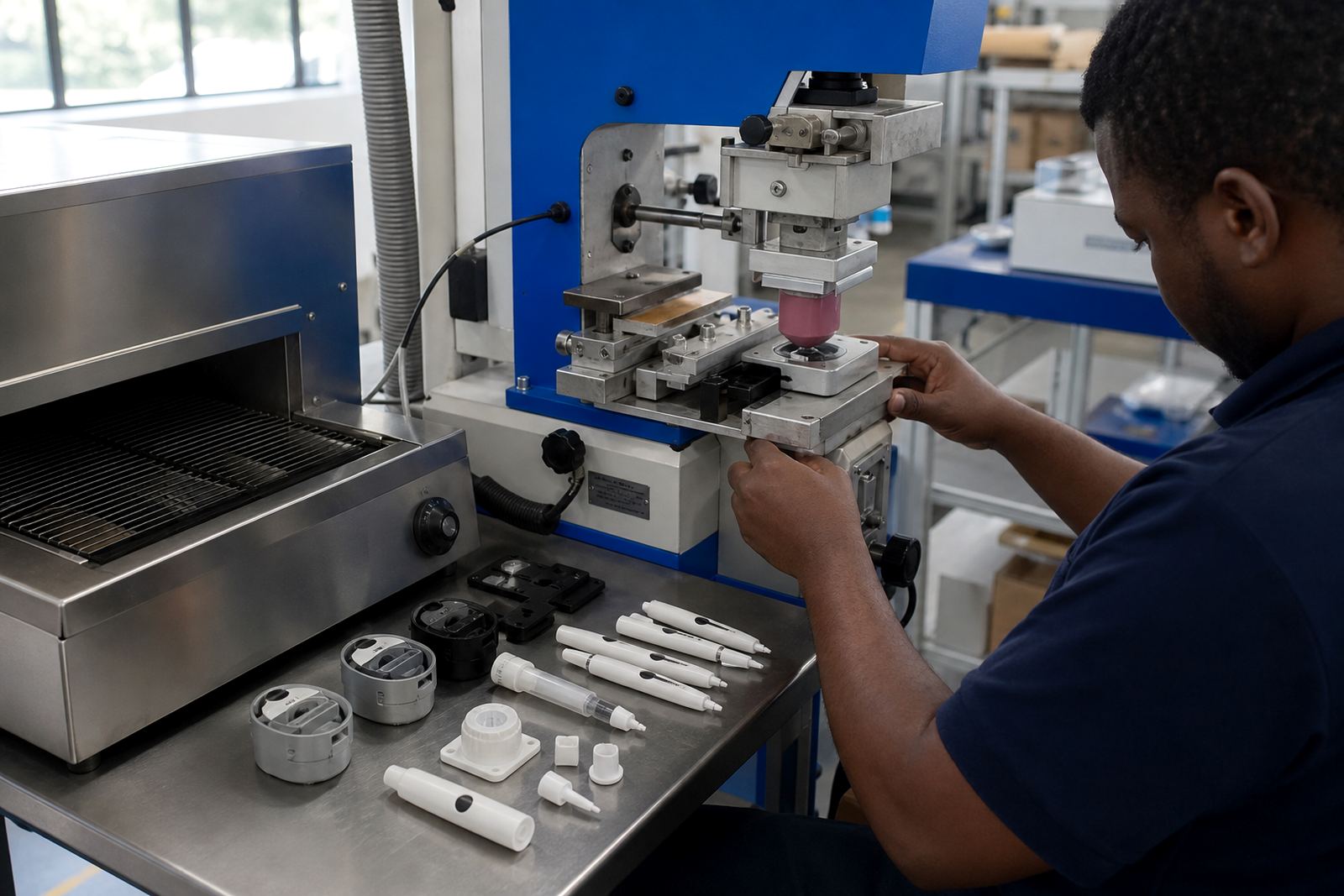
We also check the part against the practical limits of pad print production, including pad reach, image distortion on curved faces, fixture access and the space needed for curing. If the print sits too close to a clip point, mould line, moulded boss or electrical contact area, the job can become unstable. We plan around that early, which saves time later and helps keep repeat jobs predictable for manufacturers in Durban, Johannesburg, Cape Town, Pretoria and Gqeberha.
- Usable print zone review for flat, curved and stepped surfaces
- Artwork placement against moulding lines, ports, buttons and labels
- Transfer path planning for silicone pads and fixed fixtures
- Allowance for curing method, ink coverage and handling space
How We Set Up a Print Zone
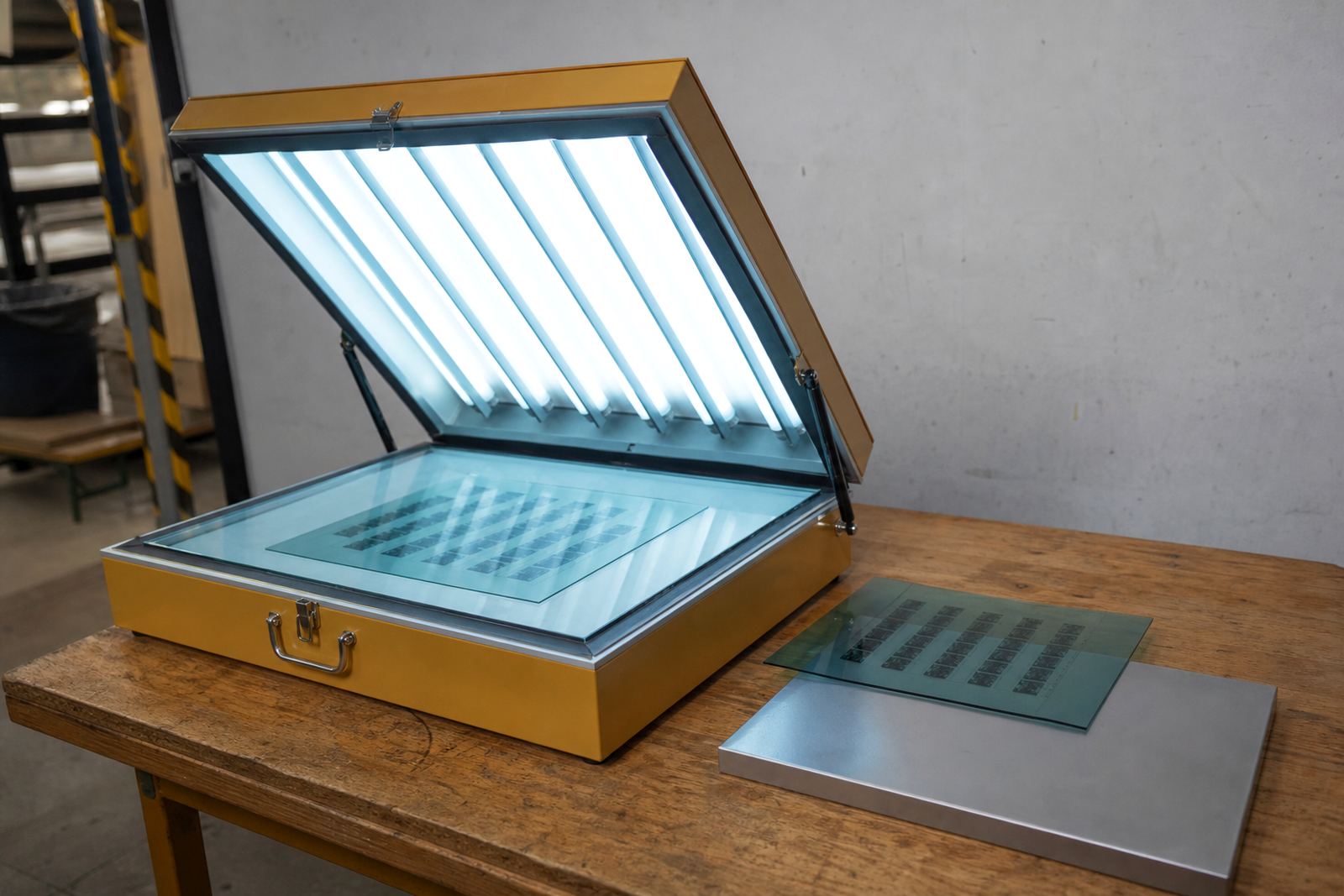
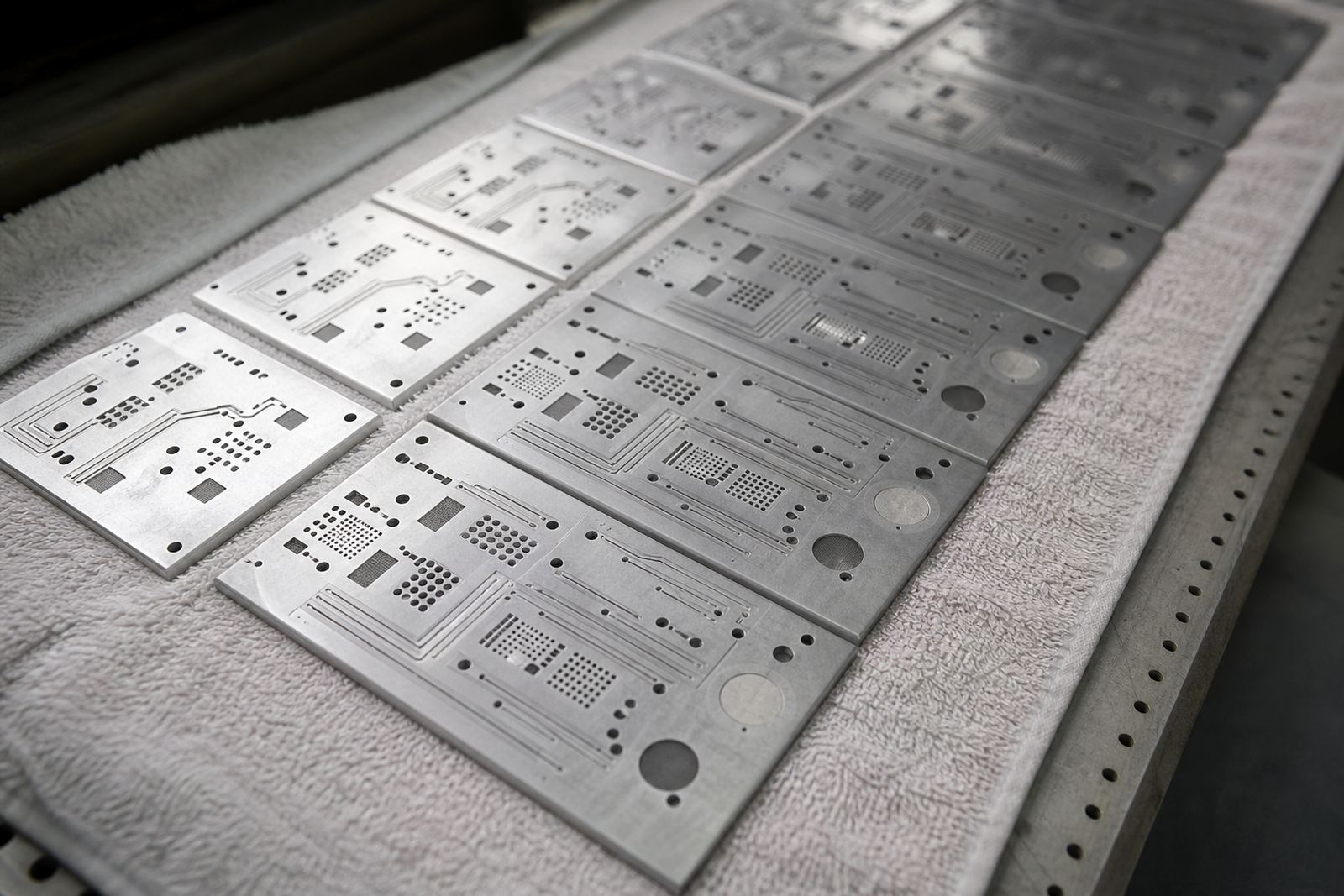
The process is straightforward and practical. We begin with part dimensions, a drawing if available, or a physical sample. Then our Artwork and Plate Technician checks the image size against the surface area that can accept the mark without smearing or stretching. If the part has a deep recess, we may need a smaller image and a different pad profile. If the component is glossy or slightly flexible, we will look more closely at ink selection and the likely cure path.
Our Production Manager and Machine Setup Specialist then review how the part will sit in the fixture. A good fixture is often the difference between a repeatable run and a job that drifts by a few millimetres. For that reason we also assess loading orientation, operator access and the direction the part needs to be fed. On some components, especially small electronic housings, a few degrees of rotation can change the final result more than people expect.
- Part measurements or sample evaluation
- Image sizing and placement options
- Fixture and handling review
- Trial positioning before plate exposure
- Final approval before production artwork is released
Included In The Planning Service
This service is not just about moving a logo around a page. It includes the practical checks needed to make sure the print can be applied repeatedly and with good visibility. For medical parts, that may mean positioning a batch code, operating mark or identification graphic in a place that remains readable after assembly. For electronic parts, it may mean keeping clear of vents, snap features, ports or conductive areas. Customers remain responsible for their own device compliance, and we focus on the print application side only.
We can also advise on adhesion test samples, colour matching and the likely cure method before the main job is released. Where needed, we prepare logo redraws, confirm the printable area against the part contour, and plan a trial sample run to check transfer quality.
- Printable area review and artwork positioning
- Adhesion test sample planning
- Colour and opacity suitability checks
- Fixture making input where required
- Trial sample run planning and rerun control notes
Turnaround, Samples And Job Control
Turnaround depends on the part complexity, the amount of artwork adjustment needed and whether a new fixture or plate exposure is required. Straightforward print area planning on an existing part can move quickly once we have a sample or accurate dimensions. More detailed jobs, especially where there are multiple print faces or tight tolerances, need a bit more back and forth before approval. We keep the process practical, and we will say early if a revised sample is needed before the job can proceed.
For local clients in Pinetown, Durban, New Germany and Westville, sample handling is usually easier because parts can be dropped off and checked on site. For clients further afield, we arrange the process through the contact page form and guide the next step from there. Rerun job control is part of the service too, so when a repeat order comes in, we can compare the new part to the approved print zone and see whether any geometry or tooling changes have affected the usable area.
- Quick review for standard repeat parts
- Additional time for new shapes or multi face parts
- Sample sign off before plate work starts
- Rerun comparison for repeat production batches
Pricing Approach And What Affects Cost For Medical Parts
We price print area planning according to the work involved, not a blanket rate. The main factors are the part complexity, number of print faces, whether artwork has to be redrawn, if a trial sample is needed and whether new fixtures or plate work must be done. A single flat surface with clear dimensions takes less time than a small curved housing with several obstructions. That is normal, and it is why we prefer to review the part first rather than guess.
Where a job is straightforward, the planning step can be folded into the broader setup. Where the part needs careful study, we will separate the work so the client can see exactly what is involved before production continues. We keep the pricing approach transparent and practical, especially for manufacturers balancing set up time, batch size and scheduled dispatches. If there are changes after approval, we will flag them before proceeding because once the plate is committed, the print zone should not be treated lightly.
Maintenance And Recheck Intervals
Print area planning should be revisited whenever the part changes, the mould is revised, the supplier changes tooling or a new finish is introduced. Even a slight shift in a boss, rib, gate mark or wall thickness can affect the usable zone. For repeat work, we recommend a recheck whenever there is a new revision, after a tooling update, or when the batch behaviour changes from the approved sample. Coastal humidity can also affect handling and drying times, so jobs for Durban or other coastal sites may need a fresh look at curing and storage conditions.
For busy production lines, regular checks are useful at scheduled intervals, especially where parts are handled often or where the same component is printed across multiple assembly runs. This helps avoid avoidable misprints, off centre marks and adhesion issues.
- Recheck after mould or tooling changes
- Review after surface finish or material changes
- Repeat approval for revised artwork or part revisions
- Check handling and curing after production interruptions
Run details
| Service focus | Print area planning for pad printing on medical and electronic parts |
|---|---|
| Base | Westmead, Pinetown, KwaZulu Natal |
| Service area | Durban, Johannesburg, Cape Town, Pretoria and Gqeberha |
| Typical part types | Housings, covers, caps, panels, clips, housings with recesses and small components |
| Planning checks | Geometry, usable print zone, pad reach, fixture access, curing space |
| Team roles | Managing Director, Production Manager, Artwork and Plate Technician, Quality Coordinator, Client Services Lead, Machine Setup Specialist |