
What Plate Etching Does For Repeatable Pad Printing
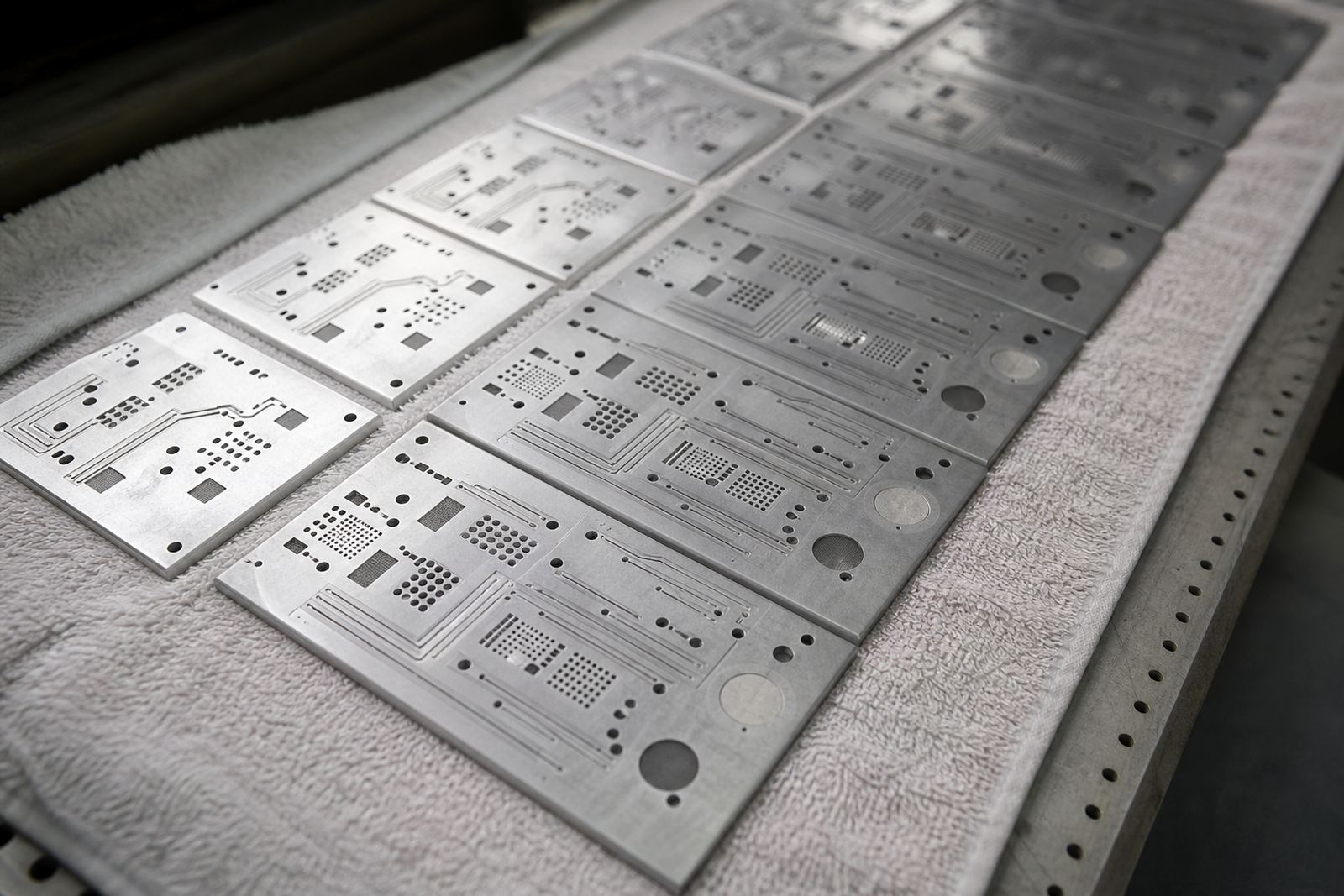
Plate etching creates the recessed image area in the printing plate, which is then filled with ink and wiped before the silicone pad lifts the image and places it onto the part. For medical housings, control panels, sensor bodies, housings, buttons and small electronic assemblies, the etched depth and edge definition matter just as much as the artwork itself. If the etch is uneven, the print can look pale in one spot and heavy in another, or the fine text may break up after a few production runs.
We handle cliché etching to support sharp transfer, clean release and consistent results across short runs and repeat jobs. The work is particularly useful where the part has small print areas, curved faces, moulded texture, or surfaces that need careful ink adhesion testing before release. In practice, the plate has to suit the ink system, the pad shape, the fixture and the curing method, not just the artwork. That is why the etching stage is planned alongside the rest of the print setup, rather than treated as a separate task.
How We Prepare And Etch The Plate
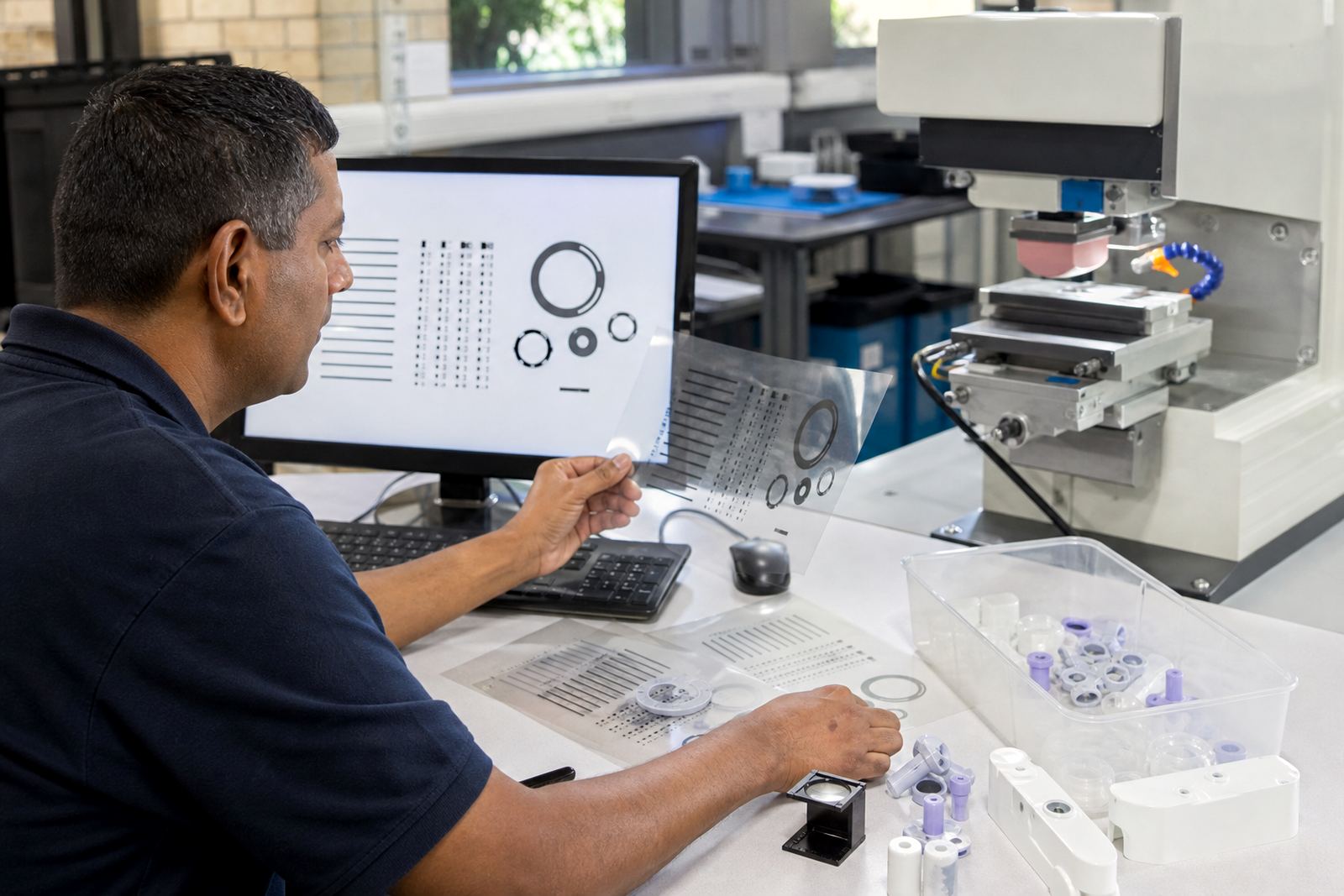
Our process starts with checking the supplied artwork and confirming line weight, font size, logo detail, print area and any registration marks needed for the job. If the artwork needs redraws or cleanup, we sort that before the plate is exposed. For medical and electronic parts, even a small line thickness change can make the difference between a crisp mark and a weak one, so we keep the drawing practical for pad printing rather than forcing printability later.
- Artwork review and print area planning
- Plate exposure with the approved image layout
- Controlled etching to achieve the required depth
- Cleaning and inspection of the etched area
- Trial sample run on the actual component or fixture
- Adjustment before full production if needed
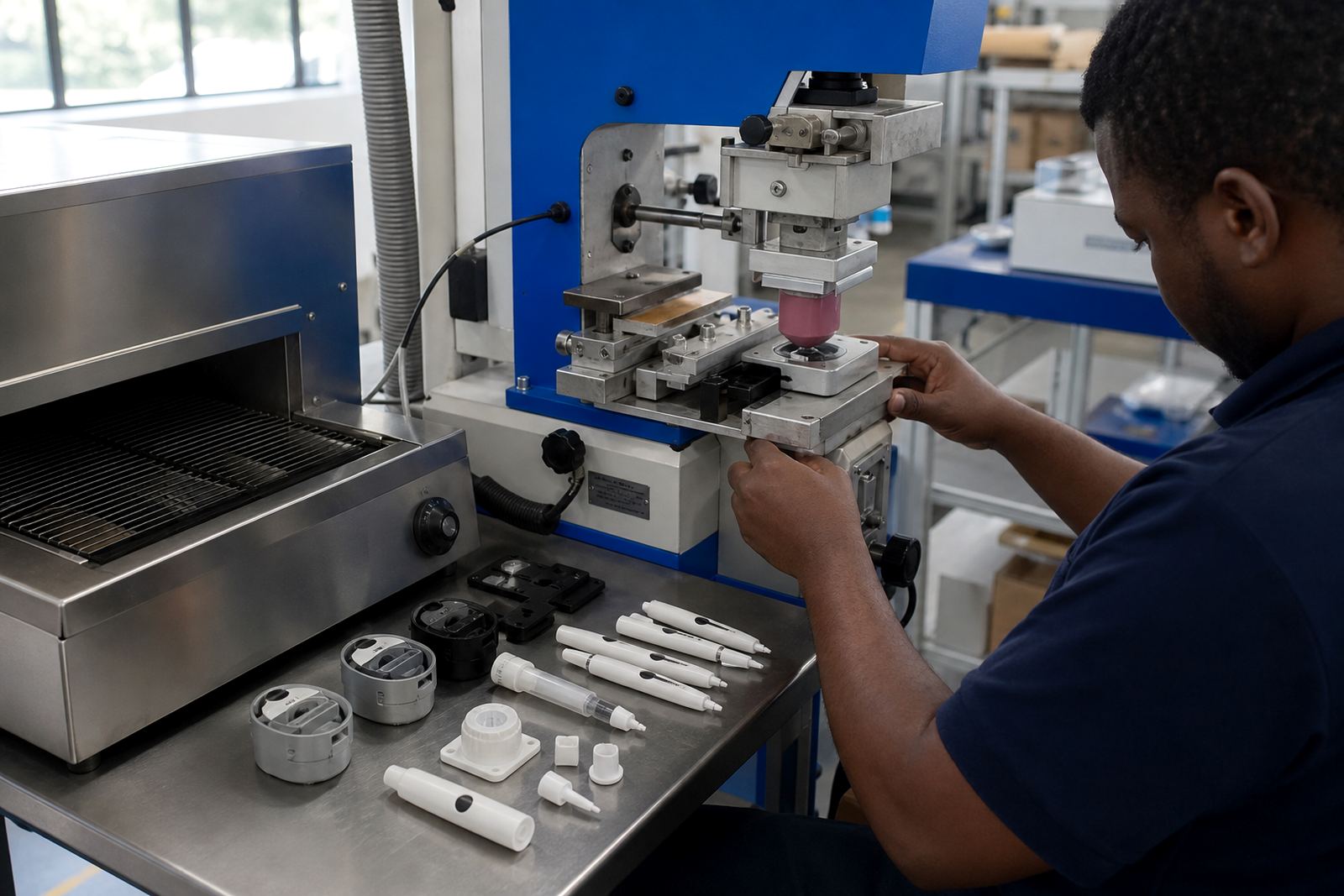
Plate etching is generally paired with test prints, because the best result comes from checking the first samples under real production conditions. We look at ink pickup, transfer, edge sharpness and whether the pad is landing squarely on the part. If the part has a mould line, curve or recess, the etch may need a slight adjustment so the image releases cleanly and does not distort during printing.
Spec Details That Affect Etch Quality
For pad printing plates, the size of the image area, line detail and material choice all influence the etching outcome. Medical and electronics work often uses small marks, serial fields, icons, calibration labels and warning text. That means we keep the etch controlled and the image geometry consistent, so the print behaves the same from one batch to the next. Where a job has several variants, we can prepare separate plates or plate zones so the operator can rerun the correct setup without mixing artwork.
The surface finish of the plate and the selected curing method also influence what comes out of the etch. Some inks need a different cure approach, and some parts, especially plastic components, need adhesion testing before release. In coastal areas like Durban and Gqeberha, humidity can affect ink behaviour and drying times, so the plate finish and job setup are planned with that in mind.
- Suitable for fine text, logos, symbols and small identification marks
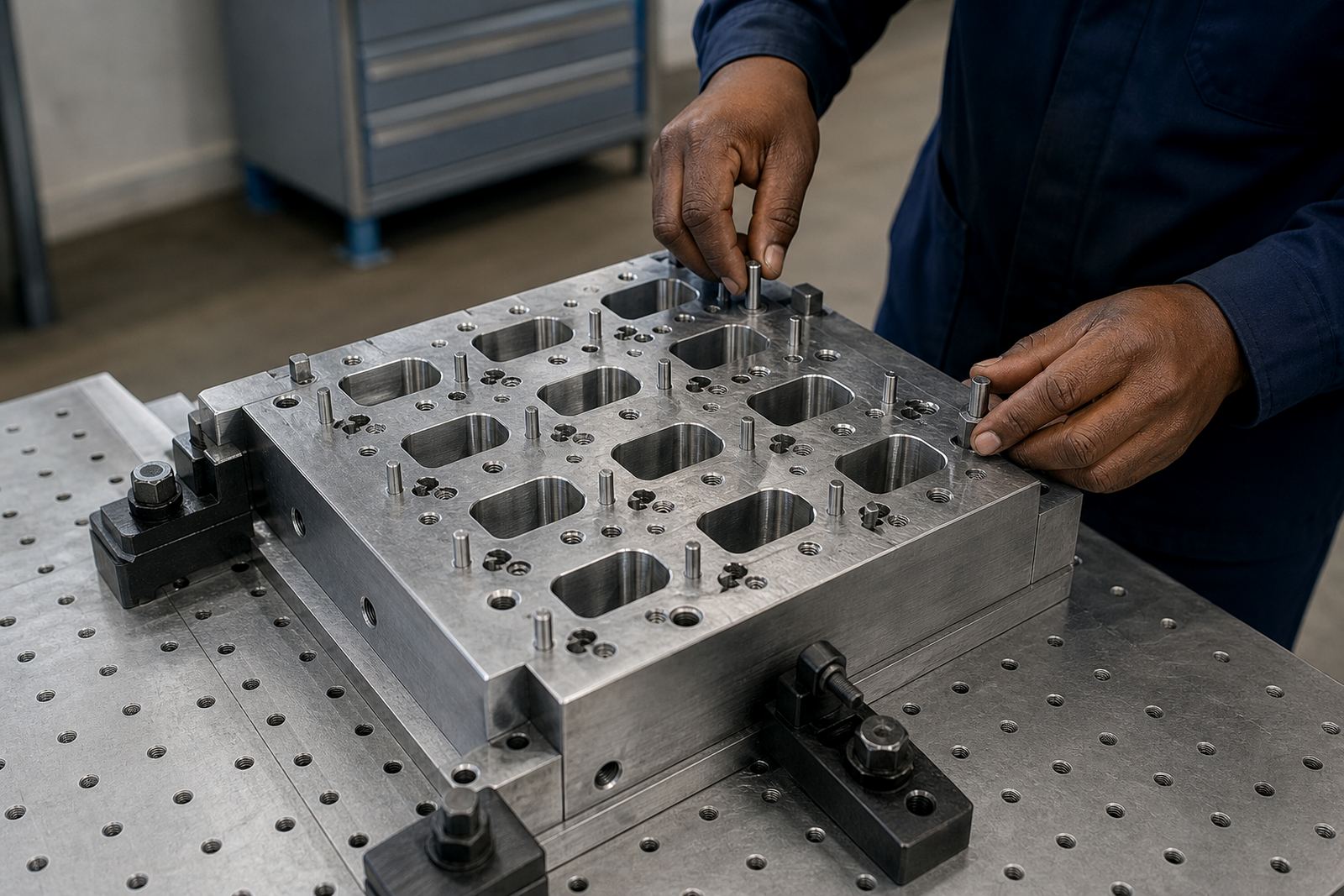
- Works with flat, curved and lightly contoured parts
- Supports one colour and multi-station printing setups
- Can be matched to fixture making for better repeatability
- Useful for prototype samples and production reruns
Turnaround, Sample Checks And Job Control
Turnaround depends on the artwork condition, number of plate variants and whether trial samples are needed before the final run. A simple plate can move quickly once the artwork is approved, while more complex layouts, fine text or multiple part references may need extra checking. Where a customer needs trial samples, we build in time for printing, review and any small correction to the image depth or placement. That approach saves time later and reduces wasted parts.
We also keep rerun job control in mind from the start. Once a plate has been approved, we store the job information so the same plate and setup can be repeated with less delay when the customer reorders. For manufacturers working across South Africa, that helps keep production moving without starting over each time. If a part design changes, we will flag the effect on the plate and explain whether a fresh etch is the better option.
- Fastest turnaround for straightforward single-image plates
- Extra time allowed for artwork correction and sample approval
- Repeat jobs tracked for future reruns
- Dispatch packing arranged once samples or production plates are ready
Pricing Approach For Etching Work
Our pricing approach is based on the actual work involved, not a one-size-fits-all rate. The main factors are artwork complexity, plate size, number of plate versions, sample requirements and whether the job needs artwork redraws or fixture adjustments. If the part is awkward to print, or if the etched image has to work with a tight print window, that adds setup time and testing. We quote accordingly so the customer can see where the work sits before production starts.
For repeat customers, the value usually comes from consistency. A properly etched plate helps reduce rework, keeps the print stable and supports cleaner production planning. We do not guess at the print setup or force a standard plate into a part that needs something more specific. Instead, we look at the component, the ink system and the curing method together, then recommend the etching route that suits the job.
Plate Care And Maintenance Intervals
Etched plates last longer when they are cleaned properly, stored flat and handled with care. After printing, ink residue should be removed with the correct cleaning method for the ink system being used, then the plate should be dried before storage. Finger marks, scraping and rough handling can shorten the life of the image, especially on finer detail. For medical and electronic runs, that matters because small wear changes can show up quickly in text or symbols.
We generally recommend checking plates at regular intervals, especially where the same job is run often or where production conditions change. A practical check before each repeat run helps catch wear, deep scratches or loss of detail early. If the image starts to soften, the plate may need reworking or replacement rather than pushing it through another batch. That is usually the cheaper decision in the long run, particularly when parts need the same mark every time.
- Clean after each run
- Inspect before every rerun
- Store flat in a dry, dust-free place
- Avoid contact with hard tools or metal edges
- Replace or re-etch if the image edges begin to soften
Run details
| Service area | Westmead, Pinetown with supply to Durban, Johannesburg, Cape Town, Pretoria and Gqeberha |
|---|---|
| Main use | Pad printing clichés for medical and electronic components |
| Typical image type | Fine text, logos, symbols, warning marks and part identification |
| Process stages | Artwork review, plate exposure, etching, cleaning, test printing and approval |
| Turnaround basis | Depends on artwork complexity, sample needs and plate quantity |
| Maintenance check | Inspect before each rerun and clean after every print session |